Races
Trail Valle de Tena 2K: Osanz and Villanueva dominate in Panticosa
Osanz and Villanueva rule in Panticosa on a day of high mountains, record atmosphere, and generational change.

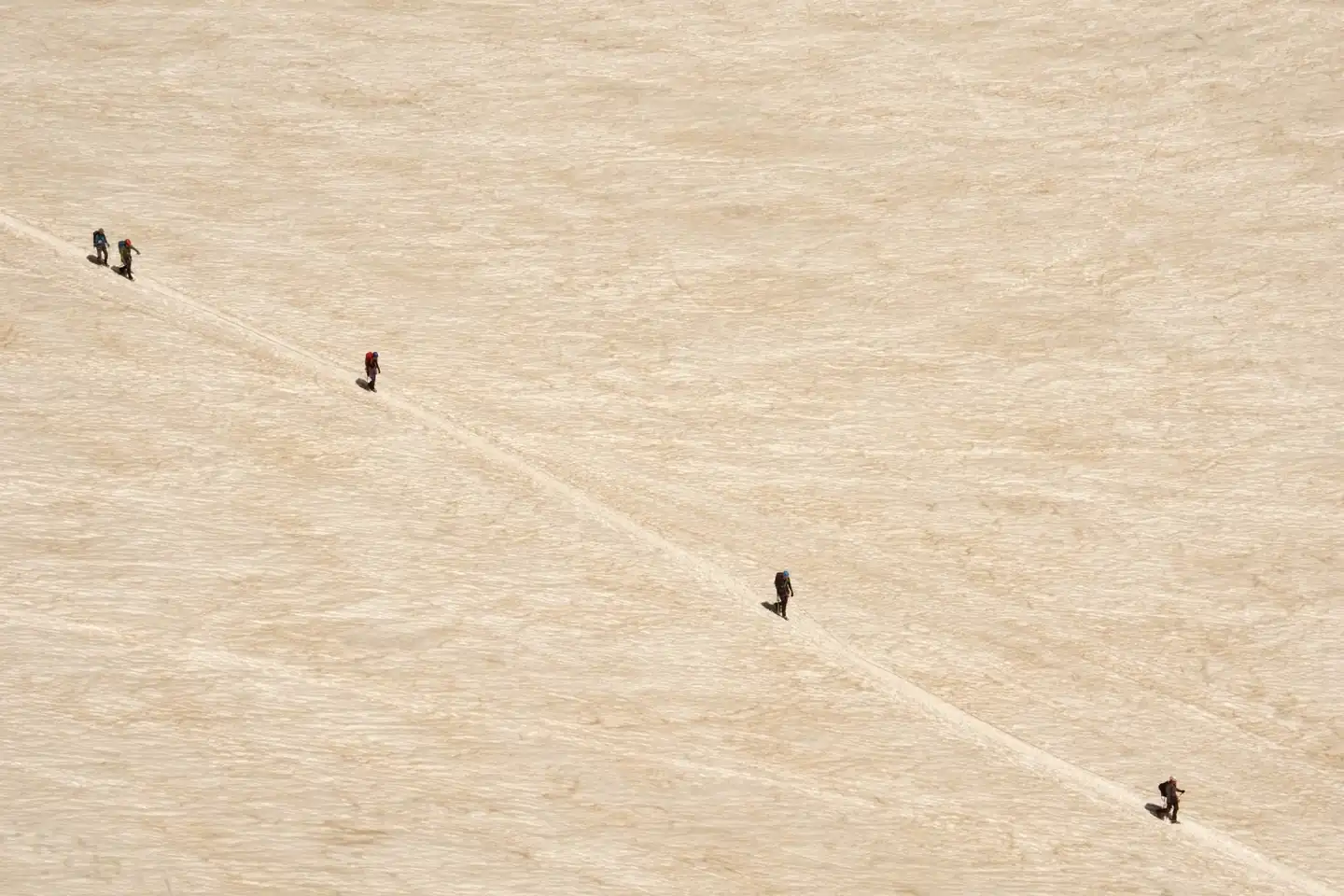
Álvaro Osanz and Patricia Villanueva took the longest and most demanding race on Sunday in Panticosa, a high-mountain event that once again tested the pace of the Trail Valle de Tena with a 20-kilometer course and 1,250 meters of positive elevation gain. The 2K was, once again, the distance that brought together the highest sporting level and best distilled the identity of this event: effort, technical terrain, and a Pyrenean landscape that offers no respite.
Osanz’s victory came with little room for dispute. The runner from Jaca set a sustained pace from the start and opened a gap in the key sections of the course, while Villanueva secured an equally solid win in the women’s category, with a clean race and no setbacks. The morning also offered a very clear image: the Trail Valle de Tena 2K is no longer just a race for specialists, but a showcase where elite competition, grassroots talent, and fans who turn Panticosa into a mountain amphitheater all coexist.
A 2K that sums up the character of the Valle de Tena
The 2K holds a special place within the program because it combines an apparently manageable distance with a route that punishes any mistake. Its 20 kilometers and 1,250 meters of positive elevation gain make it a very complete race: sustained climbing, high-altitude trails, fast sections, and a finish that still demands legs and head. It is not a race for too much speculation. Nor for overconfidence.
In Panticosa, the route set off early and took participants toward one of the most recognizable viewpoints in the area, passing through places of great beauty such as Ibón de Sabocos and the Ripera valley before returning to the town center. That route, which looks as if it were drawn for a postcard, actually conceals very real hardship: the terrain breaks apart, the elevation stacks up, and the altitude turns every change of pace into a small negotiation with the mountain.
That is why the 2K tends to attract runners of very different profiles. Some are after the result, some are chasing the challenge, and others come because this distance lets them race high up without yet entering the physical extremes of the ultras. That mix explains much of the event’s appeal and also its journalistic value: the race is selective enough to sort out the elite, but open enough to show generational turnover and the growth of Aragonese and Spanish trail running.
Osanz, dominant from start to finish
The men’s race offered a clear reading very early on. Álvaro Osanz looked dominant from start to finish and completed the race in 2:01:28, a time that confirms his ability to compete confidently on explosive and technical courses. The image he left at the finish was that of a runner who knew exactly what he was doing, without unnecessary gestures and with authority built stride by stride.
Behind him came Mikel Auzmendi, second in 2:03:14, and Alexander González, third in 2:03:43. The closeness between the two chasers added tension to a podium decided by small margins, something common in this kind of race where the terrain rules and effort management matters as much as pure speed. In a mountain race like this, thirty seconds can mean a poor choice of section, a descent taken cautiously, or a climb in which the legs begin to empty too soon.
The value of Osanz’s victory goes beyond the placing itself. In a race with such competitive density, holding the lead without giving ground speaks to form, but also to tactical awareness. The runner from Jaca knew how to move in an environment where the effort is invisible to the casual spectator and obvious to anyone who has ever run over loose rock, narrow trail, and continuous ascent. The mountain does not forgive unnecessary surges, and he seemed to understand that impeccably.
Villanueva imposes her law in the women’s category
Among the women, Patricia Villanueva delivered an equally emphatic performance with a time of 2:28:52. Her victory was built without fuss, but with a consistency that put her ahead of her rivals at the key moments of the race. In such a demanding setting, steadiness is often worth more than flair, and Villanueva applied it with precision.
The second place went to Ruth Aldea, in 2:32:07, while Dana Insausti completed the podium in 2:36:02. That combination of names reflects the race’s level very well: runners with experience, competitive background, and the ability to withstand a course that alternates beauty and punishment. The gap between them is not decided only on the climbing meters, but on how well they tolerate the accumulated fatigue on the descent, when the muscles no longer respond with the same freshness.
Villanueva’s win also fits a broader trend in modern trail running: medium- and long-distance mountain races have stopped being a matter of pure endurance and have become an exercise in fine control. Managing heart rate, choosing foot placements well, and saving a little for the final section can be as decisive as the ability to climb hard. In the Valle de Tena 2K, that blend of power and judgment was once again very clear.
A Sunday with hundreds of runners and a finish turned into a celebration
The Sunday program brought together more than eight hundred runners across the day’s three races, a figure that confirmed the event’s draw in its tenth edition. The Church square and the finish area were filled from early morning with families, volunteers, fans, and athletes, creating that atmosphere that mountain races have, something like a camp, something like a neighborhood gathering, and quite a bit like a shared celebration.
Context matters because it explains why the Trail Valle de Tena has established its own identity. It is not just about adding bib numbers. It is about designing an experience that keeps the sporting focus without breaking the connection to the valley, its geography, and the people who support the race year after year. In that sense, the 2K acts as a kind of final showcase for the event, the distance that best sums up the balance between competitiveness and enjoyment of the mountains.
The weather cooperated this time, something the organizers noted with relief after editions marked by storms and neutralizations. In a Pyrenean setting, the atmosphere can change in minutes and any high-altitude race is subject to that margin of uncertainty. When the sky opens up and the terrain allows running, the result is better not only for the participants; the overall storytelling of the event also gains, and in Panticosa that story is fueled by both hardship and light.
The short distance that demands more head than it seems
The label of a short race can be misleading. The Valle de Tena 2K is not a fast race in the conventional sense, but a high-intensity mountain race in which the runner must manage effort for much longer than the distance suggests. It is precisely that contradiction that makes it attractive: a race contained in kilometers, but expansive in elevation gain and sensations.
Anyone tackling this kind of course runs into a very concrete reality: climbing forces economy, descending punishes the legs, and altitude adds a layer of fatigue that the stopwatch does not always show. The difference between a good day and an average one usually lies in very small details, from the first uphill section to the ability to catch your breath before the next ramp. That is why the podium in Panticosa reflects so much level. Those who climb well here usually climb well almost anywhere.
The 2K also has a less visible but equally important virtue: it connects runners of different profiles with the same geographic reference. The Valle de Tena stops being just a name on the calendar and becomes a recognizable place, with its mountain lakes, slopes, rock, and silence broken by footsteps. That territorial dimension gives meaning to the event and explains why trail running continues to grow so strongly in Aragon and across Spain.
The grassroots scene and the next generation also made their presence felt
Sunday was not only a morning for established names. The shorter races on the program showed that the future of trail running in the valley is in good hands. The 1K and 0.5K brought together young runners who added color to the day, with wins for Laura Ordiales and Endika de las Heras in the 1K, as well as Julia Elías and Martín Argüelles in the children’s race.
That is no minor detail. In an event that has reached maturity, the presence of beginner categories adds continuity and a very valuable generational perspective. It is not just about offering more races, but about building a pathway into trail running where younger athletes can get familiar with the mountains in a competitive environment that is also safe and supportive. The result is visible: the morning ends with the image of a complete sporting family, from the elite to those who are just beginning to discover the act of running on trails.
The balance between competition and grassroots promotion helps explain why the Trail Valle de Tena has become established on the calendar. Major races are often measured by top-level names, but also by their ability to create succession. And in this case, the 2K shares the spotlight with a structure that gives the whole weekend meaning.
A tenth edition with more substance than just results
The organization chose to highlight the volunteers, the runners who have supported the event for years, and several symbolic recognitions that gave the day a very human texture, characteristic of mountain races. Among them was the Mountain Values award, which reminded everyone that this sport is not only about performance, but also about camaraderie, mutual support, and responsibility on challenging terrain.
That dimension explains why the Trail Valle de Tena inspires such loyalty. Participants do not return just for the elevation gain or the prestige of the route. They come back because of the feeling of being part of an event that cares about the details, respects the environment, and maintains a strong bond with the territory. The sporting result matters, but the memory is also shaped by how the race is experienced around it: the applause, the shade of the pines, the finish tape, and the shared exhaustion.
Over the years, the event has grown in importance until it has become one of the Pyrenean benchmarks of the summer. Its tenth edition confirmed that position with a very effective combination of participation, difficulty, and storytelling. The 2K, in that framework, serves a central role: it is the race that most clearly shows the competitive level of the weekend and, at the same time, the one that leaves the most readable image for the general public.
Panticosa’s sporting value on the trail map
Panticosa is not a backdrop; it is a setting that shapes the way one runs. The terrain, altitude, and transitions between more open areas and steeper sections force every movement to be considered. In the 2K, that condition is seen better than in any other distance on the program, because the route preserves the essence of trail running without falling into the endless logic of ultras. Everything happens faster, but that does not make it any less demanding.
That balance turns the race into a useful reference for understanding where modern trail running is headed. Runners look for races that combine beauty, toughness, and careful organization, and the Valle de Tena has managed to position itself at that intersection. The 2K, with its 2025 winners and its highly competitive podium list, reinforces a simple but powerful idea: the mountain remains the best judge when it comes to measuring the true state of endurance athletics away from asphalt.
What Sunday in Panticosa left behind was, in fact, a broad snapshot of the moment this sport is experiencing. There is elite competition, grassroots talent, territory, and a community that supports the race with a mix of passion and professionalism. Osanz and Villanueva led the scene, but behind their victories something more lasting emerged: an event that has learned to turn hardship into identity and identity into a long-running sporting story.
A race that measures legs, mind, and landscape
The Trail Valle de Tena 2K once again shows that a mountain race is measured not only by its distance or its times. It is measured by the way it organizes effort, by the quality of its podiums, and by its ability to shape a recognizable experience in such a powerful setting as the Aragonese Pyrenees. In Panticosa, the sporting result was clear, but so was the underlying message: the mountain remains a place where competition and beauty can go hand in hand without getting in each other’s way.
Osanz, Villanueva, Auzmendi, González, Aldea, and Insausti made for a race with its own names, while the day ended with the feeling of having witnessed an especially complete edition. More than eight hundred runners, a crowd at the finish, grassroots talent on the move, and a course that offers no shortcuts. That is the kind of competitive landscape that explains why the Trail Valle de Tena has earned a prominent place on the Spanish calendar and why its 2K remains the most revealing distance of the weekend.



How to prevent thigh chafing: causes and real solutions

Women’s running windbreakers: seven jackets and how to choose

Do more workouts get rid of soreness? A guide for runners

Jaén Half Marathon 2026: Record 3,800 Runners Registered

Men’s short running tights: how to choose the right pair

World Triathlon confirms data breach involving medical data

Izan Edo targets podium at Miyazaki World Cup

María Pérez ranks ninth in World Athletics’ 2026 top ten

Dos Santos, Duplantis and Sawe: World Athlete of the Year finalists

San Silvestre Vallecana 2026: 42,000 places, prices and start times

 Races3 months ago
Valencia Half Marathon 2027: date and registration

 Races3 months ago
Valencia Marathon 2026: entry, ballot and course

 Reviews and Comparisons4 months ago
Asics Gel-Roadmiles 3 for men: review and current price

 Reviews and Comparisons4 months ago
Asics Gel Sonoma 8 Gore-Tex: complete analysis for trail and rain

 Sneakers3 months ago
Saucony Endorphin Pro 4: full review and verdict

 News5 months ago
Strava API 2026: what changes for clubs, challenges and runner apps?

 Reviews and Comparisons5 months ago
Nike Alphafly 3: opinions, sensations, and real key points

 Reviews and Comparisons4 months ago
Under Armour running shoes review 2025-2026: models and key features

 Sports Equipment4 months ago
Shoe sizes in cm: a clear guide to getting the right fit for your footwear

 Sneakers3 months ago
Skechers GO RUN Consistent 2.0 analysis: comfort and limits

 News5 months ago
Valencia Marathon 2026 route: key tips to train and run better

 Sneakers4 months ago
Adidas Adizero Boston 13 for men: review and verdict