Races
Transgrancanaria: route, distances and key points of the major event
The major trail race in Gran Canaria combines tough elevation gain, several distances, and a changing course.

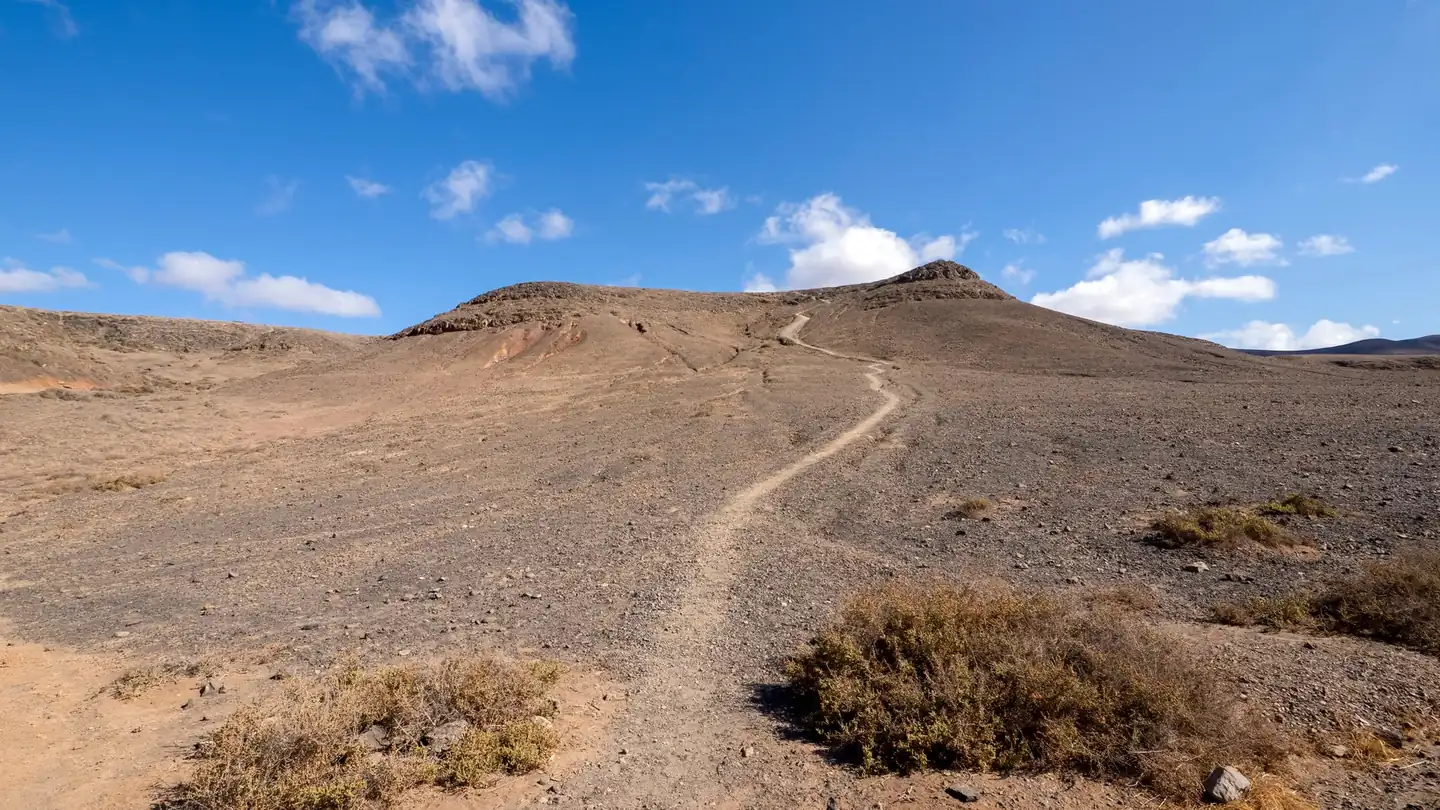
Transgrancanaria is one of the most recognizable trail races on the international calendar and, at the same time, one of the most demanding in terms of terrain, elevation gain, and duration. Born in Gran Canaria, it has gone from being a pioneering event in Spain to becoming a competition with several distances, worldwide coverage, and a very distinct identity shaped by volcanic mountains, ravines, and sudden changes of pace.
The classic race comfortably goes beyond the marathon format and enters full ultra-distance territory: recent official information lists it at 125 kilometers and 6,764 meters of positive elevation gain, while other editions and historical references have placed the course between 115 and 130 kilometers. That variation is not a minor detail, because it explains one of the race’s defining traits: the route changes frequently and each edition requires reading the map almost as if it were a new course.
A race that turned Gran Canaria into a map of endurance
Transgrancanaria’s importance cannot be understood only through its toughness. Its sporting value also comes from helping to consolidate trail running in Spain when it was still a much smaller and less visible discipline. It was one of the first ultramarathons in the country and, over the years, it has remained a benchmark for international-level runners, drawn by terrain that combines beauty and punishment in the same sequence.
Gran Canaria acts here as a total stage. The profile of the route moves between summits, tracks, trails, technical descents, and sections where mental effort matters as much as physical effort. Some races are decided by pure speed; this one, instead, is usually decided by the ability to manage energy, by tolerance to the heat or the pre-dawn cold, and by the skill to keep running when the terrain stops feeling friendly.
The race’s prestige also rests on its international reach. It is not an isolated event or a simple local ultratrail, but a race with athletes from many countries and ties to global trail circuits. That mix of island territory and worldwide showcase gives it a singular air: a competition that looks at the landscape, but also at rankings, strategy, and the ongoing comparison between generations of runners.
A format with several distances and very different audiences
Transgrancanaria is not limited to a single distance. The organization has gradually expanded the program to create an event with races designed for very different profiles, from those looking for a long ultra to those who prefer a shorter but equally technical effort. In the 2027 edition, categories include Classic 125 km, Advanced 81 km, Marathon 46 km, Half 23 km, Open Agáldar 21 km, Promo 12 km, Short 5 km, Family Trail 5 km, and KV El Gigante 5.5 km.
The variety is not just commercial or logistical. It responds to the very logic of modern trail running, where elites, experienced amateurs, and those beginning to approach the mountains from more accessible distances all coexist. The short race is not simply a minor showcase: in such a rugged environment, even five kilometers can feel like a full mountain session, with climbs that break the rhythm and sections where running means choosing every foothold very carefully.
The longest race remains the major prestige piece. The Classic, with 125 kilometers and a 30-hour cutoff in recent information, retains that aura of a huge challenge that attracts runners capable of spending almost a full day in motion. But the rest of the program helps build a full week of trail running, with staggered starts and a narrative that opens the event like a spiral: first the vertical kilometer, then the middle distances, and finally the main ultra.
The classic route: mountains, elevation, and reading the terrain
The Classic route is a lesson in geography applied to effort. The race traverses inland areas, summit villages, ravines, and sectors where the island changes its skin in just a few kilometers. In the recent official description, it is listed at 125 kilometers and 6,764 meters of positive elevation gain, a figure that is enough to understand why the race does not forgive mistakes. It is not just about accumulating meters, but about doing so on terrain that demands constant attention.
In ultratrail, elevation gain explains almost everything, but here there is another decisive factor: the variability of the course. Historical records are not exactly comparable because the route and distance can change from one edition to another. That complicates the reading of marks and records, but it also gives the competition character. Comparing times on a living course that is adjusted, lengthened, or narrowed requires looking beyond the stopwatch.
The organization describes the Classic as a race that takes the runner through a mix of physical and psychological sensations that unfold over the hours. The image is precise. In races like this, the body enters a state of permanent negotiation: climbing with controlled heart rate, descending without punishing the quadriceps too much, eating on time, drinking before thirst appears, and maintaining focus when night or fatigue turns the landscape into a succession of shadows and breaths.
The recent edition and a carefully designed schedule
The official 2027 schedule runs from February 22 to 28, with a staggered structure that distributes the effort strategically. Open Agáldar takes place on February 23, the vertical kilometer on March 4, the Half and Promo on March 5, the Marathon on March 6, and the Classic, Advanced, Short, and Family Trail on March 7. This layout allows the event to function almost like a small athletic festival, although the word festival falls short of describing the toughness of the terrain.
In events of this kind, the schedule matters as much as the course. The order of the distances shapes the atmosphere of each day and affects the presence of runners, volunteers, media, and spectators. The Classic usually draws the most attention, but the rest of the categories complete a sporting architecture in which each race has a role. The result is an event that is viewed through different lenses depending on the runner’s profile: ambition, debut, intermediate challenge, or simple exploration of the surroundings.
Also important is the fact that registration opens well in advance and that the event maintains a strong international component. In 2027, the organization announced that entries would open on July 1, a date that confirms the race’s interest in managing demand ahead of time. In mountain events of this scale, planning is not an administrative detail; it is part of the competitive experience, because runners usually organize months of preparation around a specific date and a very particular route.
Records, references, and the difficulty of comparing different years
Transgrancanaria records have relative value, because each edition can move important parts of the course. Even so, they help measure the level of the race and the caliber of those who have excelled in it. The most cited historical reference in the available information places the men’s best time at 12:42:40, set by Pau Capell in 2019 over 128 kilometers, and the women’s best at 14:40:39, achieved by Courtney Dauwalter in 2023, also over 128 kilometers.
Those records say much more than a number. Pau Capell and Courtney Dauwalter represent two ways of mastering ultra-distance: consistency, pace management, and a remarkable ability to survive accumulated wear and tear. In a race that changes so much, the record expresses not only speed; it expresses adaptation. It is not the same to run fast on a dry, technical route as it is to sustain that pace for hours on an island where the topography can turn from gentle to brutal in a matter of minutes.
It is worth remembering that comparisons between editions must be made carefully. The race’s own history warns that the routes are not identical from year to year, so the times are not perfectly comparable. That gives the event a very different character from urban races on fixed circuits. Here time matters, yes, but so does the ability to solve a course that is never quite the same.
Why it attracts trail runners so much
Transgrancanaria’s strength lies in the fact that it offers a complete challenge. Some races are tough because of elevation gain, others because of distance, and some because of climate. This one combines all three, and it also adds a visual element that appeals to mountain runners: the contrast between sea, summit, and volcano, between narrow trails and open horizons. It is a race that does not just ask for effort; it returns a very recognizable experience in the form of landscape.
For ultra-distance runners, that means leaving the one-dimensional logic of road running and entering a race where tactics constantly change. You have to read the runnable sections, accept the fast-walking zones, ration energy on long climbs, and avoid letting an aggressive descent damage the muscles too early. Much of its fame lies in that balance: having a strong engine is not enough; you have to know how to use it.
It is also influenced by the feeling of belonging to an event that has accumulated history over time. Since its first edition in 2003, the race has grown into a benchmark that is part of the imagination of European trail running. Deep down, these kinds of events function like sporting cathedrals: they are visited with respect, remembered for the suffering, and later retold with a mix of pride and relief.
The international dimension and the importance of the circuits
The presence of global circuits has reinforced the race’s position. In recent official information, the Classic appears linked to World Trail Majors, while other editions have been associated with the Spartan Trail World Championship. This connection to international structures multiplies visibility and raises the competitive level, because it attracts runners who fit very selective calendars.
For the island, this visibility has added value. Gran Canaria not only receives athletes; during those days it becomes a stage for sporting coverage, active tourism, and international conversation about mountains and endurance. The race leaves images of bibs, mud, stone, and sunrise, but it also leaves a mark on the territory’s sporting brand, which helps explain why the event has managed to endure and renew itself.
The effect is twofold. On the one hand, the race consolidates a community of fans who follow it year after year. On the other, it encourages new runners to discover trail running as a mix of physical challenge and travel. In that sense, Transgrancanaria does not just measure legs; it measures a place’s ability to become a sporting destination with its own personality.
What its evolution reveals about trail running in Spain
Transgrancanaria’s evolution sums up, to a large extent, the maturity of trail running in Spain. What began as a pioneering race has become a complex event, with different distances, strong international presence, and a very clear technical identity. Growth has not erased its essence; rather, it has refined it. It is still mountain running, but mountain running that speaks several sporting languages at once.
At a time when trail running has gained structure, sponsorship, and visibility, the Canary Islands race preserves something that sets it apart: the character of island and journey. Running there is not just competing in an ultradistance route; it is crossing a territory that requires measuring effort with a watchmaker’s precision and a climber’s patience. The combination of both worlds explains why the race continues to generate interest among professionals, amateurs, and followers of the international calendar.
Perhaps the most revealing detail is that balance between continuity and change. The race keeps its name, prestige, and personality, but adapts routes, fine-tunes distances, and expands categories without losing focus. In an era of crowded calendars, that ability to preserve identity while opening up to new formats is what makes Transgrancanaria more than just an ultra: a living laboratory of endurance on stone, wind, and elevation.
An event that continues to measure the pulse of ultratrail
Transgrancanaria continues to hold a central place on the trail map because it combines real toughness, a variety of formats, and a landscape that does not allow indifference. Its Classic remains the distance that draws the most attention, but the event as a whole offers a broader picture of what modern trail running represents today: spectacle, community, elite competition, and participation within the same framework.
The race also reminds us of something that is sometimes lost amid numbers and standings: in the mountains, each edition writes its own version. The kilometers change, the elevation gain is redistributed, and the times stop being absolute. What remains is the feeling of being in front of a big race, one that forces you to run smart, suffer methodically, and accept that, in Gran Canaria, the landscape is competing too.



Reebok runs large or small: a real fit guide

Hoka Challenger ATR 7 GTX: complete review of the all-terrain shoe

How to clean white sneakers without ruining them

Altus Pirineos 40-liter backpack: analysis, use, and key points

20,000 mm waterproof jacket for men: key points to get it right

Under Armour HOVR Sonic 6: complete review of the shoe

incline treadmills: guide to choosing better

Achilles tendonitis: real recovery time

Pain in the Achilles heel: causes, signs, and relief

What to take for calf pain: real relief and when to worry

 Races3 months ago
Valencia Half Marathon 2026: date and registration

 Reviews and Comparisons4 months ago
Asics Gel-Roadmiles 3 for men: review and current price

 Races3 months ago
Valencia Marathon 2026: entry, ballot and course

 Reviews and Comparisons4 months ago
Asics Gel Sonoma 8 Gore-Tex: complete analysis for trail and rain
- Sneakers3 months ago
Saucony Endorphin Pro 4: full review and verdict

 News5 months ago
Strava API 2026: what changes for clubs, challenges and runner apps?

 Reviews and Comparisons5 months ago
Nike Alphafly 3: opinions, sensations, and real key points

 Reviews and Comparisons4 months ago
Under Armour running shoes review 2025-2026: models and key features
- Sneakers4 months ago
Adidas Adizero Boston 13 for men: review and verdict

 Sports Equipment4 months ago
Shoe sizes in cm: a clear guide to getting the right fit for your footwear
- Sneakers3 months ago
Neutral running shoes with lots of cushioning: the best of 2026

 News4 months ago
Where is the Hoka brand from and why was it born in France