News
Gran Canaria trail races 2025: schedule, key points and events
The island brings together in 2025 a diverse mountain calendar, with ultras, technical circuits, and lots of elevation gain.

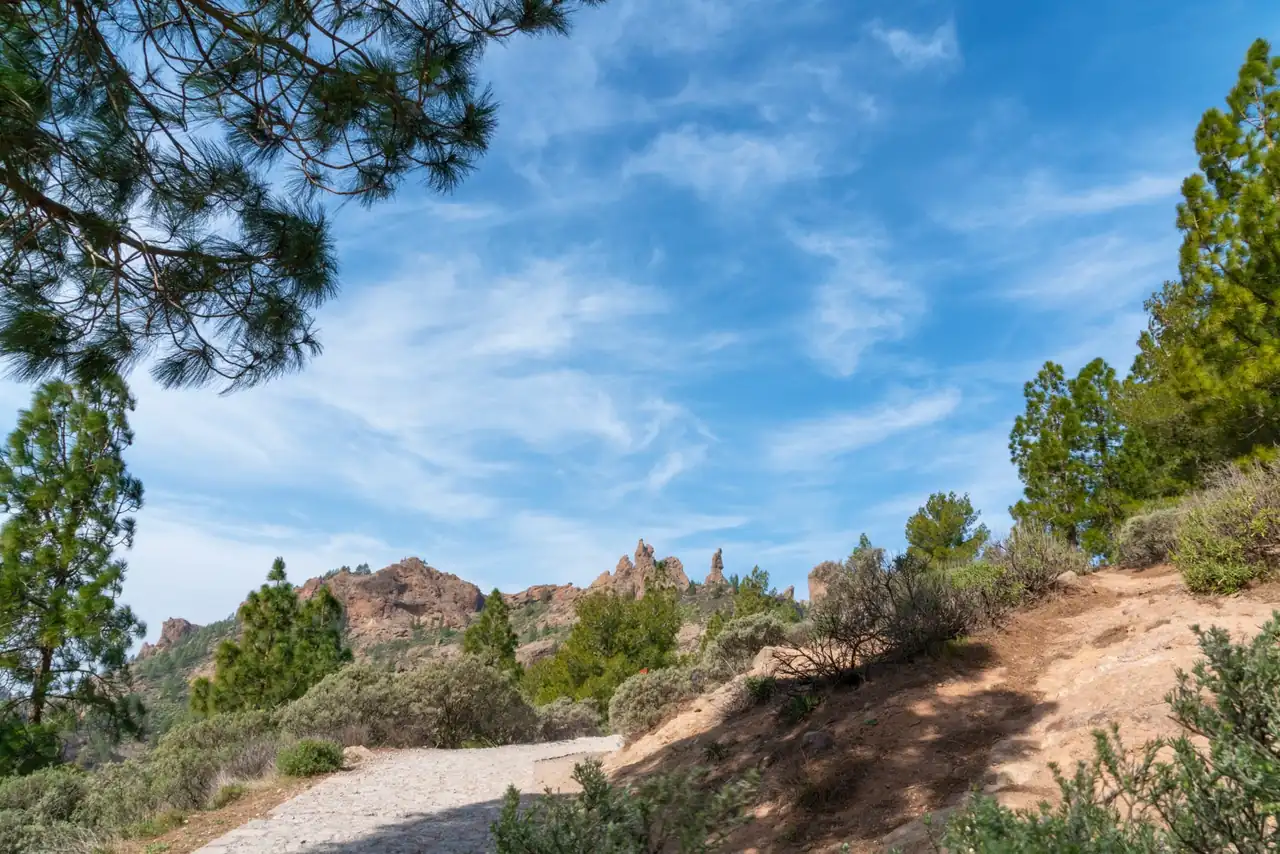
In 2025, Gran Canaria once again established itself as one of the most powerful settings in Spanish trail running. The island combines dry ravines, sharp ridges, volcanic tracks, and a climate that can change from one valley to the next in a matter of minutes. That contrast turns each race into more than a physical challenge: it is also a constant reading of the terrain, the light, and the wind.
The year offered a very clear snapshot of the state of trail running on the island. Mountain races are gaining weight, variety, and competitive level, from self-sufficient ultras to short but explosive courses, as well as popular events with deep local roots. Demand is explained not only by the landscape, but also by increasingly mature organization and by Gran Canaria’s ability to attract runners from within and beyond the archipelago.
A small island, enormous elevation gain
Gran Canaria’s uniqueness lies in its geography. In just a few kilometers, you go from the coast to the mountainous interior, and from there to areas where the trail narrows between rock, sand, and low vegetation. That mosaic means trail running here does not resemble that of other islands or the mainland. Runners rarely find a steady rhythm for very long.
Mountain races on the island usually demand a very specific mix of qualities. It is not enough to have strong climbing legs; you also need to descend safely, navigate when the route becomes confusing, and manage effort as if every kilometer were a reserve of water. In long events, navigation and mental resilience matter as much as fitness.
That technical profile explains why Gran Canaria has established a calendar with internationally prestigious races and others with a more popular vocation. Island trail running lives between epic drama and closeness: on one side, events of almost extreme toughness; on the other, races in which the local community takes center stage and the landscape becomes a shared stage.
The 360º The Challenge, the toughest benchmark
Among the flagship events, the 360º The Challenge Gran Canaria 2025 once again made it onto the international stage. The tenth edition took place from November 5 to 9 and brought together 107 participants from 22 nationalities, a record number for the race. The organizers had to respond to a wildfire risk alert and moved the start from Tejeda to the Jardín Canario in Las Palmas de Gran Canaria, with the race beginning at 3:30 p.m.
That change altered the planned script without reducing the overall difficulty. The course was shortened from 265 to 222 kilometers, but still kept more than 10,000 meters of positive elevation gain. In a race of this kind, numbers are not just statistical data: they outline a day that can stretch over two nights and turn every descent into a negotiation with fatigue. The 2025 route once again showed that mental endurance matters here just as much as physical strength.
José Bordón, a runner from Agüimes, became the first Canarian to win the race after completing the effort in 40:47:53. His victory carried enormous symbolic value within island trail running, not only because of the win itself, but because it broke a historic barrier in a race dominated until then by international names. In the women’s category, Anita Lehmann won in 55:15:11, while Nira Castro and Guacimara Suárez completed a podium of major local significance.
Beyond the results, this edition offered a very precise picture of what this discipline means on the island. Route finding on volcanic terrain, sleep management, nutrition, and reading the ravine are all part of the same effort. In a race without conventional markers and with especially technical sections, a small mistake can be very costly.
Tejeda, Chira, and the technical language of the terrain
Tejeda remains one of the great symbols of trail running in Gran Canaria. Its surroundings neatly summarize the island’s character: compact mountains, clear horizons, unforgiving gradients, and a landscape that changes with the time of day. It is no coincidence that so many major races have their epicenter there or pass through the area. Tejeda functions as a natural capital of Gran Canarian trail running.
In the 360º, one of the decisive sections was once again the Chira ravine. There, several favorites went off course, and that detail recalled something essential: in Gran Canaria, navigation technique can decide an entire race. The terrain may seem friendly from the outside, but in competition it becomes a maze of landmarks, shadows, and paths that are not always read the same way in the beam of a headlamp or moonlight.
That technical dimension shapes the island’s entire mountain calendar. The races are not limited to adding kilometers and elevation gain; they demand attention, spatial memory, and an almost handcrafted relationship with the terrain. Those who compete here learn that the trail is not always the most visible one and that, in certain areas, the clock matters less than the ability not to lose the route.
Beyond the ultra: the pulse of shorter races
Gran Canaria 2025 was not only the territory of major ultra distances. The island’s trail scene is also fueled by middle- and short-distance races, where the pace is livelier and the margin for error smaller. In that segment, events such as Fenix Trail Gran Canaria stand out, with variants of around 12.5 and 20 kilometers and elevation profiles that force runners to race smart from the very first climb.
This kind of race has important value for the calendar because it opens the door to more runner profiles. Not all Gran Canarian trail running is defined by extreme endurance. There is also room for those seeking an intense mountain experience, but one that is more contained in duration, with fast trails, short climbs, and descents that punish the legs if attacked without restraint.
The variety of formats strengthens the sport’s base on the island. A broad program allows trail running to avoid becoming an elite showcase. It builds a more solid community, with first-timers, amateurs, and specialists sharing territory, language, and reference points. And in the long run, that is what gives stability to a competitive calendar.
What the 2025 calendar reveals
Looking at the race map in Gran Canaria during 2025, a clear trend emerges: the island combines tradition, toughness, and a growing professionalization of sporting events. Some races remain closely tied to local identity, while others are already moving in a more international orbit, with runners traveling there drawn by the technical prestige of the terrain.
Trail running’s importance is not limited to a single event. It is spread across different municipalities and times of year, which helps avoid saturation and allows each race to have its own character. In practice, this offers runners a calendar with different layers: fast courses, explosive routes, self-sufficient ultras, and events that mix mountain running with a social dimension.
The key to Gran Canaria is that it does not sell a single image of trail running. The island can be tough, yes, but also welcoming at the start, photogenic on the coast, and spectacular at its highest points. That diversity means runners do not encounter a repeated experience, but a set of races with their own personality. In an increasingly homogenized calendar elsewhere, that makes all the difference.
Women’s participation, local presence, and social dimension
Another hallmark of 2025 was the advance of women’s participation in the most demanding races. The 360º The Challenge registered eleven women on the start line, the highest figure in its history, and seven managed to finish. That matters because it reflects a broader and more visible sporting base, something Canarian trail running has been building patiently.
The social dimension was also very present in other races held on the island. Trail running in Gran Canaria is measured not only by podiums and stopwatches; it is also measured by its ability to create community and make room for diverse profiles. In popular races, the mix of ages, backgrounds, and levels creates a different atmosphere, less hierarchical and more collective.
The presence of local runners in standout positions also strengthens the calendar’s identity. The success of Canarian names in extremely tough events has both sporting and symbolic value. It is not just about racing at home, but about proving that the island’s level can measure up against any international circuit.
How Gran Canarian trail running is understood from the outside
Those who come to Gran Canaria to compete usually discover something that is not always visible on maps: the race is shaped by topography, but also by the culture of the place. Mountain villages, ravines, viewpoints, and the relationship between coast and interior create a very recognizable experience. Trail running here has landscape, but it also has character.
From the outside, it may seem that all mountain races on the island follow the same pattern. However, there is a clear difference between a self-sufficient ultra, a technical middle-distance race, and a popular event by the sea. Elevation gain connects them, but the format completely changes the type of effort required. In some, strategy dominates; in others, the ability to sustain a lively pace without losing precision.
That is why Gran Canaria has become a benchmark not only for the beauty of its surroundings, but for the variety of stimuli it offers runners. On the island, you can build an entire trail season without repeating exactly the same experience. That is one of the reasons interest kept growing in 2025 both inside and outside the Canaries.
A calendar that now competes with the great mountain destinations
Gran Canaria’s place on the trail running map is neither accidental nor temporary. The island has used its terrain to build a differentiated sporting offer, with races that attract runners both for their toughness and their setting. In a market where many races compete for attention, identity becomes a decisive advantage.
The island offers something difficult to replicate: mountains, variable temperatures, technical sections, and the incentive of running in a territory that forces you to look beyond the asphalt. It is not a backdrop; it is a leading actor. And in 2025 it became clear that trail races in Gran Canaria have earned a stable place on the national and international calendar.
What comes next will depend on the ability to keep nurturing that mix of challenge, safety, and authenticity. But the balance is already solid. Gran Canaria does not just host mountain races: it turns them into a way of reading the island. And that is probably why each new edition continues to draw so much attention from runners and fans alike.
Este artículo contiene enlaces de afiliado: si compras a través de ellos, se genera una pequeña comisión sin coste adicional para ti. Más información.



How to prevent thigh chafing: causes and real solutions

Women’s running windbreakers: seven jackets and how to choose

Do more workouts get rid of soreness? A guide for runners

Jaén Half Marathon 2026: Record 3,800 Runners Registered

Men’s short running tights: how to choose the right pair

World Triathlon confirms data breach involving medical data

Izan Edo targets podium at Miyazaki World Cup

María Pérez ranks ninth in World Athletics’ 2026 top ten

Dos Santos, Duplantis and Sawe: World Athlete of the Year finalists

San Silvestre Vallecana 2026: 42,000 places, prices and start times

 Races3 months ago
Valencia Half Marathon 2027: date and registration

 Races3 months ago
Valencia Marathon 2026: entry, ballot and course

 Reviews and Comparisons4 months ago
Asics Gel-Roadmiles 3 for men: review and current price

 Reviews and Comparisons4 months ago
Asics Gel Sonoma 8 Gore-Tex: complete analysis for trail and rain

 Sneakers3 months ago
Saucony Endorphin Pro 4: full review and verdict

 News5 months ago
Strava API 2026: what changes for clubs, challenges and runner apps?

 Reviews and Comparisons5 months ago
Nike Alphafly 3: opinions, sensations, and real key points

 Reviews and Comparisons4 months ago
Under Armour running shoes review 2025-2026: models and key features

 Sports Equipment4 months ago
Shoe sizes in cm: a clear guide to getting the right fit for your footwear

 Sneakers3 months ago
Skechers GO RUN Consistent 2.0 analysis: comfort and limits

 News5 months ago
Valencia Marathon 2026 route: key tips to train and run better

 Sneakers4 months ago
Adidas Adizero Boston 13 for men: review and verdict