Races
TriXàbia Memorial Edu Monfort 2026: date, distances, and prices
The Xàbia race returns on September 27, 2026, with sprint, Olympic, relay, and tiered fees.

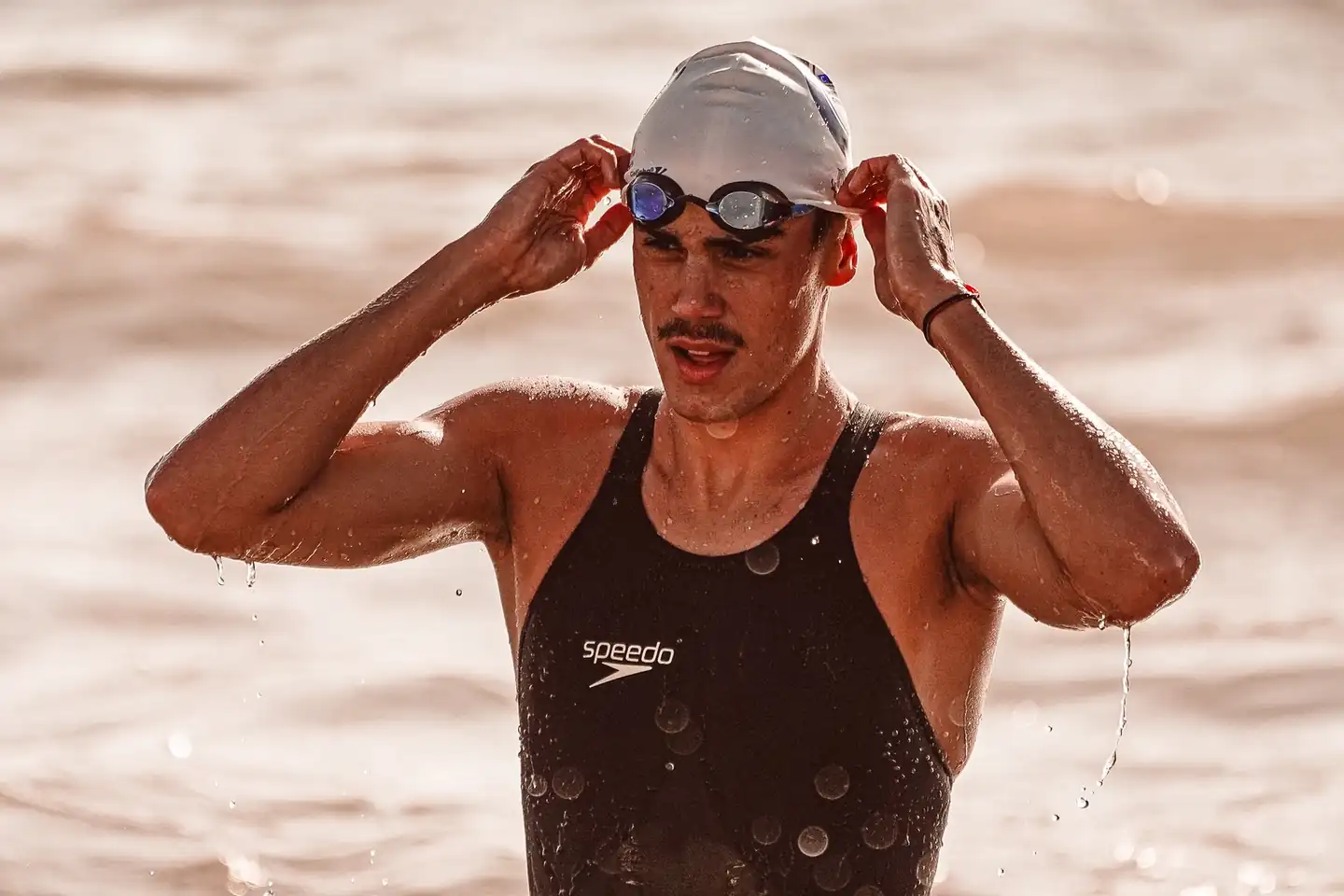
The TriXàbia Memorial Edu Monfort will once again bring together hundreds of triathletes on Arenal beach in Xàbia on Sunday, September 27, 2026, with a start at 8:30 and a program that combines sprint, Olympic and relay distances. The event is now well established on the Valencian calendar and carries special weight for those looking for a competition by the sea, fast in the swimming leg and strongly marked by the early autumn atmosphere on the Marina Alta coast.
The 2026 edition keeps the format that has helped the race grow in recent years: an event with its own identity, organized by CE Llebeig and managed for registration through the Triathlon Federation of the Valencian Community. The setting does not change the essentials, because Arenal remains the reference point: an open beach, a recognizable course and an environment that blends sport, tourism and local tradition in a single morning.
An event that already carries weight on the Valencian calendar
The Xàbia triathlon is no longer just a novelty on the schedule, but one of those events that have earned a reputation through a string of good editions. The organization itself and local buzz present it as a benchmark event, with participation that in 2025 exceeded 700 entries and a notable presence of athletes from outside the area. That figure speaks not only to volume; it also says a lot about the race’s ability to attract different profiles, from first-timers to experienced circuit triathletes.
The 2026 edition maintains that sports-showcase logic. The Olympic and sprint formats allow the event to work as a gateway for those making their triathlon debut, but also as a serious target for those looking to push hard over a short, demanding course. On the coast, the distance may look friendly on paper; on the ground, the water, transitions and final run usually put everyone in their place.
The date also gives it a very particular profile. At the end of September, Xàbia still retains light, warmth and a humidity that can make the effort harder than the calendar suggests. It is neither a winter race nor an extreme-heat event, but it is a competition that demands good pace management from the very first meter, especially in the swim-bike combination.
The course and distances that are drawing the focus
The organization has confirmed the Olympic, sprint and relay formats. The available information keeps the Olympic race as the central event, while the sprint offers a more compact and accessible version for a broad base of participants. The relays, meanwhile, add a tactical and social element that has gained ground in mass-participation triathlon: teams of two or three people, each responsible for part of the effort.
In 2025 it was already explained that the relays were limited to the Olympic distance and that men’s, women’s and mixed teams could compete. That model has become one of the event’s draws, because it allows the physical load to be shared, brings more people into the experience and turns an individual race into a kind of small choral relay, with more room for strategy and less dependence on one person’s moment of form.
The Xàbia triathlon keeps the usual course, with swimming, cycling and running linked within the same reference area. Arenal beach, because of its layout and visibility, provides a highly recognizable start for the public and a powerful image for athletes: the sea ahead, the bike afterward and the final run with fatigue already spread through the whole body. That apparently simple design is part of its appeal.
The run is usually the segment that exposes the day’s sensations most clearly. After swimming and cycling, any slight overexertion is paid for with heavier strides, and on a coastal course every turn, every patch of shade and every straight section matters more than it seems. In that sense, the race is a good summary of modern triathlon: fast in the head, but demanding in the details.
Schedule, registration and fees for the 2026 edition
The official information sets the start at 8:30 on Sunday, September 27, 2026, at Platja de l’Arenal, in Xàbia, province of Alicante. Registration opened on May 27, 2026 at 17:00 and closes on September 20, 2026 at 23:59, although previous editions suggest that bibs may sell out earlier if demand follows the pattern of past years.
Fees are structured by format and license type, with price bands increasing as the race date approaches. In the Olympic distance, TRICV-licensed athletes start at 45 euros and rise to 55 euros; athletes licensed in another region go from 48 to 58 euros; and non-licensed participants from 54 to 65 euros. For Olympic relays, the price ranges from 90 to 100 euros per team.
In the sprint, TRICV-licensed athletes pay from 35 euros to 45 euros, athletes licensed in another region between 38 and 48 euros, and non-licensed participants between 44 and 55 euros. These are typical figures for triathlons of this level, but here they make sense because of the setting, the volume of participation and the appeal of racing at a highly recognizable coastal venue. Registration, moreover, does not include management fees, a detail worth keeping in mind when calculating the total cost.
The step-by-step price increase makes one thing very clear: booking early is better than waiting. That is not unique to Xàbia, but it is a well-established practice in Spanish triathlon, where demand concentrates around events with a strong image, good logistics and a course that does not need much explanation to sell itself.
An event designed to debut, repeat and measure form
One of the reasons the race has grown is its ability to accommodate very different profiles. Some athletes arrive in Xàbia looking for a first real triathlon experience, while others want a solid event to close out the season. That mix works because the event does not force a single narrative: it allows you to race for a time, for sensations, for a debut or simply for the pleasure of finishing a demanding race in a beautiful setting.
In 2025, the organization highlighted that the Memorial Edu Monfort has become a kind of gateway for many athletes into triathlon. That idea remains valuable in 2026. Triathlon, with its three segments and transitions, can seem complex from the outside; however, when the event is well put together, the sport almost organizes itself. A good course, clear schedules and a concentrated start reduce the noise and put the essentials front and center: swim, bike and run without losing your head.
The inclusion of the relays also widens that gateway. Sharing the race among several people lowers the psychological barrier of facing all three disciplines alone and, at the same time, makes the day a more social experience. In races like this, the team does not replace individual effort; it reinterprets it. Each relay leg carries the responsibility of holding the pace and not breaking the chain.
That model explains why coastal events with good organization often become established faster than others. They do not just offer a stopwatch; they offer a story. And in triathlon, where suffering is part of the deal, the setting can make the difference between a dull day and a morning remembered for months.
The weight of the setting: Arenal, sea and a relentless calendar
Xàbia has an obvious strength: the landscape. Arenal beach needs no embellishment, because it already offers a recognizable and spacious postcard, useful for the public and functional for the race itself. In a sport where every transition must flow like a well-oiled assembly line, space matters just as much as elevation or wind. A clean, open environment reduces friction and gives the event more visual rhythm.
The province of Alicante has a strong relationship with triathlon, and Xàbia has known how to make the most of that context without losing its own personality. Its event is not competing on location alone; it is competing on identity. That balance between tourism and sport, between calendar and beach, is what sustains many Mediterranean events that want to go beyond the summer showcase.
The 2026 date also works in the competition’s favor. By late September, tourist traffic is lower than in August, but the temperature remains pleasant for spectators and challenging enough for those pulling on a wetsuit, hopping on a bike and starting to run with heads still wet. It is a point in the year when the body is neither as fresh as in spring nor punished by the cold; it sits in an in-between territory that requires careful effort management.
That is why the race is not understood simply as one more event on the calendar. It is a competition with a very specific personality: coastal, fast, accessible and with that mix of demand and spectacle that makes triathlon more than just the sum of its sports. In Xàbia, the sea is not a backdrop. It is the first judge.
The memory of Edu Monfort and the value of a race with its own name
The Memorial Edu Monfort brings an emotional weight that goes beyond the final standings. Events with their own name often sustain a collective memory, and in this case the race has grown to unite that remembrance with a very marked sporting identity. It is not an ornamental add-on: it is part of what explains the loyalty of clubs, athletes and volunteers.
The continuity of the memorial gives the event a different tone from a purely commercial competition. There is a bond with the local community, with the people who set up, mark out, control and cheer. In 2025 the organization highlighted precisely the role of volunteers and collaborators, an element that at events of this size often goes unnoticed by those who only see the finish arch, but which supports every detail of the day.
The result is a race with a double reading. On one hand, it stands out as a high-level sporting event, with official distances, defined fees and logistics that place it on the map. On the other, it retains a sense of memory and belonging that makes it different. That balance cannot be bought with marketing; it is built through years of consistency, edition after edition, until the name becomes fixed in the regular conversation of triathletes in the area.
Looking ahead to 2026, the race arrives with a familiar structure and an interest that does not depend on surprise. The important thing is no longer discovering what it is, but understanding why it keeps working: because it is well located, because it offers several entry points, because it combines atmosphere and demand, and because Xàbia provides the perfect setting for triathlon to be seen, felt and remembered.
A morning that sums up why triathlon is so addictive
The TriXàbia Memorial Edu Monfort condenses almost the entire essence of triathlon into a few hours: the silence before the start on the beach, the tension in the water, the sharp sound of the bike and the final run when fatigue has already emptied the legs but there is still enough left to push hard. That sequence, repeated in thousands of races around the world, takes on a special shine here because of the location and the way the race has carved out its place.
September 27, 2026 will be more than just another date on the sports calendar of the Valencian Community. It will be a morning of watches, wetsuits, transitions and spectators at Arenal, with an event that combines very concrete details — schedules, prices, formats, registration deadlines — with something less measurable and more lasting: the feeling that some races end up defining a town just as much as the town defines them.
That is the true value of a race like this. It does not just occupy a slot on the schedule; it leaves a mark on the beach, in the clubs, among those making their debut and among those returning for a better time. And in an increasingly crowded calendar, that kind of identity is worth as much as the bib number.
You may also like: TriXilxes #SINDRAFTING 2027: date, route, and registration.



How to prevent thigh chafing: causes and real solutions

Women’s running windbreakers: seven jackets and how to choose

Do more workouts get rid of soreness? A guide for runners

Jaén Half Marathon 2026: Record 3,800 Runners Registered

Men’s short running tights: how to choose the right pair

World Triathlon confirms data breach involving medical data

Izan Edo targets podium at Miyazaki World Cup

María Pérez ranks ninth in World Athletics’ 2026 top ten

Dos Santos, Duplantis and Sawe: World Athlete of the Year finalists

San Silvestre Vallecana 2026: 42,000 places, prices and start times

 Races3 months ago
Valencia Half Marathon 2027: date and registration

 Races3 months ago
Valencia Marathon 2026: entry, ballot and course

 Reviews and Comparisons4 months ago
Asics Gel-Roadmiles 3 for men: review and current price

 Reviews and Comparisons4 months ago
Asics Gel Sonoma 8 Gore-Tex: complete analysis for trail and rain

 Sneakers3 months ago
Saucony Endorphin Pro 4: full review and verdict

 News5 months ago
Strava API 2026: what changes for clubs, challenges and runner apps?

 Reviews and Comparisons5 months ago
Nike Alphafly 3: opinions, sensations, and real key points

 Reviews and Comparisons4 months ago
Under Armour running shoes review 2025-2026: models and key features

 Sports Equipment4 months ago
Shoe sizes in cm: a clear guide to getting the right fit for your footwear

 Sneakers3 months ago
Skechers GO RUN Consistent 2.0 analysis: comfort and limits

 News5 months ago
Valencia Marathon 2026 route: key tips to train and run better

 Sneakers4 months ago
Adidas Adizero Boston 13 for men: review and verdict