Races
Ultra Pirineu 2025: date and distances
The great Bagà race combines high mountains, wild elevation gain, and an atmosphere that stands out on the trail calendar.

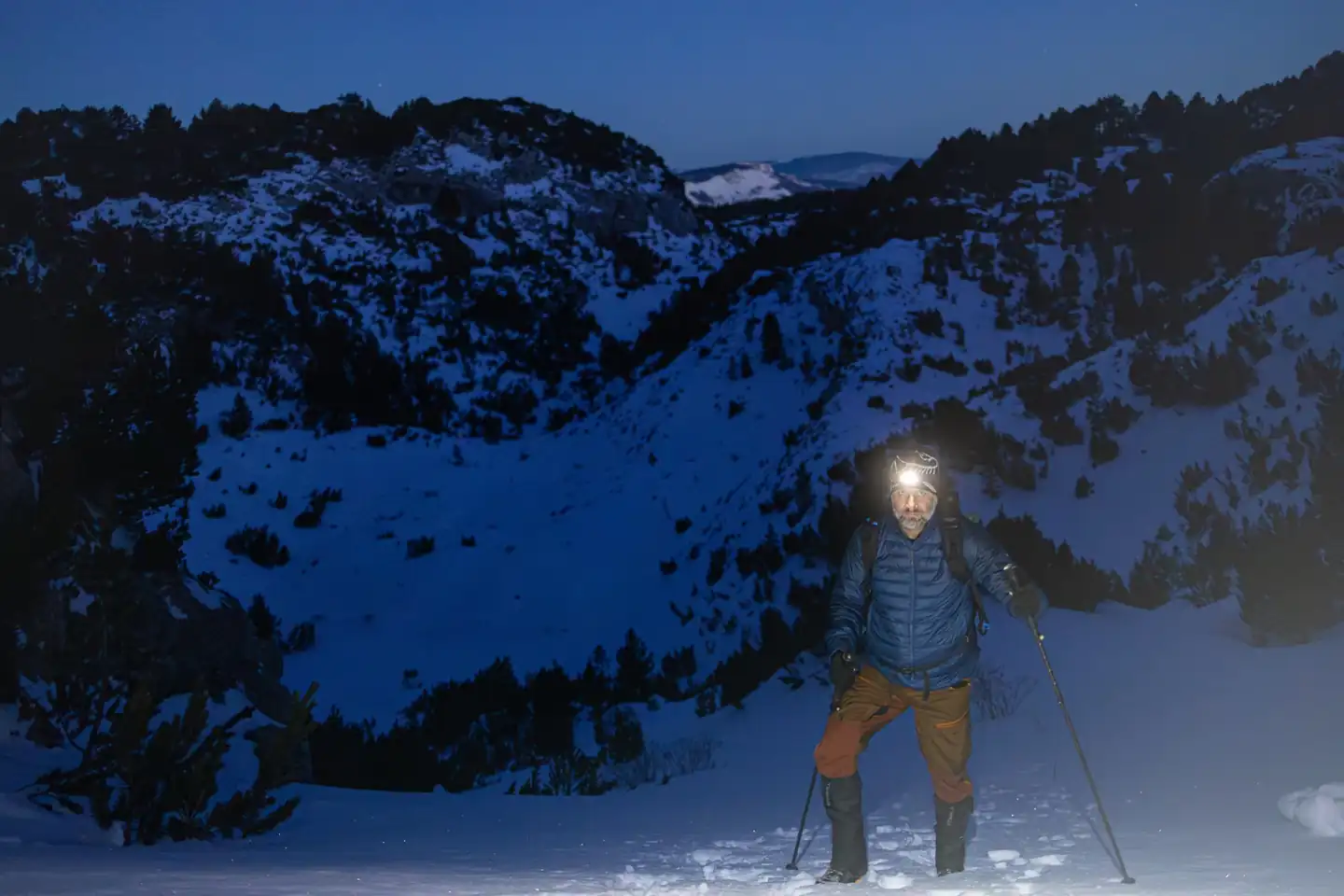
The Salomon Ultra Pirineu has established itself as one of the most recognizable mountain races on the European calendar for a simple reason: it brings together, in Bagà and right in the heart of Berguedà, technical terrain, altitude, elevation gain, and the atmosphere of a major event unlike that of a city race or a conventional marathon. Its flagship distance, close to 100 kilometers and about 6,600 meters of positive elevation gain, creates a long, changing, and highly demanding day in Cadí-Moixeró Natural Park.
The race was born with another identity, first known as Cavalls del Vent, and since 2014 it has adopted its current name. Since then, it has gained international stature and reinforced a very distinctive image: high-mountain trails, start and finish in Bagà, passage through highly recognizable spots in the massif, and a field that mixes recreational runners, ultra-distance specialists, and trail elite athletes. Much of its prestige can be explained by that combination.
A setting that makes Bagà and Cadí-Moixeró unique
Bagà is not just a logistical hub; it is part of the race’s story. The old town, Plaça Porxada, and the narrow streets filled with headlamps at dawn create a very powerful, almost ceremonial image when the effort begins. Over the weekend, the town becomes a kind of trail base camp, with constant movement, runners, companions, volunteers, and excitement around the different starts and finishes.
The setting of Cadí-Moixeró Natural Park raises both the difficulty and the visual appeal. The race moves through mountain forests, open passes, tracks, rocky trails, and sections where the elevation gain forces every stride to be managed carefully. It is not just a postcard backdrop; it is terrain that takes its toll. Passing through places like Niu de l’Àliga or ridge sections perfectly captures that balance of beauty and toughness that defines the event.
That contrast explains why the race attracts so many runners from outside Catalonia and Spain. Here, the mountains are not a background element, but the core of the experience. Anyone arriving in Bagà faces a race in which the landscape does not soften the challenge, but intensifies it. Altitude, changing weather, and the Pyrenean terrain add layers of difficulty that make each edition a different test.
The distances that shape the weekend
The event is organized into several categories for different profiles and levels, although the one that usually draws the most attention is the 100K Ultra. Alongside it coexist the mountain marathon, the half marathon, and the night vertical kilometer, which is usually held in La Molina and climbs to the Niu de l’Àliga refuge. This structure turns the event into a multi-day gathering rather than a single isolated race.
The ultra is the flagship event, with an approximate course of 100 kilometers and a cumulative elevation gain of around 6,600 meters. The marathon, which in recent editions has been around 42 or 43 kilometers and close to 2,700 to 2,900 meters of positive elevation gain, retains the alpine character of the main race, but in a shorter format. The half marathon offers a less extreme entry point without leaving behind the mountainous and technical terrain.
The vertical kilometer provides a different, explosive, and highly concentrated challenge. Its profile of about 5 kilometers and 860 meters of elevation gain sums up what a continuous mountain climb demands: strength, power, and the ability to sustain effort. Even though it is shorter, it should not be seen as a lesser option; in reality, it is a race that requires a specific and highly refined type of preparation.
How it became an international benchmark
The reach of the Salomon Ultra Pirineu is explained not only by its landscape or the prestige of its organization. It also comes from the presence of top-level athletes and its integration into international circuits such as the Skyrunner World Series at different stages of its history. Names like Kilian Jornet, Miguel Heras, Luis Alberto Hernando, Núria Picas, and Jonathan Albon have left their mark on the race, and that continuity has helped cement its status as a benchmark.
Historical results help explain this evolution. In recent editions, the race has seen very convincing victories, fast times, and remarkable competitive depth. In 2025, for example, Jonathan Albon won the men’s ultra in 10:40:02, while Anna Ongaro won the women’s category in 12:58:47. These times reflect both the level of the favorites and the relative speed of a course that gives no respite, even when the terrain is favorable in some sections.
That competitive level does not erase the popular side of the event. On the contrary, it makes it more visible. Bagà brings together thousands of participants, and the atmosphere at the aid stations and at the finish shows that Ultra Pirineu also works as a celebration of trail running in the broadest sense. The elite sets the pace, but the collective story is built by hundreds of finish-line stories, withdrawals, comebacks, and acts of survival in the mountains.
The real toughness of the race, beyond the distance
Talking about the Salomon Ultra Pirineu only in terms of kilometers would be missing the point. What sets it apart from other ultras is the combination of elevation gain, technical terrain, duration, and altitude. A 100-kilometer race may sound like a familiar figure, but when it comes with more than 6,000 meters of cumulative climbing and demanding mountain sections, the result feels more like a test of endurance than a simple steady-paced competition.
Positive elevation gain changes the equation completely. It not only punishes the legs and hips; it also disrupts effort management. On long climbs, cadence breaks down. On steep descents, impact accumulates. And when the route repeatedly goes above 2,000 meters, breathing and perceived effort can vary much more than the average pace on the watch suggests.
That is why the race demands more than aerobic endurance. It requires strength in the quadriceps, glutes, and calves, trunk stability, downhill experience, and mental tolerance for the passage of hours. Fatigue here does not arrive all at once; it settles like fine dust over the legs and the mind. Anyone who has lived it knows that a race like this is more like hauling a heavy backpack uphill than running in the classic sense of the word.
Equipment and logistics that cannot be improvised
In a race of this kind, gear is not an accessory; it is part of safety. The organization usually requires in the ultra items such as a mobile phone, drinking container, thermal blanket, whistle, headlamp with spare batteries, windproof or waterproof jacket with hood, buff, emergency food, and a minimum of 1 liter of water. A backpack, small first-aid kit, and depending on the distance, other basic safety items are also recommended.
The logic is simple: the mountains change quickly. A runner may start under clear skies in Bagà and, hours later, encounter wind, cold, or fog at higher elevations. Self-sufficiency and foresight matter as much as fitness. In addition, the duration of the ultra means thinking about the race as a sequence of decisions: when to eat, when to drink, when to lower the heart rate, when to save energy, and when to push harder.
The logistics for companions, support, and aid stations are also part of the event’s appeal. The organization provides marked routes, checkpoint stations, and services designed for a long and spread-out race. In the longer categories, cutoff times require each section to be managed wisely. In recent editions, an approximate limit of 26 hours and 30 minutes has been used for the 100K, with tighter cutoffs in the shorter distances.
What is happening in 2025 and what is already emerging for future editions
The 2025 edition confirmed that the race remains both competitively alive and a sporting spectacle. The ultra start, at 5:30 in the morning in Bagà, brought together nearly 1,300 participants in an electrifying setting. Jonathan Albon took command in the second half of the course and ultimately won by a small but clear margin over Marc Bernades and Julen Calvó. In the women’s race, Anna Ongaro’s victory came after a very solid comeback built on patience and race reading.
The marathon showed the same pattern again: fast starts, tactical battles, and small gaps at the finish. Miquel Corbera won with relative authority in a distance that, despite being shorter than the ultra, remains very demanding. There too, it was clear that Ultra Pirineu does not reserve the drama for the long race; even the middle distances retain the pure mountain stamp.
The 2026 edition is already on the horizon with the usual early-October calendar and the core of the program centered on Bagà, La Molina, and Cadí-Moixeró. Interest has not faded: the combination of landscape, prestige, and sporting level sustains an event that year after year remains deeply meaningful for trail running. More than a trend, it has become a stable reference point within the mountain autumn.
Why this race matters so much in the trail calendar
The importance of the Salomon Ultra Pirineu lies not only in its commercial name or accumulated fame. Its value is that it offers a very clear synthesis of what European mountain trail running represents today: technical courses, altitude, community, international elite, and increasingly professional logistics. In Bagà, runners seeking to finish with dignity and athletes fighting for seconds cross paths. That kind of coexistence rarely happens so naturally.
Its ability to stand the test of time without losing identity also matters. The race has changed names, adjusted distances, and expanded its media coverage, but it has retained a recognizable essence. The first light of day over the Pyrenees, the sound of footsteps on stone, the crowd’s breath in the town center, the fatigue on the final descents; all of it still creates a scene that is very hard to replace with any other event on the calendar.
In that sense, Ultra Pirineu works almost like a barometer for the state of trail running. When the race shows high participation, fast times, and international presence, it is also signaling the health of a discipline that has moved beyond the margins. And when an edition is decided by falls, withdrawals, or unexpected changes at the front, it once again reminds us that the mountains do not accept pretense. There, the showcase lasts only a short while, and the terrain rules.
An event that measures ambition, endurance, and respect for the mountains
The Salomon Ultra Pirineu is not simply a longer or tougher race than others. It is an event that forces us to understand trail running as a balance between ambition and respect, between planning and adaptation, between speed and survival. Bagà provides the human scale; Cadí-Moixeró, the wild dimension; and recent history, the sporting legitimacy.
That is why its appeal is not limited to podiums and big names. It is also found in the image of a runner entering the old town at night, in the endless climb that breaks rhythm, in the fog that transforms the landscape, in the headlamp moving like a firefly along the slope. All of that explains why, year after year, this race continues to occupy such a visible place on the Spanish and European trail map.
In an era when many races look too similar to one another, this one retains a strong identity. It has real mountains, it has history, it has toughness, and it has a community that recognizes it as its own. That rare and valuable mix is what turns Ultra Pirineu into much more than a sporting event: it places it among the great races that help define modern trail running.



How to prevent thigh chafing: causes and real solutions

Women’s running windbreakers: seven jackets and how to choose

Do more workouts get rid of soreness? A guide for runners

Jaén Half Marathon 2026: Record 3,800 Runners Registered

Men’s short running tights: how to choose the right pair

World Triathlon confirms data breach involving medical data

Izan Edo targets podium at Miyazaki World Cup

María Pérez ranks ninth in World Athletics’ 2026 top ten

Dos Santos, Duplantis and Sawe: World Athlete of the Year finalists

San Silvestre Vallecana 2026: 42,000 places, prices and start times

 Races3 months ago
Valencia Half Marathon 2027: date and registration

 Reviews and Comparisons4 months ago
Asics Gel-Roadmiles 3 for men: review and current price

 Races3 months ago
Valencia Marathon 2026: entry, ballot and course

 Reviews and Comparisons4 months ago
Asics Gel Sonoma 8 Gore-Tex: complete analysis for trail and rain

 Sneakers3 months ago
Saucony Endorphin Pro 4: full review and verdict

 News5 months ago
Strava API 2026: what changes for clubs, challenges and runner apps?

 Reviews and Comparisons5 months ago
Nike Alphafly 3: opinions, sensations, and real key points

 Reviews and Comparisons4 months ago
Under Armour running shoes review 2025-2026: models and key features

 Sports Equipment4 months ago
Shoe sizes in cm: a clear guide to getting the right fit for your footwear

 Sneakers3 months ago
Skechers GO RUN Consistent 2.0 analysis: comfort and limits

 News5 months ago
Valencia Marathon 2026 route: key tips to train and run better

 Sneakers4 months ago
Adidas Adizero Boston 13 for men: review and verdict