Races
Val d’Aran 2026: date and location
Dates, distances, prices, and requirements for one of the toughest and most prestigious trail races in the Pyrenees.

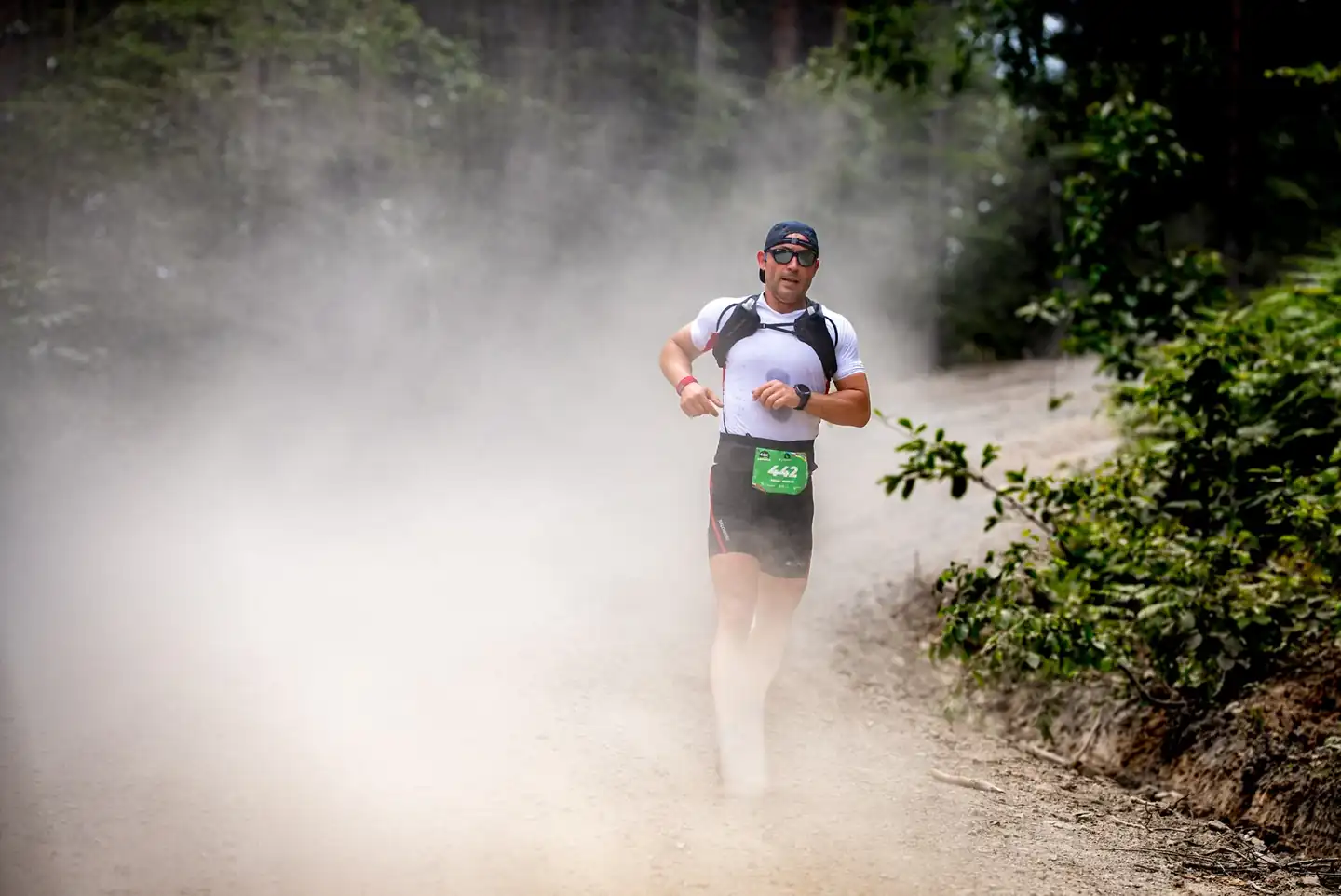
Val d’Aran is once again taking center stage in European trail running with a high-mountain week that blends toughness, scenery, and competitive ambition. The 2026 edition of HOKA Val d’Aran by UTMB® will take place from 1 to 5 July, with the start and race atmosphere in Vielha and a program that ranges from 10 kilometers to 163 kilometers.
This is not an event for long-distance first-timers. The organizers stress that the terrain is demanding, semi-self-sufficient, and subject to strict time cutoffs, a formula that forces runners to manage effort, gear, and pace precisely. More than just a medal is at stake: the race awards Running Stones, direct spots for the UTMB World Series Final in the upper categories, and huge visibility within the international calendar.
A week of trail running in the heart of the Pyrenees
Vielha and the Aran Valley provide a setting that on its own explains the appeal of this race. The route ventures into the Catalan Pyrenees with passes, ridges, forests, and high areas where the terrain changes mood in a matter of minutes. Added to that geography is the usual July heat, a variable that turns hydration and pace management into a matter of sporting survival rather than mere performance.
The race has established itself as one of the great mountain weeks of the summer thanks to its combination of volume, altitude, and international presence. In the most recent edition, more than 6,000 runners from 80 nationalities took part, a figure that illustrates the event’s magnetism well. It is not just a local competition with reach, but a European gateway to the UTMB universe, with the added value that finishers receive a double reward in the ranking system.
That competitive weight is also reflected in the kind of runner who gathers in Aran. There is elite competition, yes, but also experienced amateurs looking for a serious and measurable mountain challenge. The image is that of a large caravan of runners moving between peaks and aid stations, with poles, lightweight packs, and focused expressions. The epic nature here is not decorative: it is written into the elevation gain, the altitude, and the accumulated hours of effort.
The races and their official distances
The 2026 program is built around seven main races and several children’s events, with distances suited to very different profiles, though all share the same mountain DNA. The flagship race is Torn dera Val d’Aran, with 163 kilometers and 10,000 meters of positive elevation gain, a course that demands real experience in ultradistance running and the ability to sustain effort for many hours. It is the race that best sums up the spirit of the event: long, harsh, and uncompromising.
Below it comes Camins d’Hèr, with 110 kilometers and 6,400 meters of positive elevation gain, another extreme endurance distance that fully enters the mental navigation of an ultra. Termières dera Libertat offers 75 kilometers and 5,100 meters of positive elevation gain, while Peades d’Aigua drops to 55 kilometers and 3,300 meters, a distance that, in this setting, is still a very serious mountain day.
The more accessible part of the program does not lose any of its demands. Experiència d’Aran adds up to 32 kilometers and 2,100 meters of positive elevation gain, SKY – Baqueira Beret and SKY 18K Promesas offer 18 kilometers and 900 meters of positive elevation gain, and Vielha 10K comes in at 10 kilometers with 500 meters of positive elevation gain. There are also children’s races, an important part of the sporting festival atmosphere that surrounds the week.
The distance distribution is no accident. The race acts as a gateway into alpine trail running, while keeping a high technical and physical bar across all options. Even the shortest distances require careful reading of the terrain, precise foot placement, and the acceptance that the mountain always exacts its toll, even if the course is brief.
Course & elevation Edition 2026
Per-kilometre table
| Km | Elevation | Grade |
|---|---|---|
| 1 | 1,804 m | 17.3 % |
| 2 | 2,003 m | 20.0 % |
| 3 | 2,230 m | 22.7 % |
| 4 | 2,369 m | 13.9 % |
| 5 | 2,564 m | 19.5 % |
| 6 | 2,363 m | -20.0 % |
| 7 | 2,224 m | -14.0 % |
| 8 | 1,995 m | -22.8 % |
| 9 | 1,783 m | -21.2 % |
| 10 | 1,613 m | -17.0 % |
Plan your pace on this course →
Route source: OpenRunner
Dates, start, registration, and 2026 prices
The 2026 edition takes place between 1 and 5 July, with registration opening announced for 18 September at 11:00 a.m. CET, through the event’s official website. The organizers specified that the system would be a direct purchase, with no pre-registration or lottery, an important detail for those who follow this calendar for its dynamism and pace of bib availability.
The published 2026 fees reflect a tiered pricing model, with prices rising as bibs sell out. In the flagship race, VDA, the range goes from €225 to €260; in CDH, from €173 to €210; in PDA, from €98 to €122; in EXP, from €60 to €75; in SKY, from €39 to €48; and in SKY Prom, from €32 to €44. Added to those amounts is an 8% banking and administrative fee, non-refundable even if cancellation insurance is purchased.
Slots are limited and the organization emphasizes that registrations are subject to availability. In addition, registration is nominal and non-transferable, with bib pickup in person and original official identification. Passing a bib to another runner or freely transferring it between people is also not allowed, a common measure in events of this caliber to preserve control and safety.
The system for switching between distances does exist, but with clear limits. It is possible to move to a shorter race up to one month before the event, if bibs remain available, and to move up in distance by paying the difference. In the case of the flagship race, the change is subject to the organizers’ approval. The cancellation policy is strict: without insurance, there is no refund; with insurance, reimbursement depends on the cause being justified under the policy.
Requirements, prior experience, and mandatory gear
The organizers do not hide the event’s demanding nature. For VDA, runners must prove experience in long-distance trail running and have a UTMB Index in 100K or 100M. For CDH, the reference requirement is a valid UTMB Index in 50K, 100K, or 100M. In addition, the race itself recommends having a minimum index of 400 in the reference categories, as the time cutoffs are set with that level as a practical benchmark for safety and competitiveness.
Beyond the index, there is another central element: the event is run in semi-self-sufficiency. That means the runner must move with the logic of an alpine traverse, not the comfort of a city half marathon. The pack, the jacket, the hydration system, and food reserves become part of performance. This is not a side note: in these races, gear is as decisive as physical preparation.
The rules also require personal accident insurance covering search, rescue, and evacuation in the mountains in Spain and France, up to 3,000 meters of altitude, as well as hospitalization expenses and participation in long-distance trail running. The organization offers the option of purchasing additional coverage during registration for those who do not have a policy that meets those requirements.
In events like this, mandatory gear is not understood as a bureaucratic checklist, but as a real safety barrier. The weather can change quickly, altitude complicates body temperature, and a small incident can take on a different scale in remote areas. That is why gear checks and runner monitoring are part of the race script, just like aid stations and medical posts.
What is at stake in sporting and ranking terms
HOKA Val d’Aran by UTMB® is not only a mountain experience; it is also an important piece of the global circuit. As part of the UTMB World Series Majors, the event offers a double reward that makes it especially coveted. Those who finish the races earn double Running Stones for the draw for the UTMB World Series Finals 2027, a benefit that has greatly increased interest in the race in recent years.
The reward is even greater for the top finishers. The top ten men and top ten women in each Major earn direct entry to the UTMB World Series Final in the equivalent category. That direct access turns the race into a high-level showcase, where the sporting result has immediate and concrete consequences.
That system explains part of the event’s competitive density. It is not raced just to finish; it is raced to place within an international structure that extends the season. In that sense, the mountain also becomes a sporting ladder. The goal is not only to cross the arch, but to arrive with a margin, with legs, and, in many cases, with real options to keep progressing within the circuit.
What it is like to race in the Aran Valley when summer gets hot
July in the Pyrenees can be deceptive. Early in the day the air still holds a certain freshness, but the sun hits hard once the race has opened up and the kilometers start to add fatigue. In that context, the Val d’Aran route requires a very fine reading of effort. Climbs are not tackled with power alone, but with patience; descents are not attacked with bravery alone, but with technique and muscular endurance.
The valley has something of a natural amphitheater: walls, passes, and changes of orientation mean the runner never feels they are moving on a flat or predictable route. The race alternates forests, pastures, and high sections where the ground changes underfoot. Weather can also turn a friendly stretch into a sequence of mud, loose rock, or dry heat. It is a race that rewards adaptation and punishes rigidity.
There is also a very particular emotional component. Passing through Vielha, the presence of spectators, the aid station areas, and the constant movement of runners from many nationalities create the atmosphere of a major event. It is not a lighthearted party, but a severe celebration of effort, with an almost alpine tone. The mental picture the race leaves is clear: headlamp lights in the night, sweat, ridge-line silence, and the murmur of a valley that remains there, indifferent and majestic.
Services, companions, and the event experience
The organizers have expanded the event ecosystem with services designed for runners and companions. There are guides, race-day transport, a map of points of interest, health and trail-running information, and a program of activities that shapes a full week rather than just a few hours of competition. That context helps explain why the event goes beyond the mere sum of bibs.
Companions also have a place in the weekend narrative. Mountain races of this caliber are not experienced in isolation, and Val d’Aran has succeeded in building an environment where logistics, hotels, transfers, and race tracking are part of the appeal. The event has become a small trail-running capital for several days, with constant movement around the start, the finish, and the Ultra-Trail Village.
At the same time, the organization emphasizes messages linked to sustainability, diversity, and environmental impact. That block does not by itself resolve the tensions of a major mountain competition, but it marks a clear direction: reduce emissions, organize mobility, and care for the environment that makes the race possible. In a setting as sensitive as the Pyrenees, that nuance is no longer incidental.
An event that measures the maturity of European trail running
The strength of HOKA Val d’Aran by UTMB® lies in the fact that it brings together several levels of meaning at once. It is a race, yes, but also a barometer of modern trail running: internationalization, more technical requirements, rankings tied to the circuit, growing attention to safety, and increasingly refined logistics. All of this unfolds in a valley that, by geography, seems designed for the mountain to be in charge.
That is why its appeal goes far beyond the bib number itself. For some runners it is the chance to enter the UTMB ecosystem through a prestigious race; for others, a tough and honest alpine ultra; for the public, a week of sport with its own identity. Val d’Aran does not sell ease. It sells scenery, toughness, and a very specific way of understanding trail running: long, serious, and with a demanding Pyrenean flavor.
The 2026 edition will arrive with that same script, sharpened by accumulated experience and reinforced by its status as a European Major. Between 1 and 5 July, Vielha will once again be the starting point for one of the most intense weeks on the calendar. And, as happens in great mountain events, what matters most will not be only the chosen distance, but how one lives with the elevation gain, the heat, and the clock.



How to prevent thigh chafing: causes and real solutions

Women’s running windbreakers: seven jackets and how to choose

Do more workouts get rid of soreness? A guide for runners

Jaén Half Marathon 2026: Record 3,800 Runners Registered

Men’s short running tights: how to choose the right pair

World Triathlon confirms data breach involving medical data

Izan Edo targets podium at Miyazaki World Cup

María Pérez ranks ninth in World Athletics’ 2026 top ten

Dos Santos, Duplantis and Sawe: World Athlete of the Year finalists

San Silvestre Vallecana 2026: 42,000 places, prices and start times

 Races4 months ago
Valencia Half Marathon 2027: date and registration

 Races4 months ago
Valencia Marathon 2026: entry, ballot and course

 Reviews and Comparisons4 months ago
Asics Gel-Roadmiles 3 for men: review and current price

 Reviews and Comparisons4 months ago
Asics Gel Sonoma 8 Gore-Tex: complete analysis for trail and rain

 Sneakers3 months ago
Saucony Endorphin Pro 4: full review and verdict

 News5 months ago
Strava API 2026: what changes for clubs, challenges and runner apps?

 Reviews and Comparisons5 months ago
Nike Alphafly 3: opinions, sensations, and real key points

 Reviews and Comparisons4 months ago
Under Armour running shoes review 2025-2026: models and key features

 Sports Equipment4 months ago
Shoe sizes in cm: a clear guide to getting the right fit for your footwear

 Sneakers3 months ago
Skechers GO RUN Consistent 2.0 analysis: comfort and limits

 News5 months ago
Valencia Marathon 2026 route: key tips to train and run better

 Sneakers4 months ago
Adidas Adizero Boston 13 for men: review and verdict