Races
Valencia San Silvestre 2025: registration, price and bibs
Valencia prepares its Christmas race with 18,000 bibs, a solidarity registration fee, and pickup at key points in the city.

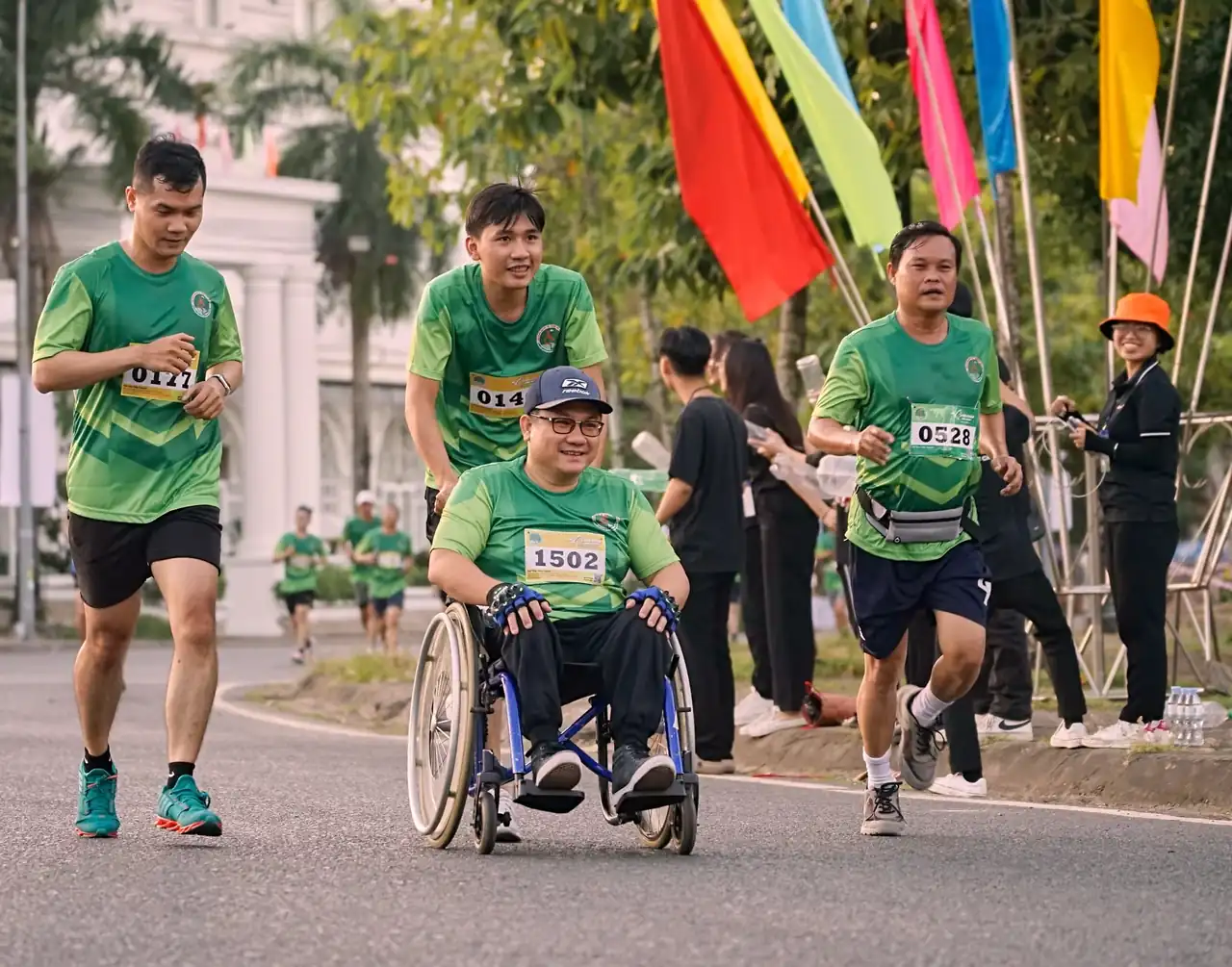
Valencia’s last major popular event of the year already has its key elements set: 18,000 bibs, a start on December 30 at 8:00 p.m., and a solidarity entry fee that this year rises to 2 euros. Demand usually concentrates over a few days, because the race blends sport, a festive atmosphere, and a highly visible charitable cause in the city center.
Registrations are handled at the usual El Corte Inglés locations —Pintor Sorolla, Avenida de Francia, Nuevo Centro and Hipercor Ademuz— during business hours, starting on December 12. For the competitive section, reserved for 300 bibs, the process is carried out specifically at the S. D. Correcaminos headquarters, on Arquebisbe Fabian i Fuero Street, 14. That distribution makes it clear that the race combines two very different rhythms: those looking for a fast time and those who go out to end the year among costumes, music, and lit-up streets.
A race that is already part of the city’s emotional calendar
Valencia’s Popular San Silvestre is not just a 5-kilometer race. It is an urban scene repeated every December, like a set piece the city recognizes instantly. Xàtiva Street, City Hall Square, and the historic center become a human corridor where families, groups of friends, veteran runners, and those who see the bib as little more than an excuse to go out into the street on an afternoon of celebration all coexist.
In its 40th edition, the race once again leans on that mix of accessibility and celebration that has made it one of the most recognizable events on the Valencian calendar. There is no elite ritual here or technical demands reserved for a select few; what matters is mass participation, the color of the costumes, and a route that crosses the heart of the city when the Christmas lights already add an extra layer of sparkle to the façades and sidewalks.
That character also explains the interest in the registration opening date. Experience from previous years shows that interest moves quickly, especially when the organization announces a limited total quota and maintains a competitive category with very few places. In practice, the bib becomes a small key to access a tradition that many Valencians already consider part of the year-end closure, almost on the same level as a family dinner or an early midnight toast.
How registration works and why the quota sets the pace
The registration process is designed to be simple, but simplicity should not be confused with endless availability. The race offers 18,000 bibs while supplies last, a high number for an urban popular race, but not enough when the event carries so much anticipation. The usual pattern is for initial demand to be strong and for bib pickups to be concentrated in the first days of sales, especially among those who want to secure the T-shirt, the race number, and a spot in an event that brings thousands of people together every year.
The solidarity bib fee rises to 2 euros, an increase from previous editions that has a clear purpose: to boost fundraising for the beneficiary organization of this edition, ASLEUVAL. In the context of a popular race, that amount is symbolic for the runner and highly relevant on the social side, because it multiplies the impact of each registration without changing the open and festive nature of the event. It is not a standard sports fee, but a contribution with a specific destination.
Sales at El Corte Inglés stores also make pickup logistics easier, something important in an event with so much participation. For those who are not keeping an eye on regulations or complex platforms, the formula of going to a physical location, completing the process, and collecting the bib in the same shopping environment is more direct. That detail, which may seem minor, helps keep the race close to the general public and not just to runners used to competing with a plan in their heads.
The competitive category, a small space for those chasing time
Only 300 bibs are reserved for the competitive category, a number that makes the race’s balance clear: the San Silvestre is above all a popular celebration, but it still keeps a small space for those who want to run fast and measure their effort over 5,000 meters. That dual format is no accident. It allows the race to remain an open celebration without entirely giving up the sporting challenge that is also part of the tradition.
Registrations for that more demanding section are handled differently, at the S. D. Correcaminos headquarters. The separation of channels avoids mixing two very different participant profiles: the one who signs up for the atmosphere and the one who is looking for a clock time. In such a massive event, that division organizes the start, reduces friction, and helps each runner find their place without breaking the overall spirit of the day.
The 5-kilometer distance also matters a lot. It is a route short enough to attract a wide range of profiles and, at the same time, long enough to give a real sense of a race. It does not require the preparation of a half marathon or the tactical patience of a long-distance event; it is run with more lightness, more intuition, and often with a costume challenging aerodynamics. That lightness is part of its charm and also one of the reasons the registrations draw so much attention.
ASLEUVAL and the real weight of the charitable side
The beneficiary organization for this edition is ASLEUVAL, the association for patients with leukemia, lymphoma, myeloma, and other blood diseases in the Valencian Community. Its role is not limited to receiving funds; the association’s presence gives meaning to an essential part of the race, making solidarity a visible component rather than a mere decorative add-on. In a city where popular running has a strong social dimension, that combination fits naturally.
The increase in the bib contribution aims to double fundraising and strengthen the support programs that the organization provides to patients and families. That dimension matters because it places the race within a logic of public benefit: running not only as a healthy habit or entertainment, but as a gesture of support for a care network that works with very serious illnesses and with long, delicate, and often exhausting processes for families.
The zero bib line and complementary actions have accompanied that same spirit in other editions, and although the key detail for anyone wanting to register is when and where to do it, the broader meaning of the event is there. The San Silvestre does not just sell a party; it offers a very concrete way to take part in a cause the city can recognize as its own. That explains why many people come not only to run, but to feel that the end of the year also has a shared purpose.
Dates, pickup points, and details worth keeping in mind
Bib pickup takes place in the sports sections of the El Corte Inglés stores in Valencia, during business hours, starting on Friday, December 12. The announced locations are Pintor Sorolla, Avenida de Francia, Nuevo Centro, and Hipercor Ademuz. That schedule helps stagger attendance and reduces pressure on a single location, which is especially useful as the final stretch of December approaches and Christmas shopping fills the city’s access points.
The municipal markets are also back in the picture with a commemorative T-shirt linked to the race. To collect it, participants must bring their bib on December 26, 27, and 29, between 8:30 a.m. and 3:00 p.m. The run is limited to 2,000 units, so availability depends on arriving on time. In journalistic terms, this part is no small detail: the connection with the markets reinforces the neighborhood feel, local commerce, and the city lived at street level that surround the race.
The logistics of registration, material pickup, and T-shirt distribution outline a race that is very closely tied to the real city, not to an event locked inside a single office or a digital platform. That closeness helps explain why the event continues to draw so much interest. There is a practical component, yes, but also a sense of belonging that is activated in recognizable, accessible, everyday spaces.
A route designed for the historic center and for Valencia’s image
The course once again opts for an urban 5-kilometer route through the historic center, starting on Xàtiva Street, at the intersection with San Vicente Mártir, and finishing in City Hall Square. These are very recognizable points and are part of the emotional map of the city. Few races can boast such a photogenic finish, with a setting that looks especially beautiful in December thanks to the lights and the constant flow of people on the eve of the New Year.
The race takes place at 8:00 p.m., a time slot that completely changes the perception of the course. It is no longer just a sporting event, but a nighttime march with the breath of an urban celebration. The lights, the mild December cold, and the density of the crowd turn the route into a kind of shared corridor where pace matters as much as atmosphere. For runners, that hour adds a touch of spectacle; for those watching from the sidewalk, the event becomes almost a New Year’s Eve parade.
Using the city center is not just an aesthetic choice. It also organizes participation and projects an image of an active, open city accustomed to integrating sport into everyday life. In Valencia, where major races are already part of the urban identity, the San Silvestre acts as a symbolic closing: one last lap of the year in which the asphalt mixes with music, costumes, and a collective energy that needs no further explanation.
The appeal of an event that mixes costumes, family, and sporting memory
One reason for its longevity is that the San Silvestre does not require just one way of experiencing it. Some go out to compete, some walk, some jog without looking at the clock, and some watch from the sidewalk to take photos, cheer, or accompany the little ones. That plurality makes it more resilient than other, more rigid races. It works like an open door, not a barrier.
There is room for families because the race does not impose unnecessary solemnity. The playful outfits, groups with coordinated costumes, and street atmosphere give the day a shared celebratory feel. In sporting terms, that may seem less serious than a long-distance competition; in social terms, it is exactly what has made it a benchmark. The city does not consume it as a mere result, but as an event to be remembered and talked about.
Regularity also helps. Year after year, the race returns to the same place, with the same spirit and a small variation in solidarity or logistical details. That repetition builds trust. People know where to register, what day to collect the bib, and what kind of atmosphere they will find. In a sports calendar that is sometimes too scattered, that predictability is a virtue. It gives a sense of continuity, like a Christmas song that comes back every December without losing its tone.
What this edition leaves on the Valencian running map
The Valencia San Silvestre holds its own because it understands its role well. It does not try to compete with a marathon or pretend to be a high-demand race. Its strength lies elsewhere: in mass participation, in its closeness to the city center, in its charitable dimension, and in a way of running that belongs as much to sport as to the city’s everyday life. That is why searches about registrations are not explained only by the need to sign up, but by the expectation of being part of something very recognizable.
With 18,000 bibs, a solidarity price of 2 euros, and a date already marked on the calendar, the 2025 edition consolidates a very Valencian model of popular race. The bib is bought easily, but also carries a certain symbolic value. Wearing it means joining a tradition that has managed to stay fresh without losing its original form: a full street, a central finish, and a late-December end that is run with the city lit up.
In that context, registration stops being a mere formality. It is the first gesture of belonging to an event where sport coexists with solidarity, local commerce, and the city’s shared memory. Whoever crosses the finish line in City Hall Square does not just complete a 5-kilometer course; they take part in a collective scene that turns the last race night of the year into a very precise image of Valencia.



How to prevent thigh chafing: causes and real solutions

Women’s running windbreakers: seven jackets and how to choose

Do more workouts get rid of soreness? A guide for runners

Jaén Half Marathon 2026: Record 3,800 Runners Registered

Men’s short running tights: how to choose the right pair

World Triathlon confirms data breach involving medical data

Izan Edo targets podium at Miyazaki World Cup

María Pérez ranks ninth in World Athletics’ 2026 top ten

Dos Santos, Duplantis and Sawe: World Athlete of the Year finalists

San Silvestre Vallecana 2026: 42,000 places, prices and start times

 Races3 months ago
Valencia Half Marathon 2027: date and registration

 Races3 months ago
Valencia Marathon 2026: entry, ballot and course

 Reviews and Comparisons4 months ago
Asics Gel-Roadmiles 3 for men: review and current price

 Reviews and Comparisons4 months ago
Asics Gel Sonoma 8 Gore-Tex: complete analysis for trail and rain

 Sneakers3 months ago
Saucony Endorphin Pro 4: full review and verdict

 News5 months ago
Strava API 2026: what changes for clubs, challenges and runner apps?

 Reviews and Comparisons5 months ago
Nike Alphafly 3: opinions, sensations, and real key points

 Reviews and Comparisons4 months ago
Under Armour running shoes review 2025-2026: models and key features

 Sports Equipment4 months ago
Shoe sizes in cm: a clear guide to getting the right fit for your footwear

 Sneakers3 months ago
Skechers GO RUN Consistent 2.0 analysis: comfort and limits

 News5 months ago
Valencia Marathon 2026 route: key tips to train and run better

 Sneakers4 months ago
Adidas Adizero Boston 13 for men: review and verdict