Races
Vera Half Marathon 2026: date, route, and key details
Departure in Vera Playa, urban circuit and parallel races: everything essential about the Vera event.

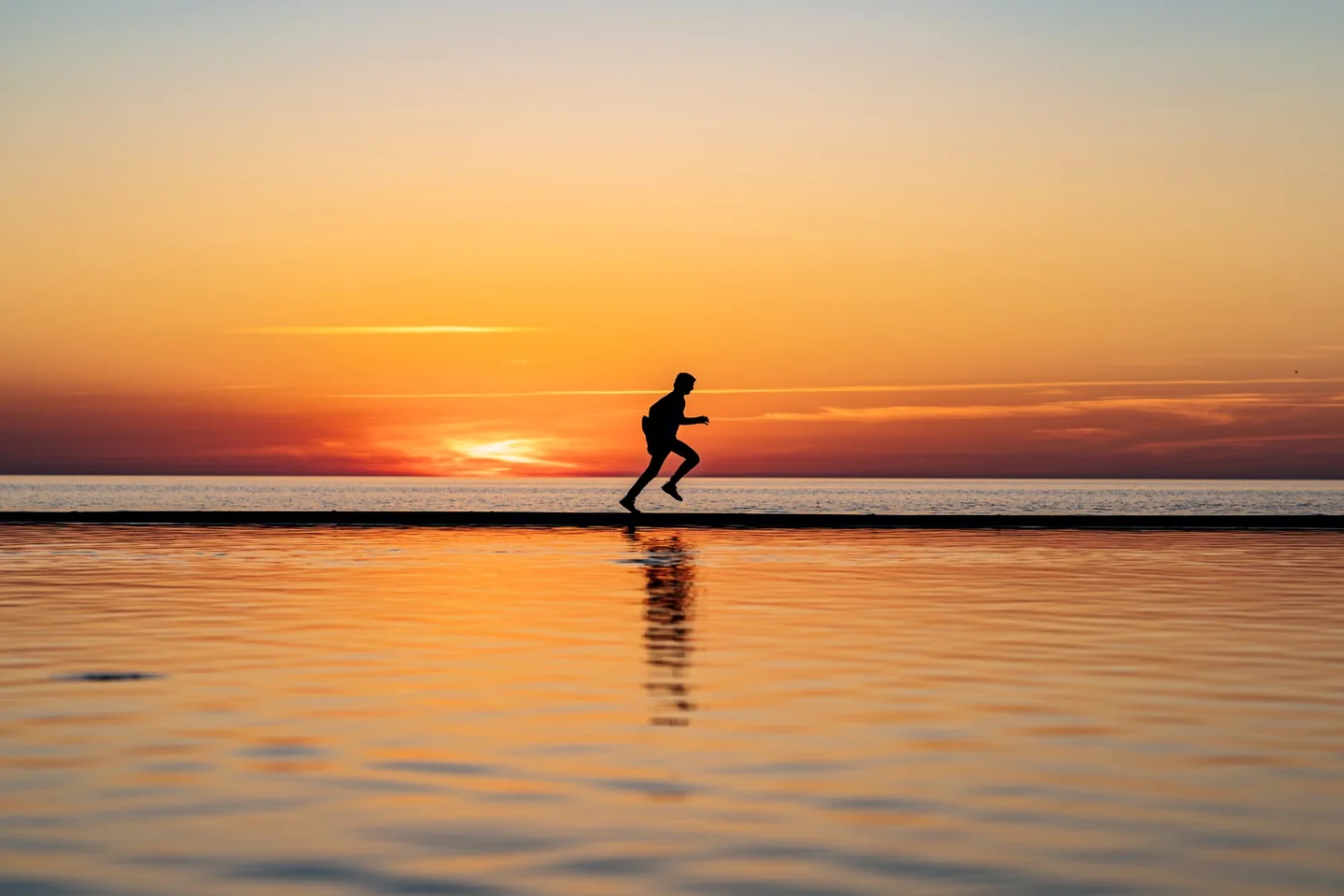
Vera will once again put on a bib on July 4, 2026 with an event already firmly established on the Andalusian calendar: the twelfth edition of its half marathon. The race, organized by the Sureste Athletics Club and the Vera City Council, maintains the momentum of an event that has been growing in importance thanks to its blend of popular atmosphere, coastal route, and a nighttime schedule that completely changes the perception of effort. The start and finish will be located on Puerto Rey Avenue, in Vera Playa, the nerve center of a day that combines sport, summer, and mass participation.
The main event will cover the 21.097 kilometers of the half marathon on a two-lap urban circuit, a route that passes through some of the municipality’s most recognizable areas. Alongside that distance, there will be a 10-kilometer race and different school and youth events, with courses adapted to younger ages. The organization has planned refreshments, checkpoint control, and kilometer markers, as well as a commemorative technical T-shirt for each entrant and trophies for the top finishers in each category.
An event that already carries weight on the provincial calendar
The Vera Half Marathon was not born as an isolated race, but as a long-term commitment that has grown in size and identity. The event’s evolution helps explain its appeal: what began as a local-level call has become a summer benchmark in the province of Almería, drawing runners from different parts of the country attracted by the setting and the combination of competition and holiday atmosphere. This is no minor detail. In popular running, context matters almost as much as the clock.
The 2026 edition also arrives backed by a track record that already exceeds a decade, a fact that in popular sport usually translates into polished organization, routines familiar to participants, and a running community that returns out of habit and affinity. Vera has found a recognizable formula there: a city that opens itself to runners, a start in a coastal setting with good service capacity, and a route that, because it is held at dusk, reduces the thermal harshness of July without entirely removing the demanding nature of a summer race.
The nighttime component is not a decorative extra. In an area where afternoon heat can define the entire experience, starting at 8:00 p.m. changes the race, the pace, and even the perception of the landscape. The air, the light, and the shade all shift differently. And that, in a road race, is felt in the legs and in the mind.
Urban route, second lap, and coastal atmosphere
The course of the main event is designed to be urban and recognizable, with two complete laps of a circuit that crosses representative places in Vera. The start and finish on Puerto Rey Avenue place the action in an area closely linked to Vera Playa, so the race unfolds with a clear geometry for runners and spectators alike. Two laps may seem like a simple solution, but in reality they create a different experience: they allow runners to learn the course from the first step, adjust sensations in the second half, and better gauge their effort.
The description most often repeated by the organization itself speaks of a route that runs through the municipality’s most emblematic spaces, with a significant portion of the circuit close to the beachfront. That proximity to the coast gives it a distinctive atmosphere, almost cinematic, where the race blends with summer without losing its competitive spirit. In events like this, geography acts like a second bib: runners are not only racing against the clock, but also against humidity, the breeze, and pace management in an open environment.
The two-lap design has advantages and risks. It helps runners read the race, especially for those who want to pace themselves rather than go out too hard, but it also exposes more quickly the points where the effort becomes tougher. That is why kilometer markers and checkpoints matter. In a half marathon, knowing where you are has physiological and mental value. Knowing where the next refreshment station is matters even more.
Distances for different runner profiles
The flagship distance of 21.097 kilometers does not stand alone. Vera’s program includes a popular 10-kilometer race, a logical alternative for those not yet ready to tackle the full half marathon or who prefer a more controlled effort on a July night. That complementary distance broadens the event’s profile and prevents it from closing in on itself. It is not just a distance race; it is an athletic festival with several layers of participation.
Alongside the open races, there are also school and youth events, with distances ranging from 50 to 1,000 meters depending on the category. Minichupetines, chupetines, prebenjamines, benjamines, alevines, infantiles, and cadets all have their own space there, in some cases non-competitive and in all cases developmental. The detail matters, because it turns the day into a kind of athletic mosaic where very different paces, ages, and goals coexist.
In sporting terms, this kind of programming reinforces a simple idea: Vera does not offer just one race, but an entire day of popular athletics. The continuity between the events, from children to adults, gives the occasion a density that few summer half marathons manage to sustain. The final image is not that of a single start, but of a city filled with runners of different generations.
Organization, services, and details that make the difference
Race information sets an entry fee of 20 euros for the half marathon, with registration closing on July 2, 2026. These are useful details because they allow the scope of the event to be read without detours: a reasonably priced offering for an event with included services and an organization that covers essential elements such as refreshments, timing, runner’s bag, technical T-shirt, and medical service. In popular races, these elements are not decorative extras; they are the framework that supports the participant experience.
Bib collection is scheduled for race day itself at the Puerto Rey Sports Center, from 11:00 a.m. to 1:00 p.m. and from 4:30 p.m. to 6:00 p.m. That timetable makes logistics easier for local runners and visitors, and fits the summer nature of the event, where part of the audience comes from outside the municipality and combines the race with a stay on the coast. The fact that the event keeps a broad bib pickup window also speaks to an organization that knows time is measured differently in July.
Another relevant feature is the installation of mandatory checkpoint controls at key points on the route. In a large-participation urban half marathon, these controls help maintain the sporting traceability of the event and reinforce its competitive seriousness. Added to this is the detail that the top three male and female finishers in each category will receive trophies, a classic but effective formula for recognizing performance without turning the day into a closed elite race.
A race also designed for the recreational runner
The Vera Half Marathon works for a simple reason: it combines recognizable organization with a pleasant setting and a symbolic distance. For many enthusiasts, the half marathon is an emotional threshold. It is not the entry point into running, but neither does it demand the rigidity of the major marathons. In that middle ground, Vera has managed to build an offering that is both welcoming and competitive. The presence of the 10K race also ensures the event is not reserved only for those who already master long-distance running.
The commemorative technical T-shirt and prizes for various categories reinforce that logic of broad participation. The aim is not only to reward the fastest, but to sustain an atmosphere of athletic celebration where every runner has a reason to be part of the same day. That community spirit is important in the summer calendar, when many races risk being reduced to a competitive formality under unforgiving temperatures.
Vera plays another major card: the scenery. The coastal route and the constant reference to Vera Playa offer a different image from the classic urban half marathon. Here the asphalt coexists with the sea nearby, the light changes quickly as evening falls, and the tourist atmosphere provides a background hum that, rather than getting in the way, can act as emotional fuel. In a popular race, those sensations matter too.
What the 2026 edition adds to the Andalusian running map
The twelfth edition consolidates Vera as one of the most stable summer races in eastern Andalusia. Its growth cannot be explained by a single variable, but by the combination of several: a clear date, an easy-to-follow urban format, distances for different profiles, and a venue with genuine tourist appeal. In an increasingly crowded calendar, the races that survive and grow are usually those that handle logistics well without sacrificing identity. Vera belongs in that group.
The fact that the children’s races and support distances are being maintained says a lot about the philosophy of the day. The event does not close itself off around the half marathon as if it were a single product; rather, it builds an entire afternoon around popular athletics. That helps build loyalty among families, clubs, and runners who return for the atmosphere as much as for the challenge. And in a province like Almería, where outdoor sport is part of daily life, that mix makes sense.
The Vera race is no longer seen only as a date in summer, but as a meeting point between performance, leisure, and place. Its route, services, and nighttime schedule shape a clear identity, easy to recognize for those looking to compete and also for those who simply want to add a different experience to their calendar. On the Andalusian running map, few events blend so naturally the ritual of the bib and the pulse of the coast.
A half marathon run with the legs and with the landscape
Vera’s appeal lies in that dual reading. On one hand, it offers a competition with concrete data, a measured course, and formal organization; on the other, it unfolds a summer scene in which the sea, the avenue, the light, and the local buzz are part of the effort. Not all half marathons manage to make the place matter as much as the time. Vera does. And that is perhaps why its name appears each year among the references for those looking for a race with its own personality.
The 2026 edition arrives with the logic of events that have already found their tone: it does not need grand gestures, only continuity, order, and a recognizable proposal. Puerto Rey Avenue as the start and finish, the two-lap circuit, the combination of half marathon, 10K, and youth races, the reasonable entry fee, and the nighttime schedule make up a fairly defined picture. The city provides the rest, turning itself in summer into a stage without ceasing to be a runner-friendly municipality.
In the end, Vera’s name becomes tied to an idea that in popular running is worth more than many promises: a well-placed, well-measured, and well-lived race. And that, on a July night, with the sound of the coast nearby and the asphalt still warm, has more force than it might seem from a technical sheet.



How to prevent thigh chafing: causes and real solutions

Women’s running windbreakers: seven jackets and how to choose

Do more workouts get rid of soreness? A guide for runners

Jaén Half Marathon 2026: Record 3,800 Runners Registered

Men’s short running tights: how to choose the right pair

World Triathlon confirms data breach involving medical data

Izan Edo targets podium at Miyazaki World Cup

María Pérez ranks ninth in World Athletics’ 2026 top ten

Dos Santos, Duplantis and Sawe: World Athlete of the Year finalists

San Silvestre Vallecana 2026: 42,000 places, prices and start times

 Races3 months ago
Valencia Half Marathon 2027: date and registration

 Races3 months ago
Valencia Marathon 2026: entry, ballot and course

 Reviews and Comparisons4 months ago
Asics Gel-Roadmiles 3 for men: review and current price

 Reviews and Comparisons4 months ago
Asics Gel Sonoma 8 Gore-Tex: complete analysis for trail and rain

 Sneakers3 months ago
Saucony Endorphin Pro 4: full review and verdict

 News5 months ago
Strava API 2026: what changes for clubs, challenges and runner apps?

 Reviews and Comparisons5 months ago
Nike Alphafly 3: opinions, sensations, and real key points

 Reviews and Comparisons4 months ago
Under Armour running shoes review 2025-2026: models and key features

 Sports Equipment4 months ago
Shoe sizes in cm: a clear guide to getting the right fit for your footwear

 Sneakers3 months ago
Skechers GO RUN Consistent 2.0 analysis: comfort and limits

 News5 months ago
Valencia Marathon 2026 route: key tips to train and run better

 Sneakers4 months ago
Adidas Adizero Boston 13 for men: review and verdict