Races
Vertical Ascent to Pico del Buitre 2026: complete guide
Routes, elevation gain, atmosphere, and useful information from a unique event in Arcos de las Salinas, with views of the observatory.

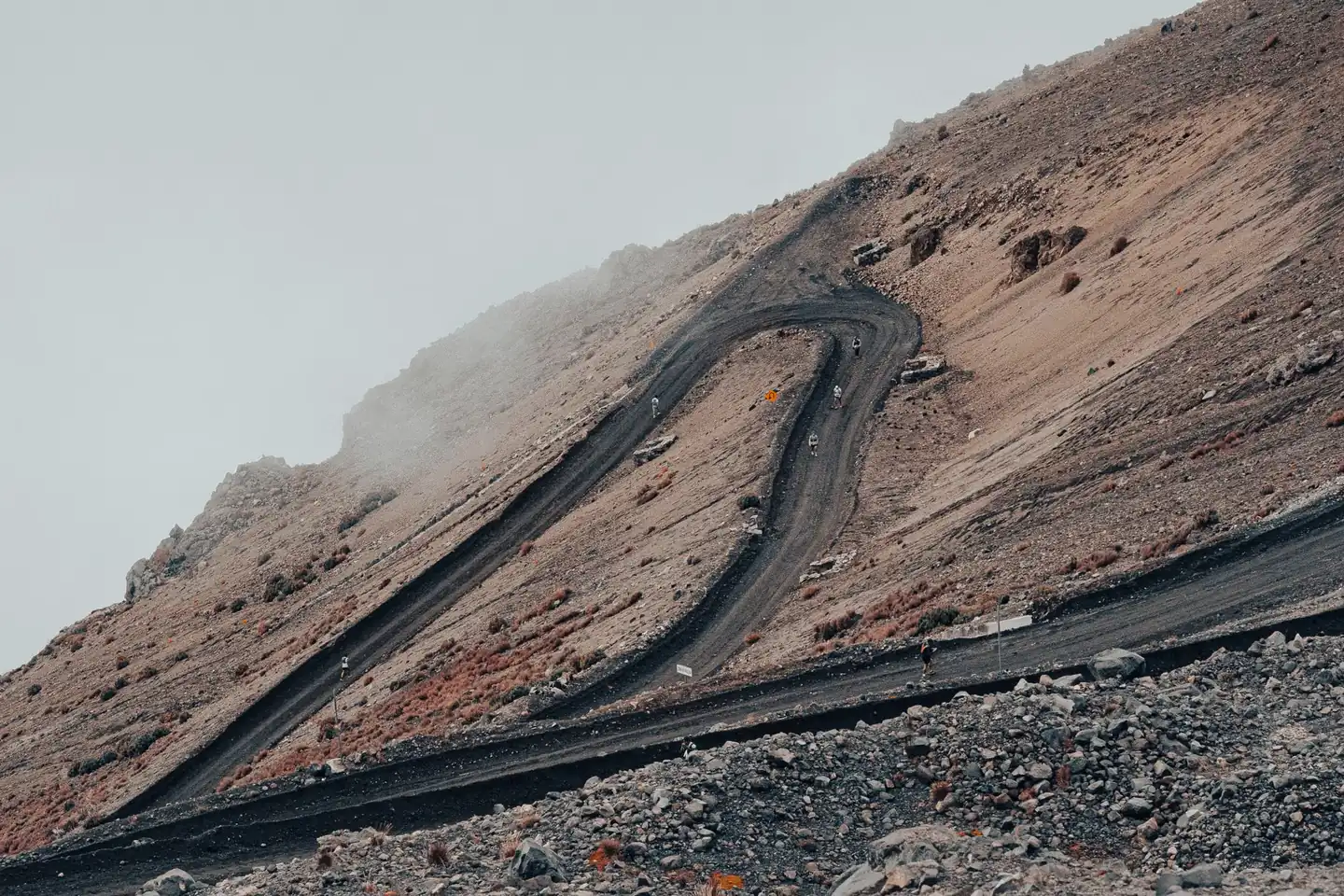
The Vertical Ascent to Pico del Buitre once again puts Arcos de las Salinas on the trail and mountain racing map with a short proposal in kilometers, but demanding on legs, lungs, and mind. The event combines asphalt, trail, and a high-mountain setting that, on its own, explains part of its appeal: a finish at altitude, a sustained climb, and a sense of clean solitude, of the kind only remote passes and peaks away from urban noise can offer.
The 2026 edition is scheduled for the end of September, with two main formats of around 10.6 and 11 kilometers, as well as races for children and juniors. The cumulative elevation gain cited by the available references reaches 1,120 meters of ascent, a figure that makes the nature of the challenge clear: this is not a long race, but an intense climb, almost without respite, where every section matters and the elevation weighs as much as the distance.
A short climb in kilometers, long in demands
The profile of this race is that of a classic vertical: few kilometers, a lot of climbing, and a progression that forces you to manage your effort wisely from the very start. In the area around Arcos de las Salinas, in the province of Teruel, Pico del Buitre and the Javalambre astrophysical observatory area form a setting familiar to cyclists and mountain runners, with a mountain road that has gained notoriety for its toughness and the altitude it reaches.
The compiled references point to two main adult categories, a Road Category and a Long Category, both labeled as 10K or 11 kilometers depending on the source consulted. That slight variation in distance does not change the essentials: the ascent dominates the race and the terrain punishes with its gradient. For the runner, the decisive fact is not the exact mileage, but that positive elevation is chained together at a steady rate, with hardly any recovery zones.
That kind of race requires a different reading of effort. It is not enough to run fast; you have to sustain, pace yourself, and avoid blowing up too early. In a vertical climb, distance becomes secondary to the relationship between pace and elevation gain. That is why even runners used to asphalt often find this a very different challenge from a city 10K or a fast cross-country race: the heart rate rises sooner, the legs burn sooner, and the visual reference of the finish takes much longer to appear.
The setting: Arcos de las Salinas and Pico del Buitre
Arcos de las Salinas is a small town, with open landscapes and a mountain character, serving as a gateway to one of the most distinctive areas of the Teruel section of the Iberian System. The race draws on that territorial value: it is not only about competing, but also about the place. The route points to a mountain with a name of its own, to a road climbing toward high ground, and to a landscape that visibly changes as altitude is gained.
Pico del Buitre is associated with the Javalambre Astrophysical Observatory, a very recognizable landmark in the area. The altitude, the exposure to the wind, and the breadth of the horizon give the race an almost alpine feel, even though it takes place in a corner of Teruel. That mix of relative accessibility and a sense of isolation is one of its main editorial and sporting attractions: the race needs no embellishment because the terrain already tells its own story.
The mountain here does not disguise itself. It shows itself clearly, with visible gradients, long bends, and a climb that strips the runner of any excess confidence. The aesthetics of the place also matter in the experience: the ascent runs between open slopes, exposed sections, and an atmosphere that can shift quickly from pleasant to harsh depending on the sun, the wind, or the coolness of late September.
Available routes and formats
The race offers several ways to tackle the climb, which broadens its appeal for different runner profiles. The 2026 references include a road format and at least two trail offerings, as well as children’s or youth courses. This variety does not reduce the overall demands, but it does make participation adaptable to different ages and levels within the same day.
In the sources reviewed, the Subida Pico Buitre – Road Category appears, labeled as a road race with a distance close to 11 kilometers, and the Subida Pico Buitre – Long Category, along with the Short Category, both identified as trail and with a cited positive elevation gain of 1,120 meters. That combination gives an important clue about the race: not all variants demand the same kind of effort or the same terrain, even though they share the main protagonist, which is the climb.
The coexistence of asphalt and trail is especially interesting because it changes the technical reading of the event. On the road, the regularity of the surface makes it easier to maintain stride and cadence with more control, while in trail running foot placement, grip, and terrain management come into play more heavily. For the runner, this means two different experiences under a single competitive identity: one more rhythmic and another more tactical, both shaped by elevation gain.
Elevation gain, pace, and the keys to such a particular effort
The 1,120 meters of positive elevation gain are the figure that best defines the race. Over such a short distance, that number forces you to understand the event as a climb rather than a conventional course. The body receives continuous load, and the strategy becomes avoiding unnecessary spikes in intensity. In this kind of race, starting too fast usually comes at a very high cost in the second half.
The area’s elevation profile had already been described by other sports observers as a benchmark climb in the province, with cycling data placing the ascent at around 12 kilometers, an average gradient of approximately 7.5%, and maximum ramps of 16%, reaching almost 1,956 meters above sea level. Although those figures belong to cycling, they help explain the character of the place: it is a mountain that gives no respite and makes itself felt under running shoes as well.
In races like this, the runner feels the terrain forcing a different economy of movement. The stride shortens, breathing takes over, and the eyes look for small references to break the effort into manageable sections. The mountain, in the end, works like a hard metronome: it sets the pace with gradients, changes in exposure, and the absence of flats. That is part of its beauty and, at the same time, its cruelty.
Calendar, registration, and what is known about 2026
The 2026 edition is placed at the end of September, although the sources consulted do not provide an exact confirmed date or a fully verifiable start time. In the absence of a cross-checked official datum, the prudent approach is to keep that broad time window and not force precision where there is none. In a race of this kind, the calendar is usually tied to the end of summer and the start of autumn, a time that offers more bearable temperatures than the height of August.
As for registration, the reference information points to the existence of an official page and the sharing of practical details, but it does not allow us to confirm a specific price or a closed bib status here. Therefore, the only certainty is that the race is presented as an active call for the next edition and that editorial interest revolves around its course, its formats, and its setting. In local or mountain competitions, that information can be updated quickly, so the most reliable picture is always the one provided by the organizers at any given time.
The absence of a confirmed price does not diminish the event’s interest; on the contrary, it highlights a common reality in this kind of race, where registration details, entry caps, and youth categories can vary by season. What truly matters for the runner is that this is an event with its own identity, recognizable for its climb and for a setting that needs little introduction among those who follow the mountain racing calendar in Spain.
A race for road runners, trail runners, and mountain runners
The Vertical Ascent to Pico del Buitre has the virtue of building bridges between different runner profiles. The road runner finds a pure climb, without the tactical dispersion of an urban race; the trail runner finds terrain with serious elevation and a mountain spirit; and anyone looking for a short but intense experience discovers a race that concentrates a great deal of effort into a small amount of time. That range of profiles helps explain part of its growing appeal.
There is also a geographical and scenic component that makes it especially attractive for those who follow running in the Valencian Community and nearby provinces. Teruel is close and, at the same time, far: close enough to be a feasible day trip, yet different enough to feel like an escape. The runner arrives because of the map, but stays for the feeling of altitude, silence, and mountain road that seems to sharpen as the climb progresses.
The children’s and junior races complete the event’s family-friendly profile. That detail matters because it places the race within a shared-day logic, not just pure competition. Youth starts usually serve as a first contact with the atmosphere of a mountain event, with a more accessible version of the world of bibs, spectators, and finish lines. In that sense, the event does not just organize a race, but a small athletic ritual around the climb.
What sets Pico del Buitre apart from other mountain climbs
Not all climbs tell the same story. Some are defined by extreme difficulty, others by length, others by the fame of the pass. Pico del Buitre brings together several of those ingredients, but adds one that is usually decisive: the sense of place. The runner is not just facing elevation gain; they are crossing a territory that feels remote, open, and highly recognizable for its skies, altitude, and clean mountain profile.
The paved road leading to the observatory has increased the pass’s popularity in fields such as cycling, but on foot that same route takes on a different meaning. The gradient becomes more immediate, the impact more repetitive, and the climb, not hidden behind famous giant mountains, surprises with its bare toughness. It is one of those ascents that look manageable on the map and very different once the clock starts.
In addition, the race remains small enough to avoid excessive spectacle. It does not need huge urban setups or a mass event feel to attract attention. Its strength lies in the clarity of its proposal: climb, endure, reach the summit. That apparent simplicity is what makes it so demanding and, at the same time, so easy to understand for any mountain running fan.
The sporting value of a vertical race in the autumn calendar
Late-September races hold a very particular place in the calendar because they come after summer, when the body has already passed through the harshest heat but still retains lightness and training consistency. In that context, a vertical climb like the Pico del Buitre ascent works as a test of control and strength, a way to measure how the runner responds to a short, tough, and sustained uphill effort.
It also serves as a transition between disciplines. Those coming from the road find a bridge into the mountains; regular trail competitors can use it as a test of power and endurance; and anyone simply looking for something different gets a race remembered for its scenery, its effort, and the feeling of having gained height almost symbolically. Climbing always has something of an epic narrative, even if the clock shows just over a dozen kilometers.
That is why the Vertical Ascent to Pico del Buitre stands out among mountain races in Aragon and the Levante area. It is not just another race on the calendar; it is a climb with its own identity, rooted in a territory that was already part of the sporting imagination through cycling and is now also gaining space on the running map. Its appeal lies in the mix of accessibility, toughness, and scenery, a combination that rarely fails.
A summit that turns every meter into sports news
Pico del Buitre does not sell ease, and perhaps that is why it is so compelling. The race is built on a simple truth: climbing is hard, and climbing fast is even harder. Its appeal is rooted in that honesty. There is no ambiguity in the challenge or unnecessary embellishment in the proposal; there is gradient, altitude, a mountain environment, and a finish that forces you to empty yourself without needing long distances.
In the Spanish running ecosystem, events like this serve as a reminder that the calendar is not measured only in half marathons, marathons, or urban 10Ks. There are also shorter, more vertical formats more closely tied to the territory, offering runners a different and often more intense experience. The Vertical Ascent to Pico del Buitre belongs to that family of races that are best understood when viewed in altitude: just enough kilometers, serious elevation gain, and a summit that gives meaning to everything else.
With the available data, 2026 is shaping up to be another edition of a race already identifiable by its name, its location in Arcos de las Salinas, and its tough ascent profile toward Javalambre. For those following trail and mountain races, that combination is enough to know the event deserves attention. Because some routes are run with the legs, and others are run also with the head, the cold air, and the gaze fixed upward. This one clearly belongs to that second category.



How to prevent thigh chafing: causes and real solutions

Women’s running windbreakers: seven jackets and how to choose

Do more workouts get rid of soreness? A guide for runners

Jaén Half Marathon 2026: Record 3,800 Runners Registered

Men’s short running tights: how to choose the right pair

World Triathlon confirms data breach involving medical data

Izan Edo targets podium at Miyazaki World Cup

María Pérez ranks ninth in World Athletics’ 2026 top ten

Dos Santos, Duplantis and Sawe: World Athlete of the Year finalists

San Silvestre Vallecana 2026: 42,000 places, prices and start times

 Races3 months ago
Valencia Half Marathon 2027: date and registration

 Races3 months ago
Valencia Marathon 2026: entry, ballot and course

 Reviews and Comparisons4 months ago
Asics Gel-Roadmiles 3 for men: review and current price

 Reviews and Comparisons4 months ago
Asics Gel Sonoma 8 Gore-Tex: complete analysis for trail and rain

 Sneakers3 months ago
Saucony Endorphin Pro 4: full review and verdict

 News5 months ago
Strava API 2026: what changes for clubs, challenges and runner apps?

 Reviews and Comparisons5 months ago
Nike Alphafly 3: opinions, sensations, and real key points

 Reviews and Comparisons4 months ago
Under Armour running shoes review 2025-2026: models and key features

 Sports Equipment4 months ago
Shoe sizes in cm: a clear guide to getting the right fit for your footwear

 Sneakers3 months ago
Skechers GO RUN Consistent 2.0 analysis: comfort and limits

 News5 months ago
Valencia Marathon 2026 route: key tips to train and run better

 Sneakers4 months ago
Adidas Adizero Boston 13 for men: review and verdict