Races
Volta a Peu Sant Marcel·lí 2023: date and return to racing
The race returns with 5 kilometers, a start in Tres Cruces, children’s categories, and a participatory format.

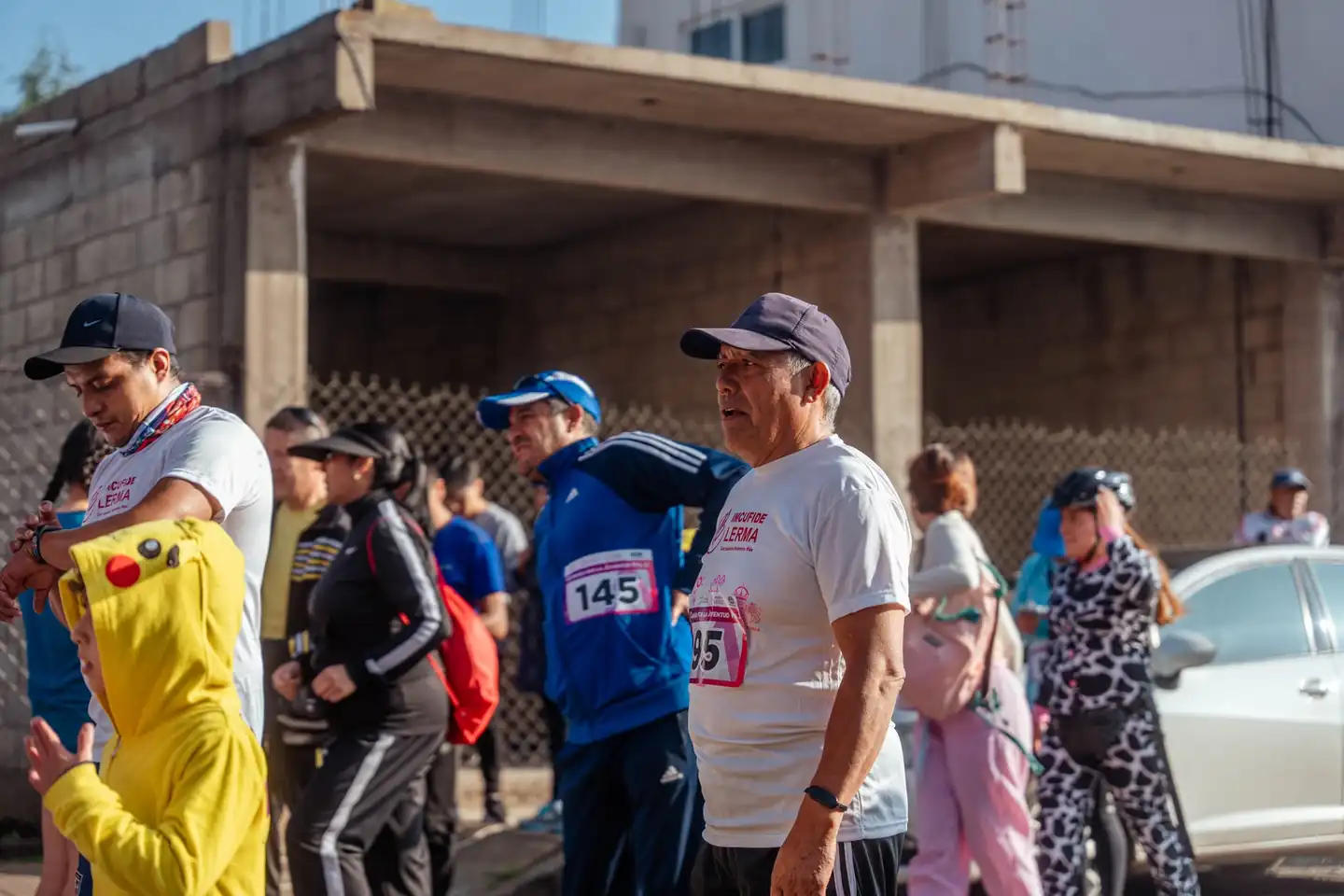
The Volta a Peu de Sant Marcel·lí and Sant Isidre once again puts València into race mode with a 5-kilometer course, a start on Avenida de Tres Cruces, and a script designed to mix competition, neighborhood spirit, and popular participation. The event is part of the Circuit de Carreres Caixa Popular Ciutat de València and marks, as every September, the return of the running pulse after summer.
Beyond the stopwatch, the race keeps a very recognizable symbolic value: it was born tied to neighborhood life and to local festivities that began to take shape in 1977, a year after the creation of the San Marcelino residents’ association. That root explains why this race is understood not only as a sporting event, but as a small urban celebration in which memory, the street, and a love of running all come together.
A classic-start 5K with a very runner-friendly profile
The official route keeps the 5,000-meter distance and starts from Avenida de Tres Cruces, opposite the General Cemetery parking area. It is a short distance, but not a minor one: in a city like València, where the popular race calendar is very dense, 5Ks tend to attract both those looking for a fast pace and those returning to competition after the summer break.
The planned start time is 9:00 a.m., a schedule that helps runners deal with milder temperatures, especially in September, when the heat can still press hard. Logistically, it also makes it easier for the neighborhood to return to normal before mid-morning, something important in a district with traffic, public transport, and an intense community life.
The route usually combines wide stretches and more urban sections, with streets linking San Marcelino, San Isidro, and the area around the General Cemetery. It is not an escape route or a flat stroll without nuances: it has the feel of neighborhood races, where every turn, every straight, and every change of pace matters. The key lies in its popular and accessible character, more than in the technical difficulty of the course.
For the regular runner, this kind of race makes it possible to quickly gauge sensations. For someone returning after a break, the 5K works as a kind of real thermometer, more reliable than any loose training session. And for the public, the distance offers something valuable: the race does not go on forever, it is experienced up close, with the feeling that the action happens right at the curb.
The neighborhood dimension that gives the race its meaning
The history of this Volta a Peu is closely tied to the neighborhood associations of Sant Marcel·lí and Sant Isidre. That is not a decorative detail. The race comes from a way of understanding the neighborhood that brings together celebration, sport, and presence in the street, a combination very much in keeping with Valencian popular culture. That is why the event has gained continuity and prestige without losing its close, familiar feel.
That origin also explains the calendar’s loyalty to it. The race has surpassed half a century of life and, over time, has become one of the benchmarks of the municipal circuit. Continuity in a popular race does not depend only on organization: it depends on the neighborhood feeling it as its own, on the streets recognizing it, and on runners knowing that there is history there.
In an era when many races look alike, this one keeps a clear personality. The neighborhood’s collective memory acts as an extra layer of the route. You are not only running on asphalt; you are running over decades of neighbors, festivities, cheers, and Sundays when the city looks at itself through sport.
Children, families, and the liveliest scene of the morning
When the main race ends, the spotlight shifts to the children’s races, progressively adapted to the ages of participants under 14. This part of the program has an importance that goes beyond the anecdotal, because it introduces the youngest runners to the atmosphere of popular races without turning it into a rigid or overly competitive experience.
The age-based progression follows a simple logic: the same is not asked of someone who is just starting as of someone already competing with ease. In practice, this turns the day into a mosaic of paces, nerves, and applause. The adults finish their effort and, shortly after, the neighborhood changes gear to welcome girls and boys who experience the race as a mix of play, challenge, and pride.
That change in atmosphere is often one of the most recognizable moments of these events. The streets lose a little of their competitive tension and fill with higher voices, small sneakers, and families pressed up against the barriers. The intergenerational element is part of the race’s success: it is not only the person wearing a bib who runs, but also the memory of those watching from the sidewalk.
A tu Ritmo, the option that broadens the meaning of the day
The A tu Ritmo format has secured its own place within this Volta a Peu. Its proposal is clear: to allow the five kilometers to be completed without the pressure of the stopwatch and with less physical demand. Instead of understanding the race as a filter, it turns it into a more open door for those who want to be part of the atmosphere without entering the competitive logic.
In a city with such a strong running culture, this formula fits well because it broadens the profile of the participant. It is not aimed only at runners with a time to chase, but also at those who want to walk, jog, or alternate both. That nuance, seemingly simple, completely changes the experience and helps make the event more representative of the neighborhood and the city.
The importance of this format also lies in its social value. Participating without obsessing over time lowers barriers and makes it easier for people of different levels to share space and route. The race then stops being a showcase of pure performance and feels more like a morning of community in motion.
A circuit that kicks off the season after summer
The race usually opens the autumn stretch of the municipal circuit after the summer break, and for that reason it carries special weight for many runners. September is not just a month of returning to work or school; in the world of urban running it is also the month when the calendar reopens, when sensations are adjusted, and when habits that the heat had put on hold are taken back up.
That return has something ritual about it. The first events of the season serve to check how the body responds, how the pace behaves, and where fitness stood before summer. The Volta a Peu de Sant Marcel·lí and Sant Isidre fits in as a first major reference because it combines closeness, accessibility, and an organization already familiar to regulars of the circuit.
The city of running thus regains its usual rhythm. After July and August, when many activities slow down, races like this bring back to the calendar the texture of Sundays with bibs, split times, applause, and conversation at the finish line. There is no need to dramatize it: just watch how the neighborhood changes during that morning to understand that popular running also shapes urban life.
What the route is like and why the surroundings matter
The route starts at Tres Cruces and runs through very recognizable streets in the southern sector of the city, passing through areas such as Doctor Tomás Sala, San Vicente Mártir, Arzobispo Olaechea, Salvador Perlés, Pío IX, Doctor Rafael Bartual, Nicolau Primitiu Gómez Serrano, and Campos Crespo, before the final return to the start area. That sequence turns the race into a kind of layered route, with neighborhoods, crossings, and roundabouts that force runners to manage effort wisely.
In urban 5K races, the surroundings matter as much as the distance. A flat stretch can tempt you to push harder than you should, while a tight turn or a small change in pavement reminds you that speed never comes alone. The smart runner does not just watch the clock: they read the street. And here that reading is especially useful, because the race moves through a very lively part of southern València, where the route demands attention and a certain ability to adapt.
There is also a visual component that should not be underestimated. Passing by everyday transit spaces, such as the area around the cemetery, the connections between avenues, and the neighborhood streets, gives the race a very urban, very lived-in-city feel. It is not a monumental setting or an empty postcard: it is a functional, everyday, recognizable landscape, and precisely for that reason it feels so much like the Valencian popular circuit.
Traffic, parking, and transport: what is worth keeping in mind
Holding a race of this kind clearly affects mobility. In the municipal information from the previous year, road closures were detailed from early morning on Avenida de Tres Cruces, along with parking restrictions around the Municipal Cemetery parking area and on several nearby streets. That kind of measure is usually activated to protect both participants and residents, as well as emergency services.
In practice, the impact on the neighborhood is concentrated in the hours before and during the race. The start setup, the runners’ passage, and the later removal of barriers and signage affect traffic well in advance. Traffic is reorganized and the neighborhood breathes at a different pace for a few hours, something common in races included in the municipal calendar.
It is also reasonable to expect adjustments to public transport, with EMT lines adapted to the route or with alternative itineraries near the start and finish area. For the resident who is not running, the practical information matters almost as much as the standings: knowing where to enter, where parking is not allowed, and which streets will be most affected helps avoid a morning of unnecessary surprises.
Why this race keeps its appeal year after year
The Volta a Peu de Sant Marcel·lí and Sant Isidre remains relevant because it brings together several layers of Valencian running in a single morning. It has history, a manageable distance, neighborhood presence, children’s participation, and a format designed to open the event to more people. That combination explains why it appears repeatedly among the most established events in the circuit.
In journalistic terms, its value lies in the fact that it does not need gimmicks. It does not depend on huge participation numbers or an exceptional setting; it is enough for it to have the consistency of a well-established tradition and for each edition to reactivate the same tacit pact between organizers, runners, and neighbors. The race works because the city recognizes it.
In addition, its schedule, distance, and location make it a meeting point for very different profiles. There are those looking for a time, those looking to get moving again, those accompanying a child, and those who simply want to feel the atmosphere of a morning when the asphalt fills with life. Few popular races manage to bring those motivations together so naturally.
A neighborhood race that says a lot about València
The strength of this race lies in its human scale. In times when running is sometimes associated with big events, training plans, and performance metrics, the Volta a Peu de Sant Marcel·lí and Sant Isidre reminds us that a race can also be a fabric of local relationships, an excuse to take over the street, and a simple way of understanding sport as a shared habit.
Its place in the calendar shows that popular runners still look for races where closeness matters as much as the final time. And it also shows that neighborhoods still have the ability to generate identity through sport, without needing to turn every activity into a spectacle. València sees itself in this kind of event because they combine competition, belonging, and memory.
That is why the Volta a Peu de Sant Marcel·lí and Sant Isidre is not just a 5-kilometer race. It is a brief, intense, and very local scene in which the sporting autumn begins with a firm step, the neighborhood becomes the protagonist again, and the city remembers that its streets are also understood by running them.



How to prevent thigh chafing: causes and real solutions

Women’s running windbreakers: seven jackets and how to choose

Do more workouts get rid of soreness? A guide for runners

Jaén Half Marathon 2026: Record 3,800 Runners Registered

Men’s short running tights: how to choose the right pair

World Triathlon confirms data breach involving medical data

Izan Edo targets podium at Miyazaki World Cup

María Pérez ranks ninth in World Athletics’ 2026 top ten

Dos Santos, Duplantis and Sawe: World Athlete of the Year finalists

San Silvestre Vallecana 2026: 42,000 places, prices and start times

 Races3 months ago
Valencia Half Marathon 2027: date and registration

 Races3 months ago
Valencia Marathon 2026: entry, ballot and course

 Reviews and Comparisons4 months ago
Asics Gel-Roadmiles 3 for men: review and current price

 Reviews and Comparisons4 months ago
Asics Gel Sonoma 8 Gore-Tex: complete analysis for trail and rain

 Sneakers3 months ago
Saucony Endorphin Pro 4: full review and verdict

 News5 months ago
Strava API 2026: what changes for clubs, challenges and runner apps?

 Reviews and Comparisons5 months ago
Nike Alphafly 3: opinions, sensations, and real key points

 Reviews and Comparisons4 months ago
Under Armour running shoes review 2025-2026: models and key features

 Sports Equipment4 months ago
Shoe sizes in cm: a clear guide to getting the right fit for your footwear

 Sneakers3 months ago
Skechers GO RUN Consistent 2.0 analysis: comfort and limits

 News5 months ago
Valencia Marathon 2026 route: key tips to train and run better

 Sneakers4 months ago
Adidas Adizero Boston 13 for men: review and verdict