Races
Zaragoza San Silvestre 2025: course and schedule
The race covers 5 km, starts from El Coso, and crosses the bridges and avenues of the city center in a festive atmosphere.

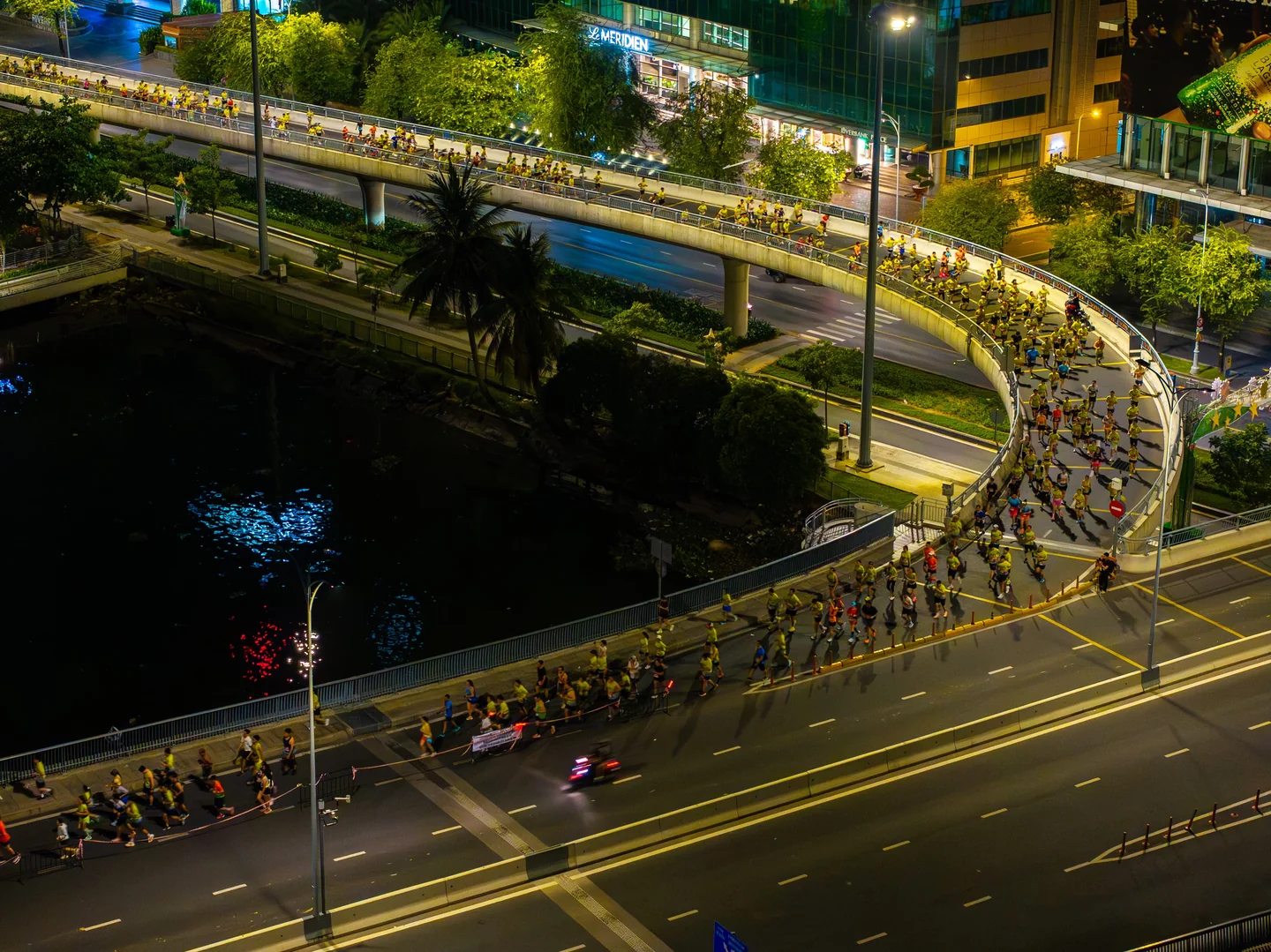
The 2025 San Silvestre in Zaragoza once again gave the city a recognizable year-end finale: five kilometers through the city center, with the start and finish on Coso, at the level of the Teatro Principal, and a route that links some of the most visible streets of the urban core. The race kept its popular, nighttime, and festive character, with a course designed for running fast, dressing up without hassle, and filling an afternoon that is already almost a collective tradition with movement.
The starting gun was set for 6:00 p.m. and registration closed days earlier, after reaching the limit of 5,000 bibs. That provided a very clear snapshot of the demand this event generates in Zaragoza: a short race, accessible to many profiles, and with a route that, while easy to follow, offers a very urban and highly recognizable sequence for anyone who knows the city.
A short, central route designed to fill the streets
The official course keeps the 5 kilometers that have made this event one of the most manageable on the popular running calendar. The start on Coso is no casual choice: part of the city’s historical heartbeat is concentrated there and, in addition, it allows the race to get underway without major logistical complications before the pack stretches toward the Ebro riverbank. From that first stretch onward, the San Silvestre behaves more like a moving postcard than a race defined by times.
The route takes runners over the Iron Bridge, along the Ribera promenade and Cataluña Avenue before heading into streets such as Valle de Zuriza, Caminos del Norte, Martín del Río, and Sangüesa Castañosa. After that, the course regains its monumental character by crossing the Stone Bridge and edging along Echegaray y Caballero promenade and San Vicente de Paúl Street, before returning to the starting point on Coso. The logic of the design is clear: move thousands of people along broad arteries, combining visibility, flow, and highly recognizable urban settings.
That layout favors those looking for an experience more than a technical challenge. There is no roller coaster of climbs and descents or sections that turn the event into a grueling battle, but rather a succession of streets that allow runners to keep pace and, at the same time, enjoy the atmosphere. That is why Zaragoza’s San Silvestre has earned its own place on the calendar: it does not need epic drama to be memorable, it is enough for it to turn the center into a continuous ribbon of runners, costumes, and the noise of an early New Year’s Eve.
The start on Coso sets the pace of the race
Coso serves as both axis and return point. Starting there, in front of the Teatro Principal, places the race in one of Zaragoza’s most recognizable postcard views and allows the public to gather in a wide, visible, and easy-to-identify space. For participants, that also has a practical side: the area offers a clear reference before the event spreads out across the urban route and later, at the finish, it makes meeting up with companions and spectators easier.
From the very first meter, the atmosphere is usually the main attraction. Zaragoza’s San Silvestre is understood not just as a year-end 5K, but as a small secular procession of popular sport. The fact that it starts at 6:00 p.m. also adds a special tone: there is still enough daylight to see the city’s details, but already that winter color appears, making shop windows, lights, and the movement of the avenues feel more intense. The race blends into the Christmas landscape and the city, for a few hours, seems to run to the same beat.
The out-and-back route through central and riverside areas also responds to a very specific decision: to make the event easy for the public to follow. Anyone watching the race can understand its progress almost at a glance, with easy landmarks such as the bridges, the riverside promenade, and the busiest streets. That clarity helps the event work as a race, but also as an urban spectacle, which is part of its success.
Times, bibs, and logistics that close the year with precision
The sporting event was set for 6:00 p.m. on December 31, a time slot that has become the natural moment for this athletic farewell to the year. It is not an hour chosen at random: it preserves the festive afternoon atmosphere, avoids the complications of full nightfall, and leaves room for the day to continue with New Year’s Eve plans. In an event this popular, the schedule is almost as important as the course, because it affects attendance, traffic, and the overall tone of the race.
Bib and shirt pickup took place at the La Almozara Civic Center on December 29 and 30. On the 29th, hours were from 2:00 p.m. to 8:00 p.m., and on the 30th, from 10:00 a.m. to 8:00 p.m., with the usual documentation to prove identity. That two-day window, tightly defined, fits the structure of a race that mainly serves a local public and participants already familiar with the routine of this kind of event.
There was also a fact that defines the event’s demand: registrations closed once the quota of 5,000 runners was reached. The race sold out weeks in advance, a sign of loyalty and popular pull that few 5K events manage to maintain so consistently. By then, the San Silvestre had stopped being a last-minute opportunity and become a date marked well in advance on the calendars of much of the city.
A popular event that blends sport, costumes, and the city
Zaragoza’s San Silvestre exists on a very particular boundary: it is a race, yes, but also a celebration. Dressing up is not a minor extra or a charming concession; it is part of the event’s identity and explains why the race attracts runners with very different goals. Some want to run fast, others want to take part without watching the clock, and many simply want to enjoy the route and the atmosphere. That mix is part of its success and its longevity.
The rules allow costumes as long as they are respectful, do not interfere with sportsmanship, and do not hinder the event’s progress. That combination of freedom and limits is important: without a minimum of order, a race like this would get out of hand; without room for creativity, it would lose its signature. The key is to keep the fun without breaking the competition. The result is a very recognizable scene: families, groups of friends, regular runners, and occasional participants sharing the same roadway.
In a city like Zaragoza, where winter can be dry and the air sharp, the color of costumes functions almost as a visual answer to the cold. People move, laugh, wait their turn, and set off with that brief burst of energy typical of mass events. The race is not trying to imitate elite athletics, and that is precisely where its strength lies: it brings together those who train all year with those who only lace up their shoes to say goodbye to December among bridges, avenues, and applause.
Prizes, solidarity, and the symbolic value of running on the last day of the year
The competitive side also had its place, with prizes for the top five finishers in both the men’s and women’s categories. Added to that was an incentive as eye-catching as it was fitting for this event: Frutos Secos El Rincón awarded a special prize of free bread for a year to the best costume, individual or group. That detail sums up the spirit of the race well, where sporting merit coexists with inventiveness and humor without either erasing the other.
In addition, the organizers kept the charitable component by donating part of the proceeds to the Zaragoza Association of Relatives of Alzheimer’s Patients and Parkinson Aragón. That side gives depth to a race that, at first glance, might seem like just a festive year-end plan. In reality, the event also supports two very specific causes, which adds meaning to the effort of those who sign up and those who come out to cheer.
There is something especially powerful about running on December 31: it is not just about ending a year, but about doing so as a community. Crossing the finish line carries a symbolic weight that goes beyond the result. A cycle closes with the sound of sneakers, cold breath, and packed streets. And that image, repeated every December, explains why Zaragoza’s San Silvestre keeps such strong appeal. It is not only a route; it is a shared scene that the city recognizes as its own.
What this course reveals about Zaragoza’s San Silvestre
The 2025 course confirms an idea repeated year after year: Zaragoza has turned this event into a benchmark urban celebration, with a very clear identity and an execution that needs no embellishment. Five kilometers are enough to link the liveliest parts of the center, gather thousands of runners, and offer a sharp image of the city on one of its most symbolic days. There are no major technical uncertainties here or geography that forces you to interpret complex maps; everything serves the collective experience.
The start and finish on Coso, the passage over the bridges, the stretch along the riverside, and the return to the heart of the city condense the logic of the event: visibility, simplicity, and atmosphere. That combination explains why the San Silvestre continues to fill bibs, why it attracts participants from outside the city, and why it retains that air of an unavoidable date as the calendar nears its end. In the end, the course does more than mark a route; it sketches a way of saying goodbye to the year in Zaragoza, with the streets as the main stage and the city as the true protagonist.



How to prevent thigh chafing: causes and real solutions

Women’s running windbreakers: seven jackets and how to choose

Do more workouts get rid of soreness? A guide for runners

Jaén Half Marathon 2026: Record 3,800 Runners Registered

Men’s short running tights: how to choose the right pair

World Triathlon confirms data breach involving medical data

Izan Edo targets podium at Miyazaki World Cup

María Pérez ranks ninth in World Athletics’ 2026 top ten

Dos Santos, Duplantis and Sawe: World Athlete of the Year finalists

San Silvestre Vallecana 2026: 42,000 places, prices and start times

 Races3 months ago
Valencia Half Marathon 2027: date and registration

 Races3 months ago
Valencia Marathon 2026: entry, ballot and course

 Reviews and Comparisons4 months ago
Asics Gel-Roadmiles 3 for men: review and current price

 Reviews and Comparisons4 months ago
Asics Gel Sonoma 8 Gore-Tex: complete analysis for trail and rain

 Sneakers3 months ago
Saucony Endorphin Pro 4: full review and verdict

 News5 months ago
Strava API 2026: what changes for clubs, challenges and runner apps?

 Reviews and Comparisons5 months ago
Nike Alphafly 3: opinions, sensations, and real key points

 Reviews and Comparisons4 months ago
Under Armour running shoes review 2025-2026: models and key features

 Sports Equipment4 months ago
Shoe sizes in cm: a clear guide to getting the right fit for your footwear

 Sneakers3 months ago
Skechers GO RUN Consistent 2.0 analysis: comfort and limits

 News5 months ago
Valencia Marathon 2026 route: key tips to train and run better

 Sneakers4 months ago
Adidas Adizero Boston 13 for men: review and verdict