Routes
10K of Laviana: route guide, profiles, and key points
A fast 10K in Laviana with an Asturian atmosphere, a favorable course profile, and key details for running smart.

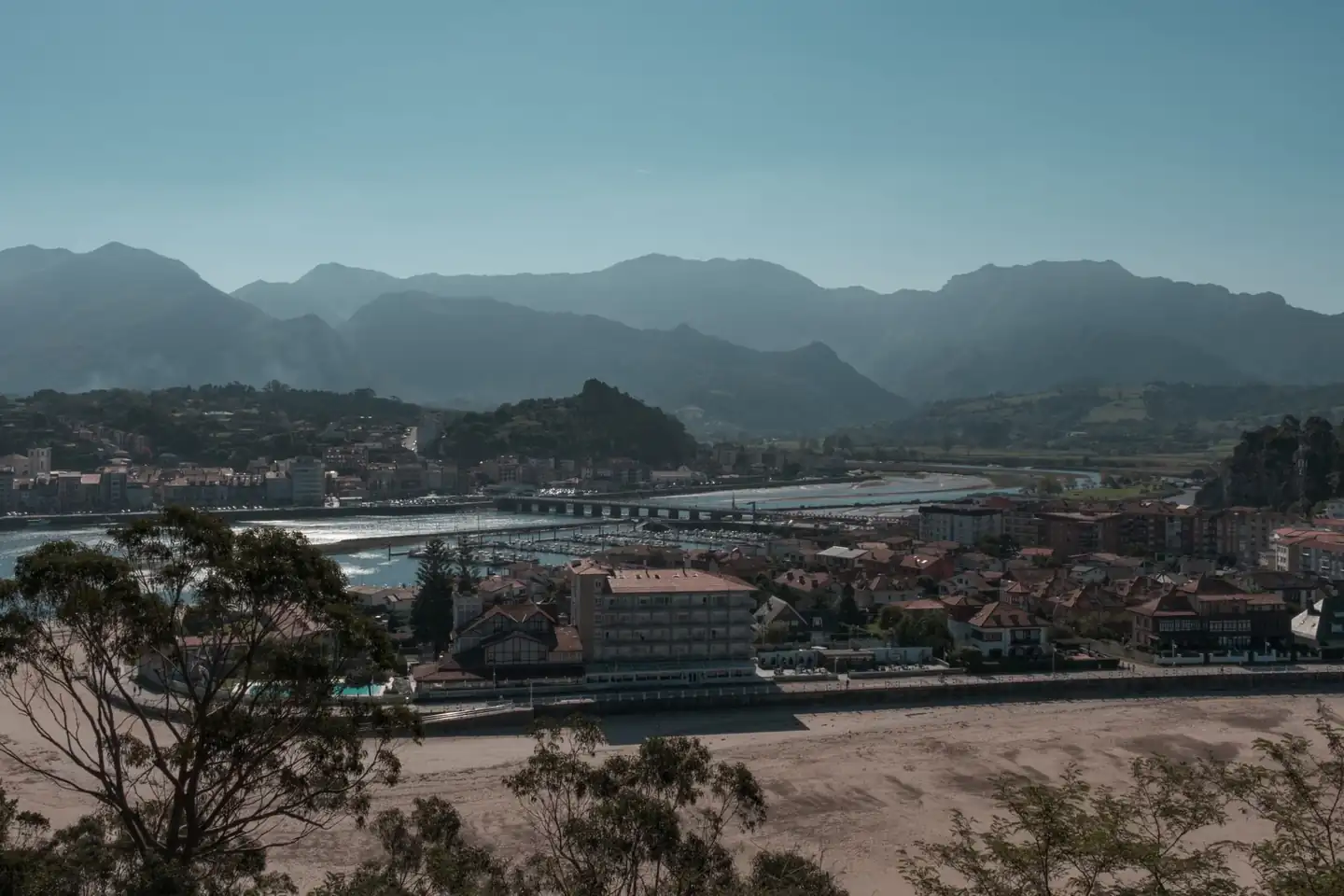
The Laviana 10K has earned a place among the races that attract those looking for speed without giving up a highly recognizable racing setting in Asturias. Pola de Laviana, the capital of the municipality, provides that human-scale feel that completely changes the experience: narrow streets, spectators close by, and a sense of clean competition, without gimmicks. Interest in this distance usually comes not only from the clock; it also stems from the combination of an accessible course, big-town organization, and an atmosphere that pushes from the very first kilometer.
For the recreational runner, this race has a clear value: it allows you to measure your true fitness over a demanding distance that is still very readable, where strategy matters as much as preparation. A well-planned 10K in Laviana usually works as an autumn or spring benchmark depending on the specific date of each edition, with paces that reward consistency and punish starts that are too aggressive. It is not a race to improvise; nor is there any need to turn it into an odyssey. That is where its appeal lies.
A 10K with its own identity in the heart of Asturias
Laviana does not compete with the noise of the major cities, and precisely for that reason it retains a personality that is very useful for recreational running. The setting of the municipality, with Pola de Laviana as its visible core, offers a race where closeness is felt at the start, in the support from the crowd, and in the way the course reads. Those coming from outside usually find a race that is more transparent than it first appears: the logistics are straightforward, the route is usually friendly for runners, and the atmosphere does not fall into the coldness of the big urban circuits.
In Asturias, 10K races are often shaped by terrain and weather, two factors that can significantly alter the final result. If the Laviana 10K course follows a fast philosophy, the key is to make the most of the most favorable part of the route without losing composure when the turns, false flats, or any short incline that breaks the cadence arrive. In this kind of race, every detail saves a few seconds, and those seconds end up separating a modest result from an outstanding mark.
There is also an emotional dimension that should not be underestimated. Running in Laviana is not just about collecting a bib; it is about taking part in an event that is best understood from a local perspective, with runners from the area, regular supporters, and an urban landscape that does not distract from the main goal. For those competing for time, that combination is almost ideal: few frills, a clear reading of effort, and a feeling of an honest race, one that gives nothing away but does not hide too many traps either.
Which type of runner fits this race best
The profile of the distance in Laviana usually favors those who already have a minimum endurance base and know how to hold a high pace for just over half an hour, depending on their level. A 10K does not forgive a lack of aerobic work, but it is also not decided by endurance alone. It requires a fairly precise mix of threshold, race pace, and running economy. That is why it is so appealing to recreational runners with prior experience in the 5K, half marathon, or even trail running who want to test themselves on the road with a specific goal.
It also suits those who want a serious benchmark without jumping into a half marathon. The 10K remains a very useful distance for reading fitness, because it reveals both a lack of endurance and a lack of sharpness. On a favorable course, a good performance in Laviana can confirm that the runner arrives with both legs and head in place; on a less forgiving one, it makes clear where the watch tightens the most. That reading, if interpreted well, is worth far more than a simple place in the standings.
First-timers can also find here a reasonable experience if they arrive with a solid training base. The secret is not to confuse accessible with easy. A 10K has a compact, almost short appearance, but it hides a tough mental stretch between kilometers 6 and 8, when the body starts asking for answers. Effort management makes a huge difference in a race like this, and Laviana, because of its size and format, usually makes that learning margin very visible.
The course and its little traps
Without exaggerating the difficulty, it is worth looking closely at any 10K. Even courses classified as fast include nuances that change the result: tight turns, changes of pace, 180-degree turns, uneven asphalt, or sections where the wind can play its part. In Laviana, the value of the route lies precisely in its ability to offer a race that is very measurable, but not mechanical. There is no perfect speed without reading the course, and that forces you to run attentively.
Runners aiming for a personal best usually appreciate two things: a first half where the body settles into rhythm without surprises and a second half where no unexpected issues appear to break the stride. In races like this, pace swings cost more than they seem. A start that is too enthusiastic may look profitable at kilometer 2, but by kilometer 7 it leaves the runner stuck. By contrast, a controlled, almost silent progression usually works better when the course allows momentum to be maintained and not interrupted by too many breaks.
Asturian weather adds another layer to the analysis. Humidity, wind, or a light rain change the perception of fatigue and grip on the ground. A 10-kilometer route can become a festival of sensations if the day is kind, but it can also turn into a patience race if the conditions feel heavy. Cool temperatures usually help; humid heat, on the other hand, forces more restraint than usual. That room for adaptation is part of the appeal of racing in the region.
How to run a distance like this best
In a 10K like the one in Laviana, the best race is rarely the most spectacular one. What works better is the race that keeps the body within a controlled range, with a solid first half and a second half driven by mental endurance. The goal is not to fly for two kilometers and then survive; it is to sustain a viable speed, comfortable only in appearance, until the effort turns into pure work. Consistency matters more than impulse.
Breathing is often a good indicator. When the race is going well, the runner quickly settles into a recognizable cadence and does not feel like they are fighting each stride. If the start has been too aggressive, breathing becomes disorganized and the pace starts to pay interest too early. In races of this kind, a difference of five or ten seconds per kilometer at the beginning can completely transform the outcome. Laviana, like other fast popular races, rewards intelligence more than enthusiasm.
It is also worth remembering that the 10K is a deceptively tricky distance from a mental point of view. It feels short for those coming from the half marathon, but it demands a much higher intensity; it feels long for those who only run 5K, but it is easier to control if there is a solid training base. The runner who understands that middle ground usually performs better. Neither a long sprint nor a fast walk: balance is the real art.
The role of the atmosphere and local fans
One of the reasons municipality races work so well is the involvement of the surroundings. In Laviana, that closeness can turn an individual effort into a collective experience. The runner hears references, sees familiar faces, and feels that the finish line is not an abstract point but a concrete place where the race becomes tangible. The crowd, even when not huge, adds a friendly pressure that helps sustain the pace in the toughest stretches.
That factor also has sporting value. Some runners perform better in a small race than in a big city because the scale reduces noise and increases concentration. The start feels more controlled, the splits are quickly memorized, and attention is focused on the real effort. The surroundings act as an emotional metronome: they do not run for you, but they keep you in the race when the legs start to doubt.
In the case of the Laviana 10K, that atmosphere also adds a territorial dimension. Asturias experiences running with a mix of passion, habit, and local pride, and that shows in road races. Visiting runners perceive a sporting culture that does not need major showcases to support a race. A well-designed course, a reasonable schedule, and a social fabric that pushes are enough. Sometimes, that matters more than any mega-event.
Preparing for a time goal without losing sight of the context
Anyone entering this 10K with a target time in mind should arrive with a very clear reference point. A sophisticated plan is not necessary to understand the distance, but it is advisable to respect a progression of work that includes pace changes, controlled-pace blocks, and some specific 10K-intensity sessions. The race punishes runners who only train easy, but also those who live too close to the threshold. Specificity matters, even if the course is favorable.
Race week usually benefits from simplicity. Less fatigue, more sleep, familiar meals, and a sensible warm-up. On 10K day, the body appreciates arriving light, not emptied out. In races of this distance, a moderate feeling of freshness can make a bigger difference than an extra quality session done at the wrong time. The usual mistake is trying to gain fitness in the last week; the reality is that fitness comes, or not, from the previous work.
It is also useful to have a realistic idea of the target pace. In a Laviana 10K, the dream time should be built on paces that have already appeared in training and previous races. The distance does not forgive fantasy. The ideal approach is to start with a simple plan: control the first third, stabilize the second, and accept the final stretch as a negotiation with fatigue. The race is often won before the start, in the way you understand it.
Why this kind of race still has such appeal
The recreational runner has become more demanding, but also more aware of what they are looking for. It is no longer enough to pile up kilometers; the race has to make sense, the trip has to be worth it, and the course has to allow running with purpose. The Laviana 10K fits that logic well because it blends competitive measurement, a recognizable territory, and a distance that still allows you to make the most of a Sunday without turning it into an expedition.
In addition, the 10K retains a virtue that other distances do not always offer: it is short enough to be intense and long enough to demand respect. That duality explains much of its popularity. In Laviana, with surroundings that are not overwhelming and a close-knit race atmosphere, that value is amplified. Some races are measured in seconds, and others are remembered for the feeling they leave when they are over; this one usually plays on both boards.
From a journalistic point of view, the interest in a race like this also responds to a simple truth: local running is still the real backbone of recreational sport. Major events attract headlines, but it is municipal races that sustain participation, feed enthusiasm, and give continuity to running culture. Laviana represents that middle scale well, where competition does not lose its essence and the runner does not become an anonymous number.
The image left by a finish in Laviana
In the end, a good 10K is not defined by the clock alone. The overall impression matters too: the compact start, the passage through streets with spectators close by, the feeling of having run in control, and the finish with the body challenged but not broken. In Laviana, that kind of experience fits well with what many recreational runners seek in a road race: a clear event, without too much noise, and with a finish that makes it easy to understand exactly what has been done.
That is why the Laviana 10K catches the attention of so many runners. It does not promise miracles or need to sell epic drama. Its value lies elsewhere: a course that can produce good times, a close atmosphere, and a recognizable Asturian identity. In an increasingly crowded calendar, that balance between performance and context carries a lot of weight. And perhaps that is its best argument, the one that needs no embellishment to convince anyone who arrives with shoes on, bib pinned, and the desire to really race.



How to prevent thigh chafing: causes and real solutions

Women’s running windbreakers: seven jackets and how to choose

Do more workouts get rid of soreness? A guide for runners

Jaén Half Marathon 2026: Record 3,800 Runners Registered

Men’s short running tights: how to choose the right pair

World Triathlon confirms data breach involving medical data

Izan Edo targets podium at Miyazaki World Cup

María Pérez ranks ninth in World Athletics’ 2026 top ten

Dos Santos, Duplantis and Sawe: World Athlete of the Year finalists

San Silvestre Vallecana 2026: 42,000 places, prices and start times

 Races3 months ago
Valencia Half Marathon 2027: date and registration

 Races3 months ago
Valencia Marathon 2026: entry, ballot and course

 Reviews and Comparisons4 months ago
Asics Gel-Roadmiles 3 for men: review and current price

 Reviews and Comparisons4 months ago
Asics Gel Sonoma 8 Gore-Tex: complete analysis for trail and rain

 Sneakers3 months ago
Saucony Endorphin Pro 4: full review and verdict

 News5 months ago
Strava API 2026: what changes for clubs, challenges and runner apps?

 Reviews and Comparisons5 months ago
Nike Alphafly 3: opinions, sensations, and real key points

 Reviews and Comparisons4 months ago
Under Armour running shoes review 2025-2026: models and key features

 Sports Equipment4 months ago
Shoe sizes in cm: a clear guide to getting the right fit for your footwear

 Sneakers3 months ago
Skechers GO RUN Consistent 2.0 analysis: comfort and limits

 News5 months ago
Valencia Marathon 2026 route: key tips to train and run better

 Sneakers4 months ago
Adidas Adizero Boston 13 for men: review and verdict