Routes
Running in La Rioja: where to run and how to make the most of it before running
Vineyards, trails, and popular races turn the region into a very complete destination for adding kilometers with variety.

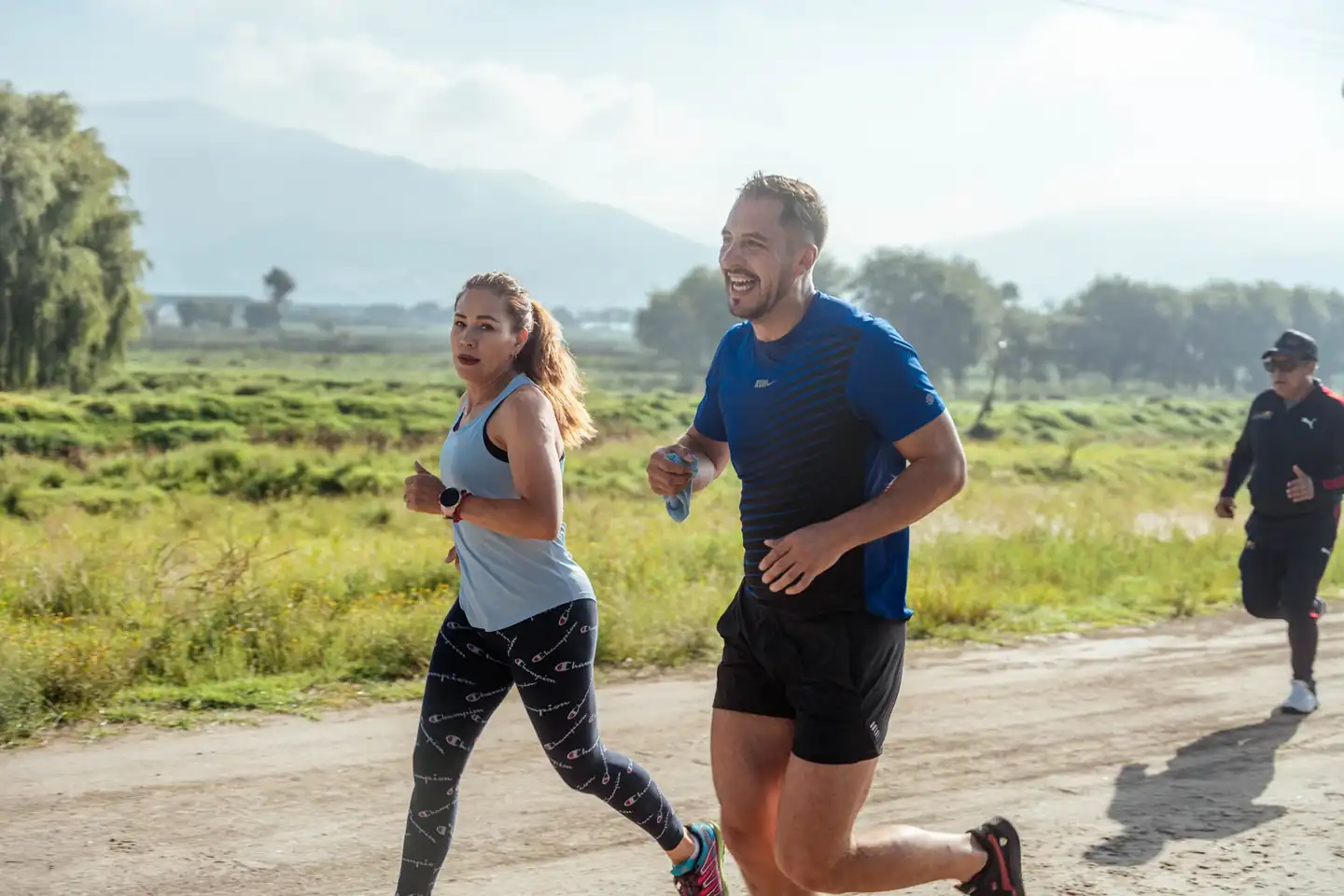
La Rioja has turned running into a way of reading the territory. In a community small in size, but very diverse in relief and landscapes, the runner finds urban asphalt, paths along the Ebro, trails among vineyards and moderate elevation changes that make it possible to train without leaving a very reasonable radius. That mix explains why more and more people are looking for places to go out and run, compete, or simply rack up kilometers with a sense of order and openness that is unusual in other areas.
The Riojan calendar also carries weight. Logroño, with its half marathon as the big event, concentrates much of the attention, but around the capital there are night races, popular races, mountain events and athletics-related events that give continuity to the season. The result is an ecosystem where the runner not only goes out to train, but can link goals, measure progress and find motivation in an agenda that, without being gigantic, is constant and very recognizable.
A compact community with many settings for running
The main virtue of La Rioja for the runner is its human scale. There is no need to make long trips to change scenery. In just a few minutes you can go from a wide avenue to a tree-lined riverbank, from a residential area to a rural stretch, from a flat route to a gentle slope that forces you to work on technique. That variety keeps training from becoming monotonous and makes every outing have a different texture, almost as if the route changed temperature just by turning a corner.
Logroño acts as the natural center of the running movement, but it does not monopolize the scene. Municipalities in Rioja Alta, Rioja Media and Rioja Oriental contribute quiet circuits, little-traveled secondary roads and routes with local flavor. In a region so closely tied to the agricultural landscape, the runner often moves among vineyards, orchards and small wooded areas, an environment that reduces the mental hardness of the effort and turns many training sessions into a very visual experience.
The climate is another decisive factor. Spring and autumn usually offer especially favorable conditions for running, with milder temperatures and clear light that stretches the afternoon. Summer demands more caution because of the heat, especially during the central hours, and winter can bring cold and windy sessions, although rarely with extremes that stop activity for too long. For those seeking consistency, that stability is valuable: it allows training weeks to be structured with fewer weather-related surprises than in other parts of northern Spain.
Where to stay near Logroño
Accommodation in the area, with prices. Choose your dates on the map.
Affiliate links: if you book through this map we earn a commission, at no extra cost to you.
Logroño as the epicenter of asphalt and sporting life
The Riojan capital concentrates the most urban side of regional running. Its wide promenades, the stretches along the Ebro and several convenient connections with residential neighborhoods make it possible to add kilometers with relative safety and without needing to improvise too much. For tempo work, controlled intervals or long runs, Logroño offers familiar ground, easy to measure and with enough traffic not to feel isolated.
The La Rioja Half Marathon sums up that central role very well. Its announcement, made for Logroño with the expectation of surpassing one thousand registered runners, confirms that the city remains the main reference point on the calendar. It is not just another race; it acts as a showcase for the health of popular athletics in La Rioja and as a barometer of participation at a time when races must compete with increasingly crowded schedules. In that context, surpassing one thousand bibs is no small detail: it speaks of roots, loyalty and a base of runners that keeps the interest in competing alive.
The city also gains appeal from the atmosphere surrounding athletic events. Around competitions and events, Logroño blends sport, social life and a gastronomic offer that ends up extending the experience beyond the stopwatch. That combination does not replace training, but it does wrap around it. For many runners, running here has something of a quiet celebration: you go out to run, yes, but you also belong for a few hours to an urban pulse that breathes at the pace of a running shoe.
The Riojan calendar and its most recognizable events
Popular races remain the backbone of interest in running in La Rioja. The La Rioja Half Marathon marks a clear peak of attention, but around it appear races that cover different runner profiles. The Antonio Moreno de Frutos Memorial Night Athletics event, held at CTD Adarraga on June 6 with free admission, adds another layer: it is not just competition, but also an athletics spectacle and a social gathering. Its program includes events such as the 100 Popular, throws, men’s 1500-meter races and women’s 400-meter races, as well as long jump.
That memorial also has obvious symbolic value. It brings back the figure of Antonio Moreno, founder of La Rioja Atletismo, and links the club’s present with a memory that helps explain how local athletics has been built. The inclusion of live music, a DJ, painting workshops and food tastings broadens the format without stripping it of sporting content. At a time when many competitions are looking to stand out, this kind of event shows that running can also naturally connect with culture.
The June schedule draws a clear sequence of activity. Global Running Day, the Albelda Challenge or The Most Sporting Night complete a stretch of the season that keeps participation alive. For the runner, this matters for a simple reason: motivation does not depend only on individual training, but on having nearby, varied and reasonable goals. When the calendar works, each week has a reason to keep adding work, and in a sport as patient as this one, that is worth almost as much as a perfect plan.
Mountain, trail and mixed terrain: the other Rioja that is also run
La Rioja cannot be understood only from the asphalt. Its geography, though contained, offers changes in elevation, compact dirt paths and rural settings that have given space to trail running and mixed events. The XI Matutrail, with victories by David Rioja and Marina Cabrero in the long distance, is a clear example of how Riojan runners also look for elevation gain, mud when it comes, and less predictable routes. That kind of event broadens the sporting map and breaks the idea that the community is limited to urban runs and road races.
The mixed terrain has a special value for those who train regularly. It forces you to adjust your stride, to watch the ground with a bit more attention and to understand that pace is not always dictated by the watch. On trails and tracks, effort is distributed differently. Foot strikes change, breathing becomes more hands-on and the runner learns to read the body more carefully. In a region where the relationship between landscape and physical activity is so close, that adaptation fits naturally.
The Riojan mountains also provide a psychological advantage. Since it is not an oversized environment nor excessively technical in many of its areas, it allows people to get started in trail running without immediately entering a logic of high specialization. That favors the transition from asphalt to tougher routes. For those who see running as a long-term practice, this possibility of alternating surfaces is almost a luxury: it reduces boredom and multiplies stimuli without requiring complex logistics.
Training in La Rioja: pace, heat and practical safety
Training planning changes quite a bit depending on the time of year. In summer, the heat forces you to set outings earlier and be very careful with hydration, especially on sticky days or when there is dry wind. In a community where temperatures can hit hard at the end of spring and in the middle of summer, running at midday stops being a good idea for most profiles. The logic is simple: better to get up early, cut intensity if necessary and accept that the body performs better when the thermometer is not punishing it so much.
The city and the rural surroundings also call for different decisions. In Logroño, lighting, traffic and the presence of other users of the space mean you have to choose schedules and routes carefully. Outside the urban center, the quiet increases, but it is also wise to pay attention to visibility, the presence of vehicles on secondary roads and stretches where the surface can change abruptly. Running well in La Rioja is not just about adding kilometers; it means interpreting the terrain with common sense.
Runners who move around the region usually appreciate the regularity of the relief. It is not a rugged territory, and that makes it possible to work consistently. There are plenty of routes to hold steady paces, absorb loads without extreme shocks and build aerobic base without needing to go up and down mountains every week. That topographic moderation, when used well, makes La Rioja especially useful for preparing half marathons, 10-kilometer races and endurance seasons with very specific goals.
Routes, landscapes and the feeling of running among vineyards
Few images are as closely associated with Riojan identity as that of the runner among vineyards. That postcard is not an empty slogan. It has a real basis in routes that cross agricultural areas, paths that border estates and stretches where the landscape opens into ordered, almost geometric lines of vines and dark soil. The runner’s rhythm blends there with a visual calm that lowers mental noise. Sometimes the stride seems to follow the order of the rows, as if the landscape were setting its own cadence.
That aesthetic value has practical consequences. Running in pleasant surroundings makes training adherence easier, especially in heavy weeks or in phases when motivation starts to wear down. La Rioja, with its mix of agricultural landscape, manageable urban centers and nearby natural spaces, offers many outings that do not require artificial epicness. There is no need to look for the grand stage when the everyday surroundings already provide enough stimulus.
There is also a cultural component that matters. Running through La Rioja is not just doing sport in a beautiful place; it is moving through a community where the land has been worked for centuries and where each town has a very marked relationship with its surroundings. The runner who stops for a minute, breathes and looks around usually finds a mix of tradition and modernity that is very much the region’s own. That combination, quiet but constant, helps the experience leave a different mark than other more uniform destinations.
The impact of popular races on local life
Races do not just attract runners; they also activate the city. An event like the La Rioja Half Marathon or a night race at Adarraga mobilizes volunteers, services, businesses and weeks of prior conversation. In medium-sized or small territories, this effect is more noticeable than in large capitals because the race does not just pass through: it enters the agenda, fills sidewalks and leaves a trail of participation that continues in bars, clubs and training groups.
Recovering sporting memory is also important. When a race pays tribute to a local reference or includes cultural elements, the competition stops being just a result and gains depth. The Antonio Moreno de Frutos Memorial fits precisely into that idea. It does not limit itself to scheduling athletics; it places it within a narrative of club, city and community. That dimension explains why certain events endure over time even when the calendar fills up with alternatives.
In La Rioja, popular athletics remains a discreet form of cohesion. It brings together veteran runners and first-timers, clubs and unaffiliated enthusiasts, people looking for a time and others who just want to finish the distance solidly. The value of that mosaic is not in spectacle, but in continuity. A region where events maintain a recognizable identity and a manageable scale builds a more stable relationship with runners, and that shows in the loyalty of participation.
A way of running that combines memory, landscape and calendar
La Rioja has earned its own place on the map of Spanish running for very specific reasons. It has a comfortable city for training, vineyard routes that give it personality, popular events well anchored in the calendar and an athletic fabric that keeps producing events with a story. It does not offer the scale of the big cities or the extreme relief of Alpine destinations, but it does offer something perhaps more useful for most people: enough variety, reasonable distances and an identity that does not disappear when you run it.
That is why the runner who moves through the region is not looking only for a surface to put one foot in front of the other. They are looking for context, variety and a certain truth in the route. La Rioja responds with paths, avenues, trails and events that turn every outing into one more piece of a sporting map that keeps growing without losing its human scale. In a sport that rewards consistency, that balance between landscape and calendar is worth almost as much as any time.
And there lies, probably, the key to its appeal. Running here is not reduced to training in a specific place, but to entering a community that has made athletics a recognizable expression of its way of inhabiting the territory. Between Logroño, the towns along the riverbank, the routes among vineyards and the events that return every year, La Rioja offers something uncommon: a setting where running keeps the flavor of the close at hand without giving up sporting ambition.



How to prevent thigh chafing: causes and real solutions

Women’s running windbreakers: seven jackets and how to choose

Do more workouts get rid of soreness? A guide for runners

Jaén Half Marathon 2026: Record 3,800 Runners Registered

Men’s short running tights: how to choose the right pair

World Triathlon confirms data breach involving medical data

Izan Edo targets podium at Miyazaki World Cup

María Pérez ranks ninth in World Athletics’ 2026 top ten

Dos Santos, Duplantis and Sawe: World Athlete of the Year finalists

San Silvestre Vallecana 2026: 42,000 places, prices and start times

 Races3 months ago
Valencia Half Marathon 2027: date and registration

 Races3 months ago
Valencia Marathon 2026: entry, ballot and course

 Reviews and Comparisons4 months ago
Asics Gel-Roadmiles 3 for men: review and current price

 Reviews and Comparisons4 months ago
Asics Gel Sonoma 8 Gore-Tex: complete analysis for trail and rain

 Sneakers3 months ago
Saucony Endorphin Pro 4: full review and verdict

 News5 months ago
Strava API 2026: what changes for clubs, challenges and runner apps?

 Reviews and Comparisons5 months ago
Nike Alphafly 3: opinions, sensations, and real key points

 Reviews and Comparisons4 months ago
Under Armour running shoes review 2025-2026: models and key features

 Sports Equipment4 months ago
Shoe sizes in cm: a clear guide to getting the right fit for your footwear

 Sneakers3 months ago
Skechers GO RUN Consistent 2.0 analysis: comfort and limits

 News5 months ago
Valencia Marathon 2026 route: key tips to train and run better

 Sneakers4 months ago
Adidas Adizero Boston 13 for men: review and verdict