Routes
Running routes near me: key considerations, common mistakes, and tips
Comfortable, safe, and varied routes to help you choose where to run based on your area and fitness level.

Running routes near me: key factors, common mistakes and tips
The best runs are not always far away: they often start on the sidewalk next door, in a neighborhood park or alongside a waterway that goes unnoticed amid the urban noise. Looking for nearby routes responds to something very specific: the desire to train without wasting time, on a reasonably designed route, with a certain level of safety and in surroundings that do not turn every kilometer into a small battle against traffic lights, cars or poorly measured inclines.
Choosing the right nearby route completely changes the experience. A comfortable circuit makes you want to repeat it, reduces the mental friction before heading out and makes it easier to maintain a consistent routine; an uncomfortable one, on the other hand, wears you down before you even start. That is why the key is not just finding a beautiful place, but recognizing what truly makes a route work for running: continuity, surface, lighting, foot traffic, shade, access and, whenever possible, room to adjust the distance without having to improvise too much.
How to recognize a good route just minutes from home
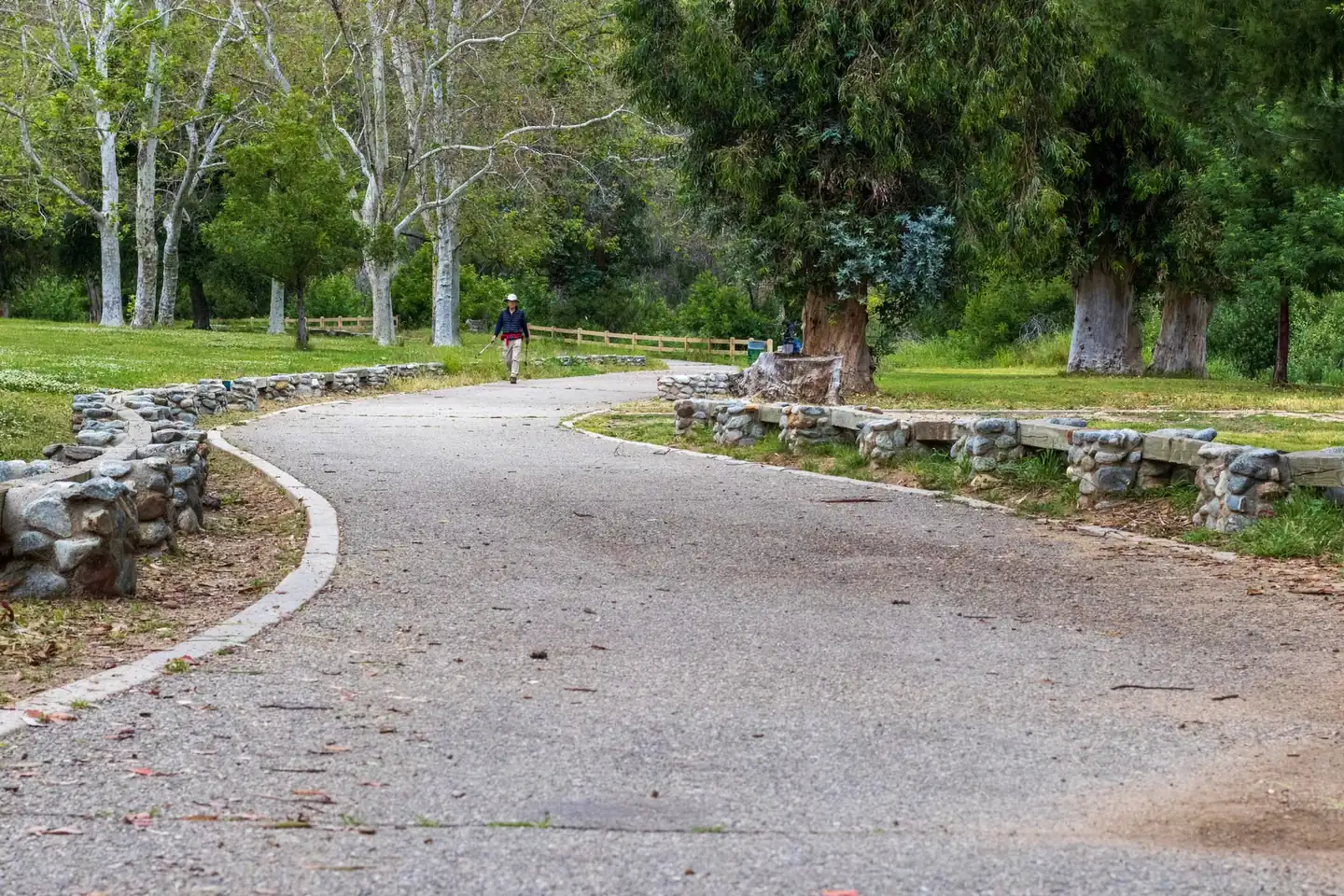
A useful running route combines three things that rarely come together by chance: flow, predictability and pleasant surroundings. Flow prevents unnecessary stops; predictability makes it possible to know what to expect at every stage; and the surroundings, although they may seem like a secondary detail, affect your mood just as much as your pace. A well-maintained riverside path, a greenway or a spacious park will usually offer fewer interruptions than a network of narrow streets and constant crossings.
It is also worth paying attention to the type of terrain. Even asphalt makes it easier to maintain a steady pace, while compacted dirt reduces impact at certain times, although it requires more attention. Loose paving stones, high curbs and areas with frequent changes in gradient add noise to your running form. You cannot always choose, but it is worth knowing which surface suits each run. For easy runs, continuity is what matters; for faster workouts, a slightly undulating profile can add variety without requiring an overly demanding route.
Safety matters more than it may seem. Lighting, clear pedestrian lanes, visibility at crossings and a certain amount of activity from other users all provide peace of mind, especially early in the morning or at dusk. In large cities, many people opt for seafront promenades, peri-urban parks or green corridors because they allow them to run with less visual friction and fewer changes of direction. In residential areas, short loops around a housing development or a linear park can be a much more practical alternative to heading out onto traffic-heavy avenues.
Why nearby routes work better than improvising every day
Consistency is built on low friction. The less mental effort it takes to head out, the more likely the session is to happen. Having several nearby options mapped out keeps you from depending on your mood that day or on complicated planning. It also reduces dead time: instead of losing half an hour getting somewhere, that time can be spent warming up calmly, extending the useful part of the workout or simply getting home earlier.
This logic does not only benefit beginners. More experienced runners also gain from knowing their regular routes inside out, because they can gauge their effort more accurately, adjust their heart rate and repeat workouts precisely. A familiar route becomes almost like a small laboratory: one day it works for an easy run, another for pace changes and another for recovery. Familiarity does not reduce quality; on the contrary, it can provide a stable foundation.
There is also a less discussed tactical advantage: nearby routes make it easier to adapt a session to the weather. On hot days, a runner can choose tree-lined areas, shaded avenues or stretches alongside the water. When the wind picks up, a more sheltered loop between buildings may be the better option. If it rains, a firmer, more visible surface matters more than a beautiful view. The best nearby route is not the most famous one; it is the one that remains useful when conditions change.
The landscapes that help you run without checking the clock every minute
A good setting supports your pace almost without you realizing it. Spacious parks ease the feeling of being enclosed; greenways, with their long, simple layout, convey an almost railway-like calm; riverside paths provide a natural rhythm, as if the body were syncing with the water flowing alongside it; and coastal trails, when available, add that balance between an open horizon and a breeze that clears your head.
Spain has plenty of settings that work well for a 5, 8 or 12-kilometer run without any major complications. Coastal areas offer flat routes and open views; former railway lines converted into paths for walking or cycling are often comfortable for running; and many metropolitan parks, even within densely populated cities, have inner loops suitable for adding kilometers with few interruptions. Runners are not always looking for something epic; sometimes they just want continuity, a decent straight stretch and some air.
It is worth remembering, however, that what is beautiful is not always the most practical. A scenic trail with too many steps may work for a particular day, but not for a repeatable routine. By contrast, a less photogenic route that is regular and accurately measured eventually becomes the favorite because it allows you to train without negotiating every meter. That is the trick: the scenery adds value, but logistics make the decision.
Distance, elevation and terrain: what you really need to look at
There is no ideal distance outside the context of the workout. For an easy session, a 4- or 5-kilometer loop repeated twice may be enough; for a medium-length run, an 8- or 10-kilometer loop may be more suitable; and for a long run, the best option is a combination of sections that lets you add distance without losing your bearings. What matters is not that the route is long, but that it matches the planned training load for that day.
Elevation completely changes how effort feels. A 6-kilometer route with a constant climb can leave a bigger mark than a completely flat 9-kilometer route. That is why looking for nearby routes usually requires more than just checking the map: you need to understand how the inclines are distributed. A gentle, progressive profile is usually kinder for most easy runs, while short climbs can work well for building strength without having to look for mountainous terrain.
The terrain also affects impact. Asphalt makes it easier to read your pace and is usually the most predictable option; compacted dirt may feel more comfortable on the legs, but it requires attention to roots, gravel and puddles; parks with mixed surfaces offer variety, although they sometimes require you to adjust your foot strike. In any case, the best choice is the one that fits the goal of the day and the runner’s physical condition. Not every workout needs the same surface.
How to make the most of parks, promenades and greenways without overcomplicating things
The most useful circuits are usually the ones you can start and finish without a major logistical effort. An urban park with an outer loop, a riverside promenade with easy access points or a greenway with nearby parking allow you to go for a run without turning the workout into an excursion. That ease, which may seem minor, makes a big difference to how often you put your running shoes back on.
Large parks have one clear advantage: they offer options within the same area. You can do a short lap, link two loops or extend the session without completely losing your bearings. Seafront promenades work in much the same way, although they offer more exposure to the wind and sometimes attract more pedestrians. Greenways, for their part, stand out for their continuity and usually provide consistent surfaces that make it easier to maintain your pace.
What to check before heading out: map, light, noise and safety
A map does more than show streets; it also anticipates how a route will feel. The total distance matters, but elevation, turns and surface type can completely change the level of difficulty. An 8-kilometer flat route may feel more manageable than a 6-kilometer route with frequent short climbs. This initial check prevents surprises and makes it possible to adjust expectations from the very beginning.
Lighting is a key variable, especially during the winter months or for runs early in the morning or at dusk. Runners who go out at night tend to prefer familiar, straight and well-lit routes. In quieter areas, visibility and the feeling of isolation are decisive factors for peace of mind during the workout.
Noise also weighs more than it may seem. Areas with heavy traffic, terraces or constant construction can make a session feel harsher than it appeared on paper. By contrast, a circuit with trees, an even surface and fewer sources of noise helps you settle into an almost meditative rhythm. Absolute silence is not necessary; it is enough for the surroundings not to compete with your breathing the whole time.
Adapting your choice to your level and training frequency
A beginner does not need a spectacular route; they need a friendly one. That means little traffic, simple crossings, minimal elevation and a reasonable distance that does not force them to stop every few minutes. Ideally, it should be a circuit that is easy to memorize, allowing the runner to focus on their form rather than on finding their way. Confidence comes from repetition, not from the scenery.
For someone who already runs regularly, the route should respond to the specific goal of the workout: a flat circuit for intervals, a trail with elevation for strength or a greenway for continuous running. Variety is key to avoiding monotony and distributing the physical and mental load more effectively. Having several nearby options — a standard circuit, an emergency route and a long run — is the best strategy for staying disciplined and adapting to each day.
In addition, details such as the presence of water fountains, restrooms, benches or shaded areas can make a difference to the quality of the experience, especially in changing climates such as Spain’s.



How to prevent thigh chafing: causes and real solutions

Women’s running windbreakers: seven jackets and how to choose

Do more workouts get rid of soreness? A guide for runners

Jaén Half Marathon 2026: Record 3,800 Runners Registered

Men’s short running tights: how to choose the right pair

World Triathlon confirms data breach involving medical data

Izan Edo targets podium at Miyazaki World Cup

María Pérez ranks ninth in World Athletics’ 2026 top ten

Dos Santos, Duplantis and Sawe: World Athlete of the Year finalists

San Silvestre Vallecana 2026: 42,000 places, prices and start times

 Races4 months ago
Valencia Half Marathon 2027: date and registration

 Races4 months ago
Valencia Marathon 2026: entry, ballot and course

 Reviews and Comparisons4 months ago
Asics Gel-Roadmiles 3 for men: review and current price

 Reviews and Comparisons4 months ago
Asics Gel Sonoma 8 Gore-Tex: complete analysis for trail and rain

 Sneakers4 months ago
Saucony Endorphin Pro 4: full review and verdict

 News5 months ago
Strava API 2026: what changes for clubs, challenges and runner apps?

 Reviews and Comparisons5 months ago
Nike Alphafly 3: opinions, sensations, and real key points

 Reviews and Comparisons4 months ago
Under Armour running shoes review 2025-2026: models and key features

 Sports Equipment4 months ago
Shoe sizes in cm: a clear guide to getting the right fit for your footwear

 Sneakers3 months ago
Skechers GO RUN Consistent 2.0 analysis: comfort and limits

 News5 months ago
Valencia Marathon 2026 route: key tips to train and run better

 Sneakers4 months ago
Adidas Adizero Boston 13 for men: review and verdict