Routes
Shortest Camino de Santiago: which one is it and what you should know
The shortest route to get to Santiago, with its minimum kilometers, useful sections, and practical tips.

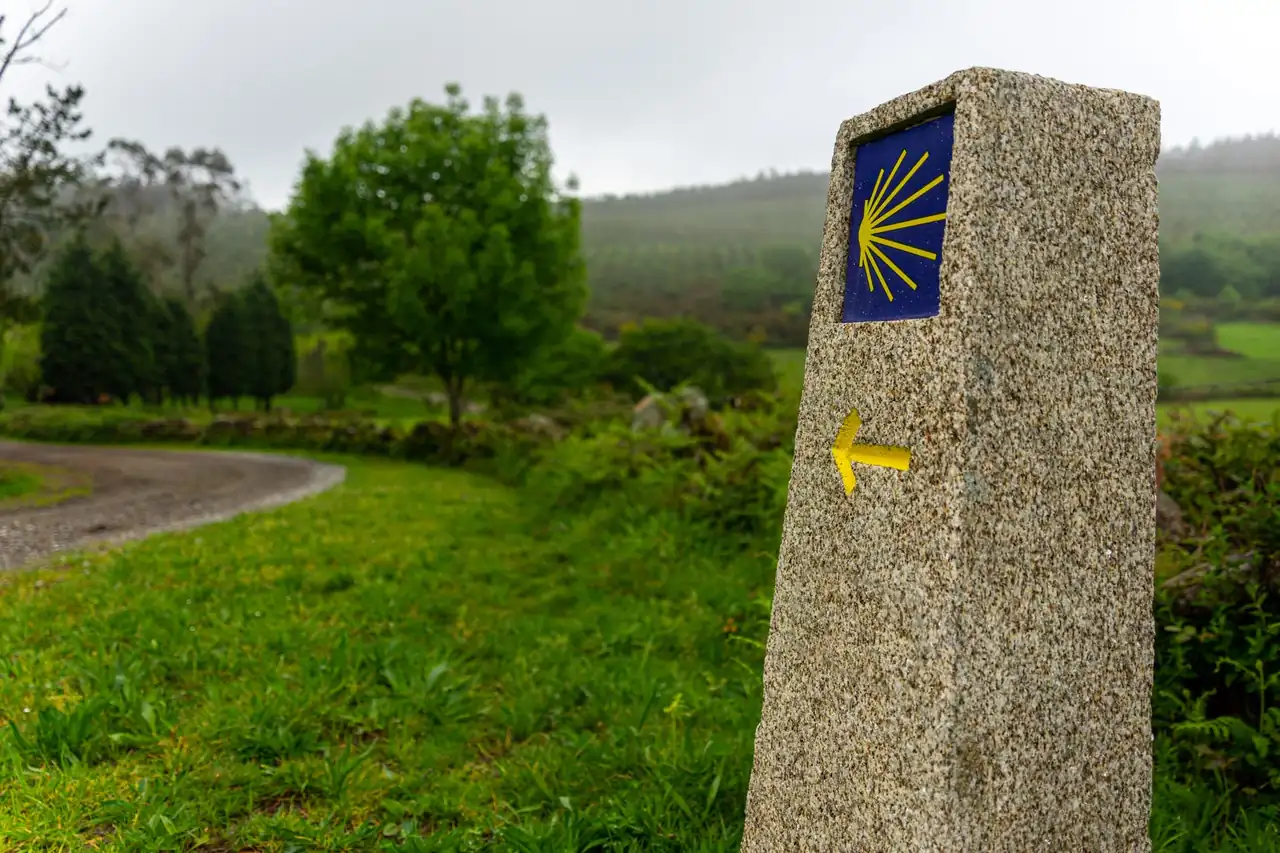
The shortest route to reach Santiago de Compostela is not a single straight line, but a combination of stretches that begins at the minimum threshold required to obtain the Compostela: 100 kilometers on foot or on horseback, or 200 by bicycle. That figure sets the mental map of any pilgrim with little time, because it leaves out many access stages and focuses attention on the final days of the French Way and on some border points of other Jacobean routes.
In practice, the itinerary that makes the most sense for anyone looking for the shortest possible route usually starts in Sarria, on the French Way, because from there there are just over 100 kilometers left to the cathedral. Other alternatives also include the English Way from Ferrol, the Primitive Way from Lugo, or the Winter Way from Monforte de Lemos, although those options usually hover around the limit or remain just above the official requirement. The difference is not only mathematical: the landscape, the level of services, and the final feeling of the experience all change.
The limit that defines a short Way
The Compostela is granted to the pilgrim who proves having completed at least 100 kilometers on foot or on horseback, or 200 if traveling by bicycle, with the credential duly stamped. This requirement explains why the concept of a short route on the Camino de Santiago is measured less by the fame of the itinerary than by the actual distance to the goal. It is not enough to start nearby; you must add the necessary kilometers and do so in a sequence that can be verified.
That is where the popularity of the final stretches comes from. Anyone with only a few days usually looks for a balance between logistical simplicity and symbolic value. The result is a kind of modern pilgrim’s waterline: neither a month-long crossing nor a single outing, but a compact journey that preserves the liturgy of the Way, its stamps, its landscapes, and the arrival at Obradoiro Square. Brevity does not reduce its depth; it often concentrates it.
The choice also depends on the means of travel. On foot, 100 kilometers are manageable in five or six stages of between 15 and 25 kilometers. By bicycle, the threshold doubles and requires thinking about a different kind of route. That is why, when talking about the shortest Camino, it is useful to separate the question in two: which is the shortest stretch that still qualifies for the Compostela, and which is the shortest, most useful, and most comfortable experience for a first time.
Sarria, the most used stretch to arrive with room to spare
Sarria is the most repeated reference point when talking about the short Camino because it sits just above the official minimum. From there to Santiago there are about 113 kilometers, according to the usual route, a distance that fits into five stages and leaves little room for improvisation. That combination of the right figure, abundant signage, and plentiful accommodation has made this starting point the gateway for thousands of pilgrims every year.
The route preserves the Jacobean character without demanding extraordinary physical preparation. The days are usually manageable and the terrain lacks the harshness of other mountain routes. In addition, this stretch maintains that dramatic progression so typical of the Camino: small villages, oak groves, bridges, rivers, narrow paths, and the gentle ascent toward the emotion of arriving in Santiago. It is not just a shorter walk; it is a distilled version of the tradition.
There is also a logistical reason that matters a great deal. In the final hundred kilometers of the French Way, services are better established than on other less-traveled routes. There are more hostels, guesthouses, and transfers, which makes it easier to walk lightly and reduces the margin for error. For those traveling with little time, that support network matters as much as the kilometers.
The English Way and other short starting points that also fit
The English Way from Ferrol is another common answer when time is tight. Its length is around 119 kilometers, so it comfortably exceeds the minimum required for the Compostela and can be completed in about five or six days. It has a different personality from the Sarria stretch, with a more Atlantic atmosphere and fewer pilgrims, which translates into a calmer environment and, for some, a more authentic one.
The Primitive Way from Lugo and the Winter Way from Monforte de Lemos also appear among the short options, but with an important nuance: their value is not in being the shortest in absolute terms, but in offering starting points that allow you to reach the official minimum without walking the full route. Lugo, for example, places the pilgrim at the 100-kilometer threshold within the Primitive Way, while Monforte de Lemos does something similar on the Winter variant. These are routes with greater historical depth and less overcrowding, although they may demand more from the walker.
The choice among these alternatives depends on the kind of experience you want. Ferrol offers a more discreet Camino, Lugo provides a more austere entry, and Monforte opens access to a less known route, with a different rhythm and character. Sarria, by contrast, concentrates most of the demand because it combines ease, compliance with the requirement, and a very clean transition toward Santiago. It is the short journey par excellence, though not the only one.
The final stretches and why they matter so much
In the logic of the Camino, the last kilometers are not just a finishing touch. They are the space where fatigue, memory, and expectation come together. On the route from Sarria, the stages pass through Portomarín, Palas de Rei, Arzúa, and O Pedrouzo before entering Santiago. It is a chain of villages that works almost like an emotional staircase: each day brings the end closer while, at the same time, stripping away some of the noise from the journey.
One reason this stretch works so well is that it preserves enough variety without becoming excessive. There are days of moderate effort, others that are longer, and a succession of rural landscapes that change with the light. There are margins of fatigue, but they do not crush the experience. The short route does not cut the epic down; it organizes it into more manageable chapters.
Moreover, the signage is usually clear and the network of accommodations allows the walk to be split with great precision. That attracts travelers with fixed schedules, people seeking a first introduction, and also walkers who return to the Camino after having done longer routes. The final stretch of the French Way has something of a familiar ceremony, like a melody many recognize without having heard it all the way through.
What changes between a short route and a long route
The size of the itinerary changes the experience significantly. On a long route, the Camino becomes a progressive immersion; on a short one, it feels more like an intense distillation. There is less time to adapt to the rhythm, less room for rest days, and a different relationship with fatigue. Each stage weighs more because the end is close from the first day.
That does not mean a short route is easier in every sense. The concentration of stages can make the body feel the accumulated kilometers sooner, especially if it is tackled in a hurry or without much training. But, in return, the logistics are simpler and the schedule fits better with week-long getaways. The time variable changes the way you walk, not just the duration of the trip.
In experiential terms, the short Camino usually leaves less room for distraction and more for concrete observation. A stone bridge, a light rain on the pavement, the mist at dawn, the sound of backpacks crossing a village. With fewer days, the pilgrim sharpens. They look more, compare less, and enter the cadence of repeated steps sooner.
Which short route suits each pilgrim profile
For a first time, Sarria remains the most solid option. Its balance of kilometers, services, and ease of access makes it an almost automatic choice for anyone who wants to meet the minimum distance without complications. The stretch is so well established that even someone with little experience can organize it with relative peace of mind if they respect the pace and do not overestimate the stages.
The English Way suits those who prefer fewer people and do not need the best-known postcard of the French Way. Its profile is more intimate, a bit more maritime at the start, and with a feeling of a route less exploited by tourism. Lugo, on the Primitive Way, may appeal to those who tolerate elevation changes better and seek an older historical imprint. Monforte, on the Winter Way, sits somewhere between rarity and demand.
On a more practical level, the decision also depends on how many days are available. Five or six days are enough for Sarria or Ferrol, while other alternatives may require more flexible planning if you want to walk with a safety margin. The shortest route is not always the most convenient; sometimes the best one is the one that fits the body, the calendar, and the type of pilgrim best.
How the arrival is resolved without losing the meaning of the Way
The final stretch almost always ends with the same image: entering Santiago, crossing historic streets, and seeing the cathedral appear like a stone magnet. That ending has a power that does not depend on having started very far away. On the contrary, for many walkers the emotion becomes clearer precisely because the journey has been brief and concentrated. Each day matters more and the arrival feels like a well-calculated reward.
Entering through the city adds a different layer to the route. The damp wood of the arcades, the shiny pavement if it has rained, the murmur of the square, the fatigue slipping from the shoulders when the façade comes into view. The end of the Camino does not function as a purely sporting finish; it acts as an intimate confirmation. The route has been short, yes, but not small.
That is why the phrase shortest Camino de Santiago contains more nuances than it seems. It does not designate only a distance, but a travel decision. It speaks of available time, expectations, physical level, preference for more crowded or quieter places, and a specific way of entering the Jacobean rite. In that mix of measure and symbolism lies much of its appeal.
The right distance between haste and experience
The popularity of short stretches has grown because they fit modern life, fragmented and fast, yet still leave room for a meaningful experience. Sarria, Ferrol, Lugo, and Monforte are not empty shortcuts; they are different gateways to the same city and to a tradition that remains alive because it admits many scales. A month, a week, or five days can lead to the same destination, even if each way of arriving tells a different story.
That diversity holds the most honest answer. There is not just one short Way, but several entry points adapted to different amounts of time. Sarria dominates by logic, Ferrol appeals for balance, and Lugo and Monforte seduce through character. All meet the basic condition of not losing the meaning of the journey and of preserving the right to the Compostela, which in the end remains a symbol, not a mere bureaucratic credential.
The best way to read that search is not to think in terms of the fewest possible kilometers, but of the stretch that preserves the spirit of the Camino without overflowing the calendar. That is the exact measure of a well-chosen short route: short enough to be possible, long enough to leave a mark.
You may also like: Which is the easiest Camino de Santiago for beginners?.



How to prevent thigh chafing: causes and real solutions

Women’s running windbreakers: seven jackets and how to choose

Do more workouts get rid of soreness? A guide for runners

Jaén Half Marathon 2026: Record 3,800 Runners Registered

Men’s short running tights: how to choose the right pair

World Triathlon confirms data breach involving medical data

Izan Edo targets podium at Miyazaki World Cup

María Pérez ranks ninth in World Athletics’ 2026 top ten

Dos Santos, Duplantis and Sawe: World Athlete of the Year finalists

San Silvestre Vallecana 2026: 42,000 places, prices and start times

 Races3 months ago
Valencia Half Marathon 2027: date and registration

 Races3 months ago
Valencia Marathon 2026: entry, ballot and course

 Reviews and Comparisons4 months ago
Asics Gel-Roadmiles 3 for men: review and current price

 Reviews and Comparisons4 months ago
Asics Gel Sonoma 8 Gore-Tex: complete analysis for trail and rain

 Sneakers3 months ago
Saucony Endorphin Pro 4: full review and verdict

 News5 months ago
Strava API 2026: what changes for clubs, challenges and runner apps?

 Reviews and Comparisons5 months ago
Nike Alphafly 3: opinions, sensations, and real key points

 Reviews and Comparisons4 months ago
Under Armour running shoes review 2025-2026: models and key features

 Sports Equipment4 months ago
Shoe sizes in cm: a clear guide to getting the right fit for your footwear

 Sneakers3 months ago
Skechers GO RUN Consistent 2.0 analysis: comfort and limits

 News5 months ago
Valencia Marathon 2026 route: key tips to train and run better

 Sneakers4 months ago
Adidas Adizero Boston 13 for men: review and verdict