Routes
Taxis ascent to Circ de Colomèrs: access, hours, and price
Schedules, fares, and tips for going up to the Circ de Colomèrs in a 4×4 taxi, hassle-free and with useful information.

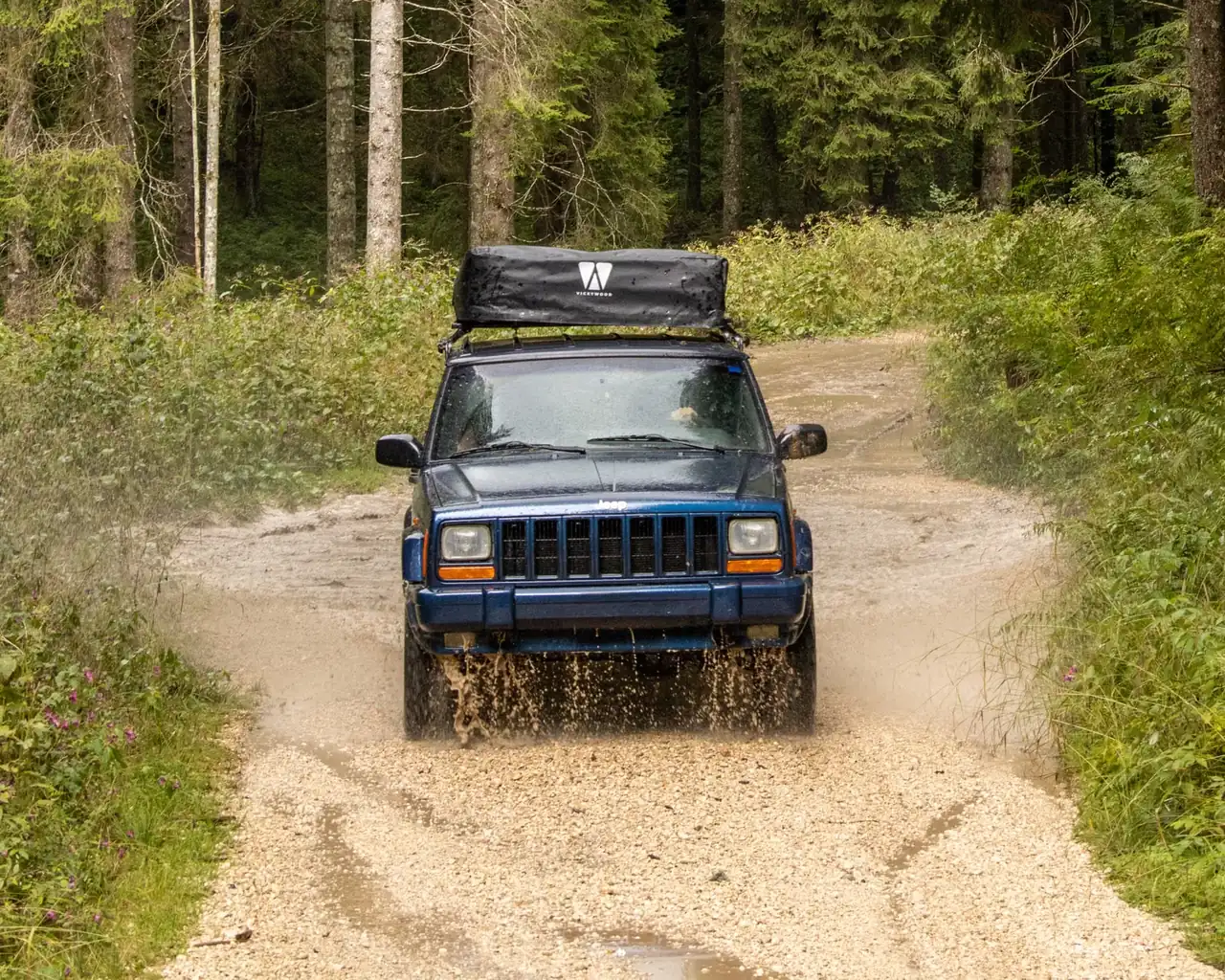
The taxi climbs to the Circ de Colomèrs has become a key feature for those who want to enter one of the valley’s most visited landscapes without wasting energy on the first stretch. In summer, access to Plan des Banhs and the upper part of the route relies on authorized vehicles that cut down the kilometers, spare you the most tedious elevation gain, and leave visitors closer to the heart of the glacial cirque, where the lakes and the most recognizable footbridges begin.
The most repeated reference among travelers and guides agrees on one point: going up by 4×4 taxi completely changes the excursion. Not only because it is more comfortable, but also for logistical reasons. The ride usually lasts about 10 to 15 minutes, the drivers know the track well, and the service runs seasonally, with broad opening hours during the busiest months. That explains why this access appears again and again in reviews, forums, and mountain articles as the most practical option for getting to the top without losing half a day on an unrewarding ascent.
An access designed to distribute the effort better
The Circ de Colomèrs lies within a high-mountain setting where the goal is not only to arrive, but also to preserve a fragile landscape that receives a great deal of visitor traffic. That is why the taxi ascent is not just a tourist transfer, but a mobility solution that concentrates vehicles on a specific stretch and reduces pressure on the path. In practice, this makes access more orderly and makes an itinerary that is quite long on foot from below much easier to manage.
The full excursion is around 16 kilometers round trip, with a duration that can approach 6 hours without breaks. The taxi service can cut about 9 kilometers in some route plans, something that is especially noticeable when the heat is intense or when traveling with children, a dog, or simply with the intention of spending more time in the upper area. The difference between a long walk and a more balanced day may lie precisely in that initial leap made by the 4x4s along the forest track.
Reviews gathered by various websites point to a fairly consistent experience: vehicles with room for several passengers, drivers accustomed to the terrain, and stops near the information hut or the main parking area. Another useful detail for visitors also appears: in several cases you can pay per ride, per person, or even book a round trip, something that avoids improvising on the way down when fatigue is already weighing on the legs.
Where to stay near Salardú
Accommodation in the area, with prices. Choose your dates on the map.
Affiliate links: if you book through this map we earn a commission, at no extra cost to you.
Seasonal schedules and a very marked summer window
The service does not operate the same way all year. The most consistent information places its operation between June 15 and September 15, matching the peak mountain season in the Vall d’Aran. Within that period, the schedule changes in stages: from June 15 to July 14, the service usually starts at 9:00 and keeps the last descent at 18:30; from July 15 to August 27, the start is brought forward to 8:00 and the last descent remains at 18:30; and from August 28 to September 15, the schedule returns to 9:00 to 18:30.
That time window matters more than it seems, because it shapes the excursion from the very start. Anyone arriving late risks unnecessary waiting or less convenient planning, especially if they want to complete the circular route at a relaxed pace. The return also depends on seat availability, so the system has some flexibility, but not total freedom. The mountain sets the rhythm, and the taxi simply organizes it.
During high season, the frequency is usually good, although travelers themselves recommend not leaving everything to improvisation. Visitor numbers in the Aran Valley rise in summer and, with them, the demand for these vehicles. That is why advance booking is often mentioned as a sensible measure, especially if you are arriving in a group or plan to match the return time to a specific hike. The final experience is usually smoother when transport is sorted out before you start walking.
Fares, payment, and the detail visitors care about most
Price is one of the most frequently asked questions and also one of the reasons reviews carry so much weight. The figures seen in the sources are fairly clear: 5 euros per trip for adults in one of the most recent testimonies, with similar references to 5 euros per person and per trip in other comments. In the guide consulted about the full excursion, the 4×4 service tariff is also given with specific prices: 5 euros for adults, 4 euros for children aged 4 to 11, free for children under 3, and 3 euros for dogs.
At another ascent point, Eth Cèrer de Monladi, the amounts are a bit higher, with adults at 7 euros and children at 5, which shows that the price can vary depending on the exact boarding point. It is not a uniform service at every stop, and that nuance matters a lot if you want to avoid surprises. There are also travelers who say they paid by card, though others recommend bringing cash in case of coverage problems in the area. On a mountain track, technology sometimes behaves like a capricious guest.
User reviews add another valuable detail: the cost may seem high for a solo traveler, but it makes more sense when shared among several people. A group of four or five experiences the price differently from someone traveling alone. In addition, the service does more than move bodies; it moves time, comfort, and physical strain. That combination of factors explains why a fare of just a few euros ends up being seen as a reasonable investment for those who want to save their energy for the scenic part of the route.
What the ride from Plan des Banhs feels like
The most cited starting point is Plan des Banhs, next to Banhs de Tredòs, an area already very close to the natural entrance to Aigüestortes and Estany de Sant Maurici National Park. From there begins the path that leads to the Colomèrs refuge and the chain of lakes that makes the itinerary famous. The 4×4 taxi climbs along the track and leaves the traveler in a much better position to start walking with better views and less fatigue.
The ride itself is not usually long, but it is striking: curves, incline, and the feeling of suddenly entering a different altitude. The landscape changes in a matter of minutes. What below is forest track and parking area becomes, higher up, rock, water, pastures, and more open horizons. Some reviews describe the drivers as people who know the terrain very well and can give useful advice about the path, the return, or the state of the route.
That local knowledge adds value to the service. It is not just about going up and down, but about a relationship with the mountain that usually comes with practical guidance. In an environment where signage is not always convenient and some sections can be confusing, that familiarity with the terrain helps avoid mistakes and improves the experience. For many visitors, the taxi is almost the prelude to the excursion, a kind of rolling prologue that sets the day’s pace.
The excursion changes a lot between walking and using the taxi
The great virtue of this access is that it does not force you to give up the route; it simply redistributes the effort. Those who go up by taxi do not eliminate the hike, but rather place it where the landscape is most rewarding and the slope less punishing. That makes a lot of sense on a route where the most beautiful areas are found around the lakes, footbridges, and refuge. Instead of saving energy for an unremarkable climb, you save it for the water clearings and rocky slopes that really stay in your memory.
The Circ de Colomèrs excursion is circular and can be done clockwise or counterclockwise, but several accounts recommend entering first through the refuge area because the alternative requires a tougher initial climb. The taxi fits that logic well, since it leaves hikers at the point where the route starts with the best balance. In this way, the day becomes easier to read: first the short ascent, then the dam, then the refuge, and finally the string of lakes, with the return already in descent mode.
There is also a very important physical argument. Summer heat in the Vall d’Aran can be intense, and the route does not always offer shade. Reducing the kilometers on the lower part of the route leaves more room to hydrate, stop and take in the scenery, and keep a steady pace. Those traveling with children or dogs especially appreciate that adjustment, because it turns an excursion that could be tough into a more reasonable and pleasant outing for the whole group.
Dogs, luggage, and other small decisions that matter a lot
Compatibility with dogs appears repeatedly in several sources and is presented as one of the most practical aspects of the service. Some travelers report that the taxis are dog-friendly and that the animal can ride next to the passenger or in a carrier, depending on the driver and the dog’s size. A specific supplement for pets is also mentioned, around 3 euros, which suggests that traveling with animals is accounted for and not improvised on the fly.
That detail is not minor, because the Colomèrs excursion can be long and quite exposed to the sun. Bringing enough water, choosing the right departure time, and realistically assessing the dog’s ability are decisions as important as selecting footwear. Reviews and guides agree that the terrain is rocky and that mountain boots are necessary, so the taxi does not replace preparation; it complements it. In a place like this, comfort never comes alone; it always walks alongside planning.
As for luggage or hiking gear, comments suggest that space is usually not a problem if you notify them in advance. Backpacks, trekking poles, or small loads fit within reasonable limits, though it is wise not to treat the vehicle like an urban transfer. The mountain imposes its limits, and the service works well largely because the passenger understands them. That tacit cooperation between driver and visitor is part of the appeal of a system that is deeply tied to the territory.
What the reviews say: efficiency, kindness, and a few reservations
User ratings paint a fairly clear picture. Words like punctuality, friendliness, and knowledge of the area keep coming up. One comment highlights the driver patiently waiting to fill seats before heading down, while another emphasizes pleasant service and the possibility of paying by card. Overall, the impression is of a service that is useful, friendly, and well adapted to the surroundings.
There are also criticisms, mainly related to the price, which some consider high when the round trip is paid in full or when the group is small. That is a understandable objection in a mountain service where operating costs are not those of an urban taxi. Even so, the comparison with the effort saved, the area you get to know, and the time you free up usually balances the equation. In that context, the fare stops being just a number and becomes part of the logistics of a broader excursion.
Another interesting nuance is the waiting time on the return trip. There are testimonies describing the driver waiting longer than expected to fill the vehicle, something that makes sense in high season if the goal is to optimize the service. Seat rotation is part of the system and explains why it is wise to arrive with some margin and not push the return to the limit. On a mountain route, time is not always measured by the clock; sometimes it is measured by light, fatigue, and the last photo you want to take before heading back to the parking area.
The track, the refuge, and the economy of time in high mountain terrain
The Circ de Colomèrs is not just a pretty excursion. It is also an example of how the mountain organizes access so that visitors do not turn the visit into an unnecessary endurance test. The track to Plan des Banhs, the taxi stop, and the possible combination with the Colomèrs refuge all sketch out a kind of economy of time in which every section matters. Saving energy below makes it possible to enjoy more above, and that logic explains the system’s success.
The route has very recognizable spots: the Aiguamòg dam, the yellow refuge, Estanh Mòrt, Garguilhs de Jos, Lac des Cabidornats, Estanh Long, and Lac Clot de Naut. Those who go up by taxi arrive with a clearer mind to observe these shifts in light and water, which are the real reward of the day. There is no need to wear out your boots on a less photogenic lower stretch; the focus stays on the lakes, reflections, and the sound of water among the rocks.
There is also a conservation dimension behind the service. Limiting private traffic in such an area helps maintain the balance between access and protection. Visitors may experience it simply as convenience, but the system responds to something deeper: avoiding overcrowding, organizing movement, and reducing impacts in a place of enormous natural value. In this setting, the taxi is also a land-management tool, not just a means of transport.
A practical access that has changed the way people visit Colomèrs
The taxi ascent has ended up shaping the way many visitors approach the Circ de Colomèrs. What was once a more demanding excursion from below has become a scalable route, able to adapt to different profiles without losing its mountain character. Families, occasional hikers, groups of friends, and travelers with dogs all find in this system a middle ground between total effort and absolute comfort.
That is why, when people search for taxi pujada Circ de Colomèrs, they are really asking about something broader: schedules, prices, trip conditions, booking, and how convenient it truly is compared with the full hike. The answer comes from the sources themselves and from user experiences: the service works, it is seasonal, has relatively clear fares, and offers a sensible way to get higher without breaking the spirit of the place. In a landscape ruled by rock and water, that fair balance matters more than decoration.
In the end, the value of this access is not just in the vehicle or the track, but in what it allows you to see afterward. The Colomèrs lakes, the refuge, the wind over the dam, and the spaced-out silence of the valley matter more than the ride up. The taxi is soon forgotten; the mountain is not. And that is probably the best measure of its usefulness: leaving visitors where the real memory of the place begins.



How to prevent thigh chafing: causes and real solutions

Women’s running windbreakers: seven jackets and how to choose

Do more workouts get rid of soreness? A guide for runners

Jaén Half Marathon 2026: Record 3,800 Runners Registered

Men’s short running tights: how to choose the right pair

World Triathlon confirms data breach involving medical data

Izan Edo targets podium at Miyazaki World Cup

María Pérez ranks ninth in World Athletics’ 2026 top ten

Dos Santos, Duplantis and Sawe: World Athlete of the Year finalists

San Silvestre Vallecana 2026: 42,000 places, prices and start times

 Races3 months ago
Valencia Half Marathon 2027: date and registration

 Races3 months ago
Valencia Marathon 2026: entry, ballot and course

 Reviews and Comparisons4 months ago
Asics Gel-Roadmiles 3 for men: review and current price

 Reviews and Comparisons4 months ago
Asics Gel Sonoma 8 Gore-Tex: complete analysis for trail and rain

 Sneakers3 months ago
Saucony Endorphin Pro 4: full review and verdict

 News5 months ago
Strava API 2026: what changes for clubs, challenges and runner apps?

 Reviews and Comparisons5 months ago
Nike Alphafly 3: opinions, sensations, and real key points

 Reviews and Comparisons4 months ago
Under Armour running shoes review 2025-2026: models and key features

 Sports Equipment4 months ago
Shoe sizes in cm: a clear guide to getting the right fit for your footwear

 Sneakers3 months ago
Skechers GO RUN Consistent 2.0 analysis: comfort and limits

 News5 months ago
Valencia Marathon 2026 route: key tips to train and run better

 Sneakers4 months ago
Adidas Adizero Boston 13 for men: review and verdict