Sneakers
What shoe size is 43 1/3 and what are the equivalents?
Size 43 1/3 usually corresponds to a European 43, but it varies depending on the manufacturer, last shape, and sizing system.

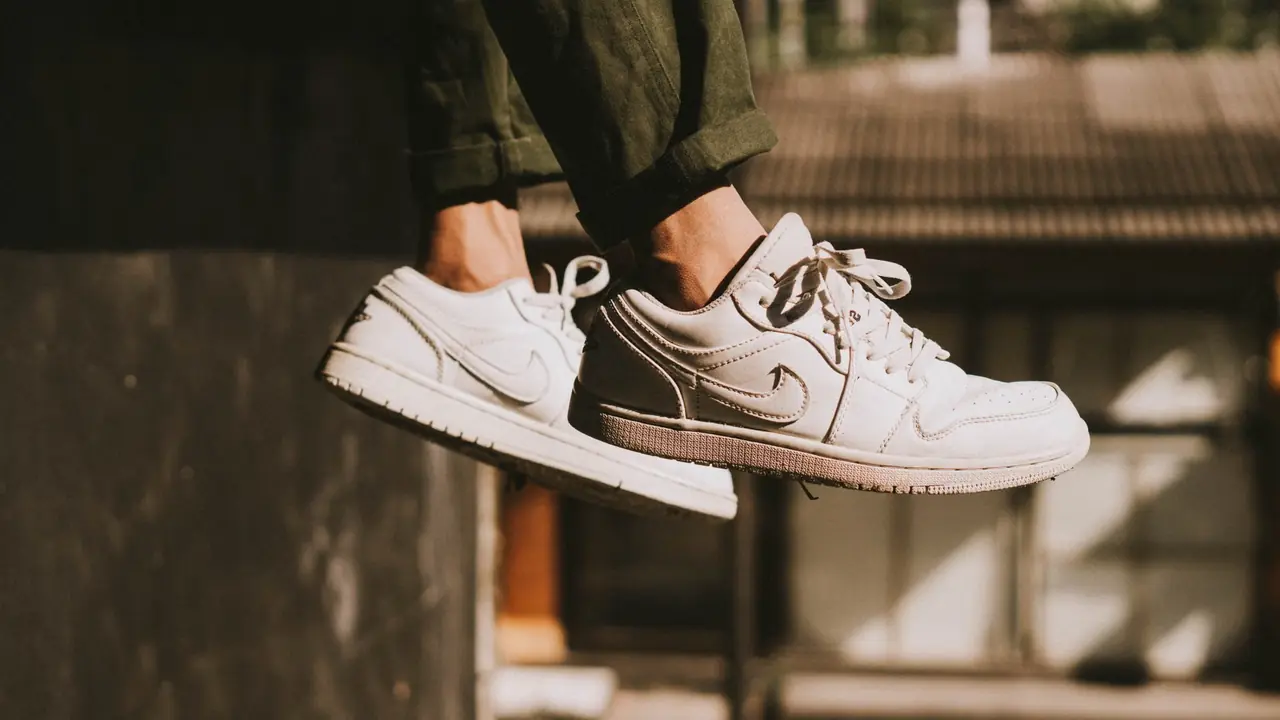
Size 43 1/3 is usually in the range of a European 43, although in sports footwear, and especially in brands like adidas, it does not always match an exact whole number. In practice, that half fraction indicates an intermediate fit: more precise than a full 43, but not quite the next whole size. For the buyer, the key is not just translating the number, but understanding what foot length, internal allowance, and type of last lie behind it.
In terms of equivalence, 43 1/3 in the European system usually comes close to a men’s US 9.5 and a UK 9, with small variations depending on the manufacturer. For women, the reference changes and can move around a US 11.5, but here the difference between systems is more sensitive because many charts separate men and women. What matters, therefore, is not memorizing an isolated equivalence, but reading it as a clue within a broader chart.
What that fraction really represents
Footwear with fractions like 43 1/3, 42 2/3, or 44 2/3 is part of a logic that is very widespread in European sports footwear. It is not a design whim, but a way to offer finer adjustments between whole sizes. That intermediate graduation can be useful in running, hiking, or training, where a few millimeters change comfort on downhills, long runs, or sessions when the foot is somewhat swollen.
The visual difference between a whole size and a fractional one is minimal, but its effect is noticeable. A 43 1/3 shoe usually offers a little more room than a 43 and a little less than a 44. In practical numbers, it usually moves around a foot length close to 27.5 centimeters, although the exact value depends on the system and the standard each brand uses. That figure serves as a useful reference, not an absolute truth.
That is why a quick conversion can guide you, but it never replaces the official chart of each manufacturer. European, British, and US sizing did not arise at the same time and do not share the same calculation base. When buying, that history matters as much as the number printed on the tongue.
Most common equivalences in practice
The most frequent correspondence for 43 1/3 in men’s sports footwear is a EU 43 or a EU 43.5 depending on the brand, with an approximate jump to US 9.5 and UK 9. On the women’s side, the comparison usually shifts toward higher values in the US system, because the scale is not directly aligned. That difference explains many mistakes when buying online.
In international systems, the size can also be read in centimeters. Under the logic of many conversion charts, 43 1/3 sits around a foot of 27.3 to 27.8 cm. That seemingly small margin matters a lot when the use will be athletic, because the foot expands with heat, effort, and repeated impact. A fit that seems correct at home can become tight after 40 minutes of running.
The big trap is thinking that the European number always translates the same way. It does not. Between brands there can be differences of half a size or even a bit more, and in high-performance shoes the fit can be tighter than in casual models. The same size can feel different if the last, width, or amount of cushioning underfoot changes.
Why the number alone is not enough
Size is only part of the fit. Two shoes with the same label can feel opposite: one hugs the midfoot like a glove, another leaves room in the forefoot and toe box. The reason lies in the shape of the mold, the thickness of the tongue, the internal volume, and the materials. Flexible mesh adapts one way; stiffer leather, another. The number does not tell the whole story.
In running, that difference is magnified. Footwear that is too short punishes toenails and metatarsals; footwear that is too long can cause slipping, rubbing, and a feeling of instability on turns or descents. The balance usually sought leaves between 1 and 1.5 centimeters of room in front of the longest toe. No more, except in very specific cases; no less, if you want to avoid continuous pressure on long runs.
In hiking or mountain use, the issue becomes a bit more complicated. The foot tends to swell, the slope pushes the toes forward, and the sock adds volume. There, a 43 1/3 may be the right size for one person and the wrong one for another. What in an asphalt shoe seems precise can fall short in a technical boot.
How to measure your foot without getting lost among sizes
The most useful way to get out of the maze is to measure the foot on a sheet of paper, with the heel firmly planted and the pencil held vertically. It is best to do it at the end of the day, when the foot is slightly more expanded and better reflects the real volume it will have during activity. Measuring in the morning often gives a false sense of room that later disappears when walking or running.
The measurement should be taken on both feet, because they are not exact twins. Many people have a slight difference in length, and in sports footwear that is enough to alter the feeling of fit. The longer foot should be used as the reference. It is a simple rule, but it avoids much of the buying mistakes that end in returns, blisters, or cramped toes.
Once you have the length in centimeters, the sensible thing is to compare that data with the brand’s official chart. In adidas, for example, fractional sizing usually follows finer increments than in other manufacturers. That detail is very noticeable in running and mountain footwear, where a tenth of a fit is not a minor matter, but the difference between a clean stride and a persistent discomfort.
What happens when converting between men and women
The US system adds an extra level of complexity, because it separates men and women. In many practical conversions, a women’s US size is usually about two units above the men’s for a similar length, although sports shoes can be a bit closer, around 1.5 sizes in some models. That explains why the same European size can translate differently depending on the gender the chart is aimed at.
In Europe, by contrast, sizing is usually more universal. A 43 1/3 does not change from men to women by itself, but the context does: the men’s last is usually a bit wider, while the women’s is often narrower in the heel and midfoot. That nuance can change the real perception of fit even if the number is identical.
That is why, when looking for equivalents, it is best to pay attention to three layers at once: number, length, and shape. The most common mistake is focusing only on the arithmetic conversion. The correct approach is to read the size as a combination of measurements and sensations, somewhat like choosing a key that not only fits, but turns smoothly.
The level of effort also changes the perceived size
A runner who starts fresh in the morning does not have the same foot at 15 kilometers. Heat, blood pooling, and repeated tension make the volume increase. The same happens on a long hike or during a day spent standing. That expansion, although moderate, explains why many shoes seem perfect when taken out of the box and a bit tighter after a week.
In that context, 43 1/3 may be the correct size for someone seeking precision, but insufficient for someone who prioritizes space in the toe box. There is no universal equivalence that solves every case. The right size is the one that leaves enough freedom without sacrificing support, a nearly artisanal balance between firmness and room.
The type of sock also matters. A thin racing sock does not take up the same space as a hiking sock, and a fit designed for summer may not work the same in winter. In an online purchase, that detail is often forgotten, but in daily use it becomes a central part of comfort.
Different brands, different sensations
Uniformity between brands is more theoretical than real. Even within the same European system, a 43 1/3 can feel shorter in a racing model and roomier in a training model. The cause lies in the design of the last, the forefoot width, the curvature of the midsole, and how the upper deforms with use.
This is especially noticeable in popular sports footwear. Running shoes designed for fast paces tend to hug the foot more, while a daily training model may offer more tolerance in the toe box. Two pairs labeled the same can feel like they belong to different leagues, as if one were made for a slimmer foot and the other for a more relaxed one.
That is why many manufacturers recommend checking the model-specific chart and not relying only on previous experiences. Sizing memory works only halfway: it helps, yes, but it also misleads. A runner may have worn a 43 for years and discover that in another line they need a 43 1/3 or even a 44 to maintain the same comfort.
What equivalence matters most to the buyer
The question is not usually just which European number corresponds to 43 1/3, but what that data means in a specific purchase. For someone looking at running shoes, the practical reference is usually foot length in centimeters. For someone buying casual or urban footwear, the room can be more flexible. In sports products, however, every detail becomes relevant: the toe box, the drop, the width, and the space for the big toe.
A useful conversion, therefore, should answer three questions at once: how long the foot is, how much room the shoe leaves, and how the brand behaves in that model. The number alone solves very little. It is like reading only the headline of a news story and believing you already know the full content.
In high-performance footwear, that difference can affect support, stability, and even technique. If the foot is too tight, the runner shortens the stride and loses natural movement. If it is too loose, internal movement appears and with it rubbing. The right fit is not always the prettiest or the easiest to remember, but the one that lets the foot work without fighting the shoe.
When it is also worth paying attention to width
Length is not everything. Two feet of the same length can have very different widths, and that nuance completely changes the feeling of use. A 43 1/3 can fit well in length and yet feel narrow in the forefoot or excessive in the heel. That is where the silent problem of many buyers appears: they think they got the size wrong when in fact the issue is the last.
Some brands indicate specific widths, but not all do so with the same system. Sometimes letters appear, other times abbreviations such as regular, wide, or narrow. The lack of uniformity makes reading difficult, but the underlying logic is clear: a good size without the right width is still a bad purchase. The foot needs lateral space as much as room in front.
In sports, that need is even more visible. A wide foot compressed inside a narrow shoe can end up with numbness, lateral pressure, or loss of stability. The fit should allow the toes to open a little when landing, like small branches seeking balance on the ground.
A useful reference to avoid getting 43 1/3 wrong
The most reliable conversion for 43 1/3 is to think of it as a European size close to 43, with a common equivalence around 27.5 cm of foot length, men’s US 9.5, and UK 9, always with the warning that each brand may shift the result. That base helps you orient yourself quickly, but the correct purchase requires looking at the specific product, not just the number.
If the use will be athletic, prudence says to leave a little room in front, check the width, and remember that the foot changes throughout the day and with effort. Almost everything is decided in that combination of small data points. Size is not an isolated label; it is a negotiation between anatomy, use, and manufacturing pattern.
That is why the short answer to what size 43 1/3 is should not stop at a single number. It is, above all, an intermediate size very close to European 43, with an approximate translation to 27.5 centimeters of foot length and with real variations depending on brand, model, and last. In footwear, as in almost everything that touches the body, detail matters more than theory.



How to prevent thigh chafing: causes and real solutions

Women’s running windbreakers: seven jackets and how to choose

Do more workouts get rid of soreness? A guide for runners

Jaén Half Marathon 2026: Record 3,800 Runners Registered

Men’s short running tights: how to choose the right pair

World Triathlon confirms data breach involving medical data

Izan Edo targets podium at Miyazaki World Cup

María Pérez ranks ninth in World Athletics’ 2026 top ten

Dos Santos, Duplantis and Sawe: World Athlete of the Year finalists

San Silvestre Vallecana 2026: 42,000 places, prices and start times

 Races3 months ago
Valencia Half Marathon 2027: date and registration

 Races3 months ago
Valencia Marathon 2026: entry, ballot and course

 Reviews and Comparisons4 months ago
Asics Gel-Roadmiles 3 for men: review and current price

 Reviews and Comparisons4 months ago
Asics Gel Sonoma 8 Gore-Tex: complete analysis for trail and rain

 Sneakers3 months ago
Saucony Endorphin Pro 4: full review and verdict

 News5 months ago
Strava API 2026: what changes for clubs, challenges and runner apps?

 Reviews and Comparisons5 months ago
Nike Alphafly 3: opinions, sensations, and real key points

 Reviews and Comparisons4 months ago
Under Armour running shoes review 2025-2026: models and key features

 Sports Equipment4 months ago
Shoe sizes in cm: a clear guide to getting the right fit for your footwear

 Sneakers3 months ago
Skechers GO RUN Consistent 2.0 analysis: comfort and limits

 News5 months ago
Valencia Marathon 2026 route: key tips to train and run better

 Sneakers4 months ago
Adidas Adizero Boston 13 for men: review and verdict