Sneakers
Black adidas Adizero Evo SL for women: review and buying guide
Lightweight feel, Lightstrike Pro foam and reliable grip: how these adidas fit faster training and racing.

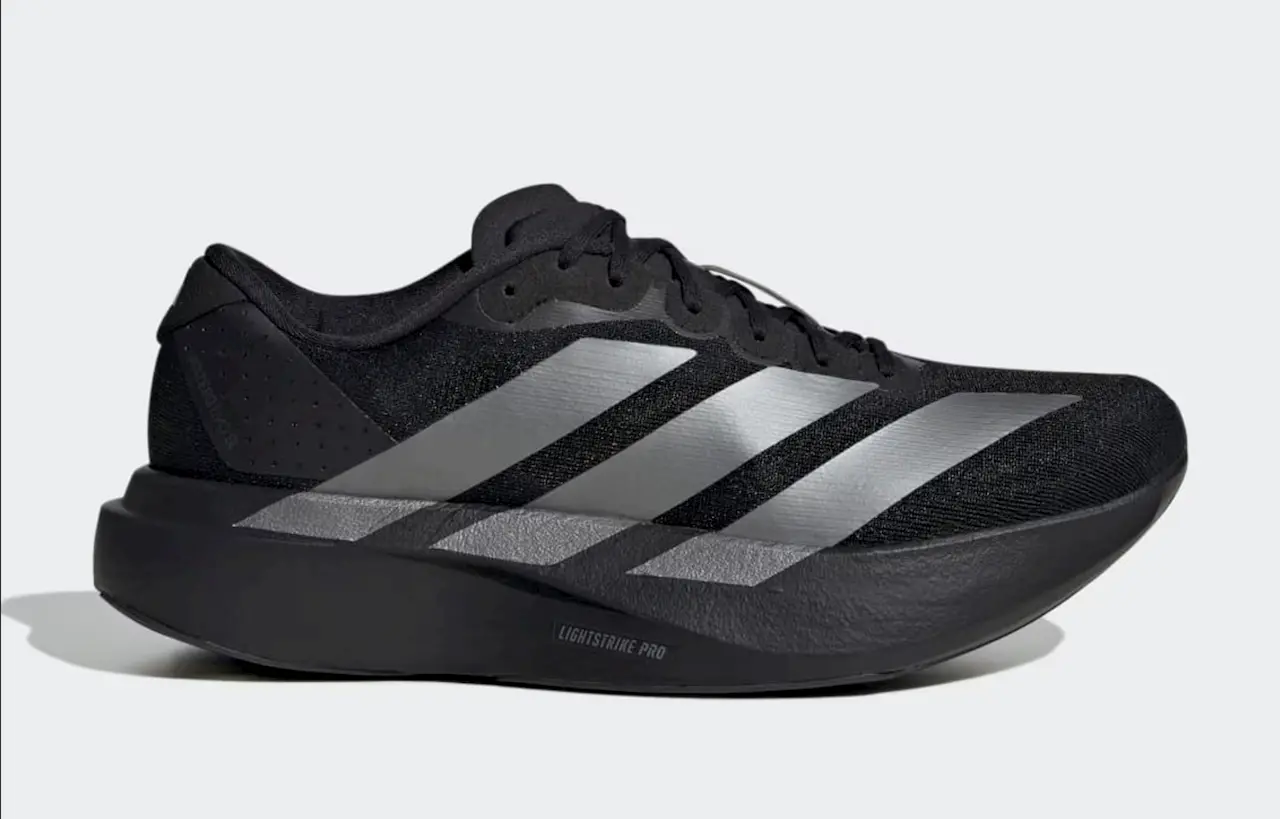
Adidas Adizero EVO SL Negras mujer
The black adidas Adizero Evo SL for women is a road-running shoe designed for fast running without taking the extreme approach of a full racing model with a plate. Its construction combines a Lightstrike Pro foam midsole, a relatively stable platform and a weight close to 205 grams per shoe in the reference size, placing it among the lighter options on the market.
Its launch price is around 150 euros, although the stores reviewed show occasional prices between 105 and 135 euros depending on the color, product code and availability. The black version may appear under different commercial references, so checking the technical details, size and color is more reliable than relying only on a product photograph.
A fast shoe designed for training
The Evo SL belongs to adidas Adizero, a family traditionally associated with speed. Its design draws ideas from the brand’s Pro Evo 1 racing shoe but adapts them to a more versatile and less radical construction. The result is a shoe designed for intervals, pace changes, faster runs and road races where an agile underfoot sensation is important.
It does not include a rigid carbon plate, an important detail when interpreting its behavior. The response comes from the geometry, low weight and foam rather than from an element that forces the transition. It may therefore feel more natural than a pure racing shoe during frequent training, although it offers less leverage than a plated model designed specifically for competition.
Its natural territory is asphalt and, to a lesser extent, smooth urban surfaces. The outsole pattern is not intended for loose dirt, muddy parks or technical trails. It moves confidently on dry pavement; on uneven gravel, its limited protection and sporty profile stop being advantages.
What Lightstrike Pro foam brings
The midsole is the center of this model’s character. adidas uses a layer of Lightstrike Pro, a foam designed to provide energy return and cushioning while keeping weight under control. It does not feel like a soft, maximum-comfort shoe, but rather like a platform that tries to return part of the force generated with every landing.
The density is not identical throughout the midsole. The rear and midfoot offer a somewhat firmer sensation, while the forefoot remains more flexible to encourage toe-off. This combination keeps the foot from sinking too deeply on landing and gives the forward transition a lively character, especially when the pace increases.
The foam cannot eliminate impact or correct poor technique. The final sensation depends on the runner’s weight, cadence, surface and landing pattern. For a lighter athlete it may feel fast and sufficiently protective; for someone who prefers a very soft feel on long runs, it may seem firmer than expected.
Cushioning and stability in practice
The Evo SL offers medium-to-high cushioning for a lightweight shoe, but relaxed comfort is not its main goal. The platform is more stable than its streamlined appearance might suggest because of a broad forefoot base. That design helps keep the foot centered during the transition and adds confidence when accelerating.
Its stability is neutral, however. There are no specific control elements to correct pronation, and the model is not a substitute for a shoe designed for runners who need structural support. The platform is intended for neutral runners or for people who are comfortable with a free and flexible ride.
On curves, urban turns and moderate changes of direction, the wider forefoot helps prevent the landing from feeling narrow. It can also be used at easy paces, although its feel makes more sense when the body is working with some intensity. For walking or spending many hours standing, it is not the most logical choice in the adidas range.
Grip from the Continental rubber
The outsole includes Continental rubber in areas intended to reinforce traction. This compound is one of the model’s most interesting features because it aims to maintain consistent grip on both dry asphalt and wet surfaces. In the city, that quality can be noticeable on crosswalks, polished paving or painted road markings after rain.
The grip does not turn the shoe into a trail model. The lug geometry remains road-oriented and protection against rocks or irregular ground is limited. It can work on a compact park path, but roots, mud and deep gravel require a different outsole and a more protected midsole.
Durability depends on technique, weight, mileage and ground roughness. Continental rubber helps protect high-wear areas, although a lightweight shoe is rarely the best choice for every weekly kilometer on abrasive asphalt. It is better to monitor heel and forefoot wear than to rely on one universal lifespan figure.
Fit, shape and choosing the right size
The upper combines a lightweight, breathable synthetic material with lateral reinforcements that keep the foot in place. The tongue is thin and not fully integrated into the structure, which helps reduce weight but may require careful positioning to prevent folds or uneven pressure across the instep.
Some commercial listings warn that the model may run small and recommend going up half a size when between sizes. The decision should not be based only on the usual size from another brand. Room in front of the toes is essential, especially when the foot swells during a long run or race.
A simple home check is to measure the foot at the end of the day, wearing the socks used for running, and add roughly half a centimeter of room. The reviewed chart places a 25-centimeter foot near an EU 40 2/3, although equivalences can vary by manufacturer and preferred fit.
The heel should remain secure without requiring excessive lace tension. If the instep feels pressured from the first minutes, increasing the size will not always solve the issue; the volume of the upper may matter more. A toe box that is too narrow also cannot be fixed by breaking the shoe in, because the material may loosen slightly but does not change the structure.
What the black finish means for everyday use
The black version, identified by some stores as Core Black with metallic details, has a restrained appearance that works with technical clothing and everyday sportswear. The dark color hides light dust better than white versions, although mud and dried sweat can still leave visible marks on the fabric and midsole.
The dark finish does not change the foam response or outsole grip. Differences between references usually concern color, reinforcements and commercial availability rather than a completely different performance category. Choosing black is mainly an aesthetic and practical decision, not a technical one.
To preserve the materials, it is best to remove dirt with a soft brush and lukewarm water, without soaking the shoe or putting it in a washing machine. Drying should take place away from radiators and intense heat, since high temperatures can deform the upper and accelerate adhesive deterioration.
Which workouts suit them best
The Evo SL works particularly well when a workout calls for a change of gear. In 400-to-1,000-meter repetitions, progression runs, fartlek sessions and controlled tempo runs, its low weight keeps the shoe from feeling cumbersome. The transition is most convincing when the runner lands with reasonable precision and uses the flexibility of the forefoot.
It can also be used for 5K and 10K races, and for half marathons if the fit is comfortable and the runner tolerates its firmer feel. In a marathon, the choice depends more on experience, muscular strength and individual adaptation than on the technical sheet. Speed should not be confused with unlimited protection.
For recovery runs or days when the goal is simply to run without watching the pace, adidas offers alternatives with a softer and more relaxed ride. The Evo SL can complete a training rotation, but it does not have to become the only shoe. Alternating sensations and loads can help distribute stress across muscles and joints.
Who is most likely to benefit
This model may appeal to neutral runners who want a lightweight shoe for fast training and occasional racing. It is also a reasonable option for anyone used to firmer shoes who enjoys a direct response with little sinking sensation. The combination of energetic foam and grippy outsole is appealing for urban road running and race circuits.
It is less obvious for a beginner who needs substantial stability, for someone who prioritizes a very soft ride or for anyone who regularly runs on unpaved paths. It does not offer the correction of a stability shoe or the isolation of a maximalist model. The runner’s profile matters as much as the technology.
Body weight alone does not determine compatibility. A heavier runner can use a lightweight shoe if it feels stable, adaptation is gradual and it is reserved for specific sessions. What matters is the interaction between comfort, control, pace and surface, not a rigid rule based on kilograms.
Differences from a plated racing shoe
The lack of a carbon plate makes the experience less propulsive and, for many runners, easier to control. The transition does not force movement as much, and the forefoot can flex more naturally. This often favors training use, since repeating sessions in an extreme geometry is not always convenient.
A plated shoe may provide more propulsion at fast paces, but it also requires specific adaptation and may not behave as well at slower speeds. The Adizero Evo SL occupies a middle ground: it is fast, but it does not try to replace an elite racing flat. Its value lies in versatility within the lightweight category.
The comparison should not be reduced to the stopwatch. Accumulated fatigue, technique and surface influence the perception of speed. A slightly less aggressive shoe may allow more consistent training, even if it does not appear as advanced on paper as a competition model.
Price, product codes and buying carefully
The reviewed listings place the recommended price between 149.95 and 150 euros. Specific campaigns show prices of 119.90, 131.99 or even 105 euros, but those amounts depend on promotions, sizes and stores. A visible discount does not guarantee that every size is available or that the listing matches the black women’s version.
References such as JP7147, KI4794, KI4795 and KJ2552 appear alongside different Evo SL variants in the reviewed catalogs. This variety can create confusion because one commercial family may include colors, seasons and specific versions. The product code is a better way to verify a purchase than the shortened name shown in a listing.
Before paying, check that the listing clearly states gender, color, available size, return policy and final price. It is also worth confirming that the offer is not for a WOVEN version or an edition with different materials. In technical footwear, a small upper change can alter the fit even when the silhouette looks identical.
Care that helps preserve performance
Fast-training shoes need time to rest between sessions when they are used frequently. Allowing the foam to recover and keeping the footwear ventilated helps reduce moisture buildup. Special products are not necessary: removing the insole when needed and airing the interior is usually enough.
Wear normally appears first in the rubber at the main landing areas and in the folds of the midsole. A clear loss of stability, uneven compression or new discomfort are more useful signs than a fixed mileage figure. The condition of the shoe should determine replacement, because two runners can wear the same model at very different rates.
Store the pair in a dry place without crushing it under other clothing to protect the heel and toe-box shape. Regular cleaning also prevents small particles from becoming embedded in the fabric. These are simple habits, but they help the outsole retain its pattern and keep the fit from changing prematurely.
A balanced option within the Adizero family
The black adidas Adizero Evo SL for women makes sense as a lightweight, responsive and relatively versatile road shoe. Its best setting is faster paces, quality workouts and short-to-medium distances, with foam that prioritizes energy return and a Continental outsole prepared to provide confidence on wet ground.
The purchase becomes more reasonable when its limitations are understood: it is not a pronation-control shoe, it is not designed for trail running and it does not provide the plush feel of a maximalist model. The upper may feel close-fitting, so measuring the foot and leaving room in front of the toes matters more than automatically choosing the usual size.
Within a well-planned rotation, this model occupies the place of a precise tool: light, firm and ready to accelerate when the workout demands it. The black color adds discretion and easy coordination, but the final decision should rest on fit, intended use and the actual price of the available size.
Este artículo contiene enlaces de afiliado: si compras a través de ellos, se genera una pequeña comisión sin coste adicional para ti. Más información.



How to prevent thigh chafing: causes and real solutions

Women’s running windbreakers: seven jackets and how to choose

Do more workouts get rid of soreness? A guide for runners

Jaén Half Marathon 2026: Record 3,800 Runners Registered

Men’s short running tights: how to choose the right pair

World Triathlon confirms data breach involving medical data

Izan Edo targets podium at Miyazaki World Cup

María Pérez ranks ninth in World Athletics’ 2026 top ten

Dos Santos, Duplantis and Sawe: World Athlete of the Year finalists

San Silvestre Vallecana 2026: 42,000 places, prices and start times

 Races3 months ago
Valencia Half Marathon 2027: date and registration

 Races3 months ago
Valencia Marathon 2026: entry, ballot and course

 Reviews and Comparisons4 months ago
Asics Gel-Roadmiles 3 for men: review and current price

 Reviews and Comparisons4 months ago
Asics Gel Sonoma 8 Gore-Tex: complete analysis for trail and rain

 Sneakers3 months ago
Saucony Endorphin Pro 4: full review and verdict

 News5 months ago
Strava API 2026: what changes for clubs, challenges and runner apps?

 Reviews and Comparisons5 months ago
Nike Alphafly 3: opinions, sensations, and real key points

 Reviews and Comparisons4 months ago
Under Armour running shoes review 2025-2026: models and key features

 Sports Equipment4 months ago
Shoe sizes in cm: a clear guide to getting the right fit for your footwear

 Sneakers3 months ago
Skechers GO RUN Consistent 2.0 analysis: comfort and limits

 News5 months ago
Valencia Marathon 2026 route: key tips to train and run better

 Sneakers4 months ago
Adidas Adizero Boston 13 for men: review and verdict