Sneakers
Is the Hoka Clifton 9 still good for running and daily training?
The Hoka Clifton 9 remains on runners’ radar: comfortable, lightweight, and reliable for logging plenty of miles, although it’s not perfect for fast paces.

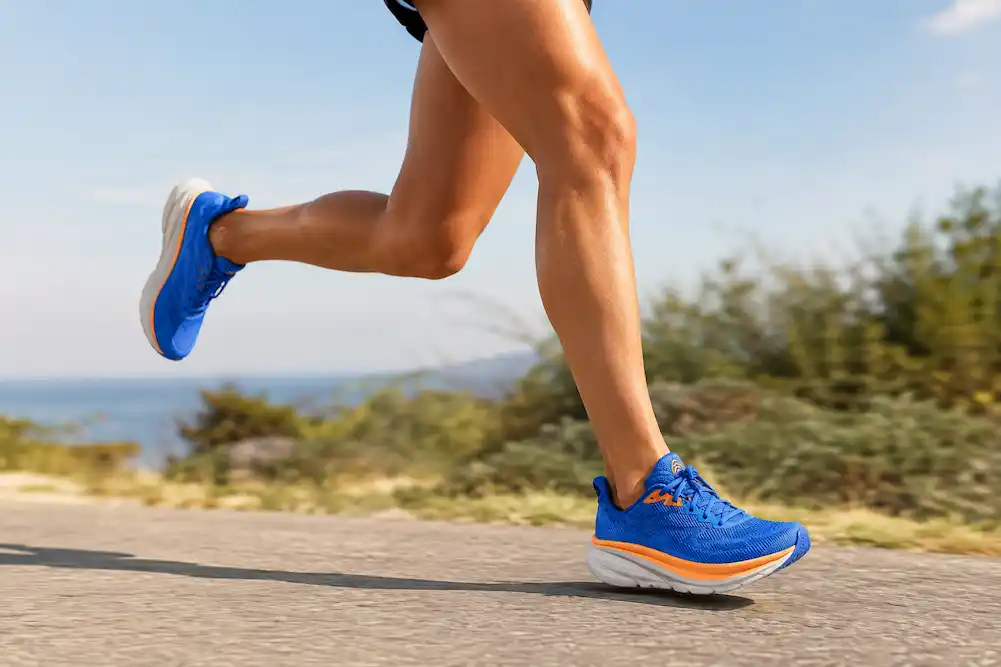
Hoka Clifton 9
The Hoka Clifton 9 is still one of those shoes that explain why Hoka stopped being a rarity for maximalist runners and became part of the urban landscape: you see it on easy runs, in popular marathons, on long walks, in hospitals, in airports and even in offices where nobody admits they’re wearing running shoes because, well, the back gets a vote too. It’s a neutral daily training shoe, with lots of cushioning and a smooth ride, designed to add miles without punishing the legs too much. It’s not the fastest, it’s not the most explosive, and it doesn’t try to be. That’s where its virtue begins.
The real question is not whether the Clifton 9 is comfortable. It is. The useful doubt is whether it’s still worth it when the market has filled up with livelier foams, plates, aggressive geometries and shoes that promise to turn every run into an Olympic semifinal, with the discreet help of 180 euros. The short answer: yes, it’s worth it for anyone looking for a reliable daily shoe, light for its volume, kind to the joints and useful both for running and walking; much less for anyone who wants to do intervals, race fast or run often on wet asphalt.
A shoe that’s not about epicness, but about doing the job
The Clifton 9 belongs to that class of shoes that don’t seduce with a flash, but with repetition. You head out on a Tuesday without too much enthusiasm, do eight easy kilometers, come back in one piece. You repeat on Thursday. On Sunday you go out for 16 or 18 kilometers and there’s no drama either. That’s its language: comfortable running, filtered impact, easy transition and a feel underfoot closer to a firm mattress than to a trampoline. It doesn’t bounce like a super shoe, it doesn’t propel like a modern lightweight trainer, it doesn’t ask you to run fast. It lets you run.
It’s worth saying this early because the running market lives in a pretty funny kind of narrative inflation: any foam is “revolutionary,” any outsole “redesigns the experience,” and any tongue seems to have been conceived by NASA engineers. The Clifton 9 is more humble. The technology is there, of course, but in service of a simple idea: cushion a lot without weighing too much. That combination is still hard to get right. Many protected shoes end up being bricks with laces; others are light, yes, but once you pass 12 kilometers you start feeling the ground as if someone had turned the foam volume down. The Clifton 9 lands in an interesting spot: it’s not a soft cloud with no control, nor a board.
Hoka kept the 5 mm drop in this version, a figure that fits the brand’s philosophy: sit fairly close to the ground in terms of incline, even with a generous platform. The shoe grew in stack height compared with the Clifton 8, shed a bit of weight and refined the midsole feel. That balance between more cushioning and less weight is probably the reason so many people still look at it fondly. It doesn’t make noise. It works.
Technical specs of the Hoka Clifton 9: what matters before buying it
The Hoka Clifton 9 is a neutral-stride shoe for asphalt and very compact paths. It’s not a classic stability shoe, it doesn’t have a plate, it doesn’t have a rigid pronation-control piece and it’s not meant for trail, although its wide base and geometry offer a certain sense of security to runners who don’t want to feel like they’re standing on jelly. Hoka talks about inherently stable geometry, a slightly catalog-like phrase, yes, but a fairly accurate one: stability doesn’t come from aggressive correction, but from the width of the platform, the shape of the chassis and the roll of the midsole.
The midsole uses compression-molded EVA, a known, reliable foam, a bit old-school compared with more modern compounds, but still effective when formulated well. Here the feel is soft, with clear protection in the heel and forefoot. It’s not a springy foam in the most modern sense of the word. Anyone coming from a shoe with a lot of rebound may notice that the Clifton 9 gives back less energy. It doesn’t bounce. It accompanies. And that, depending on who you are, will be a flaw or a blessing.
The technical mesh upper is breathable, with a fairly clean build, less overloaded than in some previous versions. The tongue is reinforced on one side, the heel has generous padding and the shoe includes details like a rear reflective panel, laces made with recycled materials and recycled polyester components in the mesh, lining and insole. Those are relevant details, though they shouldn’t distract from the basics: the technical upper holds well at easy and moderate paces, but it doesn’t hug the foot with the firmness of a fast shoe.
In terms of price, the Clifton 9 was launched in the range of mid-to-high daily trainers, although its value changes a lot when it goes on sale. At full price it competes in a tough bracket; with a discount, it becomes much more interesting. And that’s the little trap of the calendar: the Clifton 10 already occupies the family’s main display, but the Clifton 9 can be a smarter buy when it shows up with a good markdown. The newer model doesn’t automatically make the previous one old. Sometimes it makes it sensible.
What changed compared with the Clifton 8
The Clifton 9 didn’t break the saga. It refined it. Hoka added more midsole height, reduced some weight and reformulated the feel to make it softer. In practice, that translates into a shoe that’s more pleasant on long runs and more comfortable for runners who found the Clifton 8 a bit dry or narrow in the arch. It’s not a fireworks-style revolution. It’s the kind of evolution you notice on the third workout, not necessarily on the first walk around the store.
The change doesn’t turn the Clifton 9 into a radically new shoe. Anyone expecting a category leap may be left cold. But anyone looking for a kinder Clifton, less harsh and with a better feel underfoot, will find exactly that. The saga keeps its personality: lots of cushioning, little drama and a ride that’s easy to understand even for someone who can’t tell EVA foam from an election promise. Both, by the way, can sink if they’re formulated badly.
How it feels while running: soft, stable, a bit muted
The first sensation when running in the Hoka Clifton 9 is usually one of immediate protection. The heel lands comfortably, the foot rests on a wide base and the rocker invites you to let the body fall forward without thinking too much. That’s one of Hoka’s hallmarks: the MetaRocker, that curvature in the sole that eases the transition from landing to toe-off. It’s not magic, even if the brand sometimes dresses it up with technical incense. It’s geometry. And it works especially well when the pace is steady.
On easy runs, between conversation and clean breathing, the shoe finds its place. Impact comes through filtered, the foot doesn’t sink too much and the transition feels smooth. For everyday runners training three or four days a week, alternating outings of 6 to 14 kilometers, the Clifton 9 offers a very appealing mix: comfort, lightness and security. It doesn’t force you to run in a specific way, but it does favor calm landings and a cadence without surprises.
Where you can see its seams is when you speed up. Not because it’s clumsy, but because its foam absorbs more than it gives back. In pace changes, long intervals or hard progression runs, the Clifton 9 can feel a bit sleepy. The foot pushes, the shoe takes the hit with British politeness and gives back a lukewarm reply. Thanks, but without enthusiasm. That limited energy return is one of the keys to its character: it protects more than it propels, calms more than it excites.
That doesn’t mean you can’t run fast in it. Of course you can. You can also go to a wedding on a scooter, but maybe that’s not the vehicle. The Clifton 9 allows the occasional change of pace, a lively outing, even a long run with a progressive finish if the runner has the legs for it. But that’s not its natural terrain. Its home is aerobic training, the day after a hard session, those gray miles that make Sunday’s shine possible.
Easy runs, long runs and the half marathon
For preparing a half marathon, the Clifton 9 can be a great volume companion. It works for stacking up kilometers, protecting muscles and arriving less beaten up to the key workouts. It can also be used on race day if the goal is to finish comfortably, make a debut or run without obsessing over the clock. In that context, its cushioning is an honest ally. It doesn’t give you seconds for free, it saves you small bills.
In the marathon, the reading changes a bit. For runners going at easy paces or prioritizing protection over response, it can work. For anyone looking for a personal best, efficiency and a sense of propulsion over 42 kilometers, there are more suitable options. The Clifton 9 has no plate, no especially responsive foam and it isn’t designed as a racing shoe. Its value lies in preparing the marathon, not necessarily attacking it.
For beginner runners it’s especially attractive because it doesn’t punish. The ride is kind, the base inspires confidence and the fit doesn’t demand too much adaptation if you choose the right size. That point matters. Many people start running in shoes that are too firm, too old or too “casual,” and only later discover that the body doesn’t forgive badly chosen enthusiasm. The Clifton 9 doesn’t prevent injuries by decree, no shoe does, but it does offer a comfortable environment for building a habit.
It also makes sense for veteran runners, people coming back after a break or those who combine running with the gym, walks and daily life. The Clifton 9 doesn’t demand fresh legs or exquisite technique. It goes along with you. In a city like Valencia, with so much asphalt, the Turia path, seafront promenades and training for 10K, half marathon and marathon, its profile fits well: lots of easy running, lots of hard ground, lots of legs that prefer to get home in one piece.
Fit, last and comfort: the foot decides, not the brand
The Clifton 9 has a fit that many runners describe as comfortable, though not universal. The standard last can feel a bit narrow in the forefoot for wide feet, and here it’s best not to play the hero. If the foot asks for space, give it space. Hoka offers wide versions in some markets and sizes, and that can make the difference between a delicious shoe and a factory of discreet blisters. The standard last works well for many feet, but not for all.
The heel is well padded, with that characteristic rear profile that makes it easy to slip on and gives a soft feel. The tongue, more streamlined than in heavier versions, doesn’t bother the instep. The upper holds properly for running at easy paces, although some runners may need to lace it carefully to avoid small heel movements. It’s not a dramatic flaw, but it exists: so much comfort sometimes sacrifices a bit of lockdown.
The feel in the arch also deserves a mention. In previous Clifton models there were runners who noticed a marked presence in the midfoot, as if the shoe were pushing up on the sole from below. In the Clifton 9 that sensation seems less intrusive. The platform still guides, still has Hoka character, but it feels more forgiving. For neutral feet or custom insoles, it can work well, as long as there’s enough volume inside the shoe.
As a shoe for walking, working on your feet or traveling, the Clifton 9 scores a lot of points. Here sarcasm falls short: half of Spain buys running shoes to not run, and that’s fine. Modern life is also an ultradistance, just with fluorescent lights, hard sidewalks and bad coffee. The Clifton 9 cushions well when walking, doesn’t weigh too much and offers a less bulky look than the Bondi. For those who spend many hours standing, it can be more sensible than many flat-soled urban shoes with empty promises.
Outsole, grip and durability: good in dry conditions, modest in the wet
The Clifton 9’s outsole uses rubber placed in strategic areas, with sections of exposed foam to save weight. That solution is common in lightweight training shoes: protect where wear is highest and trim material where it’s not needed as much. The result is an outsole that’s sufficient for dry asphalt, urban parks and bike lanes, but not a universal grip champion.
In dry conditions, traction does the job without showing off. In the wet, it’s wise to keep expectations in check. Smooth tile, shiny crosswalks, city paint, quick turns in the rain: there the Clifton 9 doesn’t inspire the same confidence as other shoes with more aggressive compounds. That doesn’t mean it’s inherently dangerous; it means that, on wet asphalt, you need to run with a bit more caution. You know how it is, epic looks great on Instagram until a damp roundabout reminds you of gravity.
Durability will depend on the runner’s weight, technique, surface and shoe rotation. In general, the Clifton 9 should hold up well as a daily trainer if used where it’s meant to be used, but the exposed foam may show wear sooner than a fully rubber-covered outsole. No mystery there. Less rubber usually means less weight and, in exchange, a bit less armor. Running always charges you somewhere.
For Valencia, with lots of asphalt, relatively dry weather and a calendar full of popular races, the Clifton 9 fits quite well. It wouldn’t be the first choice for stormy days or for running on loose dirt, but for regular city runs it makes sense. In fact, its profile suits the Valencian everyday runner who mixes easy training, long walks and preparation for 10K, half marathon or marathon without expecting every outing to be a lactate test.
Who it’s for, who it isn’t for
The Hoka Clifton 9 has a very clear audience: neutral-stride runners who want a daily training shoe, comfortable from day one, with lots of cushioning and contained weight. It also suits beginners starting to build mileage, veteran runners looking to protect their legs, people who alternate running and walking, and users who need comfortable footwear for many hours on their feet.
It can be a great choice for easy and moderate paces, especially if the runner lands on the heel or midfoot and values a guided transition. On recovery runs, long runs without competitive ambition and base training, the Clifton 9 moves naturally. It doesn’t ask for the spotlight. It does the job. Like those midfielders nobody applauds until they get injured.
It’s not the best option for runners with marked pronation who need specific support. Nor for very wide feet if the right version isn’t available. It’s not ideal for those looking for a fast, responsive shoe with lots of bounce or one ready for intervals. For that, within and outside Hoka, there are more lively models. The Mach plays in a different register; plated shoes, frankly, are playing a different game.
Compared with the Bondi, the Clifton 9 is lighter, less bulky and more versatile. The Bondi offers more of a mattress-like feel and a bigger presence underfoot, but it can also feel cumbersome. Compared with the Mach, the Clifton is more comfortable and protective, but less spirited. Compared with a Nike Pegasus or a Brooks Ghost, the Clifton offers a more maximalist, more curved, more Hoka-like ride; not necessarily better for everyone, but definitely different. And in a market where many shoes seem like copies with different foam, that has value.
With the arrival of the Clifton 10, buying the Clifton 9 depends a lot on price. If the price difference is small, it’s worth trying both. If the Clifton 9 is discounted, its appeal goes up quite a bit. The newer shoe isn’t always the best one for your foot. That should be tattooed at the entrance of every running store, along with another essential phrase: “don’t buy for the color even if the color is gorgeous.” Nobody listens, of course.
A comfortable cruiser with its feet on the ground
The Hoka Clifton 9 remains a very recommendable shoe for everyday running when the goal is to add kilometers with comfort, softness and protection. Its great virtue isn’t speed, but consistency. It’s a shoe for training without noise, for taking care of the legs, for heading out to run when the body isn’t in the mood for heroic speeches and for walking afterward without feeling like you’ve got two concrete blocks on your feet.
Its limits are clear too. It doesn’t offer especially lively response, it’s not the best in the wet, it can feel narrow for certain feet and it doesn’t replace a racing shoe. But within its category, it does what it promises. And that, in today’s market, almost feels like an extravagance. The Clifton 9 doesn’t show up to brag in an interval session; it shows up so that on Wednesday, Friday and Sunday you can keep adding kilometers without arguing too much with your calves.
The Clifton 9 is not perfect. Better that way. Perfect shoes usually exist only in press releases and store conversations before they’ve gone through 200 kilometers of asphalt. This Hoka has character, very visible virtues and manageable flaws. For the runner looking for a companion for easy runs, a comfortable shoe for the half marathon or a reliable model for training several times a week, it still makes a lot of sense. Especially on sale. Because running may be very spiritual, yes, but the bank account has an aerobic threshold too.
Este artículo contiene enlaces de afiliado: si compras a través de ellos, se genera una pequeña comisión sin coste adicional para ti. Más información.



How to prevent thigh chafing: causes and real solutions

Women’s running windbreakers: seven jackets and how to choose

Do more workouts get rid of soreness? A guide for runners

Jaén Half Marathon 2026: Record 3,800 Runners Registered

Men’s short running tights: how to choose the right pair

World Triathlon confirms data breach involving medical data

Izan Edo targets podium at Miyazaki World Cup

María Pérez ranks ninth in World Athletics’ 2026 top ten

Dos Santos, Duplantis and Sawe: World Athlete of the Year finalists

San Silvestre Vallecana 2026: 42,000 places, prices and start times

 Races4 months ago
Valencia Half Marathon 2027: date and registration

 Races4 months ago
Valencia Marathon 2026: entry, ballot and course

 Reviews and Comparisons4 months ago
Asics Gel-Roadmiles 3 for men: review and current price

 Reviews and Comparisons4 months ago
Asics Gel Sonoma 8 Gore-Tex: complete analysis for trail and rain

 Sneakers4 months ago
Saucony Endorphin Pro 4: full review and verdict

 News5 months ago
Strava API 2026: what changes for clubs, challenges and runner apps?

 Reviews and Comparisons5 months ago
Nike Alphafly 3: opinions, sensations, and real key points

 Reviews and Comparisons4 months ago
Under Armour running shoes review 2025-2026: models and key features

 Sports Equipment4 months ago
Shoe sizes in cm: a clear guide to getting the right fit for your footwear

 Sneakers3 months ago
Skechers GO RUN Consistent 2.0 analysis: comfort and limits

 News5 months ago
Valencia Marathon 2026 route: key tips to train and run better

 Sneakers4 months ago
Adidas Adizero Boston 13 for men: review and verdict