Sneakers
Running shoes for overpronators: how to choose support and comfort
Keys to choosing stability footwear: signs of pronation, useful technologies, and which models fit best.

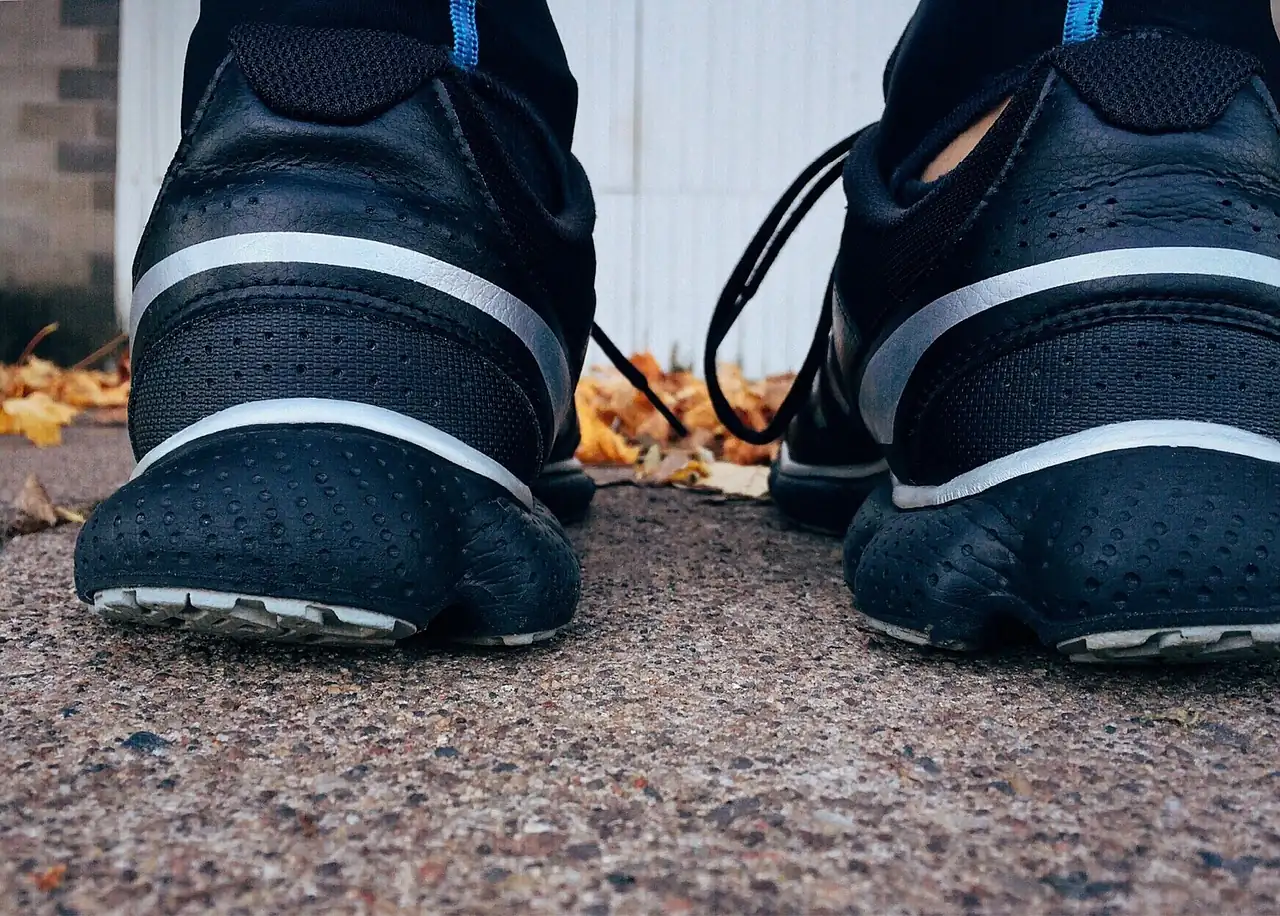
Imagen: Pexels / Pixabay
Running shoes for overpronators are no longer synonymous with rigid, heavy blocks. The evolution of running footwear has taken support into a much friendlier place: wide bases, livelier foams, and structures that guide the foot without imposing a harsh correction. For anyone who needs stability, the change matters because it allows you to run with more confidence, less feeling of punishment, and a more natural stride.
Choosing the right pair doesn’t depend only on the overpronator label. The degree of pronation matters, as does the runner’s weight, usual distance, type of foot strike, and even the shape of the foot. One model may be perfect for easy runs and fall short on long outings; another, on the other hand, may offer impeccable stability but feel too firm for someone looking for softness. In today’s market, very different solutions coexist, and that is precisely the key: not all shoes that stabilize do it the same way or for the same profile.
What overpronating means and when footwear matters
Pronation is a normal movement. The foot rotates slightly inward to absorb impact and distribute forces when it lands. The problem appears when that rotation becomes too pronounced, the arch collapses too much, and the ankle loses part of its alignment. That situation, known as overpronation, can end up loading the ankles, knees, hips, or plantar fascia, especially when it repeats over weeks and miles.
That is why interest in shoes for overpronators is not about fashion, but about mechanical need. Stability footwear aims to accompany the foot’s movement, not fight against it. In runners with mild pronation, a very stable neutral shoe, with a wide base and a good heel counter, may be enough. In more marked pronation, however, clearer resources are needed: lateral guides, foams of different densities, or internal structures that slow the collapse of the arch without turning the stride into something artificial.
Not every ache starts in the foot, but the foot often triggers everything. When a stride comes in crooked or sinks too much with every landing, the body compensates above and below. Sometimes that compensation goes unnoticed for months; other times it shows up as persistent overload in the posterior tibial tendon, the Achilles tendon, or the inner side of the knee. That is why the right footwear has more preventive value than it seems at first glance.
How stability shoes are recognized
The most obvious clue is in the geometry. A shoe designed for overpronators usually shows a wider base, especially in the heel and midfoot, as well as a well-structured heel and a feeling of firmness when you twist it by hand. It is not about stiffness for its own sake, but about a platform that limits unwanted side-to-side movement when the foot takes the load.
Other visible features also help. The beveled heel smooths the foot’s entry for runners who land on the rearfoot; the sidewalls raise the midsole and create a kind of discreet rail; denser foam pieces under the arch provide support at the most critical moment of the transition. In some models, these elements are combined with enveloping uppers that lock down the midfoot without squeezing too much.
The feel on the run is usually more revealing than the look. A stability model should feel stable, yes, but also usable at everyday paces. If the correction is too aggressive, the shoe becomes intrusive; if it is too light, it does not do its job. The ideal balance is felt when the stride stops drifting inward and the runner perceives a clean continuity, as if the ground were better organized beneath their steps.
The technologies that have changed this segment the most
Brands have turned stability into a matter of fine engineering. Brooks uses GuideRails, a system of firmer sidewalls that act like a soft fence around the heel and midfoot. Hoka has opted for structures such as J-Frame and H-Frame, with foams of different densities that surround or cradle the landing. ASICS, for its part, has evolved toward systems like 4D Guidance System or FluidSupport, which combine geometry, sidewalls, and a wide base to guide the transition.
Saucony has followed a similar path with support frames like CenterPath or wider platforms in its training models. Mizuno keeps a very recognizable identity with the Wave plate, which adds firmness and load distribution. New Balance blends Fresh Foam X foams with internal stability planes, while Nike has been refining its Structure line with more discreet support and a feel closer to that of a neutral shoe. The result is a market that is less clunky and more intelligent.
The most visible advance is that stability no longer has to feel hard. Today’s foams make it possible to combine cushioning and control, something unthinkable years ago in many models in this segment. That explains why some of the best options for overpronators are also suitable for long runs, daily use, and even long walks. The gap between a brick and a useful shoe has narrowed a lot, and that is one of the sector’s biggest improvements.
Which profiles usually benefit most from this type of footwear
Runners with moderate or obvious overpronation are the clearest candidates. Also those who have noticed pronounced inner wear on their shoes, a sinking feeling in the arch, or repeated fatigue on the inner side of the leg. In these cases, support does not just add comfort; it helps distribute forces better with each landing and reduces the feeling of mechanical disorder during the run.
Medium- to heavier-weight runners often especially value stability when they go out at easy paces or rack up lots of miles. There, the shoe stops being just a tool and becomes a small control system. The firmer heel, wide platform, and generous cushioning help keep the stride from deforming too much as fatigue builds. On long workouts, that difference feels like a kind of invisible handrail.
In mild pronation, the line is more blurred. Some runners feel better in a stable neutral shoe, especially if they have no discomfort and their technique is efficient. Others prefer a soft stability shoe, not so much to correct as to calm the stride. The practical rule is simple: if the foot drifts too far inward or if fatigue worsens the landing, a little guidance can be more useful than cushioning without structure.
The difference between cushioning and stabilizing
A soft midsole is not the same as a stable midsole. They are related qualities, but not identical. Cushioning protects against impact, while stability controls lateral movement and excessive rotation. A shoe can be very soft and still let the foot sink too much; another can be firm without being uncomfortable, because it distributes pressure well and keeps posture in line.
In this area, lab metrics are useful for understanding why some models work better than others. Stack height, base width, torsional rigidity, or impact absorption help organize sensations that, while running, sometimes blend together. A wide heel and a midsole with enough support usually translate into calmer landings; a platform that is too narrow, on the other hand, forces the runner to work harder to compensate for every wobble.
Energy return also matters. For years it was assumed that a stability shoe had to be less responsive, but that is no longer a fixed rule. Today there are models that support the foot well and, at the same time, return part of the stride’s energy. That combination is especially useful for runners who train several days a week and do not want to sacrifice dynamism for safety.
Which models stand out today for their balance
Brooks Adrenaline GTS has become a reference for its gentle stability and very versatile use. It guides the stride without making it feel stiff and offers a safe transition for daily training. It is the kind of shoe that works well for runners who want a predictable response and a constant feeling of protection, without giving up some flexibility at toe-off.
Saucony Hurricane stands out for very high cushioning and stability that does not feel clumsy. It is an interesting option for those who prioritize comfort on long runs and value clear midfoot support. At the other end of the spectrum, Saucony Tempus has gained ground by combining support with a livelier response, an unusual mix in this segment and especially useful for runners who do not want a heavy or overly solemn shoe.
Saucony Guide offers a more everyday approach, less maximalist and very balanced for day-to-day use. HOKA Arahi opts for a striking lightness within the category, while Topo Ultrafly has carved out a place among those looking for a wide toe box and a sense of space without losing guidance. In ASICS, the Kayano family remains the great premium stability reference, and the GT-2000 keeps a more accessible and versatile approach. Each one solves a similar problem with different nuances.
How foot shape and last width influence things
Forefoot width can change everything. A runner with a wide foot can feel trapped in a technically excellent shoe if the front end squeezes too much. Stability loses its purpose when the foot cannot expand naturally on impact. That is why some models stand out precisely for their wide last, a virtue that does not always appear on the most visible lists, but does show up in the runner’s real experience.
The forefoot should offer enough room for the toes to spread at toe-off, while the midfoot has to hold without locking down. If the toe box narrows too much, the foot fights inside the shoe and the distribution of forces is altered. By contrast, when the last follows the anatomy, stability feels more like a solid base than an external correction. It is a small difference in appearance and a huge one in feel.
Fit also depends on the arch and the heel. Some runners look for a padded collar and a very pronounced heel counter; others prefer a cleaner hold, without too much material. The useful rule is simple: if the heel moves inside the shoe, stability is lost from the very first kilometer. If the arch is well supported but the foot can breathe, the whole setup works. Everything else is noise.
What role weight plays in the feeling of support
More weight does not mean more stability, even though for years that was almost taken for granted. Some of the most capable models for overpronators have managed to cut grams without sacrificing support. That matters because too much mass ends up hurting cadence, especially for runners who stack up many training sessions each week and do not want their legs to feel heavy too soon.
The scale, however, does not explain everything. A relatively light shoe can feel very stable if its geometry is well resolved, while a heavier one can feel unbalanced if the foam does not distribute the load well. In practical terms, the goal is not to find the lowest possible number, but the exact point where stability, comfort, and agility coexist without fighting each other.
Daily training shoes usually carry the hardest compromise. They have to be safe enough for frequent use, comfortable enough not to fatigue you, and dynamic enough so the stride does not become heavy. That is why modern stability models are no longer limited to support: they also have to accompany. That word, accompany, defines better than any other the direction this category has taken.
Impact absorption, durability, and grip: what is worth looking at
Impact absorption is especially relevant for overpronating runners. If the landing is somewhat misaligned, the shoe has to cushion better to prevent the load from traveling unfiltered up to the ankles, calves, and knees. Models with high profiles and modern foams often make clear differences on long runs, where every landing counts and fatigue multiplies small technical flaws.
Durability also deserves attention, because pronation usually punishes the inner side of the outsole and midsole more. Some designs reinforce those areas with thicker rubber or more abrasion-resistant materials. A sole that holds up well not only lasts longer; it also maintains its initial stability for more miles, something you appreciate when the shoe becomes a regular companion rather than an occasional whim.
Grip completes the picture. On dry asphalt most models do fine, but when rain or dirt appears, outsole compounds start to make a difference. Good rubber can be the line that separates a secure stride from a feeling of doubt on every corner, every step over a wet crosswalk, or every urban turn. In a category meant to provide confidence, slipping is no small detail.
When it makes sense to seek a professional assessment
At-home tests are useful as a guide, but they do not replace a biomechanical assessment. Looking at shoe wear, recording your stride, or doing the wet footprint test can give clues, although none of those tools precisely detect the complexity of a real stride. Pronation is not just a matter of the arch; the hip, knee, musculature, and overall mobility are all involved.
If there is recurring pain, repeated injuries, or a persistent feeling of instability, the sensible thing is not to keep improvising with footwear. The foot may be showing a broader problem. In that case, the right shoe helps, but it does not replace a full assessment. Footwear stability works best when it matches the runner’s real need, not when it tries to cover up a signal coming from higher up.
In long races and high volumes, the margin for error shrinks. A slightly incorrect landing repeated thousands of times does not fix itself with patience alone. It is corrected, in part, with the right footwear, and refined with technique, strength, and load management. That is why shoes for overpronators are a useful tool, but not a magic wand. They help make a movement that, by nature, will always be a little imperfect, more orderly.
The new standard for stability shoes in running
The old image of corrective shoes is behind us. Today, stability looks more like a guidance system than a forced correction. Brands have understood that runners do not want to feel like they are stepping into a brace, but rather that their stride flows within a safer environment. That is why the best models combine pleasant foams, wide platforms, and discreet support.
That shift has broadened their use. We are no longer talking only about runners with clear overpronation, but also about profiles looking for extra security on long workouts, people who spend many hours on their feet, or runners who want a sturdier shoe to rack up miles without surprises. Stability has become more versatile and, as a result, more useful.
Choosing well still requires attention to detail. It is not enough to look at whether a shoe is stable; you have to think about what kind of stability it offers, how much it weighs, how it absorbs, how wide it is, and what sensations it gives when fatigue has already done its work. That is where you decide whether a model truly fits or whether it is only answering to a marketing label. And in such a broad market, that difference defines the season.
Este artículo contiene enlaces de afiliado: si compras a través de ellos, se genera una pequeña comisión sin coste adicional para ti. Más información.



How to prevent thigh chafing: causes and real solutions

Women’s running windbreakers: seven jackets and how to choose

Do more workouts get rid of soreness? A guide for runners

Jaén Half Marathon 2026: Record 3,800 Runners Registered

Men’s short running tights: how to choose the right pair

World Triathlon confirms data breach involving medical data

Izan Edo targets podium at Miyazaki World Cup

María Pérez ranks ninth in World Athletics’ 2026 top ten

Dos Santos, Duplantis and Sawe: World Athlete of the Year finalists

San Silvestre Vallecana 2026: 42,000 places, prices and start times

 Races3 months ago
Valencia Half Marathon 2027: date and registration

 Races3 months ago
Valencia Marathon 2026: entry, ballot and course

 Reviews and Comparisons4 months ago
Asics Gel-Roadmiles 3 for men: review and current price

 Reviews and Comparisons4 months ago
Asics Gel Sonoma 8 Gore-Tex: complete analysis for trail and rain

 Sneakers3 months ago
Saucony Endorphin Pro 4: full review and verdict

 News5 months ago
Strava API 2026: what changes for clubs, challenges and runner apps?

 Reviews and Comparisons5 months ago
Nike Alphafly 3: opinions, sensations, and real key points

 Reviews and Comparisons4 months ago
Under Armour running shoes review 2025-2026: models and key features

 Sports Equipment4 months ago
Shoe sizes in cm: a clear guide to getting the right fit for your footwear

 Sneakers3 months ago
Skechers GO RUN Consistent 2.0 analysis: comfort and limits

 News5 months ago
Valencia Marathon 2026 route: key tips to train and run better

 Sneakers4 months ago
Adidas Adizero Boston 13 for men: review and verdict