Sneakers
Puma Velocity Nitro 4: reviews, price, and full analysis
Top grip, agile feel, and a snug fit: that’s how Puma’s latest all-purpose model performs.

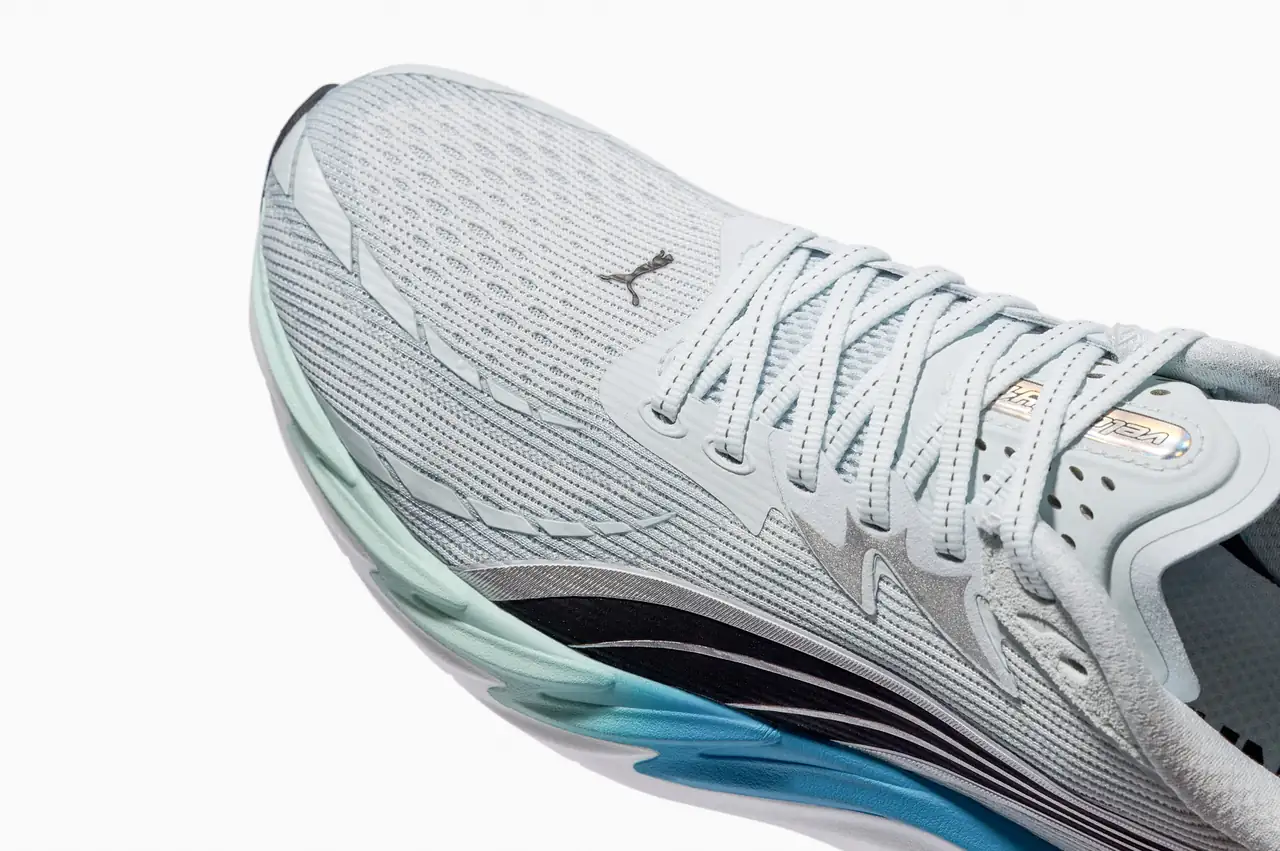
Image: PUMA
The fourth installment in the Velocity series has taken a clear leap forward in feel: lighter, more lively, and with a outsole that remains one of the most reliable when the asphalt is wet. Puma has refined a daily training shoe that no longer relies so much on the brand’s momentum, but instead on very concrete strengths: balanced underfoot feel, a smooth transition, and grip that enters the conversation alongside some very established names in the market.
The quick takeaway is simple: this version fits better for neutral runners of low to medium weight who want a single shoe for easy miles, sharper efforts on selected days, and piling up kilometers without a bulky sensation underfoot. It’s not the softest or the most stable in the segment, but it is one of the most coherent in what it offers and what it costs, with an official price of 130 euros that places it below many direct rivals.
A step forward that you notice from the very first stride
The great virtue of this shoe is that it doesn’t try to impress with volume, but with efficiency. Compared with other daily trainers that stack foam to seem protective, Puma has chosen a more restrained approach here. The result is a shoe with moderate stack heights, a close-to-the-ground feel that favors footstrike control, and a more natural response with every landing.
That completely changes the user experience. The stride doesn’t sink, doesn’t demand aggressive mechanics, and doesn’t force you to run fast for the shoe to make sense. It works calmly on easy runs, but also when the pace picks up and the runner wants a livelier step. That versatility explains much of the interest it has generated and why it has slipped into the conversation among the most talked-about daily training options.
The key is the balance between cushioning and rebound. The Nitro foam in this generation offers a softer feel than the previous version, but without turning into a mushy bed that absorbs too much energy. What the runner gets is an agile sensation, with enough protection for regular use and an extra dose of dynamism that is appreciated in pace changes, fartleks, or long intervals.
The midsole: less gimmick, more useful sensations
Puma has simplified the internal structure and it shows. The previous version relied on a more complex combination, whereas this fourth edition concentrates the entire midsole in Nitro Foam, a material that here is lighter and more uniform in behavior. That decision cuts weight and leaves a shoe that is easier to move, more direct, and less clumsy through transitions.
Out on the run, the foam works with a very recognizable logic: it cushions without swallowing the foot and returns energy with discreet but effective elasticity. There’s no catapult sensation, nor does there need to be. What does appear is enough responsiveness so the runner doesn’t feel like they’re dragging a heavy training shoe. That difference is especially noticeable at moderate paces, where the foot wants a stable base, but not a rigid one.
It also helps that the chassis doesn’t try to impose itself with aggressive curves. This is a shoe with a fairly classic geometry, without the drama of some models with a very pronounced rocker. That translates into a straightforward transition, less dependent on technique and kinder for everyday use. In other words: it doesn’t push you, but it doesn’t hold you back either.
Grip and outsole: one of its clearest hallmarks
PumaGrip rubber is once again one of the model’s pillars. If there is one reason to look at this shoe closely, it is the security the outsole transmits on dry and wet surfaces. This isn’t an empty advertising claim: the compound has earned its reputation, and here it appears well distributed, with broad coverage and a tread pattern that favors traction on different surfaces.
On wet asphalt, the difference compared with many shoes in the same range becomes apparent quickly. The step feels planted, without that slight slip that makes you cut back on confidence at crosswalks, corners, or tiled areas. For anyone who runs often in the city and can’t always choose the weather, that behavior matters almost as much as cushioning.
Durability is also well resolved. The rubber is firmer than in the previous generation and the outsole coverage has remained broad, which helps spread wear more evenly. It’s not a shoe designed to live only on tracks or to turn every outing into a lab test, but it does offer a reasonable lifespan for the mileage a recreational runner typically accumulates in weekly training.
Fit, upper and last: good sensations with one clear warning
The upper is well built, though not the most breathable on the market. Puma uses a double-layer technical mesh with heat-welded reinforcements and containment pieces that wrap the foot firmly. The result is solid, secure, and pleasant for anyone who prefers a snug fit, although breathability falls short of ideal on very hot days.
That upper gives the impression of a serious shoe. The heel is well executed, the tongue holds adequately, and the padding does the job without excess. There are no unnecessary luxuries, but there is a general sense of a well-put-together product. The construction avoids odd foot movements and maintains structure without turning the shoe into a stiff block.
The fine print is in the last. Puma still works with a fairly snug shape, especially in the forefoot. That means runners with wide feet, high insteps, or those who use bulky insoles may find it less forgiving than other profiles. Anyone with a normal or narrow foot will probably feel comfortable; those who need more room, however, should be cautious because the fit can become somewhat tight over the miles.
It’s also worth bearing in mind that lateral support is not especially pronounced. The shoe is aimed at neutral footstrikes and runners who don’t need extra structural guidance. With a stable mechanics it can work very well; with noticeable pronation or a clear need for control, there are more suitable options within and outside the brand’s catalog.
Which type of runner it suits best
This Velocity makes sense for anyone who wants to train in a daily shoe that isn’t heavy or dull. It’s a good companion for easy runs, medium-distance outings, controlled-pace days, and sessions with changes in intensity where the shoe should support you without fighting your body. If a training shoe needs some character, this one has it.
It can also work well as a single-shoe option for runners who don’t want to complicate things with several shoes in rotation. Its real versatility brings it close to that user profile who runs several times a week and needs an honest tool, without a strange adaptation period or an overly technical behavior. It doesn’t require a long explanation before it starts performing.
Runner weight and mechanics matter more than usual. For runners up to around 80 or 85 kilos, especially if the footstrike is neutral and technique doesn’t overly punish the forefoot, the shoe usually delivers very convincing performance. Above that it can still work, but it loses some margin if use is long and frequent. It doesn’t fall short due to lack of quality; simply, its proposition isn’t maximalist.
Where it beats its best-known rivals
Price is one of its strongest arguments, but not the only one. There are daily training models with more cushioning, others softer, and some with more interior space, though few combine such well a restrained weight, grip, and lively feel at this price point. That mix gives it personality versus more generic shoes like those that have dominated the segment for years.
Its rivalry is understood not just through specs, but through sensations. Against softer offerings, the Puma feels more direct. Against more rolling models with wider bases, it feels more compact and a bit more fun. Against options designed for a lot of protection, it wins on lightness and natural feel, even if it gives up a bit of underfoot travel.
In wet conditions it stands out where others blur together. That is a very tangible advantage for runners who train at dawn, in the evening, or in cities where humidity and rain are part of the real calendar, not a hypothesis. Grip adds peace of mind, and that peace of mind is also performance: you run more freely when you know the outsole will respond.
User verdict: what it does best and what to keep an eye on
The best thing about this model is that it feels more expensive than it is. It has a lightness that surprises when you put it on, a pleasant ride, and top-tier grip. It doesn’t feel cheap, nor does it have cushioning that collapses after a few kilometers. There is a sense of a mature product, finished with care and without unnecessary embellishments.
The most delicate point is the internal space and the stability for some runner profiles. Anyone who needs a wide base, a lot of arch support, or a very guided transition may find a better fit in other models. You also have to account for the fact that ventilation is not its strong suit, so in summer or during long hot sessions it can feel more enclosed than one might want.
All things considered, the balance clearly tilts in its favor. The combination of weight, energy return, feel, and outsole places it as a very serious daily shoe. It doesn’t need to be the best at absolutely everything to be attractive; it just needs to get the important parts right, which is the experience of running in it week after week.
Price, real value, and what it conveys to the buyer
The 130-euro MSRP places it in a particularly interesting bracket. In a market where many daily trainers have risen quite a bit in price, finding a model with this level of lightness, quality rubber, and updated foam is not trivial. Puma has avoided jumping to more aggressive figures, and that increases its appeal even before you step into it.
The value isn’t just in what it costs, but in what it saves the runner in second-guessing. It doesn’t force you to choose between comfort and dynamism in a stark way. It also doesn’t ask to be reserved only for one type of workout. That makes it a rational purchase, especially for anyone who prioritizes a shoe that can serve in more contexts without feeling out of place in any of them.
There is an important caveat: its price makes more sense if it fits your foot. The value for money is high, yes, but the last doesn’t forgive too much. If the fit works for you, the package makes a lot of sense. If not, it doesn’t matter how strong the spec sheet is: the day-to-day experience is everything in a training shoe.
A shoe that confirms Puma’s strong moment in running
The Velocity Nitro 4 is not an isolated exception, but another proof of Puma’s quality leap in running. The brand has been building a coherent lineup for some time now, with training and racing models that no longer rely solely on aesthetics or novelty. There is serious work here in materials, outsoles, and real-world behavior, and that shows in a market that quickly punishes any shortcut.
This shoe represents that evolution very well. It has character, yes, but also balance. It has agility, but not nervousness. It has grip, but it doesn’t feel like a slab. And above all, it proposes a way of running that brings back something almost old-school in the best sense: a more direct relationship with the ground, more transparent, easier to understand from the very first step.
The most positive reviews agree on the same point: it’s a very complete shoe for training, especially if you’re looking for a versatile tool with a good outsole and a feel that is less generic than many rivals. It won’t please everyone equally, because its fit is decisive, but when it works, it convinces with unusual clarity.
A very solid model for those who value running with feel and control
The Puma Velocity Nitro 4 operates in that space where common sense and fun go hand in hand. It is not a record-breaking shoe, nor does it pretend to be. Its merit is different: it supports, responds, grips, and doesn’t punish you with an excessive structure. In day-to-day use, that is worth far more than a list of technologies that is hard to translate into real sensations.
That is why its reviews tend to be favorable among those who have already found their size and usage profile. It shines on normal runs, holds its own when training gets tough, and maintains a distinct personality in a segment full of lookalikes. It doesn’t aim to dazzle from the shop window; it convinces on the road, where the foot, the pace, and the asphalt ahead are what matter.
In that combination of lightness, grip, and reasonable feel lies its best argument. And also its identity: a training shoe that doesn’t feel inflated, that doesn’t disguise what it is, and that, precisely for that reason, ends up being more useful than many more eye-catching offerings promise.
You may also like: Puma Velocity Nitro 3 women: analysis, price and key usage tips.
Este artículo contiene enlaces de afiliado: si compras a través de ellos, se genera una pequeña comisión sin coste adicional para ti. Más información.



How to prevent thigh chafing: causes and real solutions

Women’s running windbreakers: seven jackets and how to choose

Do more workouts get rid of soreness? A guide for runners

Jaén Half Marathon 2026: Record 3,800 Runners Registered

Men’s short running tights: how to choose the right pair

World Triathlon confirms data breach involving medical data

Izan Edo targets podium at Miyazaki World Cup

María Pérez ranks ninth in World Athletics’ 2026 top ten

Dos Santos, Duplantis and Sawe: World Athlete of the Year finalists

San Silvestre Vallecana 2026: 42,000 places, prices and start times

 Races3 months ago
Valencia Half Marathon 2027: date and registration

 Races3 months ago
Valencia Marathon 2026: entry, ballot and course

 Reviews and Comparisons4 months ago
Asics Gel-Roadmiles 3 for men: review and current price

 Reviews and Comparisons4 months ago
Asics Gel Sonoma 8 Gore-Tex: complete analysis for trail and rain

 Sneakers3 months ago
Saucony Endorphin Pro 4: full review and verdict

 News5 months ago
Strava API 2026: what changes for clubs, challenges and runner apps?

 Reviews and Comparisons5 months ago
Nike Alphafly 3: opinions, sensations, and real key points

 Reviews and Comparisons4 months ago
Under Armour running shoes review 2025-2026: models and key features

 Sports Equipment4 months ago
Shoe sizes in cm: a clear guide to getting the right fit for your footwear

 Sneakers3 months ago
Skechers GO RUN Consistent 2.0 analysis: comfort and limits

 News5 months ago
Valencia Marathon 2026 route: key tips to train and run better

 Sneakers4 months ago
Adidas Adizero Boston 13 for men: review and verdict