Sneakers
Salomon S/Lab Ultra 3: analysis of the most precise trail shoe
Precise fit, great grip, and solid protection: this is how one of Salomon’s most serious trail shoes performs.

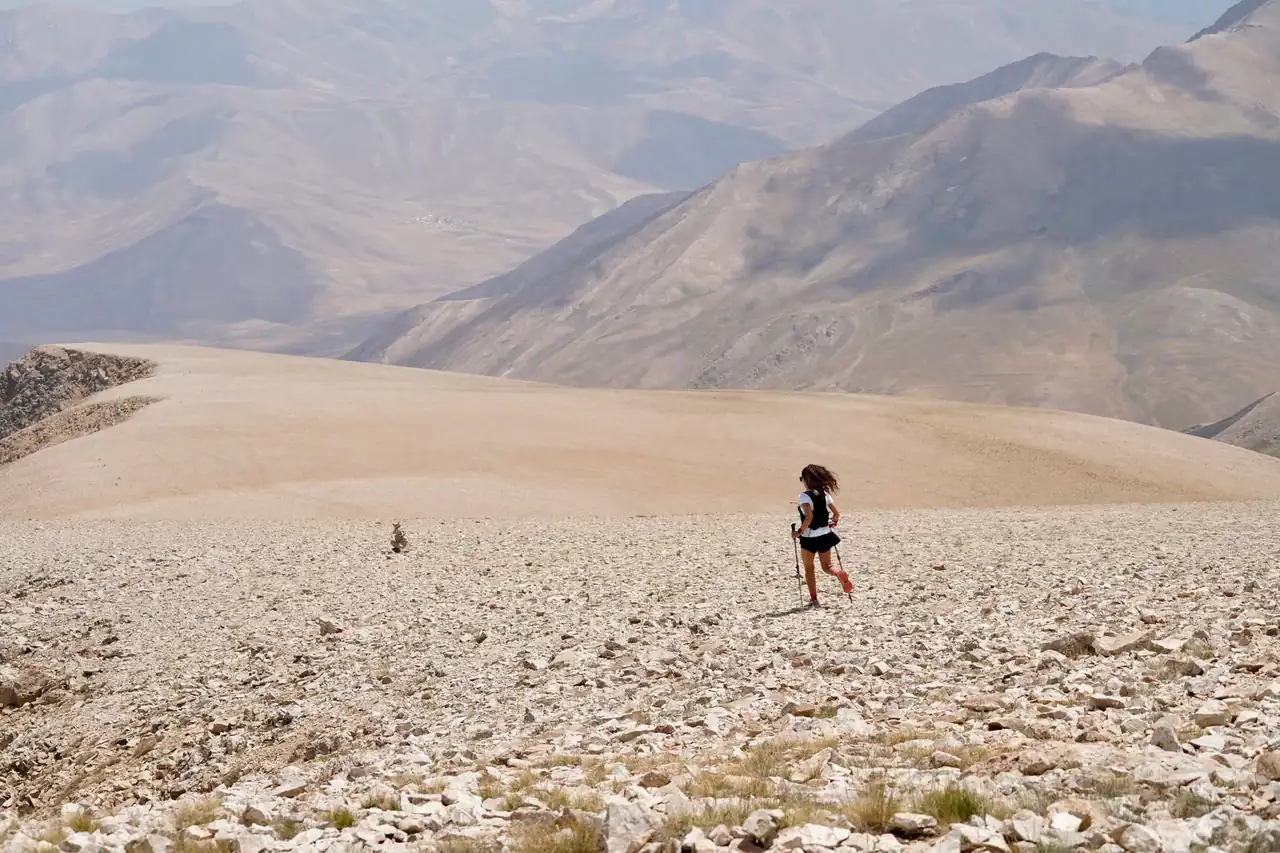
The S/Lab Ultra 3 occupies a very specific place in the trail showcase: it is not trying to appeal to everyone, but rather to perform with firmness when the terrain gets tough and the clock keeps ticking for hours. Salomon designed it together with ultrarunner François d’Haene as a high-performance shoe for long races, with a very snug fit, a stable platform, and a sense of security that is noticeable on rock, dry trails, and technical sections.
That focus explains why it generates such strong opinions. For some runners, it is an almost surgical tool; for others, a chassis that is too narrow and demanding. Its proposition is best understood when you look at its mix of protection, grip, and containment, three traits that place it closer to a competition shoe for technical trail than to a friendly model for easy runs.
A shoe designed to run far, not to run softly
The first impression this model gives is that of a shoe built with a racing mindset. The midsole provides firm cushioning, the outsole bites well on variable surfaces, and the last hugs the foot with very little room for internal movement. That combination favors precision when the trail narrows, uneven footing appears, or the runner needs to change pace without feeling the shoe fall apart.
Salomon has insisted on a very clear idea: maintain performance after many hours. In practice, that means the Ultra 3 is not chasing a soft or bouncy ride, but a restrained, stable, and fairly consistent response as the miles build up. That approach fits well with technical ultras and with runners accustomed to more responsive materials than plush ones.
The collaboration with François d’Haene is not a decorative detail. The design seems aimed at someone who knows how to move in the mountains, accepts a tight fit, and prioritizes confidence underfoot over the expansive comfort of a roomy last. That philosophy, very much Salomon’s, still defines the model’s personality and explains why it has gained so many followers among advanced runners.
Snug fit and a precise feel
The fit section defines almost the entire experience with this shoe. The sensation is one of total wrapping, almost as if the foot were locked into a technical glove. The Matryx upper adds durability and breathability, but it also reinforces that firm hold that many reviewers describe as one of its greatest strengths and, at the same time, as its main usage filter.
That support pattern favors stability on steep sections and on descents with high muscular demand. The foot moves very little inside the shoe, which reduces the feeling of wobble when fatigue sets in. In return, tolerance is limited for wide feet, for runners with a lot of forefoot volume, or for those who need extra room as the foot swells during long efforts.
The toe box and midfoot feel compact, with little allowance for the foot’s natural expansion. In short races and intense efforts, that can be an advantage; in very long ultras, depending on the runner’s anatomy, it can become a limitation. That is why this shoe fits better with technical profiles, runners accustomed to a snug fit and able to live with a constant sense of firmness.
Firm cushioning and real protection underfoot
The midsole is not trying to compete with the maximalist offerings that dominate part of modern trail running. Its behavior is more sober: it absorbs impact competently, protects from rocks and roots, and maintains a fairly honest platform, without excess rebound or theatrical softness. That character makes a lot of sense in a model aimed at varied terrain and sustained paces.
In recent product references, Salomon talks about a combination of foam and plate designed to filter the terrain without losing dynamic return. In this product family, the idea is clear: protect without completely isolating the runner. The stride maintains contact with the ground, but the foot is shielded from direct impacts and small obstacles that, in a long race, end up accumulating fatigue.
That makes the Ultra 3 an interesting option for runners who are not looking for a foam roller coaster. The feel is firmer than soft, more contained than forgiving. It may be less pleasant for walking or very easy sessions, but in racing it makes a lot of sense: save mechanical energy where it matters and avoid stability losses when technique deteriorates with fatigue.
Traction that shines on rock, hard-packed trails, and mixed terrain
One of its biggest strengths lies beneath the outsole. The All Terrain ContaGrip compound and a moderate lug pattern, around 3.5 mm in the official product sheet, offer very competent grip on rock, compact dirt, dry areas, and mixed surfaces. This is not a shoe with aggressive lugs for deep mud, but rather a more versatile and precise tool.
The feedback from specialized testers agrees on one essential point: the outsole inspires confidence on delicate foot placements. On scree traverses, slopes with loose stones, or fast descents over rock, the sense of control is usually above average. That security matters as much as pure speed, because in technical trail the margin for error is cut in half as soon as the runner relaxes.
The trade-off is logical. Lower lugs can struggle in soft mud or very broken terrain, and a compound so focused on grip can wear out sooner if used daily on asphalt or hard surfaces. The Ultra 3 is closer to precision than to absolute versatility, and it should be read that way so you do not ask it to be something it never wanted to be.
Sufficient lightness to compete, without becoming fragile
Salomon has also taken care with the weight, although here it is worth putting the numbers into context. The current official sheet places the model at around 11 ounces per shoe in a reference men’s size, while various specialized media reviews recorded weights close to 258–284 grams in a men’s size 9 depending on version and measurement method. These are reasonable figures for a highly protective technical ultra shoe.
What matters is not just the number, but the sensation it gives. The Ultra 3 does not feel clumsy, but it also does not try to feel like a feather. It is a nimble shoe within its category, with a response that favors a firm step and precise direction more than playfulness or exaggerated flexibility. That personality fits best with runners who have a clean stride and good landing technique.
When a shoe tries to be very light and very protective at the same time, it usually pays a price in durability or stability. Here the balance is fairly well measured. It does not offer the liveliness of a minimalist model or the softness of a supertrainer, but it maintains a serious structure for prolonged efforts where confidence matters as much as the stopwatch.
What kind of runner makes the most sense for
The S/Lab Ultra 3 is not meant for someone just starting out in trail running or for anyone looking for a friendly shoe from the very first minute. Its fit demands experience and its firm feel can seem harsh if you come from softer or roomier models. The most honest reading is different: it works best for runners with experience, technique, and a taste for control.
Its best setting is mountain races, technical ultras, long climbs, fast descents, and terrain where lateral stability matters a lot. It can also work as a racing shoe for those who prefer a secure last and firm ground contact. On the other hand, it may fall short for wide feet, runners who use bulky insoles, or profiles that prioritize broad comfort over precision.
The user experience also reveals an important detail: the collar and heel area can rub if the sock sits too low. This is not a minor issue, because in ultras small rub points become big problems. With this model, sock choice and lace adjustment matter more than they might seem at first glance.
What the Matryx upper and Quicklace system bring
The Matryx fabric is one of the elements that sets this version apart. It is a textile reinforced with high-tenacity fibers and Kevlar, designed to resist abrasion, improve durability, and provide good ventilation. In technical trail, where the shoe brushes against rocks, brush, and uneven ground, that resistance adds real value and not just marketing.
Alongside that, the Quicklace system remains a Salomon signature. It allows fast tightening, keeps the instep very secure, and stores the excess in a lace pocket. That solution is practical in race conditions, although not everyone finds it equally comfortable when putting the shoe on or handling the closure in a hurry. The overall feeling is one of security, not compromise.
The upper structure also explains why this shoe feels more closed than other rivals. The integrated tongue, low internal volume, and collar shape create a compact unit, very effective for running hard on changing terrain. On the downside, getting the shoe on is a little more cumbersome than with conventional models, especially during the first few uses.
What the comparison with other benchmark trail shoes reveals
Compared with softer shoes, the Ultra 3 offers a more technical and less forgiving experience. Compared with maximalist models, it gives you more ground feel, more precision, and less of a sofa-like sensation. And compared with pure racing trail shoes, it adds protection and solidity to hold up when the race truly stretches out.
Compared with rivals such as the Hoka Torrent, NNormal Kjerag, or Saucony Peregrine, this Salomon offering feels less playful and more serious, almost like a scalpel versus a multitool. Its natural territory is long-distance technical trail, especially when the runner wants reliability on rock and an almost absolute foot lockdown.
It is also worth noting that not everyone values a firm shoe in the same way. Some runners appreciate the direct response, while others interpret it as a lack of lively cushioning. In the Ultra 3, that boundary is very clear, and precisely for that reason it has built such a distinct identity within Salomon’s catalog.
How it performs after many hours of running
The model’s big promise is to withstand the passage of time well within the same race. That idea refers not only to material durability, but also to the ability to maintain stability, fit, and protection when the body is no longer coordinating as well. In long ultras, that quality is worth as much as weight or traction.
The combination of firm support, stable base, and protective foam allows the shoe to maintain a fairly consistent behavior over efforts of 10 to 15 hours or even more, depending on the runner and the terrain. It is not a shoe meant to encourage looseness; it is meant to support clean mechanics when the legs begin to enter wear-and-tear territory.
That is probably its most valuable trait: it does not fall apart when the race gets harder. It keeps responding, keeps holding you in, and keeps offering a recognizable platform. In long-duration trail running, where many shoes lose their shape as the miles add up, that continuity carries enormous weight.
A demanding model that rewards those who fit it
The S/Lab Ultra 3 is one of those shoes that speaks plainly. It does not hide its narrow fit, it does not disguise its firm feel, and it does not try to seem more comfortable than it is. That honesty may turn some of the public away, but it also explains its prestige among mountain runners looking for a precise and reliable tool.
Its best version appears when used in the right context: technical trail, mountain ultras, sustained paces, and runners accustomed to a very controlled fit. In that environment, its virtues outweigh its limits by a large margin. Stability, grip, and underfoot protection create a feeling of control that is very hard to find in softer or roomier models.
The result is a shoe with a strong personality, closer to serious performance than to broad comfort. And that is precisely why it has endured with such authority in a market that changes quickly: because it does not try to be universal, but instead to be very good at a specific kind of use. In trail running, that specialization is sometimes worth more than any promise of total versatility.
Este artículo contiene enlaces de afiliado: si compras a través de ellos, se genera una pequeña comisión sin coste adicional para ti. Más información.



How to prevent thigh chafing: causes and real solutions

Women’s running windbreakers: seven jackets and how to choose

Do more workouts get rid of soreness? A guide for runners

Jaén Half Marathon 2026: Record 3,800 Runners Registered

Men’s short running tights: how to choose the right pair

World Triathlon confirms data breach involving medical data

Izan Edo targets podium at Miyazaki World Cup

María Pérez ranks ninth in World Athletics’ 2026 top ten

Dos Santos, Duplantis and Sawe: World Athlete of the Year finalists

San Silvestre Vallecana 2026: 42,000 places, prices and start times

 Races3 months ago
Valencia Half Marathon 2027: date and registration

 Races3 months ago
Valencia Marathon 2026: entry, ballot and course

 Reviews and Comparisons4 months ago
Asics Gel-Roadmiles 3 for men: review and current price

 Reviews and Comparisons4 months ago
Asics Gel Sonoma 8 Gore-Tex: complete analysis for trail and rain

 Sneakers3 months ago
Saucony Endorphin Pro 4: full review and verdict

 News5 months ago
Strava API 2026: what changes for clubs, challenges and runner apps?

 Reviews and Comparisons5 months ago
Nike Alphafly 3: opinions, sensations, and real key points

 Reviews and Comparisons4 months ago
Under Armour running shoes review 2025-2026: models and key features

 Sports Equipment4 months ago
Shoe sizes in cm: a clear guide to getting the right fit for your footwear

 Sneakers3 months ago
Skechers GO RUN Consistent 2.0 analysis: comfort and limits

 News5 months ago
Valencia Marathon 2026 route: key tips to train and run better

 Sneakers4 months ago
Adidas Adizero Boston 13 for men: review and verdict