Sneakers
Sneaker brands: the ones dominating in 2026
Nike, Adidas, and New Balance remain on top in a market that blends technology, comfort, and urban fashion.

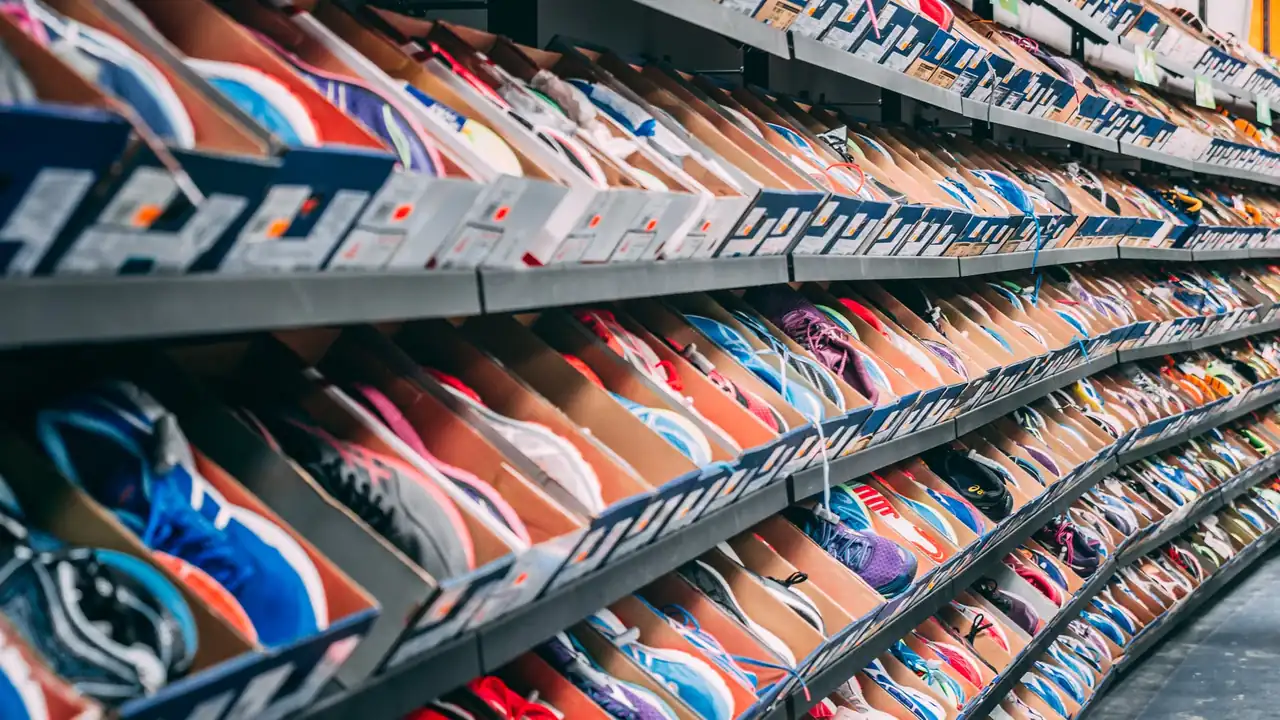
The market for athletic sneakers is no longer driven solely by performance. Today, urban fashion, everyday comfort, and the idea of footwear that can accompany a full day without losing shape or presence are also pushing it forward. In 2026, the major brands compete with lighter models, softer foams, better-grip outsoles, and designs that are no longer reserved for the gym.
This mix explains why some houses dominate the global showcase while others gain ground through specialization, price, or identity. Nike, Adidas, New Balance, Asics, Brooks, Hoka, Puma, Skechers, Saucony, Mizuno, Salomon and Reebok are not playing exactly the same game, but all have understood the same underlying shift: the sneaker is no longer an accessory, it is part of the everyday language of the street, informal work, and recreational sport.
The brands setting the pace in 2026
Nike remains the most visible benchmark. Its strength does not depend on a single model, but on a very broad network that ranges from running to urban wear, including historic lines that are already part of popular memory. Models such as Air Zoom Pegasus remain synonymous with reliable, versatile running shoes, while silhouettes like Air Force 1 or Air Jordan uphold the brand’s cultural dimension beyond the track.
Adidas holds a similar position, although with a somewhat different personality. Its catalog combines the technical drive of families such as Ultraboost with the pull of its classic lines, among which Samba and Stan Smith stand out. That dual reading, sport and style, allows it to fit both the runner looking for comfort and the person wanting a clean sneaker to wear with jeans, relaxed tailoring, or everyday clothes.
New Balance has built its reputation on a mix of comfort, retro aesthetics, and a wide fit in many of its models. The 990 series, the 574, and other classic-inspired designs have found a second life in a market that values both visual memory and real comfort. Added to that is an image that is less flashy than other brands’, which has given it an advantage across very different audiences.
Why some brands have become almost universal
The underlying reason is simple: the best brands no longer sell just one promise. They sell cushioning, stability, durability, lightness, and style in different proportions. Runners want smooth transitions and a midsole that protects without adding unnecessary weight. People who spend many hours walking want softness, fit, and ventilation. Those who mix sport and urban life also look at design, ease of matching, and the feeling of quality to the touch.
That is where brands like Asics, Brooks, and Hoka have gained prestige among regular runners. Asics maintains an image of technical reliability with series such as Gel-Kayano and Gel-Nimbus, associated with support and cushioning. Brooks has refined its offering around a comfortable stride and continuous use, while Hoka has become synonymous with generous midsoles, gentle ride, and a voluminous aesthetic that is now part of the running landscape.
At a different level, but increasingly visible, are Skechers, Puma, Reebok, and Saucony. Skechers leans into immediate comfort and a pricing policy that is often more accessible. Puma alternates between sporty and urban profiles with considerable ease. Reebok makes the most of its heritage and the appeal of the classic. Saucony, for its part, maintains a very solid reputation among those who value understated, stable models designed for running without fuss.
Favorites in Spain and the weight of familiarity
In Spain, the map does not differ too much from the international one, but it does have its own nuances. Nike and Adidas continue to dominate the conversation, although Joma and Kelme still retain important symbolic weight thanks to their local roots and their historical presence in Spanish sport. Joma, in particular, maintains a recognizable position in running, football, and general training, with an offering that usually pays close attention to the relationship between price and performance.
There is also clear loyalty among some runners toward Asics, Mizuno, and New Balance. These are brands that have built trust through consistency. They do not need to reinvent themselves every season to stay relevant. They change details, improve compounds, fine-tune geometries, but preserve an easily recognizable essence. That continuity matters a great deal when feet do not forgive improvisation.
The distribution channel has also helped some offerings gain share in Spain. Decathlon, with its Kalenji and Kiprun lines, has brought running closer to many beginners and to those looking for a first functional pair without moving into premium ranges. It is a less flashy phenomenon than that of the major multinationals, but an important one: in a country where walking, running, and gym training are part of the routine for thousands of people, entry-level options matter just as much as elite ones.
Running, gym, and street: three uses, three priorities
The same brand can mean different things depending on the context. In running, the focus is on the midsole, weight, and impact response. In the gym, lateral stability, the wide base, and the sense of security when movement changes direction matter more. For urban wear, the winning combination is comfort, aesthetics, and durability for daily wear on asphalt, public transport, and long hours on your feet.
That is why some brands have diversified better than others. Nike and Adidas manage an enormous catalog capable of covering practically any scenario. Asics, Brooks, and Hoka feel more defined in the running space. Skechers and New Balance perform very well on the boundary between walking, casual work, and light activity. Puma and Reebok make good use of the value of their classic silhouettes, which have become a visual shortcut to retro style.
At bottom, the choice should not depend only on a brand’s fame. Two sneakers with the same logo can behave very differently. One model may be designed to add miles smoothly, while another is meant to look good when you step out of the house. The brand guides, but the model decides. That is the difference that is often lost in a quick search and that is worth keeping firmly in mind.
The trends changing the catalog
The first major trend is more advanced foams. Almost all brands have refined their midsoles to achieve a ride that absorbs impact better without feeling clumsy. What used to be simply a soft sneaker now tries to be soft and responsive at the same time, a delicate balance that defines many mid- and high-end ranges in 2026.
The second force is the return of retro. New Balance, Adidas, Nike, and Puma have brought back silhouettes from the 80s and 90s with a feel that connects multiple generations. It is not just nostalgia. It is also a search for cleaner, less aggressive shapes that are easier to pair with casual clothing. The result is a visual language that works like an old familiar song: it does not surprise, but it accompanies.
The third trend is sustainability, though with varying levels of commitment. Many brands are incorporating recycled materials, lower-impact processes, or more austere packaging. This is not a perfect or uniform solution, but it is real pressure on the industry. The 2026 consumer increasingly looks at the origin of materials, durability, and the ability to extend the product’s useful life.
How a good sneaker is evaluated beyond the logo
A brand’s reputation serves as a compass, but not as a verdict. Before buying, it is worth looking at the cushioning, the last width, forefoot flexibility, outsole type, and ventilation. A runner who lands on the heel needs a different feel from someone who lands midfoot. A wide foot usually appreciates more space in the toe area. Heavy summer use demands more open, breathable materials.
The terrain also matters. A dry street is not the same as a hard track, nor is an urban walk the same as an uneven trail. That is where brands like Salomon shine, especially well established in trail and mountain running, with a technical, robust aesthetic that works on difficult terrain. At the other end, some Adidas, Nike, or New Balance lines are designed for easy runs, daily commutes, and general training without too many technical demands.
It is wise to be skeptical of overly simple labels. A comfortable sneaker does not always mean the right sneaker. A fast sneaker does not always mean a stable one. A beautiful sneaker does not always mean a durable one. A sensible purchase usually comes from a more sober combination: intended use, actual fit, materials, and brand consistency. Everything else is storefront noise.
The brands that best understand everyday comfort
Some brands have made comfort their central argument. Skechers has built much of its identity around a cushioned feel and prolonged use without major complications. New Balance, for its part, has cultivated a reputation for a friendly fit, especially appreciated by those who want a sneaker for spending many hours on their feet or moving without surprises.
Hoka offers another reading of comfort, more pronounced and more visible. Its maximalist aesthetic may seem excessive from the outside, but for many runners and walkers it represents a form of mechanical relief. The sneaker cushions, protects, and smooths the transition. That sense of moving on a more generous base has been one of the keys to its international expansion.
Among them all, Asics still occupies a peculiar place: it is not always the most eye-catching, but it is one of the brands that has best managed to combine performance and continuity. That combination is especially valuable for those who are not looking for a fashion experience but for footwear that performs several days a week, for months, without falling apart at the first hurdle.
The appeal of urban style and the boundary with fashion
Sneakers crossed the line separating sport from everyday wardrobes long ago. The sporty chic phenomenon has turned many brands into style pieces, not just training gear. Nike and Adidas lead this transformation with models that have moved from the track to the street almost without changing visual language. New Balance, meanwhile, has turned a cool-grandpa vibe into a competitive advantage.
This change is not superficial. It affects the way collections are designed. Brands no longer think only about the mile or the gym session, but also about the storefront photo, the subway ride, the casual workday, or dinner after training. The sneaker has become a hybrid object: useful, visible, and culturally loaded.
Even historically technical brands, such as Mizuno or Salomon, have benefited from this shift. Their value is no longer limited to pure performance. There is also a consumer looking for authenticity, well-resolved materials, and a less mass-market aesthetic. In a saturated market, that difference becomes a form of personality.
What the competition between giants and specialists reveals
Today’s competition does not reward only those with the most visibility, but those who achieve a clear identity. Nike dominates through breadth, cultural influence, and the ability to launch icons. Adidas responds with balance between past, present, and performance. New Balance capitalizes on comfort with a recognizable aesthetic. Asics and Brooks support the more technical side of the market. Hoka has changed the conversation about cushioning. Skechers has brought comfort to a very broad audience.
That diversity is good news for consumers, because it pushes brands to refine their offerings. It is no longer enough to slap on a powerful logo. You need an outsole that responds, a last that does not punish, and a design that does not age too quickly. Feet, after all, have memory. They remember rubbing, pressure on the instep, a hard heel, lack of grip on a wet street. And the brand that does not listen to that memory eventually loses ground.
In 2026, choosing among the sector’s major houses is less a matter of fashion than of fit between function and character. The best athletic sneaker brands are not just the most famous, but the ones that have understood that today’s footwear must run, walk, dress up, and last all at once. That is the fine line the whole industry is moving along.
A market that no longer separates sport, street, and habit
The boundaries between categories have become porous. The same pair can be used to go to the gym, grab bread, and get through half a day in an informal office without seeming out of place. That versatility has widened the market and strengthened brands able to move between different worlds without losing credibility. That is a big part of the big brands’ success.
But a brand’s power is not measured only by sales volume. It is also measured by trust, collective memory, and the feeling that a model can accompany you without making a fuss. The logo matters, but experience weighs more. That is why some brands survive the passage of trends while others get trapped in a too-brief cycle of novelty and forgetting.
The 2026 map leaves a fairly clear reading: leadership remains concentrated in a few names, but the field has become richer and more competitive. Between technical performance, aesthetics, and everyday use, athletic sneaker brands have learned to sell something harder than a product: a way of moving through the world.



How to prevent thigh chafing: causes and real solutions

Women’s running windbreakers: seven jackets and how to choose

Do more workouts get rid of soreness? A guide for runners

Jaén Half Marathon 2026: Record 3,800 Runners Registered

Men’s short running tights: how to choose the right pair

World Triathlon confirms data breach involving medical data

Izan Edo targets podium at Miyazaki World Cup

María Pérez ranks ninth in World Athletics’ 2026 top ten

Dos Santos, Duplantis and Sawe: World Athlete of the Year finalists

San Silvestre Vallecana 2026: 42,000 places, prices and start times

 Races4 months ago
Valencia Half Marathon 2027: date and registration

 Races4 months ago
Valencia Marathon 2026: entry, ballot and course

 Reviews and Comparisons4 months ago
Asics Gel-Roadmiles 3 for men: review and current price

 Reviews and Comparisons4 months ago
Asics Gel Sonoma 8 Gore-Tex: complete analysis for trail and rain

 Sneakers4 months ago
Saucony Endorphin Pro 4: full review and verdict

 News5 months ago
Strava API 2026: what changes for clubs, challenges and runner apps?

 Reviews and Comparisons5 months ago
Nike Alphafly 3: opinions, sensations, and real key points

 Reviews and Comparisons4 months ago
Under Armour running shoes review 2025-2026: models and key features

 Sports Equipment4 months ago
Shoe sizes in cm: a clear guide to getting the right fit for your footwear

 Sneakers3 months ago
Skechers GO RUN Consistent 2.0 analysis: comfort and limits

 News5 months ago
Valencia Marathon 2026 route: key tips to train and run better

 Sneakers4 months ago
Adidas Adizero Boston 13 for men: review and verdict