Training
5 Back-Strengthening Exercises for Runners
Five effective movements to gain stability, relieve tension, and improve posture with clear technique.

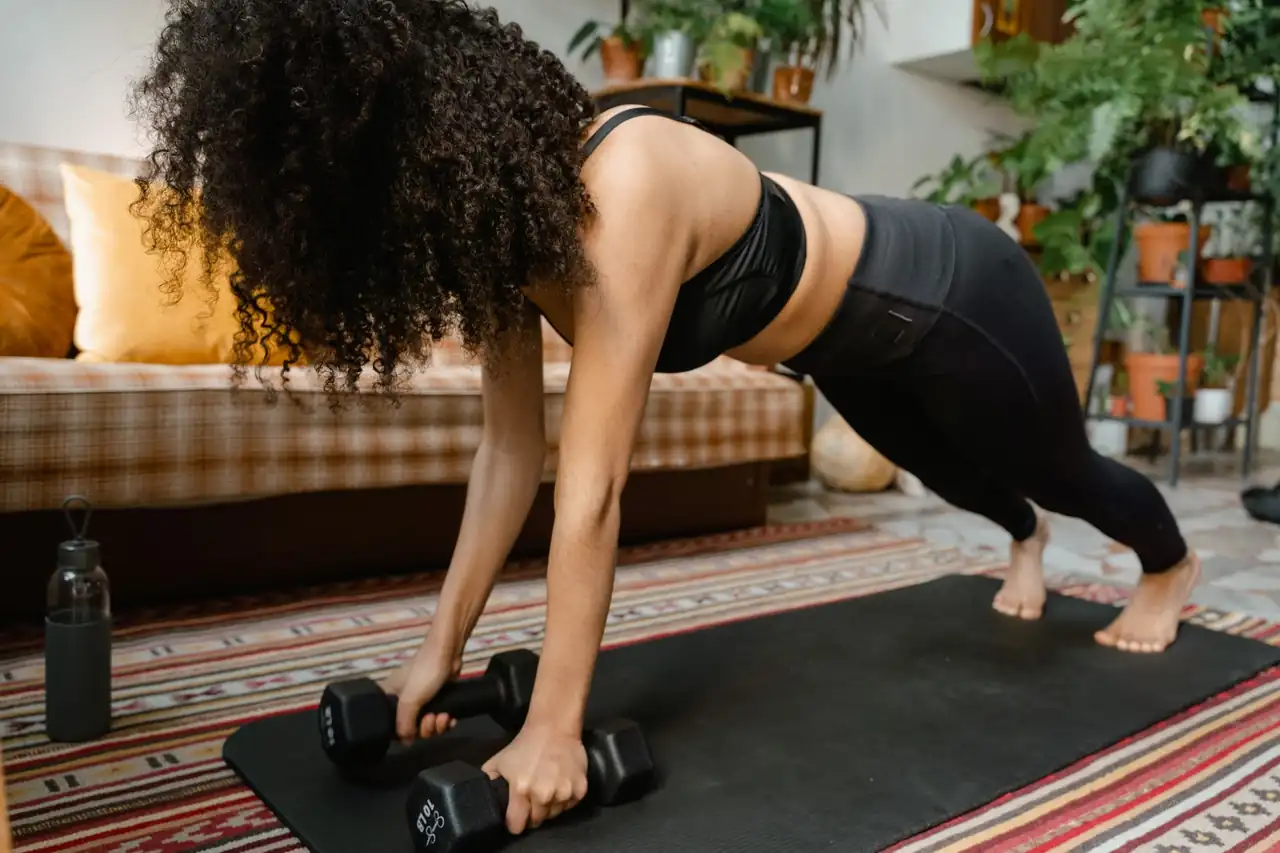
Your back does much more than support your torso: it absorbs impact, offsets the effects of sitting for hours, and contributes to every stride, turn, and push. That is why strengthening it is about more than appearance; it can help you maintain posture and move with greater control in everyday life, training, and races.
In running, that foundation matters even more. A stable back helps keep the pelvis aligned, distributes running forces more efficiently, and prevents fatigue from turning technique into a kind of repeated fall forward. Regular strength work, well planned, can make the difference between musculature that holds up and musculature that complains at every effort.
The back works as a chain, not as a separate piece
The most common mistake is to think of the back as a single block. In reality, it is a system of muscles that cooperate with one another: the spinal erectors help keep the torso upright, the rhomboids stabilize the middle back, the latissimus dorsi takes part in pulling, and the trapezius organizes much of the movement of the shoulders and shoulder blades. Added to that network are the deep core muscles, which act as an internal belt.
When that network loses tone, the body notices immediately. The lower back takes on more load, the shoulders tend to roll forward, and the head projects forward, a very common image among those who spend many hours in front of a computer. In runners, that weakness is often seen at the end of long sessions, when the torso gradually falls apart and technique becomes less efficient.
The most useful exercises are not necessarily the most eye-catching. In fact, the best results usually come from simple, controlled movements repeated with good technique. Back strength is not built on spectacular gestures, but on consistency, a reasonable range of motion, and a progression the body can tolerate without protesting.
Why back strength matters outside the gym too
A stronger back does more than help you lift weight or tolerate more miles. It also improves the ability to maintain an efficient posture in everyday tasks such as carrying bags, bending down to pick something up off the floor, or keeping alignment during a long workday. Stability gains ground over fatigue, and that detail is noticeable both in the office and on the final uphill stretch of a race.
In addition, the thoracic and lumbar areas usually respond well to a combination of strength and mobility. The goal is not to stiffen the body, but to give it the ability to move with control. Back muscles work better when they can contract and lengthen without sudden jolts, like a well-tuned spring. If they become clumsy or rigid, movement becomes more costly and fatigue appears sooner.
That is why it is worth seeing these five exercises as a useful foundation, not as a fixed recipe. They are versatile, scalable movements that are easy to adapt at home or in the gym, with or without equipment. The important thing is not to accumulate variations, but to choose well and execute with intention.
Plank: the anchor that organizes the torso
The plank occupies a central place because it teaches the body to resist without collapsing. It does not push or pull; it forces you to hold. This isometric resistance activates the abdomen, glutes, shoulders, and a large part of the musculature surrounding the spine, so the back learns to stabilize while the rest of the body remains in line. That quality makes it especially valuable for runners, who need a firm torso to transfer energy with less leakage.
The key is to avoid a position that is artificially high or sagging. The neck should follow the line of the back, the abdomen should stay active, and the pelvis should not drop toward the floor. Instead of thinking about holding on just to hold on, it helps to imagine the body lengthening in two opposite directions, as if an invisible rope were pulling from the crown of the head and the heels. That image helps maintain the correct tension without blocking breathing.
A well-executed plank works less through wear and more through precision. Starting with short intervals, of 20 to 30 seconds, is usually more useful than extending the time too early. Movement quality matters more than duration, and a brief but clean set gives more than a long posture in which the lower back eventually gives out.
Glute bridge: a silent help for the lower back
The glute bridge is one of those discreet exercises that change a lot when performed with detail. Although the spotlight falls on the glutes, it also forces the lower back to stabilize and the pelvis to move with control. In practical terms, it unloads part of the work that usually falls on the lower back and reinforces a very useful relationship between the hips and the torso.
Its value increases because many low-back complaints do not start in the back alone, but in the way the hips stop cooperating. When the glute does not participate properly, the body looks for shortcuts in the lower back. The bridge restores some of that lost function and teaches hip extension without exaggerated arching. The correct sensation is of rising from the floor with firmness, not bending the back to gain height.
It is a good idea to pause briefly at the top, squeezing the glutes without losing the torso’s neutral position. That short suspension, almost imperceptible, improves control and prevents bouncing. It is as simple as it is valuable, because it retrains one of the body’s basic coordinations: stable hips, protected back, and smooth breathing.
Bird-dog: fine coordination for a more stable spine
The bird-dog seems like a modest movement, but it demands much more than it appears. From a quadruped position, extending one arm and the opposite leg forces the spine to resist rotation and swaying, the exact opposite of what happens when the torso is fatigued or poorly controlled. That anti-rotation work is gold for the back, because it trains stability without the need for external load.
The beauty of the exercise lies in the stillness. If the body moves too much, it loses the purpose. The back should stay long, the pelvis level, and the movement clean, without flaring the ribs or letting the abdomen sink. The image is that of a firm table with two legs lifting at the same time, but without the structure trembling.
It also has a very valuable advantage for people who are beginning to strengthen their back: it teaches control without being intimidating. It is a low-risk exercise with great functional carryover, useful both for those looking to prevent discomfort and for those who need to regain a sense of stability before moving on to more demanding work.
Supported row: pulling for the middle and upper back
The middle back often gets overlooked when only the lower back is considered. The row changes that focus because it asks you to bring the elbows back, squeeze the shoulder blades together, and wake up the rhomboids and middle trapezius. That gesture, repeated with control, corrects part of the rounded posture so common in daily life and in many jobs.
It can be done with a dumbbell, resistance band, or even a well-loaded backpack, as long as the movement is stable. What matters is not the tool, but the direction of the effort: pulling toward the body, not upward; keeping the chest open, not forcing the lower back; controlling the return, not dropping the weight as if it were burning. That is where the difference between training and simply moving objects appears.
This exercise is very interesting because it distributes the load between the back and the arm, yet makes it clear that the pull begins in the back muscles. Executed well, it improves strength, scapular control, and tolerance to pulling gestures, something useful in the gym and in everyday tasks that require dragging, lifting, or holding.
Superman: gentle extension to wake up the posterior chain
The superman is performed on the floor, which makes it an accessible option for many people. By lifting the arms and legs simultaneously, the spinal extensor muscles become active together with the glutes and shoulders. The spine learns to stay active without external overload, which makes it interesting as an activation exercise or as the closing movement of a light session.
The execution should be measured. There is no need to lift as high as possible or force a heroic curve in the back. In fact, the more exaggerated the movement, the more likely the lower back is to compensate abruptly. The goal is to feel a controlled, brief, and symmetrical extension, as if the body were floating a few centimeters above the mat.
Its value lies in that combination of simplicity and sensitivity. It is useful for reminding the back that it can extend without pain or stiffness, especially when everyday life has kept it in flexion for hours. It is not meant to impose strength, but to restore coordination to the trunk extensors.
Planning the session without falling into haste or rigidity
A strength block for the back does not need to become an endless session. With these five exercises, a reasonable structure can include an isometric exercise, one for the hips, one for contralateral control, one pulling movement, and one gentle extension. Variety makes sense when each piece covers a different function, not when similar movements are piled together without a clear logic.
Recovery should also be respected. The back muscles respond well to consistency, but not to the improvisation of training hard one day and forgetting about it for two weeks. Two or three weekly stimuli, with moderate volume, usually provide more than a single intense session. In strength training, as in almost everything, the body improves when it can repeat the learning without surprises.
For runners, a session like this usually fits well on low-load days or as a complement to general strength work. It does not compete with leg training; rather, it supports it. A stable back improves movement economy and reduces compensations, something especially useful when fatigue, asymmetries, or recurring lower-back discomfort appear.
Five back exercises to help you hold your running form
When you run, your back does more than keep you upright. Along with your abdominal muscles and glutes, it helps stabilise your torso and coordinate your arm and leg movements. As fatigue sets in, particularly on longer runs or late in a race, you may notice your shoulders hunching, your torso leaning, or your stride losing its rhythm. That does not necessarily mean your back is the cause, but it is worth noticing changes in your posture and how you feel.
The five exercises in this article—plank, glute bridge, bird-dog, supported row, and Superman—work complementary skills. Planks and bird-dogs train trunk control; bridges involve the glutes; rows work the mid and upper back, while Superman practises gentle back extension. Move with control and use a comfortable range rather than holding or lifting more at the expense of good form. If a variation feels too challenging, choose an easier version.
Build this strength work gradually into your week alongside your runs. Avoid letting a demanding back session leave you too fatigued for an important workout or race. Keep breathing steadily and watch for new discomfort or form that starts to break down. If an exercise causes pain, reduce the effort or stop; if pain or other symptoms persist, seek advice from a healthcare professional. Consistent, controlled practice matters more than rushing through lots of repetitions.
A strong back is noticed in silence
The best sign of progress is not always lifting more weight or lasting longer. Often it is felt in more subtle details: less tension at the end of the day, more ease when running, better control when bending down, less sense of stiffness when standing up from a chair. Back strength translates into movement quality, and that is a gain that makes no noise, but stays.
Choosing five well-thought-out exercises makes it possible to build a solid base without falling into excessive complexity. The plank organizes, the bridge connects, the bird-dog stabilizes, the row corrects, and the superman awakens. Together they form a sensible sequence for improving the back from several directions, with a logic that combines control, strength, and coordination.
At a time when the body spends too many hours still, giving it the ability to support itself is almost a form of physical hygiene. The back does not ask for heroics, only regular attention. And when it receives that care, it responds like a good shock absorber: it absorbs, protects, and allows you to keep moving forward with less wear.



How to prevent thigh chafing: causes and real solutions

Women’s running windbreakers: seven jackets and how to choose

Do more workouts get rid of soreness? A guide for runners

Jaén Half Marathon 2026: Record 3,800 Runners Registered

Men’s short running tights: how to choose the right pair

World Triathlon confirms data breach involving medical data

Izan Edo targets podium at Miyazaki World Cup

María Pérez ranks ninth in World Athletics’ 2026 top ten

Dos Santos, Duplantis and Sawe: World Athlete of the Year finalists

San Silvestre Vallecana 2026: 42,000 places, prices and start times

 Races3 months ago
Valencia Half Marathon 2027: date and registration

 Races3 months ago
Valencia Marathon 2026: entry, ballot and course

 Reviews and Comparisons4 months ago
Asics Gel-Roadmiles 3 for men: review and current price

 Reviews and Comparisons4 months ago
Asics Gel Sonoma 8 Gore-Tex: complete analysis for trail and rain

 Sneakers3 months ago
Saucony Endorphin Pro 4: full review and verdict

 News5 months ago
Strava API 2026: what changes for clubs, challenges and runner apps?

 Reviews and Comparisons5 months ago
Nike Alphafly 3: opinions, sensations, and real key points

 Reviews and Comparisons4 months ago
Under Armour running shoes review 2025-2026: models and key features

 Sports Equipment4 months ago
Shoe sizes in cm: a clear guide to getting the right fit for your footwear

 Sneakers3 months ago
Skechers GO RUN Consistent 2.0 analysis: comfort and limits

 News5 months ago
Valencia Marathon 2026 route: key tips to train and run better

 Sneakers4 months ago
Adidas Adizero Boston 13 for men: review and verdict