Training
Gym for runners: useful strength to run better
Well-chosen strength improves your stride, protects your joints, and helps you sustain high paces with less wear and tear.

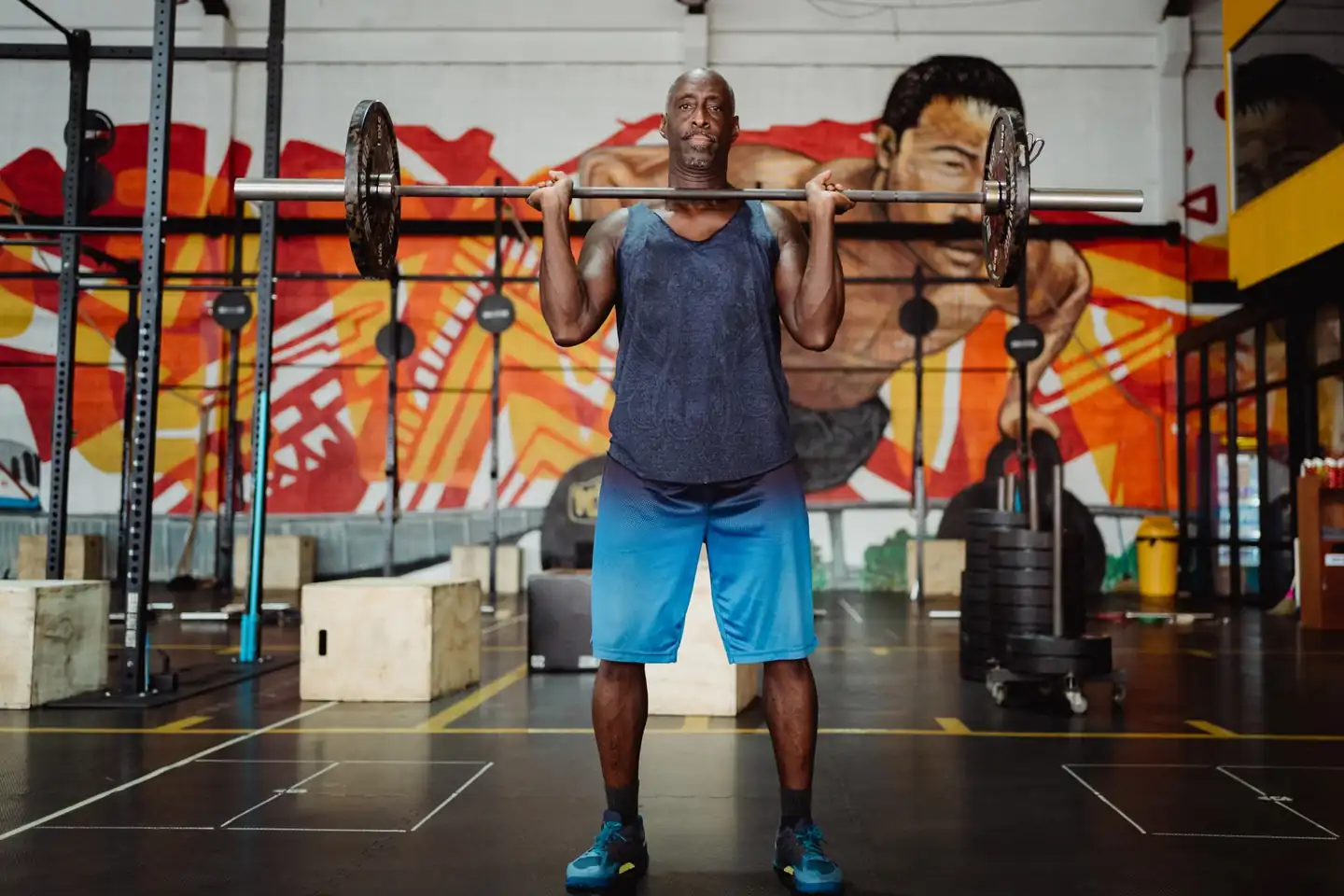
The gym is no longer foreign territory for those who run. In modern training, weights, machines, and stability exercises have gone from being an optional add-on to becoming a central piece for running more smoothly, sustaining effort, and arriving more intact at the end of a season. The idea that a runner only needs miles is long gone: evidence and sports practice point to the fact that a stronger body tolerates impact better, loses less efficiency when fatigue shows up, and responds with more stability in every stride.
The issue is not adding muscle just for the sake of it, but building a more solid athletic base. A runner who works on strength with purpose usually improves running economy, controls posture better when the pace picks up, and reduces the risk of overload in areas as punished as the calves, hamstrings, glutes, hips, or knees. The gym for runners, properly understood, is not about turning anyone into a bodybuilder; it is about making the body better able to handle the repeated act of running, which is as simple in appearance as it is demanding in reality.
Why strength changes the way you run
Running seems like a linear movement, but the body works in a chain. Every foot strike activates ankle, knee, hip, and trunk at the same time, while the upper body is responsible for stabilizing, not showing off. When one piece fails, the movement becomes more energy-expensive. That is why strong musculature not only drives better: it also brakes better, stabilizes better, and distributes loads better. That difference is especially noticeable over middle and long distances, where fatigue punishes technique the way wind erases a footprint in the sand.
Improving running economy is one of the great arguments in favor of strength work. Different studies have observed that, after several weeks of well-programmed resistance training, some runners consume less energy at submaximal paces and show better force production with each foot strike. In simple terms: moving forward costs less. And when moving forward costs less, the runner can hold pace for longer or save resources for the final stretch, that moment when a time, a position, or simply a good running feeling is decided.
The other big advantage is durability. Many runner problems appear through repetition: iliotibial band syndrome, patellofemoral pain, plantar fasciitis, Achilles discomfort, loaded calves, or lower back pain that repeats like an uncomfortable melody. Strength does not magically eliminate the risk of injury, but it does improve the tolerance of muscles, tendons, and joints to accumulated impact. It also helps maintain hip alignment and prevents the knee from collapsing inward when fatigue is already biting.
What well-done work in the weight room brings
The gym for runners works best when it is thought of in terms of transfer, not spectacle. The useful movements usually resemble the language of running: hip thrusts, squats, lunges, hip hinges, unilateral work, back pulling, and core exercises. That selection is no accident. Running is a succession of single-leg supports, of small imbalances corrected instantly, and of a constant need to stabilize the trunk while the legs do their work. The more solid that framework is, the cleaner the mechanics become.
It also improves the ability to maintain technique when fatigue arrives. A tired runner tends to shorten the hip, collapse the trunk, lose arm swing, and land heavier. Here strength acts like a kind of mechanical insurance: it does not prevent fatigue from appearing, but it helps the body fall apart less. That nuance matters a lot in the last kilometers of a half marathon, on the hills of a 10K, or in the final part of a long run, when movement economy is worth gold.
There is also a less visible but very relevant effect: bone density. The impact of running already stimulates bone, but resistance training adds a different stimulus, especially useful for veteran runners or for those who string together a lot of weekly volume. A more robust skeleton better supports the repeated load of training and provides a safety margin in the medium and long term. In a sport built on continuity, that is not a minor detail; it is a competitive and health advantage.
How the gym should be approached for runners
The first rule is simple: better little and well than a lot and badly. The runner who enters the weight room for the first time does not need a bodybuilding program or endless sessions. They need to learn technique, recognize their body control, and choose a load that demands effort without throwing things off. In practice, two weekly sessions are usually a reasonable starting point for most recreational runners, as long as the rest of the running load is well adjusted and recovery is there.
The second rule is almost as important as the first: prioritize quality exercises and simple patterns. Squats, Romanian deadlifts, lunges, sled pushes, rows, assisted pull-ups, or core work usually give more return than a long succession of isolated machines with no relation to the running movement. It is not about excluding everything else, but about focusing where the most transfer is. The runner gains when training the whole system, not a loose muscle as if it were a spare part.
It is also worth respecting the logic of the season. In phases of higher aerobic load, the gym can be more general and with moderate volumes. As an important competition approaches, strength is usually oriented toward fewer reps, more intent to move fast, and a selection of exercises that leave less soreness. That adaptation matters because a heavy leg session, poorly placed, can ruin the quality of intervals, hills, or long runs. The calendar matters more than the ego.
The movements that make the most sense for someone who runs
The hip hinge is one of the pillars of useful training. The deadlift, especially in variations like the Romanian deadlift, teaches how to load the posterior chain: glutes, hamstrings, lower back, and deep back musculature. That pattern is pure gold for runners because it reproduces a key function of sprinting and of a powerful stride, hip extension. If the hip drives well, running becomes more lively and less dependent on excessive braking with each foot strike.
Squats, especially front squats or those performed with good control, strengthen quads, glutes, and trunk. Their value is not only in leg strength; they also force the torso to stay more upright and to hold position as the center of mass shifts. For a runner, that ability to maintain posture is valuable because the trunk cannot collapse every time effort bites. An upright back, an active abdomen, and aligned knees provide a much more efficient base.
Unilateral work deserves its own section. Lunges, split squats, step-ups, and single-leg variations help correct imbalances between the right and left sides. In running, every stride is a single-leg support; that is why it makes sense to train that way. If one leg produces more force or controls movement worse, the body compensates. And that compensation, repeated thousands of times, eventually takes its toll. Unilateral work not only strengthens: it also reveals differences that in a bilateral movement could remain hidden.
An effective selection of exercises to do in the gym
The Romanian deadlift is among the most valuable exercises for runners. It is performed with a slight bend in the knees, the hips are pushed back, and the back stays neutral while the torso lowers under control. The key is to feel how the hamstrings and glutes take the load without the lower back doing all the work. It is a movement that teaches you to drive from the hip, exactly what is needed for a more powerful stride and a more efficient push-off phase.
The Bulgarian split squat offers a very complete unilateral workout. One leg bears most of the load while the other rests behind on a bench. The result is a combination of strength, balance, and mobility that challenges exactly what is most useful for running: hip stability, knee control, and the ability to produce force without losing alignment. It is also an honest exercise; it quickly shows whether there is a significant difference between legs.
Walking or static lunges serve a similar function, but with a dynamic nuance. They force you to coordinate descent, push-off, and recovery in a less stable environment, closer to the reality of running. If the runner keeps the trunk firm and avoids the knee drifting, that pattern eventually carries over into running. There is no need to load too much to get benefit; precise execution and an intensity that truly makes you work are enough.
Front squats add an extra layer of trunk control. The load in front of the body forces the chest to stay up and prevents collapsing. That postural demand helps strengthen the core in a functional way and maintain pelvic orientation better. For runners who tend to lean too much or lose stability when they get tired, this type of squat is especially interesting.
Back pulling also matters, even if it is sometimes underestimated. Pull-ups, dumbbell rows, or face pulls strengthen the upper back, an area that works to keep arm swing efficient and posture open. You do not run with your arms in front of your chest or with your shoulders hunched; you run with the trunk organized. A strong back helps technique not close in like an old umbrella as the kilometers go by.
The core should be understood as a stability system, not as an area for doing abs and nothing more. Planks, pallof press, dead bug, hanging leg raises, and anti-rotation exercises fulfill that function better. Their job is to prevent unwanted movement, not to create obvious fatigue. For running, what matters is that the trunk transmits force between legs and arms with as little noise as possible, like a beam well set into a bridge.
Explosive work, well dosed, can add a very useful layer of performance. Kettlebell swings, sled pushes, drags, and, in more advanced runners, some power exercises with light loads and fast execution, train the ability to generate force quickly. In short races or during pace changes, that quality makes a difference. It is not about moving fast just for the sake of it, but about teaching the nervous system to react with more snap.
How many sets, how many reps, and at what intensity
The right answer depends on the time of season, but there are useful general principles. In base phases, many runners benefit from moderate sets of 6 to 10 reps in the big movements, with a load that leaves a real sense of effort without breaking technique. In more accessory or stability exercises, slightly higher rep ranges can help consolidate control. The key is not to chase muscle failure at all costs, but to accumulate quality work.
When the goal is maximal strength, volume usually goes down and load goes up. That does not mean lifting to the limit all the time, but working with shorter reps and more rest. This approach can favor transfer to the running movement because it improves the ability to apply force with fewer wasted reps. For most recreational runners, however, the sweet spot is usually a balance between strength, control, and recovery capacity.
Frequency matters just as much as the exercise chosen. Two weekly sessions are enough to generate adaptation in many cases, as long as there is consistency. One session can serve as maintenance, and three only make sense in very specific phases or in runners with a well-designed load structure. More is not always better; often, better placed is.
How to fit it in with easy runs, intervals, and the long run
The coexistence of running and strength needs order. Placing a hard leg session right before a quality workout is usually a bad idea, because the muscles arrive tired and technique deteriorates. On the other hand, placing it after an easy run or on a separate day usually allows for better execution. The ideal combination varies, but the principle is constant: protect the key running sessions.
In periods of heavy load, strength can be reduced without disappearing. The goal then is to maintain the neuromuscular stimulus and not accumulate useless fatigue. A runner preparing for a half marathon or a marathon does not need to reach the final week with persistent soreness. They need to arrive fresh, reactive, and without having sacrificed the quality of specific training for misplaced ambition in the weight room.
There is also an important nuance with runners coming from a long period without strength work. The body responds quickly at first, but it also pays for excess quickly. Tendon tissue needs time to adapt, and that adaptation does not always move at the same pace as the feeling of muscular capacity. That is why it is wise to progress patiently, refine technique, and avoid sudden jumps in load or volume. In strength, as in running, haste usually comes at a price.
Common mistakes that reduce the benefits
The most common mistake is training as if the goal were another sport. A runner does not need to turn every session into a hypertrophy battle or chase total exhaustion. Nor is it wise to copy routines designed for muscle aesthetics with no relation to running mechanics. When the gym moves too far away from the useful pattern, it loses much of its value for the runner.
Another frequent mistake is neglecting technique in order to move more weight. In basic exercises, a rounded back, poorly aligned knees, or a collapsing hip neutralize the goal and increase risk. The load should grow at the pace of control, not the other way around. A weight handled with precision offers more transfer than a shiny bar lifted with bad posture and disordered breathing.
Recovery is also underestimated. Strength does not only work in the gym, but in the hours afterward. Sleep, enough food, and a reasonable distribution of loads are part of the process. A runner who adds quality in running and strength without rest ends up paying the bill in the form of persistent fatigue, heavy legs, or less snap in specific workouts.
What really makes the gym useful for a runner
The value of the gym for runners is not in fashion, but in transfer. The weight room makes sense when it helps you run more economically, tolerate impact better, and maintain a useful posture until the end of a demanding session. That is the most honest yardstick. If an exercise improves the ability to produce force, control the trunk, and sustain technique, it probably deserves its place; if it only fills time, it does not.
The combination of running and strength draws a more complete athlete profile. Not necessarily more bulky, nor heavier, nor more cumbersome. More resilient. More stable. Better prepared to absorb repetition, which is the true unit of measure in running. In the end, running better does not always mean running more; often it means building a body that keeps responding when the clock, the asphalt, and fatigue are already pressing hard.
That is why the gym should not be seen as an obligation separate from the runner, but as a logical extension of training. There, the structure that supports every stride is refined. Weak links are corrected. The movement is polished. And, above all, room is gained to keep running solidly when others start to fade. In a sport where every foot strike counts, that solidity is noticeable from the first kilometer to the finish line.



How to prevent thigh chafing: causes and real solutions

Women’s running windbreakers: seven jackets and how to choose

Do more workouts get rid of soreness? A guide for runners

Jaén Half Marathon 2026: Record 3,800 Runners Registered

Men’s short running tights: how to choose the right pair

World Triathlon confirms data breach involving medical data

Izan Edo targets podium at Miyazaki World Cup

María Pérez ranks ninth in World Athletics’ 2026 top ten

Dos Santos, Duplantis and Sawe: World Athlete of the Year finalists

San Silvestre Vallecana 2026: 42,000 places, prices and start times

 Races3 months ago
Valencia Half Marathon 2027: date and registration

 Races3 months ago
Valencia Marathon 2026: entry, ballot and course

 Reviews and Comparisons4 months ago
Asics Gel-Roadmiles 3 for men: review and current price

 Reviews and Comparisons4 months ago
Asics Gel Sonoma 8 Gore-Tex: complete analysis for trail and rain

 Sneakers3 months ago
Saucony Endorphin Pro 4: full review and verdict

 News5 months ago
Strava API 2026: what changes for clubs, challenges and runner apps?

 Reviews and Comparisons5 months ago
Nike Alphafly 3: opinions, sensations, and real key points

 Reviews and Comparisons4 months ago
Under Armour running shoes review 2025-2026: models and key features

 Sports Equipment4 months ago
Shoe sizes in cm: a clear guide to getting the right fit for your footwear

 Sneakers3 months ago
Skechers GO RUN Consistent 2.0 analysis: comfort and limits

 News5 months ago
Valencia Marathon 2026 route: key tips to train and run better

 Sneakers4 months ago
Adidas Adizero Boston 13 for men: review and verdict