Training
Half marathon training plan in 2 hours
Paces, weekly mileage, strength, and strategy to arrive strong at the 21K and sustain the target pace.

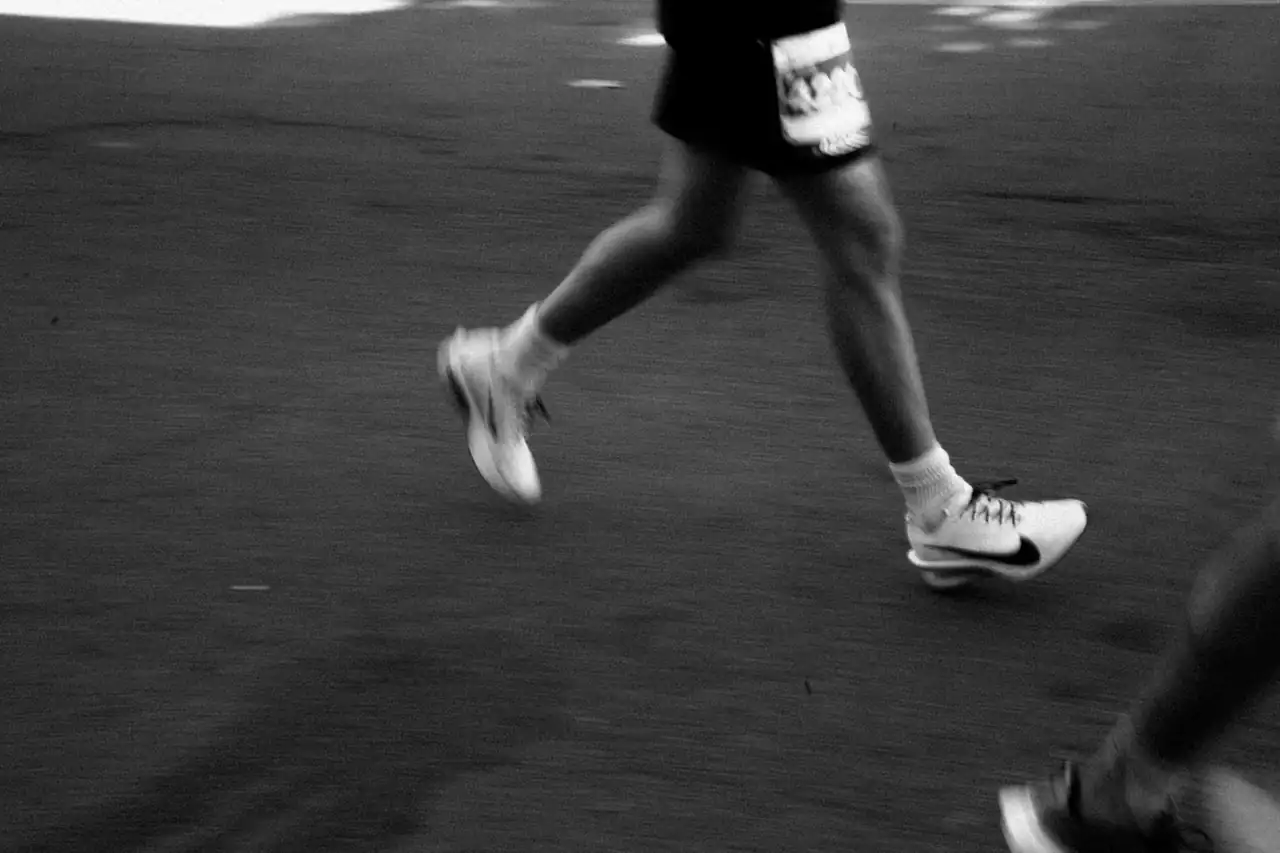
Breaking two hours in a half marathon does not depend on a single brilliant session or on stringing miles together out of inertia. It requires a very specific race pace, around 5:41 per kilometer, and an aerobic base capable of sustaining it for 21.097 kilometers without the legs emptying too soon. The difference between finishing strong or blowing up is usually found in the architecture of the training: how much volume is accumulated, how the intensities are distributed, and how much real margin the runner has to absorb the workload.
The most reliable plans agree on one essential point: for this goal, you do not need to live on the track, but you do need to train with order. Three running days per week can be enough if the runner already has some experience in 10 kilometers, a stable weekly mileage of 25 to 40 kilometers, and a recent time close to 53-56 minutes in the 10K. From there, the work should mix easy paces, sections at half-marathon pace, quality sessions, and some strength work so the body does not reach the final stretch like a house with damaged foundations.
The mark that seems modest and demands a lot of craft
The two-hour barrier has something of an illusion to it. On paper, it does not seem like an elite mark or a frontier reserved for exceptional runners, but in a race it behaves like a very serious filter. It forces you to run patiently, not to go out faster than planned, and to maintain a fairly stable stride economy when fatigue starts making itself felt around kilometer 14 or 15. From that point on, you are no longer running with your legs alone; you are also running with judgment.
The target pace of 5:41 per kilometer sets the tone for the entire plan. It is not a decorative number: it defines easy runs, intervals, progressions, and even how to think about effort. Anyone approaching this challenge usually needs a mix of aerobic endurance, a well-developed threshold, and some ability to tolerate pace changes without breaking down. That is why the most useful plans are not built around a single block of intensity, but around a progression that leaves room for adaptation.
It is also worth accepting an uncomfortable reality: not every runner who can run 10 kilometers in 55 minutes is ready to nail a sub-2 half marathon right away. The distance stretches, the wear builds up, and the margin for error shrinks. Strategy matters as much as fitness, because an overenthusiastic start can turn a promising race into an endless uphill battle. In the half marathon, prudence usually pays more than enthusiasm.
What base the runner needs before starting
Before tackling a plan for this goal, the minimum reference point is clear. Having raced a few 10K events helps the body understand the effort, and having sustained weeks with 25 to 40 kilometers makes it easier to tolerate the load. That range is not a rigid barrier, but it is a reasonable floor to keep the plan from becoming a sequence of sessions that are too hard for the actual starting point.
In that context, recent 10K experience serves as a benchmark. A time between 53 and 56 minutes says a lot about the possibility of sustaining half-marathon pace for two hours. It also reveals something important: the runner has already experienced continuous effort and is not starting from zero when it comes to pace management. Even so, the preparation should not focus only on running faster; it must teach you to run longer without losing efficiency.
The ideal frequency of three days per week does not mean poor training, but rather a very carefully designed distribution. One of those days should be clearly easy, another should be quality work, and a third should be longer, with enough time in the aerobic zone. In between, strength acts as the invisible skeleton of the plan: it is not always visible, but it supports everything else. Without it, technique breaks down sooner and the impact is felt more in the calves, hamstrings, and hips.
How a ten- to twelve-week block is organized
The most effective plans for this goal usually run for 10 to 12 weeks, although longer versions also exist. The difference is not just in the calendar, but in how the stress is distributed. At the beginning, it is best to consolidate the base and remind the body how to run comfortably; then comes the specific work block, where paces close to the goal appear; and at the end, you sharpen, reduce volume, and preserve freshness without fatiguing the body more than necessary.
A sensible progression avoids sudden jumps. One week might combine easy runs with hills or 1,000-meter intervals; the next, a longer tempo block; the following week, an extended controlled-pace run. That alternation keeps the stimulus alive without overloading. In this kind of preparation, the body responds better to smart repetition than to chaotic changes. Improvement comes when the runner recognizes sensations, not when each session is improvised as if it were an exam.
Deload weeks also carry a lot of weight. They are not a reward or a whimsical break, but the part of the work that allows what has already been trained to be absorbed. Reducing kilometers and lowering the intensity a notch helps the cardiovascular and muscular systems consolidate adaptations. Without that breathing space in the middle of the effort, the plan loses clarity and fatigue starts to look like performance, when in reality it is only accumulated tiredness.
Paces that organize the preparation
To sustain a half marathon in under two hours, the runner needs to live with several paces, not just the target one. Easy runs usually fall into a zone where you can still talk fairly naturally, something like a comfortable run that leaves room to breathe. In reference plans, approximate paces between 6:20 and 6:50 per kilometer appear for that easy work, although each runner must adapt the number to their actual level and heart rate.
The half-marathon pace, of course, sits at 5:41 per kilometer. That is the rhythm worth learning in progression runs, long blocks, or controlled sections within a run. Faster than that, the effort moves toward 10K pace or even threshold zones; slower than that, the body works the base well, but does not learn to sustain the specific pressure of the race. Precision here is not a whim: it is the way to arrive with automatisms on race day.
Above that pace come the more demanding workouts. 1,000- or 2,000-meter intervals usually move around 10K pace or slightly faster, while fartlek and hills add strength and tolerance for change. The goal is not to blow up every session, but to teach the body how to handle different kinds of effort. That learning, accumulated week after week, eventually builds the solidity that a well-run half marathon demands.
Strength, that insurance policy that is almost never extra
For amateur runners, strength remains a frequent debt. And yet, for a goal like this, it makes a visible difference. A stronger lower body stabilizes the stride, improves running economy, and reduces the chance that technique will collapse when fatigue bites. This is not about lifting like a weightlifter, but about better sustaining the repeated motion of running for an hour and a half or more.
Two strength sessions per week usually fit well into a preparation like this, as long as they do not become a second endurance workout in disguise. The work can include squats, lunges, glute bridges, calf work, core, and corrective exercises. The core of the body matters more than it seems: it helps prevent the pelvis from wobbling too much and directs energy forward instead of correcting imbalances at every step.
It is also useful to think of strength as prevention. When the runner accumulates weeks of intervals, easy runs, and long runs, the tissues receive repeated impacts. Prepared muscles absorb that punishment better and distribute the load more intelligently. Over this distance, injuries usually do not appear from one session, but from a sustained imbalance. Strength, placed well, works like a silent emergency brake.
The nutrition and hydration that support the effort
The nutritional strategy for a half marathon does not need solemnity, but it does need order. In the days before, it is wise to ensure sufficient carbohydrate intake to arrive with available glycogen. That does not mean eating without restraint, but prioritizing foods that are easy to digest and familiar to the runner: rice, pasta, bread, potatoes, oats, or ripe fruit. Excess fiber or fat in the hours before tends to backfire, especially if the stomach is sensitive.
On race day, breakfast should be taken with time, ideally 2 to 3 hours before, and should focus on foods that are light on the stomach. During the effort, a half marathon of around two hours may require 40 to 60 grams of carbohydrates per hour, especially if you want to race with stability rather than just survive. Gels and sports drinks are the most practical formats, because they provide energy without needing to chew or interrupt the rhythm too much.
Hydration also matters, even if the margin for error seems small at this distance. Arriving well hydrated at the start and drinking according to the heat and sweat rate helps keep the heart rate from rising too early. In mild conditions, small sips at aid stations may be enough; in hot weather, the need increases and the runner must be even more precise. Losing just 2% of body weight through dehydration already starts to affect performance.
A realistic example of a typical week
The most useful weekly structure does not aim to fill the calendar, but to distribute fatigue well. An effective week can start with rest or very light activity, continue with an easy run, include a quality day in the form of tempo or intervals, and reserve the third day for a progressively longer run. The logic is simple: one stimulus to activate, another to improve, and another to consolidate. In between, rest is not an absence, but part of the adaptation.
A runner training three days a week can, for example, do a comfortable 45- to 60-minute run, a session of 800- or 1,000-meter intervals, and a long run that gradually builds up to 90 minutes or a bit more. For this goal, that long outing does not have to be heroic; what matters is that it includes final sections at controlled pace to simulate accumulated wear. The last third of the workout teaches more than the first fresh kilometers.
The key to a typical week is not the number of hard sessions, but how they coexist. If the runner arrives too beaten up to every workout, the plan falls apart. If, on the other hand, the runner keeps an easy base and only pushes where needed, progression becomes more sustainable. That sense of control, sometimes silent, is what usually separates a solid preparation from a pile of disconnected efforts with no direction.
The mistakes that make the goal much harder
The first is believing that all workouts should feel demanding. That idea leads to running every session harder than necessary, which wears you down, hinders recovery, and leaves the most important weeks with a tired body. In a half marathon, consistency matters more than daily heroics. Training with your head means saving intensity for where it truly adds value.
Another common mistake is ignoring strength or relegating it to a decorative add-on. When the legs no longer support posture well, the target pace becomes expensive. Volume management also often fails: trying to add too many kilometers too soon. The body usually warns you before it breaks, but it does so quietly, with small signs that many runners prefer not to hear.
Nor is it a good idea to try anything new on race day. New shoes, newly bought socks, or a shirt that chafes can turn a day aimed at a personal best into a race of discomfort. The half marathon punishes any poorly solved detail. Comfort does not win races, but it prevents losing them. That simple phrase sums up much of the practical wisdom of the experienced runner.
How to arrive feeling good at kilometer 15
The half marathon really begins when the body stops running on autopilot. Up to kilometer 10, the effort usually feels manageable; between 12 and 15, the first serious bill arrives. That is where you find out whether the pace was chosen well and whether the preparation could tolerate sustained effort. There is no magic in that stretch, only physiology, patience, and some mental discipline.
The runner who wants to finish under two hours needs to arrive there with reserves, not debts. That is achieved by starting a little more conservatively than adrenaline dictates, hydrating sensibly, avoiding going over target pace in the first kilometers, and accepting that wear is part of the equation. The race is decided long before the finish, in the way the effort is distributed when everything still feels easy.
Training at paces close to the goal, especially in long or progressive blocks, helps make that kilometer 15 feel less like an unexpected wall. The body recognizes the cadence, breathing, and stride length, and that reduces the sense of chaos. In a well-executed half marathon, the finish is not a miracle: it is the result of having respected each previous section.
The final week and the value of sharpening without exhausting yourself
The last week is not designed to gain fitness, but to avoid losing it. Reducing volume, keeping some short stimuli, and avoiding heaviness usually works better than trying to make up for missed training at the last minute. The runner arrives with more neuromuscular freshness and less mental noise. That freshness, invisible in a printed plan, is very noticeable at the start.
A few days before, it is wise to stop chasing impossible paces and focus on maintaining tone. A short run, some mobility, and one or two very moderate quality touches are enough to remind the body what is expected of it. Tapering is not a renunciation; it is the phase in which the work already done starts to pay off. If you push too hard in this stretch, you gain fatigue and lose sharpness.
The eve of the race should not be a psychological battle. Sleeping well helps, but a single bad night does not ruin months of preparation. What does make the race harder is anxiety about compensating, eating strangely, or lining up with empty legs. At this distance, serenity is usually a better companion than euphoria. The goal is to race, not to survive the process.
What really separates the attempt from the sub-2
A half marathon under two hours is not achieved by blindly piling up kilometers or by a miraculous interval session. It is built with a coherent block, with a reasonable volume for the runner’s level, with a sufficient dose of quality, and with the humility to accept that rest also produces adaptation. That combination, more sober than spectacular, is usually the one that works best.
Above all, this goal demands consistency, pace control, and respect for recovery. Anyone who trains three well-placed days, sharpens race pace, adds strength, and arrives at the start without dragging unnecessary fatigue enters the zone where a sub-2 stops being an abstract wish and becomes a real possibility. It is not an easy promise. But it is a perfectly readable goal for a runner with a base, patience, and a well-organized preparation.
The half marathon has that strange character of races that feel intimate and yet ruthless. It accompanies you for kilometers, lets you think, allows you to negotiate with yourself, and, in the end, demands its due. Finishing under two hours means having understood that negotiation from the start. It is not about running harder all the time, but about running better when it matters most.
You may also like: Half marathon plan in 1h30: paces, sessions, and keys.



How to prevent thigh chafing: causes and real solutions

Women’s running windbreakers: seven jackets and how to choose

Do more workouts get rid of soreness? A guide for runners

Jaén Half Marathon 2026: Record 3,800 Runners Registered

Men’s short running tights: how to choose the right pair

World Triathlon confirms data breach involving medical data

Izan Edo targets podium at Miyazaki World Cup

María Pérez ranks ninth in World Athletics’ 2026 top ten

Dos Santos, Duplantis and Sawe: World Athlete of the Year finalists

San Silvestre Vallecana 2026: 42,000 places, prices and start times

 Races3 months ago
Valencia Half Marathon 2027: date and registration

 Races3 months ago
Valencia Marathon 2026: entry, ballot and course

 Reviews and Comparisons4 months ago
Asics Gel-Roadmiles 3 for men: review and current price

 Reviews and Comparisons4 months ago
Asics Gel Sonoma 8 Gore-Tex: complete analysis for trail and rain

 Sneakers3 months ago
Saucony Endorphin Pro 4: full review and verdict

 News5 months ago
Strava API 2026: what changes for clubs, challenges and runner apps?

 Reviews and Comparisons5 months ago
Nike Alphafly 3: opinions, sensations, and real key points

 Reviews and Comparisons4 months ago
Under Armour running shoes review 2025-2026: models and key features

 Sports Equipment4 months ago
Shoe sizes in cm: a clear guide to getting the right fit for your footwear

 Sneakers3 months ago
Skechers GO RUN Consistent 2.0 analysis: comfort and limits

 News5 months ago
Valencia Marathon 2026 route: key tips to train and run better

 Sneakers4 months ago
Adidas Adizero Boston 13 for men: review and verdict