Training
Is it good to run with zero drop? Advantages, risks, and how to make the transition
Zero drop can favor a more natural stride, but it does not suit all runners or all phases equally.

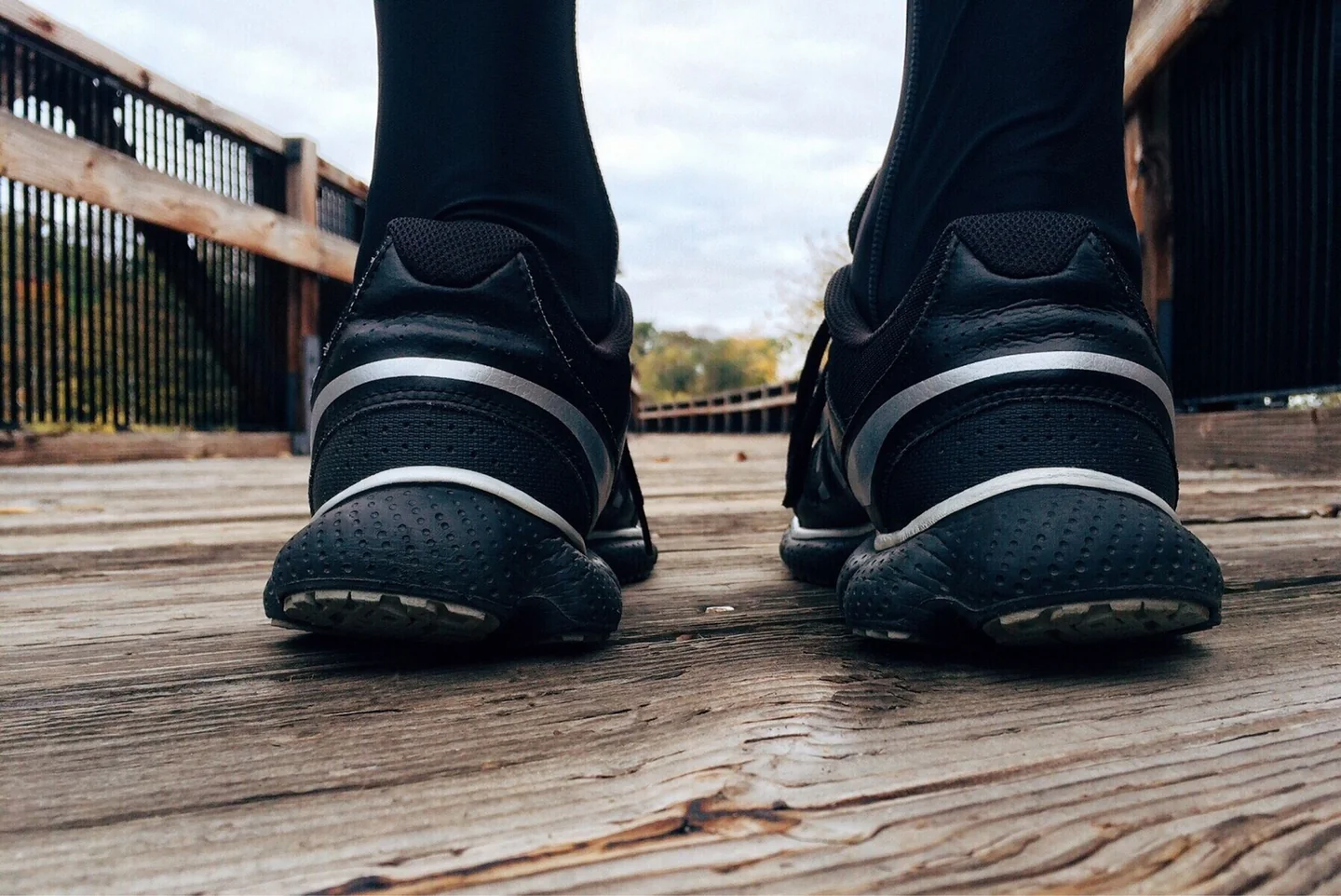
Zero drop has stopped being a niche rarity and has become an increasingly visible option on road and trail. Its main feature is simple: the heel and forefoot sit at the same height, with no wedge under the rearfoot. That changes foot posture, the way you land, and, above all, how loads are distributed when running.
The short answer to the question is nuanced: it can be a good choice, but not for everyone or in just any way. For runners accustomed to conventional shoes, jumping straight into this terrain usually punishes the calves, soleus, and Achilles tendon. By contrast, a slow transition, with a solid strength base and good load tolerance, can provide a more natural feel and a technique closer to barefoot running.
What really changes when the heel stops rising
In a traditional shoe, the drop usually ranges between 6 and 12 millimeters, although there are higher or lower models. That difference, which seems minimal on the table, changes stride mechanics like a small wedge tilting an entire piece of furniture. The body responds to that tilt with adjustments in the ankle, knee, hip, and trunk.
By removing that elevation, the foot tends to settle more flatly and ground contact usually shifts toward the midfoot or forefoot. This is not a universal law, because every runner lands according to their technique, mobility, and fatigue, but it is a frequent pattern. That transition can encourage a quieter, more compact stride, with less pronounced heel striking in some cases.
It is worth separating two ideas that are often mixed together: drop is not the same as cushioning. A shoe can have zero drop and still offer foam, protection, and long wear; another can be very minimal, almost ground-like, and seek a more direct feel. Drop refers to geometry, not softness. That difference is crucial to avoid drawing incorrect conclusions when comparing models.
Why it appeals so much to runners
The popularity of zero-drop footwear is not explained by fashion alone. It responds to a specific search: feeling support more clearly, reducing artificial elements, and regaining a stride less dependent on an elevated heel. For some runners, especially those with experience and body control, that sensation translates into a more stable run that feels more connected to the ground.
Proprioception, that is, the information the brain receives from the feet and ankles, plays a more prominent role in this type of shoe. The ground is perceived sooner, support is read more clearly, and technique can be refined. On trail, that terrain reading can also help in technical sections, as long as the outsole and protection are up to the task.
Another factor is an idea very present in modern running: less structure does not always mean less performance. Some runners find that a flat platform gives them better cadence, less feeling of awkwardness, and a response that is truer to the natural movement. But that benefit does not come from simply changing shoes; it depends on neuromuscular adaptation and total training load.
When it can be a good choice and when it cannot
Zero drop can work well for runners who already have a solid strength base in the calves, soleus, foot, and hip, and who also tolerate different types of footwear well. It is often appealing for those seeking a closer-to-the-ground feeling, for easy runs, for technique work, or for alternating with other models within a varied rotation.
By contrast, it is usually not a good entry point for someone dealing with Achilles issues, who has spent years running with a lot of heel elevation, or who has grown used to very guided cushioning. The change can be too abrupt. Muscle and tendon need time to adapt to a different demand, just as a car needs a few miles to adjust its brakes and suspension after a major repair.
Body weight also matters, but not in a mechanical or exclusive way. What matters is not an isolated number, but how the body responds to repeated impact. A lighter runner may tolerate the transition poorly if they speed up the changes too much; another with more weight may use this type of shoe safely if they respect prudent progressions and the model provides enough protection. Experience matters more than the label.
The real benefits and their limits
Among the arguments in favor, a possible improvement in technique often appears. With no rear elevation, many runners reduce exaggerated heel striking and slightly shorten their stride. This change can lessen certain braking forces and distribute the workload between the foot and ankle more effectively. It is not a magic wand, but it is a biomechanical change that makes sense.
Another plus is stability. By standing on a flat platform, the foot receives a more even base and some people feel more control in turns, descents, or easy paces. On trail, that feeling can be valuable when the terrain forces quick reactions. However, stability does not depend only on drop; shoe width, outsole grip, and lateral stiffness also matter.
The big limitation is adaptation. Many potential benefits appear only when the runner accepts a transition period. During that time, the foot and calf work harder. If the load spikes, the supposed improvement becomes overuse. The Achilles tendon, for example, usually does not forgive abrupt changes in volume and pace when the small help provided by the elevated heel disappears too.
The discomfort that most often appears
The area that notices the change most is the posterior chain. Calves, soleus, and Achilles take on more responsibility because the ankle works through a different range and the calf absorbs part of the demand that the shoe geometry used to share. Morning stiffness, a feeling of tightness, or localized fatigue are common signs in the early stages.
Discomfort can also appear in the arch or the sole of the foot, especially if the intrinsic muscles are not used to working with so much freedom. The foot, which in stiffer shoes acts almost like a contained piece, has to stabilize itself. That task is not always noticeable on a short run, but it shows up in long intervals, descents, or accumulated mileage.
The knee and hip are not left out, although the effect varies from person to person. A runner who shortens stride and improves support may unload certain knee structures. Another, however, may compensate with more hip tension if they lose mobility or try to force a technique they still do not master. That is why the same model can suit one person and not another.
What biomechanics says without turning it into dogma
Research on zero drop and injuries does not offer a single verdict. Some studies point to favorable changes in certain load variables, while others warn of increased stress in tissues that are not yet adapted. The most solid message from the literature is that context matters more than slogans. It is not the same to be a healthy runner who rotates models as it is to change abruptly and increase mileage at the same time.
Biomechanics also reminds us of something basic: the body does not work in isolated parts. A flat shoe changes the ankle, yes, but also arm rhythm, trunk lean, and landing pattern. Sometimes the runner thinks they are changing shoes and in reality they are changing the entire choreography. That is why the same pair can feel liberating in a short session and heavy in a long run.
The most common mistake is to attribute all discomfort to drop when, in reality, the cause is usually a mix of volume, fatigue, technique, and lack of adaptation. Footwear does not cause injury on its own; improper use within an unprepared context does. That distinction matters more than any marketing debate.
How to move to a flat platform without paying a price
The change works better when it resembles a move, not a leap into the void. First you try it on walks, then on short runs, and only later on full sessions. The body needs time to interpret the new geometry and strengthen the tissues that will receive more load. Skipping that process is like taking a new bike on a long climb without having adjusted the saddle.
Foot and calf strength make the difference. Calf raises, eccentric work, one-leg balance, and support exercises on stable surfaces help prepare the ground. It is also worth taking care of ankle and hip mobility, because a stiff posterior chain amplifies the problem. What matters is not doing a lot, but doing it consistently and progressively.
Shoe rotation is another sensible tool. Alternating a zero-drop shoe with a medium-drop or more cushioned one allows you to distribute stimuli and avoid the same tissue receiving the same load all the time. Instead of putting all your trust in one model, the runner keeps room to maneuver. That variety is usually smarter than blind loyalty to one sensation.
Which runners usually get the most out of it
Zero drop usually fits better with profiles that are technically curious, tolerant of strength work, and patient enough to listen to small signals before they become major discomforts. It also tends to appeal to those who prioritize ground feel and agility over maximum protection. On short trail runs or controlled outings, that combination can be very attractive.
Long-distance runners are not excluded, but they need more caution. The longer the foot spends inside the shoe and the more fatigue the muscles accumulate, the more important the overall protection of the package becomes. Too little foam can leave the runner reading every stone as if the ground were in their pocket. In ultras or long runs, that detail eventually matters.
There is also a very clear profile for whom an immediate transition is usually not advisable: those with repeated Achilles, plantar fascia, or calf issues, those with very limited ankle mobility, and those who already run with a forefoot-heavy technique but without enough strength base. In those cases, the change can worsen the problem it was meant to solve.
How to tell a good purchase from a marketing trap
The market has expanded the range so much that looking at drop alone is no longer enough. What matters includes forefoot width, longitudinal flexibility, foam amount, outsole quality, and the overall weight of the shoe. A good flat shoe is not the most Spartan one, but the one that balances natural feel and protection for the actual use it will get.
On road, a zero-drop option may need a bit more cushioning than on a track or in very short sessions. In the mountains, protection from stones and roots is almost as important as geometry. The key is not to confuse minimalism with extreme austerity. A model that is too hard may seem honest, but it will last little in the hands of an average runner.
It is also wise to be skeptical of the idea that a flat platform can correct a flawed technique on its own. It may help you feel support better, yes, but it does not replace a stable mechanic or fix a mobility limitation. The shoe supports the movement; it does not rewrite it from scratch.
The sensible choice depends on the body, not the trend
Zero drop is neither a universal solution nor an automatic mistake. It is one more tool in the runner’s kit, useful when it responds to a specific need and when the body is ready to handle it. It can improve terrain perception, encourage a more natural stride, and serve as a technical stimulus, but it can also demand more from the calf and tendon if used without transition.
That is why the question should not be framed as a blanket defense or rejection, but as an honest assessment of tolerance, experience, and goal. It is good for some runners, at some times, and with a well-thought-out progression. For others, however, it may simply be an unnecessary source of overload. Between those two realities lies a broad and reasonable middle ground, which is where the best decisions in running are usually made.
In the end, the best signal comes not from the catalog or the trend, but from the foot’s response after several consecutive workouts. When the transition is done well, the shoe disappears from the mind and gives way to the movement. And in running, few things speak more clearly than that absence of noise.



How to prevent thigh chafing: causes and real solutions

Women’s running windbreakers: seven jackets and how to choose

Do more workouts get rid of soreness? A guide for runners

Jaén Half Marathon 2026: Record 3,800 Runners Registered

Men’s short running tights: how to choose the right pair

World Triathlon confirms data breach involving medical data

Izan Edo targets podium at Miyazaki World Cup

María Pérez ranks ninth in World Athletics’ 2026 top ten

Dos Santos, Duplantis and Sawe: World Athlete of the Year finalists

San Silvestre Vallecana 2026: 42,000 places, prices and start times

 Races3 months ago
Valencia Half Marathon 2027: date and registration

 Races3 months ago
Valencia Marathon 2026: entry, ballot and course

 Reviews and Comparisons4 months ago
Asics Gel-Roadmiles 3 for men: review and current price

 Reviews and Comparisons4 months ago
Asics Gel Sonoma 8 Gore-Tex: complete analysis for trail and rain

 Sneakers3 months ago
Saucony Endorphin Pro 4: full review and verdict

 News5 months ago
Strava API 2026: what changes for clubs, challenges and runner apps?

 Reviews and Comparisons5 months ago
Nike Alphafly 3: opinions, sensations, and real key points

 Reviews and Comparisons4 months ago
Under Armour running shoes review 2025-2026: models and key features

 Sports Equipment4 months ago
Shoe sizes in cm: a clear guide to getting the right fit for your footwear

 Sneakers3 months ago
Skechers GO RUN Consistent 2.0 analysis: comfort and limits

 News5 months ago
Valencia Marathon 2026 route: key tips to train and run better

 Sneakers4 months ago
Adidas Adizero Boston 13 for men: review and verdict