Training
Gym machines for legs and glutes: a runner’s guide
Lower-body machines make a difference in activation, safety, and results. This is how to understand them and choose well.

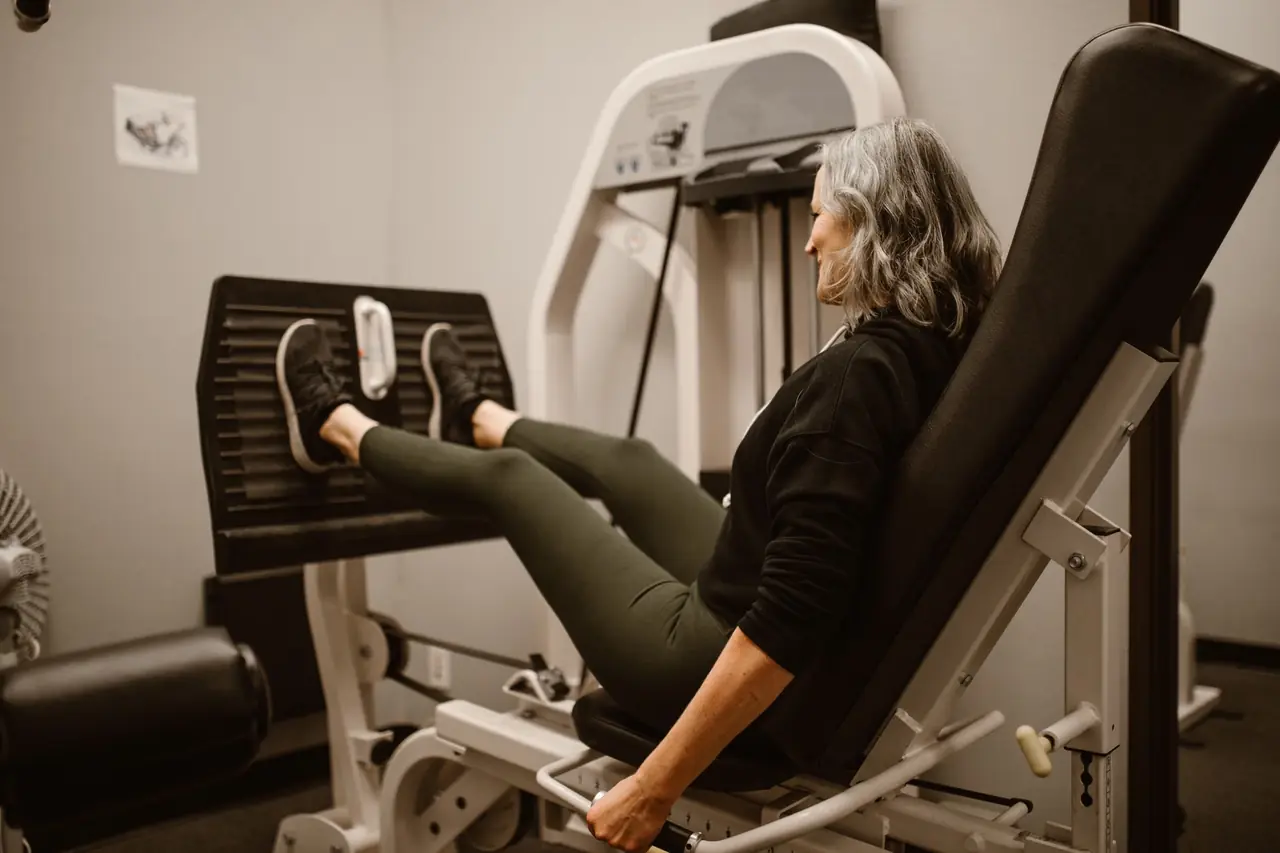
Lower-body machines can provide effective gym work for runners looking to build strength, muscle, or stability in their thighs and hips. They do not all serve the same purpose or challenge the body in the same way: some place more emphasis on the glutes, others focus on the hamstrings, and some distribute the effort across the quadriceps, pelvis, and lower back with a level of precision that can be hard to replicate with free weights.
The key is to distinguish the function of each machine before sitting down to push or pull without a plan. The leg press, the abductor machine, the hamstring curl, the guided hip thrust, or the lever squat are not interchangeable variations, but different tools for different stimuli. Understanding that difference saves time, reduces technique errors, and makes it easier to choose well both in a commercial gym and in a home setup.
What each machine contributes to the lower body
The leg press is probably the best known for its versatility. Depending on foot placement, range of motion, and backrest angle, it can shift part of the work toward the quadriceps or toward the posterior chain, with a notable role for the glutes and hamstrings when the stance is higher and wider. Its advantage is simple: it allows you to move a lot of load with high stability and less technical demand than a free-weight squat.
In a similar vein, but with a more selective focus, comes the abductor machine. Although it is often seen as a secondary piece of equipment, in reality it plays an important role in activating the gluteus medius, a decisive muscle for pelvic stability, knee alignment, and efficiency when running or walking. In many cases, abduction work translates into a better sense of control in lunges, changes of direction, and single-leg support.
The hamstring curl, whether seated or lying down, shifts the focus to the back of the thigh. Here the hamstrings take center stage, working with the gluteus maximus in hip extension and drive power. For anyone looking for a balanced lower body, this machine is often just as important as the one that draws the most attention in a weight room, because it completes the work that the squat or leg press do not always fully cover on their own.
The machines that most activate glutes and hamstrings
The machine hip thrust has become a benchmark for one very specific reason: it concentrates the load on hip extension, one of the most direct movements for stimulating the gluteus maximus. Compared with the barbell-and-bench version, the machine provides a more guided path, a more stable position, and, in many cases, an easier entry point for those who still do not fully master free-weight technique. The movement is short, but the stimulus can be intense.
The glute bridge machine also stands out, sharing the same logic as the hip thrust but usually featuring slightly different supports and bracing. The mechanical feel changes: the range of motion can be more compact, the torso remains more anchored, and each repetition feels less unstable. For gyms looking for equipment suited to frequent use, this kind of machine is valuable because it reduces the margin for error and makes the movement more consistent across users of different heights.
The hip extension machine, the glute kickback with ankle strap on a cable machine, and certain lever stations add another layer of work. In them, the glute acts as the main engine in a backward pushing movement, very useful for strengthening the upper and middle glute area. Although they do not replace big compound exercises, they do allow you to fine-tune the stimulus, add volume without as much systemic fatigue, and finish sessions with cleaner localized loading.
What musculature each machine really works
The glutes do not function as a single piece. The gluteus maximus dominates hip extension and provides most of the visible volume; the medius and minimus stabilize the pelvis and prevent the hip from collapsing inward during support and movement. That is why a complete lower-body workout cannot rely only on exercises that move a lot of weight, but also needs stability and abduction stimuli.
The most useful leg machines usually distribute the load between the quadriceps, glutes, and hamstrings differently depending on body angle and pushing direction. The leg press, for example, can be more knee-dominant or more hip-dominant. The hamstring curl shares almost no spotlight with the quadriceps and focuses on knee flexion, while the hip thrust deals mainly with hip extension. That anatomical difference explains why a well-designed routine combines several machines instead of relying on just one.
In practice, the lower body responds better when it receives complementary stimuli. A session focused only on the leg press can create fatigue, but not necessarily cover the full functional range of the leg. One based only on abductors and glute kickbacks can leave out overall strength. Balance usually appears when heavy loading, isolation work, and movements that demand postural control are mixed together.
How to choose between stability, load, and range of motion
Choosing a machine is not only about the muscle it promises to work. The type of resistance, ergonomics, the space it takes up, and the kind of user who will use it also matter. In commercial equipment, manufacturers usually offer plate-loaded, lever, and guided-load machines with different sensations. Plate-loaded machines allow clear progressions with plates; lever machines usually provide a very consistent resistance curve; guided machines are simpler for those seeking safety and repetition without so much technical complexity.
For heavy use, it is worth looking at less flashy but decisive details: high-strength steel frame, lateral stability, well-placed handles, adjustable backrest, comfortable rollers, and supports that do not force awkward positions. A machine can look spectacular in photos and be mediocre in practice if it forces you to shorten the range, punishes the lower back, or does not adapt to different leg lengths. Ergonomics, in this area, is not a luxury; it is the difference between a useful movement and one that only seems useful.
Safety and durability also matter. In the professional market, references such as EN 957 or ISO 9001 are often mentioned, along with repeated load and extended-use testing. The reality is that a machine designed for gyms must withstand thousands of repetitions without losing alignment, without loosening hardware, and without turning every set into an uncomfortable vibration. In that sense, the final price often reflects more than the brand: it includes materials, machining, warranty, distribution, and technical service.
Price, range, and differences between home and gym
The cost of these machines varies enormously depending on the format. In international commercial references, simple accessories such as cable ankle straps can cost just a few dollars, while complete glute or leg press machines can range from just over 300 dollars to easily more than 1,000 dollars per unit in robust formats. In commercial facilities, the volume of purchase also clearly changes the unit price, with progressive discounts on large orders.
For a home, the logic changes. The problem is no longer just budget, but space and versatility. A heavy leg press or a lever station takes up a lot of room and requires prepared flooring; by contrast, a hip thrust bench, a compact cable machine, or a home abductor machine can provide plenty of stimulus without turning the living room into a weight room. At home, the relationship between size, noise, and ease of setup usually matters more than absolute max load.
In a gym, however, the priority is different: resistance to continuous use, comfort for different body types, and predictable maintenance. A machine that withstands eight hours of daily work, constant rotation, and repeated adjustments has to be built for that. That is why high-traffic facilities tend to prefer equipment that is intuitive, quick to adjust, and has accessible replacement parts, because downtime also costs money.
What the leg press, abductor, and hip thrust do well
The leg press remains a kind of strength workshop for the lower body. It allows loading without the balance demands of a free squat and offers a very clear way to work the pushing pattern. If the feet are placed higher and a bit wider, the glutes participate more; if they are placed lower, the quadriceps take the lead. That ability to vary the stimulus makes it a particularly useful resource when sustained progression is the goal.
The abductor machine has a worse reputation than it deserves, perhaps because its movement is less eye-catching than other options. However, lateral pelvic stability and knee control depend heavily on that musculature. In glute-focused sessions, it often works as a very worthwhile complement: it does not provide the dramatic effect of a hip thrust, but it refines the work, improves alignment, and can be decisive for those who notice that one leg compensates too much during basic movements.
The guided hip thrust plays in another league because of its ability to concentrate effort on hip extension. With equal technique, it usually allows a very direct sensation of work in the gluteus maximus. It also helps fix posture, which is important for those who still do not master the barbell version. The final feeling is similar to pushing a heavy block off the floor with the hip as the hinge: brief, intense, and very specific.
Common mistakes when using leg and glute machines
One of the most common mistakes is loading too much too soon. When the weight goes up before technique is solid, the body compensates with the lower back, shoulders, or even the ankles. On the leg press, that means lifting the back off the pad or shortening the range of motion. In the hip thrust, it shows up as hyperextension at the top of the movement, shifting some of the work to the wrong place. The result is a noisy set, but not a productive one.
Another frequent mistake is using machines meant for isolation as if they were for moving maximum loads. The abductor machine is not there to compete with the leg press; the hamstring curl does not replace a squat; the glute kickback does not substitute for a strong, global extension pattern. Each machine has a useful working range and it is worth respecting it. When you ask it to do what it cannot do, technique gets clumsy and the stimulus becomes diluted.
It is also common to ignore adjustments. A poorly placed backrest, a seat set too far forward, or an incorrectly positioned pad can completely change the movement. On a leg machine, two centimeters can noticeably alter the knee angle and the load on the hips. In well-designed equipment, those small adjustments are precisely what allow the machine to work for tall people, short people, those with long thighs, or those with short torsos.
How they are combined in a sensible routine
A balanced sequence usually starts with the most demanding pattern and ends with the most localized one. The leg press or guided squat can open the session because they require more overall energy; then come the hamstring curl or hip thrust; at the end, abductors, glute kickbacks, or hip extensions refine the work. That progression makes physiological sense: first the heavy work, then the specific work.
In a complete lower-body session, the important thing is not to stack machines just for the sake of it, but to build a relationship between them. The quadriceps receive load in the leg press and squat; the glutes fire in the hip thrust and hip extension; the hamstrings take center stage in the hamstring curl; the lateral stabilizers come in with abduction. The combination produces a solid, almost architectural sense of work, as if laying the foundation and then finishing the sides.
Recovery matters as much as machine selection. A demanding lower body leaves its mark for 24 to 48 hours, and even more so if the load or volume is high. That is why weekly progression matters more than obsessing over a specific machine. When technique is maintained, the range is clean, and effort is well distributed, training stops being a collection of machines and becomes a coherent system.
What truly makes the difference when choosing equipment
The best machine is not always the most eye-catching one. It is usually the one that best fits the space, the body, and the user’s real goal. In a neighborhood gym, a sturdy leg press and a well-maintained hamstring curl can add more value than a complex station that gets little use. In a center focused on hypertrophy, the guided hip thrust and the lever glute machine may be in very high demand. At home, a compact, stable option will almost always beat a huge solution that nobody adjusts properly.
The difference between a smart purchase and a disappointing one lies in details that rarely appear on the product sheet: comfort of support, ease of adjustment, noise, maintenance, and sense of safety. When those elements are well solved, the user concentrates on what matters: pushing, pulling, controlling, and progressing. When they fail, the session fills with small annoyances that erode consistency.
That is why talking about gym machines for legs and glutes is not just about a catalog. It is about biomechanics, habits, budget, and real use. And also about something simpler: the lower body responds better when it is treated with precision. There is no need to turn every session into a display of strength; it is enough to choose well, adjust better, and repeat with intent until the movement stops being mechanical and becomes effective.
A strong lower body supports much more than aesthetics
Legs and glutes are not just about appearance. They also support posture, absorb impact, and take part in everyday actions ranging from standing up from a chair to climbing a hill. In runners, cyclists, and athletes of any discipline, a solid base in the hips and thighs improves movement economy and helps distribute effort better. Gym equipment, when used well, can build that base with great precision.
In a context where training is often sold as a quick promise, it is worth remembering that real progress is more sober. It is more like carpentry than a spectacle: the leg press lays the structure, the hip thrust lifts the most visible part, the abductors refine stability, and the hamstring curl completes the work from behind. The result does not depend on a miracle machine, but on the correct sum of stimuli, performed with patience and with technique that does not cheat.
Choosing the right leg and glute machines means understanding what each one contributes, when to use it, and what to expect from it. Whoever masters that reading stops training blindly and begins to build a stronger, more balanced, and more useful lower body both in and out of the gym.
How to fit leg and glute machines into your running training
Leg and glute machines can complement running: running builds endurance, while strength work gives the muscles involved in your stride a different stimulus. The leg press trains several lower-body muscles; the hamstring curl targets the back of the thighs; the hip thrust focuses on hip extension, and the abductor machine lets you work the muscles that help control the hips and pelvis. None of these replaces running or guarantees a more efficient stride on its own.
Choose exercises to match what you want to work on, and learn each movement with a manageable load first. Keep your repetitions controlled rather than turning every gym session into an all-out effort, especially when your plan also includes intervals, tempo running, or a long run. Strength training can leave your legs tired or sore, making the next run feel harder, so schedule it with enough space around key sessions to run them well.
Start with an amount of work you can recover from, then adjust it to your experience, running load, and how your legs respond. If your technique starts to break down, fatigue builds, or the quality of your runs drops, reduce the workload or allow more recovery. Mild muscle soreness can happen, but do not ignore pain during exercise or symptoms that persist; consult a healthcare professional. Consistent strength work that fits around your running matters more than adding machines for their own sake.



How to prevent thigh chafing: causes and real solutions

Women’s running windbreakers: seven jackets and how to choose

Do more workouts get rid of soreness? A guide for runners

Jaén Half Marathon 2026: Record 3,800 Runners Registered

Men’s short running tights: how to choose the right pair

World Triathlon confirms data breach involving medical data

Izan Edo targets podium at Miyazaki World Cup

María Pérez ranks ninth in World Athletics’ 2026 top ten

Dos Santos, Duplantis and Sawe: World Athlete of the Year finalists

San Silvestre Vallecana 2026: 42,000 places, prices and start times

 Races3 months ago
Valencia Half Marathon 2027: date and registration

 Races3 months ago
Valencia Marathon 2026: entry, ballot and course

 Reviews and Comparisons4 months ago
Asics Gel-Roadmiles 3 for men: review and current price

 Reviews and Comparisons4 months ago
Asics Gel Sonoma 8 Gore-Tex: complete analysis for trail and rain

 Sneakers3 months ago
Saucony Endorphin Pro 4: full review and verdict

 News5 months ago
Strava API 2026: what changes for clubs, challenges and runner apps?

 Reviews and Comparisons5 months ago
Nike Alphafly 3: opinions, sensations, and real key points

 Reviews and Comparisons4 months ago
Under Armour running shoes review 2025-2026: models and key features

 Sports Equipment4 months ago
Shoe sizes in cm: a clear guide to getting the right fit for your footwear

 Sneakers3 months ago
Skechers GO RUN Consistent 2.0 analysis: comfort and limits

 News5 months ago
Valencia Marathon 2026 route: key tips to train and run better

 Sneakers4 months ago
Adidas Adizero Boston 13 for men: review and verdict