Training
Minutes per kilometer to kilometers per hour: table and formula
Formula, table, and examples to convert running pace to speed in seconds.

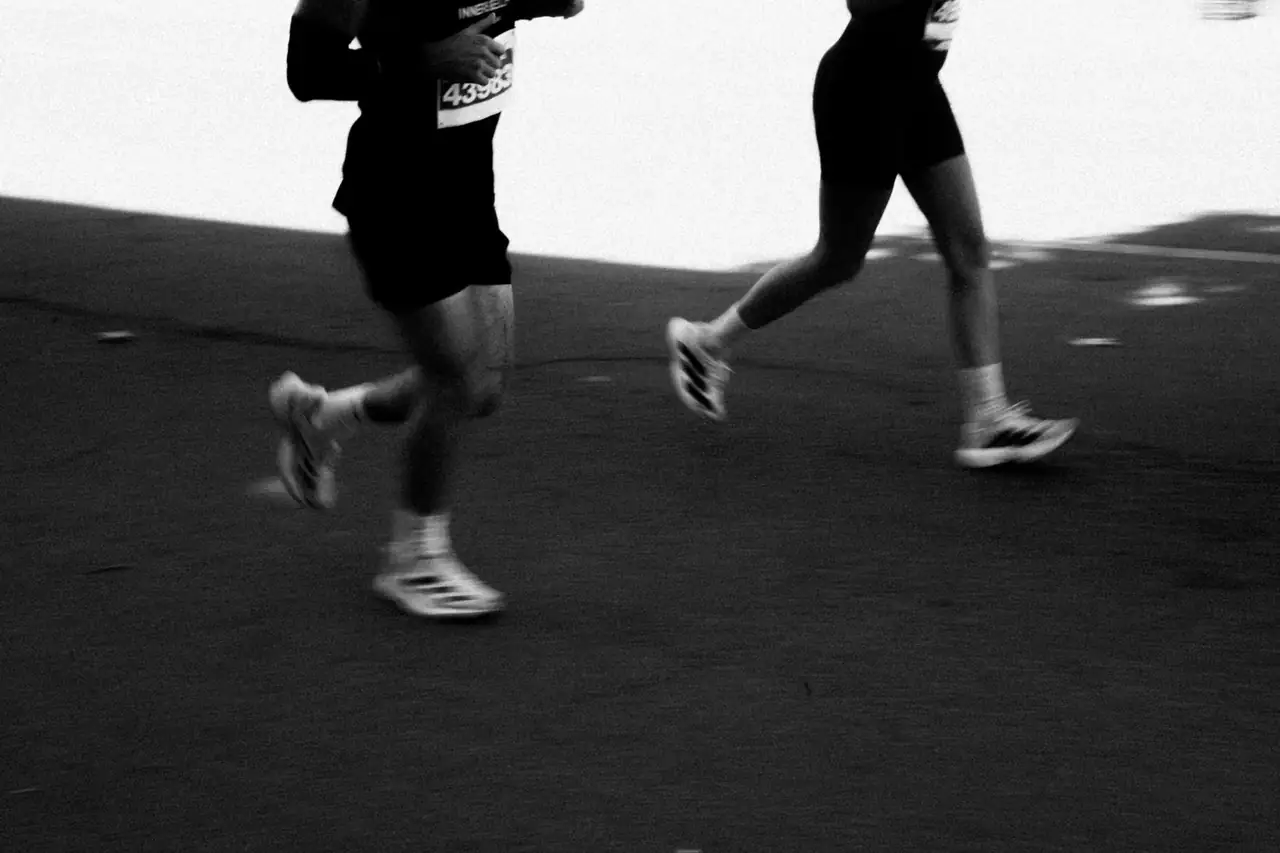
The equivalence between pace and speed comes down to a simple operation: one minute per kilometer tells you how long it takes to cover a kilometer, while kilometers per hour express the distance covered in one hour. In practice, that means all you need to do is divide 60 by the pace to get speed in km/h, or multiply speed by the same factor to return to running format.
In running, that numerical translation appears at every step. An easy run, a track interval, or a long treadmill workout can be measured in different ways depending on the watch, the app, or the gym screen. That is why converting between per-kilometer pace and hourly speed is not a mathematical curiosity: it is the basis for reading a workout properly and comparing efforts without confusing feelings with numbers.
The exact relationship between pace and speed
The key figure is very stable: 1 min/km equals 60 km/h. There is no room for doubt because an hour contains 60 minutes. If a runner maintains 5:00 min/km, their average speed is 12 km/h; at 6:00 min/km it drops to 10 km/h; and at 4:00 min/km it rises to 15 km/h. The arithmetic is clean, almost mechanical, like a treadmill that always turns at the same rhythm.
The reason this conversion can be difficult at first is that running often teaches effort in the opposite way a speedometer does. Pace per kilometer counts time per distance; speed, distance per time. They are two sides of the same coin, but one forces you to think from the stride and the other from the movement. In popular races, structured training, and many cardio machines, both languages coexist at the same time.
The useful formula is this: speed in km/h = 60 ÷ pace in min/km. And the reverse path, equally practical, is pace in min/km = 60 ÷ speed in km/h. That symmetry avoids reading errors when the watch shows a target in min/km and the treadmill presents it in km/h, or when a session is described in speed and the runner thinks in race paces.
Examples that clarify the equivalence effortlessly
A runner going at 10 km/h is moving at 6:00 min/km. If they speed up to 12 km/h, they shift to 5:00 min/km. At 15 km/h they are already running at 4:00 min/km, a demanding pace for many recreational runners over a sustained stretch. The quickest mental translation is to remember that every 1 km/h step changes pace by a noticeable fraction, especially when working near threshold.
It is worth fixing a few reference points that are useful in everyday training. At 8 km/h you run at 7:30 min/km; at 9 km/h, at 6:40 min/km; at 10 km/h, at 6:00 min/km; at 11 km/h, at 5:27 min/km; at 12 km/h, at 5:00 min/km; at 13 km/h, at 4:37 min/km; at 14 km/h, at 4:17 min/km; at 15 km/h, at 4:00 min/km. They are easy steps to memorize and very useful for interpreting tempo runs, intervals, and fartleks.
You can also see it the other way around. A marathoner who holds 4:30 min/km is moving at 13.33 km/h; at 5:00 min/km, at 12 km/h; at 5:30 min/km, at 10.91 km/h; and at 6:00 min/km, at 10 km/h. The body feels the pace in the legs, but the watch dashboard usually offers speed. Understanding both formats avoids surprises when the number changes on screen.
Practical table for converting common running paces
Tables help because in real training there is not always time to do the math. One glance is enough to place a pace and know whether it is a relaxed run, aerobic work, or high intensity. The most useful reference is not the most extreme one, but the one used every week in regular sessions.
Among the most common paces, 3:30 min/km equals 17.14 km/h; 4:00 min/km, 15 km/h; 4:30 min/km, 13.33 km/h; 5:00 min/km, 12 km/h; 5:30 min/km, 10.91 km/h; 6:00 min/km, 10 km/h; 6:30 min/km, 9.23 km/h; 7:00 min/km, 8.57 km/h; and 8:00 min/km, 7.5 km/h. You do not need to memorize the entire table, but it helps to have a few anchor figures.
In the other direction, 8 km/h means 7:30 min/km; 9 km/h, 6:40 min/km; 10 km/h, 6:00 min/km; 11 km/h, 5:27 min/km; 12 km/h, 5:00 min/km; 13 km/h, 4:37 min/km; 14 km/h, 4:17 min/km; 15 km/h, 4:00 min/km; 16 km/h, 3:45 min/km. The table does not replace judgment, but it does reduce the noise when the watch screen and body sensations seem to speak different languages.
Why this conversion matters in training
Recreational runners usually think in per-kilometer pace because it is the measure most closely tied to perceived effort. However, hourly speed appears on treadmills, in some apps, on race information sheets, and on certain gym machines. Switching from one format to the other allows you to compare sessions without losing context, especially when training alternates between outdoors and indoors.
On a treadmill, for example, speed is adjusted in km/h. That forces you to mentally translate the target: a session at 10 km/h means running at 6:00 min/km, while 12 km/h already requires 5:00 min/km. On the track, by contrast, many athletes think in splits and lap paces; on the road, the watch usually provides a moving average that can fluctuate because of GPS. The unit changes, but the physiological load should not become a guessing game.
There is also a question of precision. A watch’s instant pace can bounce a few seconds up or down because of GPS error, especially in dense urban areas, thick tree cover, or routes with frequent turns. That is why it is more reliable to look at the average over several minutes or the pace of a longer segment. Speed in km/h, when it comes from a treadmill or an internal sensor, is usually more stable indoors, though it still needs critical reading.
How to read treadmill speed without losing your race pace
The treadmill changes the perception of effort because it removes factors such as wind, incline, and part of the ground resistance. That is why 10 km/h on a treadmill does not always feel the same as 10 km/h outdoors. The number is the same, the experience is not. That difference explains why some runners hold a speed better in the gym than on asphalt, while others feel it heavier because of monotony or ambient heat.
On the machine display, the unit usually appears in kilometers per hour and increases in small increments. Going from 9.5 to 10 km/h, or from 11.5 to 12 km/h, may seem like a minimal variation, but in pace terms the difference is already visible. At 9.5 km/h you run at approximately 6:19 min/km; at 10 km/h, at 6:00 min/km; at 12 km/h, at 5:00 min/km. These are changes that clearly alter sustained effort.
In long sessions, that reading helps distribute energy more intelligently. A warm-up at 8 km/h is noticeably easier than a main block at 12 km/h, even though the two are separated by only four units on the screen. The conversion brings order to training and avoids confusing a comfortable speed with a pace that is already in demanding territory.
Common mistakes when switching from one system to the other
The most frequent mistake is reversing the operation. Anyone trying to go from pace to speed and multiplying by 60 instead of dividing ends up with an absurd figure. Another very common error is forgetting that 4:30 min/km is not exactly 4.30 minutes, but 4 minutes and 30 seconds. Decimal format and sexagesimal format do not mean the same thing, and that is where much of the confusion comes from.
It is also wise not to round too early. 5:45 min/km does not exactly equal 10.5 km/h if you want strict accuracy; the real speed is 10.43 km/h. In casual conversation the difference is irrelevant, but in a plan with intervals or thresholds it can add up to small deviations. Rounding at the end is usually better than rounding before converting.
A third pitfall appears when reading apps and watches with short intervals. Instant speed can change abruptly because of a turn, a downhill section, a slight signal loss, or an automatic adjustment of the sample. The average pace over 1 km or 5 minutes offers a more serious snapshot. In running, the average matters more than the flash, especially when you want to avoid hasty conclusions.
Relation to race times and target paces
The conversion between min/km and km/h is useful for interpreting race performances instantly. A 10K at 5:00 min/km means holding 12 km/h for the whole race. A half marathon at 4:30 min/km requires 13.33 km/h. A marathon at 5:30 min/km is run at 10.91 km/h. Speed helps visualize the physiological ceiling implied by each goal without losing the pace reference.
In endurance training, this equivalence becomes valuable because runners usually think in long blocks, not in isolated bursts. Knowing that 11 km/h equals 5:27 min/km helps place a tempo effort; knowing that 13 km/h is 4:37 min/km helps identify a clearly hard intensity; and knowing that 15 km/h equals 4:00 min/km places the point at which most recreational runners enter a very demanding zone.
Popular races in Spain are full of these crossings between technical language and practical language. A bib number may hide an intention for a time goal, but the body only understands sustained time, breathing, and stride. The conversion acts as a bridge between what is hoped for at registration and what later appears on the road or treadmill.
A simple way to memorize it without constant calculation
There is a very effective mental method: think of 60 as the key. If the pace is in minutes per kilometer, divide 60 by that number to get speed. If the speed is in kilometers per hour, divide 60 by that figure to get pace. The logic holds even when the decimal is not pretty, because the relationship between hour and minute does not change.
Another useful resource is to associate a few very common paces with their speed. 6:00 min/km is 10 km/h. 5:00 min/km is 12 km/h. 4:00 min/km is 15 km/h. 3:00 min/km is 20 km/h. That ladder allows you to reconstruct the rest by approximation, like placing signs on a long road and then measuring the distance between them. Memory works better with anchors than with endless lists.
In practice, this is enough for most runners. Training is not decided by an exact tenth on the screen, but by the consistency of the effort, the recovery between blocks, and the ability to sustain the load. The conversion is a reading tool, not a substitute for athletic judgment.
Why watch and treadmill screens do not always tell the same story
A watch’s GPS measures movement with a margin of error that can increase in narrow streets, between tall buildings, or in wooded areas. That makes instant pace fluctuate even if the runner maintains a steady cadence. By contrast, the treadmill calculates a more regular internal speed, but it does not account for real terrain or the energy cost of the environment. Two numbers can both be correct and still tell different stories.
That is why it is best to read speed and pace as complementary indicators. The former helps translate mechanical load; the latter helps understand the time spent per unit of distance. In an interval session, the hourly figure can help set the machine; on an outdoor run, pace per kilometer usually reflects the race pattern better. The usefulness changes depending on the setting, and that is part of its value.
The runner who masters this equivalence gains more than convenience: they gain judgment. They can cross data, compare sessions, adjust goals, and avoid interpretation errors. The screen stops being a confusing mosaic and becomes a readable, almost transparent dashboard. Understanding the conversion between pace and speed is understanding your own effort better, which is, after all, what training truly measures.
The figure that organizes effort without embellishment
The relationship between minutes per kilometer and kilometers per hour has the elegance of simple things: a brief, constant, and useful rule. Divide 60 by the pace to get speed; divide 60 by speed to get pace. With that idea, everything from the gym treadmill to a half marathon split can be solved, including easy runs and the liveliest intervals.
In running, few equivalences are as practical. You do not need long formulas or complicated tables to find your way. All it takes is reading the unit correctly and remembering that the body runs on sensations, but the stopwatch and the screen speak in numbers. Translating between both languages is one of the most discreet and useful skills of a runner who wants to understand what they do, not just repeat it.
Este artículo contiene enlaces de afiliado: si compras a través de ellos, se genera una pequeña comisión sin coste adicional para ti. Más información.



How to prevent thigh chafing: causes and real solutions

Women’s running windbreakers: seven jackets and how to choose

Do more workouts get rid of soreness? A guide for runners

Jaén Half Marathon 2026: Record 3,800 Runners Registered

Men’s short running tights: how to choose the right pair

World Triathlon confirms data breach involving medical data

Izan Edo targets podium at Miyazaki World Cup

María Pérez ranks ninth in World Athletics’ 2026 top ten

Dos Santos, Duplantis and Sawe: World Athlete of the Year finalists

San Silvestre Vallecana 2026: 42,000 places, prices and start times

 Races4 months ago
Valencia Half Marathon 2027: date and registration

 Reviews and Comparisons4 months ago
Asics Gel-Roadmiles 3 for men: review and current price

 Races4 months ago
Valencia Marathon 2026: entry, ballot and course

 Reviews and Comparisons4 months ago
Asics Gel Sonoma 8 Gore-Tex: complete analysis for trail and rain

 Sneakers4 months ago
Saucony Endorphin Pro 4: full review and verdict

 News5 months ago
Strava API 2026: what changes for clubs, challenges and runner apps?

 Reviews and Comparisons5 months ago
Nike Alphafly 3: opinions, sensations, and real key points

 Reviews and Comparisons4 months ago
Under Armour running shoes review 2025-2026: models and key features

 Sports Equipment4 months ago
Shoe sizes in cm: a clear guide to getting the right fit for your footwear

 Sneakers3 months ago
Skechers GO RUN Consistent 2.0 analysis: comfort and limits

 News5 months ago
Valencia Marathon 2026 route: key tips to train and run better

 Sneakers4 months ago
Adidas Adizero Boston 13 for men: review and verdict