Training
Seville Marathon 2026 pacers and target paces
Split times, targets and practical keys for following pacers without losing control over the 42.195 kilometers.

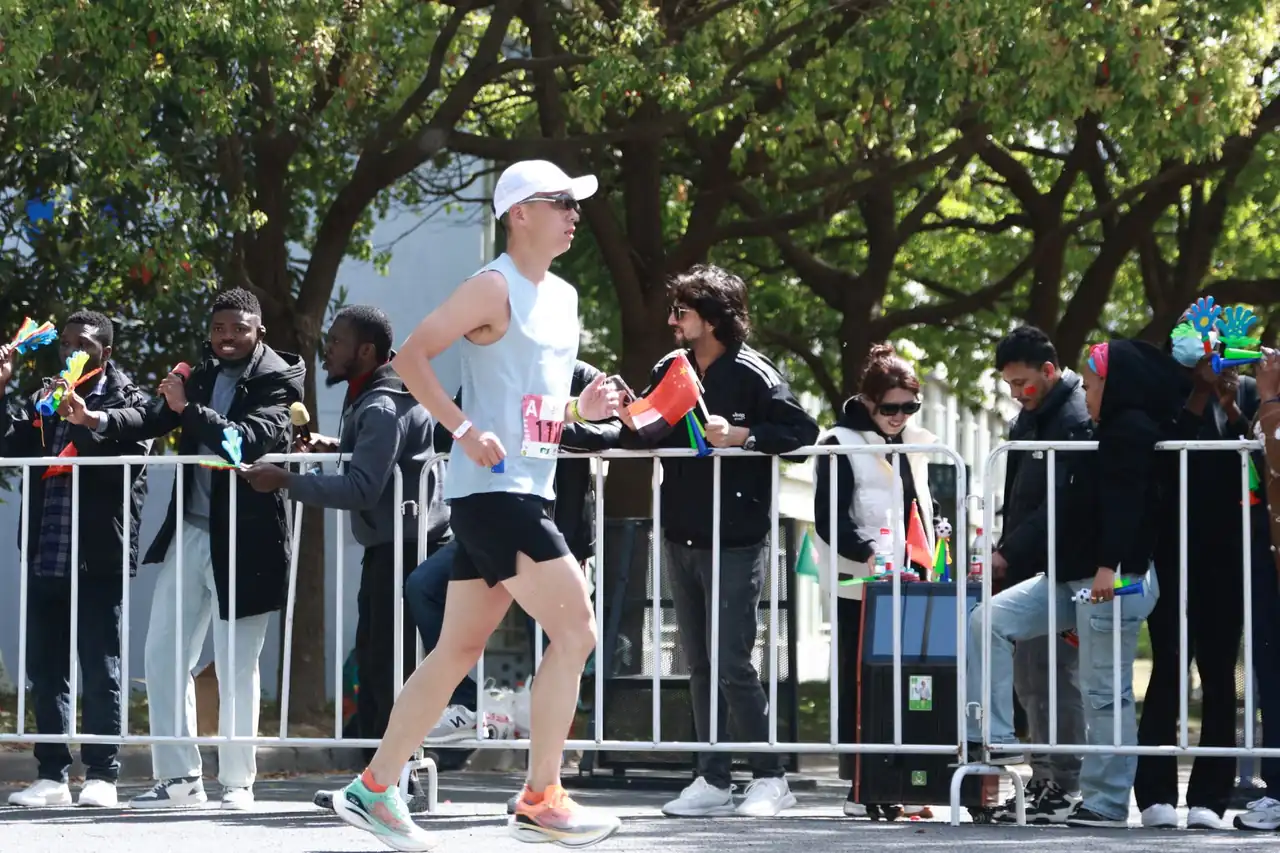
The 2026 Seville Marathon will have pacers for targets of 2:45, 3:00, 3:15, 3:30, 3:45, 4:00, 4:30 and 5:00 hours. The pacers will be positioned in the corresponding starting pens and identified by a tall flag and a distinctive shirt, providing a visible reference for runners seeking a steady pace on a fast, almost completely flat course.
The race will take place on Sunday, February 15, 2026, starting from Avenida de María Luisa at 8:30 a.m. Following a pacer can help prevent the early excitement from pushing the pace too high, but it does not replace personal judgment: pace must respond to weather, crowding, nutrition stops and how the legs feel after halfway.
What pacers actually do in Seville
A pacer is not running to compete against the group, but to provide a steady pace reference over a distance where a few seconds per kilometer eventually become several minutes. Their practical role is to maintain a regular speed and guide participants sharing a time goal.
A pacer is particularly useful during the opening kilometers, when the start can encourage runners to go faster than planned. In Seville, five waves and a wide course should support a smooth race, although the group around each flag may make turns or access to aid stations more difficult.
A pacer pace should not be treated as a permanent obligation. Groups break up, runners stop to drink and the pacer may lose a few meters for operational reasons. The useful reference is the overall movement of the group, not the exact gap from the flag at every moment.
The available time targets
The organizers have prepared eight official references, from 2 hours 45 minutes to 5 hours. This range covers experienced athletes chasing a demanding result as well as participants hoping to finish their first marathon within a reasonable margin.
The group should be chosen according to a realistic, trained target, not simply the most attractive time on paper. Over 42.195 kilometers, starting with a pacer who is too fast may feel easy for half an hour and become a debt that is difficult to repay after kilometer 30.
A pacer can also be used as an intermediate reference. A runner aiming for around 3:35, for example, may stay near the 3:30 group early on, but should check whether the effort is sustainable before deciding whether to remain with it or let it move away. Caution is part of the strategy, not a sign of weakness.
Average pace per kilometer
The targets translate into approximate average paces. The 2:45 group runs at around 3:55 minutes per kilometer; 3:00 requires about 4:16. The 3:15 group is close to 4:37 per kilometer, while 3:30 requires approximately 4:59.
The next references are 5:20 per kilometer for 3:45, 5:41 for 4:00, 6:24 for 4:30 and 7:07 for 5:00. These are averages over the official distance, so small differences may arise from the racing line, turns, GPS readings or how each pacer handles crowded areas.
The group finish time does not necessarily match a mathematically perfect split. A pacer may run a few seconds faster or slower in certain sections to create a natural progression. Runners should watch effort and cumulative time rather than treat an instant figure as an unchanging command.
Race reference table
The 2:45 target is approximately 19:35 at kilometer 5, 39:10 at kilometer 10, 1:22:30 at halfway and 2:20:00 at kilometer 36. For 3:00, the reference splits are about 21:20, 42:40, 1:30:00 and 2:33:50. These figures help check progress without relying only on a watch screen.
For 3:15, approximate times are 23:05 at kilometer 5, 46:10 at kilometer 10, 1:37:30 at halfway and 2:46:00 at kilometer 36. The 3:30 target is around 24:55, 49:50, 1:45:00 and 2:59:20. The difference between the two groups looks small, but it requires a clearly different level of endurance in the second half.
Runners with the 3:45 group can use 26:40 at kilometer 5, 53:20 at kilometer 10, 1:52:30 at halfway and 3:12:00 at kilometer 36. For 4:00, the splits are around 28:25, 56:50, 2:00:00 and 3:25:00. In larger groups, it is better to leave visual space and avoid speeding up to recover a few meters after every turn.
The 4:30 group passes approximately in 32:00 at kilometer 5, 1:04:00 at kilometer 10, 2:15:00 at halfway and 3:50:20 at kilometer 36. The 5:00 reference is around 35:35, 1:11:10, 2:30:00 and 4:16:00. These are guides, not guarantees, because wind, stops and aid-station management affect the real time.
How to choose the right pacer
The decision should combine the target, recent race history and ability to sustain controlled effort for several hours. A half-marathon result can provide a clue, but it does not describe endurance, nutrition or muscular tolerance over twice that distance.
The safest reference is usually the one leaving a small margin against the best theoretical prediction. In Seville, the lack of major climbs may encourage an aggressive start, but hard pavement, turns, standing time and accumulated kilometers remain. A marathon is decided by continuity, not by speed during the first 10 kilometers.
First-time marathoners should pay close attention to their long-run experience. If the intended race pace has only appeared during short sessions, joining that pacer may be risky. A slightly slower reference can allow better management of the early aid stations and preserve strength for the final section.
The pace will not be identical every kilometer
The Seville course combines long avenues, urban turns and historic areas with different crowd densities. Although the event is presented as one of Europe’s flattest marathons, an urban race never offers a completely uniform line. The pace may vary by a few seconds without damaging the strategy.
GPS watches also create errors. On streets with buildings, sharp bends or large groups, the recorded distance can exceed 42.195 kilometers. Running only by instant pace can therefore cause unnecessary surges. It is more stable to watch lap average, elapsed time and breathing effort.
The pacer provides a visual compass in a changing environment. If the flag disappears during a turn or at an aid station, there is no need to sprint to recover it. Holding the planned pace and reconnecting later is usually more efficient than turning a small gap into a sudden intensity change.
The danger of starting too fast
The opening sections of Avenida de María Luisa can combine excitement, spectators and enough room to feel light. That combination produces a classic marathon mistake: running below the planned pace because the body has not yet felt the cost of distance.
A start just five seconds per kilometer faster may seem irrelevant, but it can create nearly a minute over the first 12 kilometers. The problem is not only mathematical. Extra effort reduces reserves and increases muscular tension before clear fatigue signals appear.
The pacer works best as an upper limit, not as an invitation to run faster. If the group moves a few meters away early on, the race has not been lost. The aim is to reach kilometer 30 with the ability to respond, not to win the personal race before reaching Plaza de España.
Aid stations and group continuity
The 2026 Seville Marathon will have water and isotonic stations at different kilometers, as well as gels, energy chews and solid products at specific points. The organizers indicate, among others, gels at kilometer 20.7 and energy products at kilometers 29.6 and 34.
Drinking or taking fuel near a pacer requires planning. Groups may spread out as they reach the tables and regroup afterward. Move toward the side early, collect the product without stopping in the main line and return to pace gradually. Fueling must be practiced, because a marathon is not the place to test an unfamiliar plan.
Losing contact at an aid station does not mean losing the target. The seconds spent drinking may be repaid through better physical preservation, while skipping a station to avoid losing the flag can create problems later. The group is helpful; hydration and energy are physiological needs.
What to do when the pacer moves away
The first reaction is usually to accelerate, but that is not always sensible. Before changing pace, check whether the gap comes from a turn, a water station or a crowded section. The watch may also show an irregular speed while the group maintains a stable pace.
When the gap grows gradually, the runner should assess whether the current effort is sustainable. If breathing becomes broken or the stride loses its natural rhythm, chasing the pacer can turn a useful reference into an opponent. In that situation, a slightly slower pace may offer a better chance of reaching the finish strongly.
The race allows adjustments. Moving to a later group is not necessarily failure, but a change of strategy. In a marathon, the final result depends on the kilometers still ahead, not on the relative position held during the first half.
The second half changes the rules
Until kilometer 21, concentration and group conversation can make the effort seem easy. After that, running economy carries more weight. Muscles absorb more impact, available energy falls and any earlier irregularity becomes visible.
Runners reaching halfway with controlled breathing and a comfortable stride can continue with their reference. Those who used the group to compensate for insufficient preparation will probably begin to lose contact. Kilometer 30 is a management test, not a magical boundary, but it marks the point where early patience can become an advantage.
During the final 10 kilometers, the flag remains useful, but technique and safety become the priority. Slightly shortening the stride, keeping the torso stable and avoiding pace changes may help more than trying to recover every lost second. The body should move like a machine preserving its parts, not an engine forced to its limit.
The Seville course and its influence
The course starts on Avenida de María Luisa and passes landmarks such as the Torre del Oro, Plaza de España, Parque de María Luisa and the Maestranza. The combination of heritage, spectators and long avenues makes the event attractive, but it can also alter how effort is perceived.
In the loudest sections, noise and excitement can increase pace without the runner noticing. In wider areas, the lack of nearby references can have the opposite effect. The pacer provides continuity in both situations, although the athlete must keep evaluating their own condition.
The flat profile favors regularity, but it does not remove outside factors. Temperature, wind, sunlight and participant density can change energy cost. A smart strategy uses the course’s speed without confusing it with a guarantee of a personal best.
Watch, flag and body sensations
The best reading combines three signals: the pacer’s position, the watch’s average pace and perceived effort. When all three agree, the strategy is on track. When one separates from the others, analyze the situation before making an adjustment.
The watch may show an excessively fast pace because of a signal error while the group remains stable. The opposite can also happen: a section with curves makes the device appear slow and encourages a surge. The flag provides an external reference, but sensations provide the most personal and continuous information.
For four-and-a-half- or five-hour targets, comfortable breathing and the ability to walk a few meters at an aid station may matter more than chasing a perfect average. At faster targets, precision matters more, but it should never override a clear sign of exhaustion or pain.
What to expect at the start
The organizers have planned staggered starts in five waves, ordered according to accredited times. The bib will show the assigned pen and wave, and the system is intended to reduce crowding during the opening kilometers.
The relevant pacer should be in the pen associated with the target, identified by a raised flag. Arriving early makes it easier to find the group without crossing runners or moving hurriedly just before the start. The visual reference may disappear once the race begins, so remember the average pace it represents as well.
Correct positioning improves safety and reduces constant overtaking. A runner placed ahead of their pace can obstruct others; one too far back will have to regain places from the start. An orderly beginning is another part of the time strategy.
Set a target without becoming trapped by it
Pacers simplify a complex decision, but they do not remove uncertainty. Finish time depends on preparation, fueling, rest, temperature and individual response. An official reference should therefore be understood as a possible scenario, not a promise.
The strongest strategy allows the target to be reviewed at several points. After 10 kilometers, the body should feel contained; at halfway, stable; and near kilometer 30, still functional. If those conditions are absent, slowing down can protect the overall result and prevent early ambition from ending in a long sequence of stops.
Seville offers a favorable setting for fast running, with a flat course and pacers covering eight targets. The real advantage appears when runners use those references intelligently: stay patient early, manage aid stations precisely and preserve enough reserve to face the final kilometers with the dignity demanded by the distance.
The reference that remains when the flag disappears
At some point, the pacer may be hidden among runners, stop briefly at a station or move outside the field of vision. That moment should not disrupt the race. Previous preparation should have turned the external pace into a recognizable sensation that can be maintained even when the flag is no longer visible.
The best relationship with a pacer is temporary guidance. It helps move through the noise of the start, organizes the first half and offers a shared measure for judging effort. Later, every runner must take control of their legs and decisions, especially in the section where the marathon stops feeling like a sum of kilometers and becomes a complete test.
In Seville, targets from 2:45 to 5:00 hours provide a clear map for planning the race. The outcome will depend on how that map is used: with patience at the beginning, precision at aid stations and enough reserve to cover the final kilometers with the composure the distance demands.



How to prevent thigh chafing: causes and real solutions

Women’s running windbreakers: seven jackets and how to choose

Do more workouts get rid of soreness? A guide for runners

Jaén Half Marathon 2026: Record 3,800 Runners Registered

Men’s short running tights: how to choose the right pair

World Triathlon confirms data breach involving medical data

Izan Edo targets podium at Miyazaki World Cup

María Pérez ranks ninth in World Athletics’ 2026 top ten

Dos Santos, Duplantis and Sawe: World Athlete of the Year finalists

San Silvestre Vallecana 2026: 42,000 places, prices and start times

 Races3 months ago
Valencia Half Marathon 2027: date and registration

 Races3 months ago
Valencia Marathon 2026: entry, ballot and course

 Reviews and Comparisons4 months ago
Asics Gel-Roadmiles 3 for men: review and current price

 Reviews and Comparisons4 months ago
Asics Gel Sonoma 8 Gore-Tex: complete analysis for trail and rain

 Sneakers3 months ago
Saucony Endorphin Pro 4: full review and verdict

 News5 months ago
Strava API 2026: what changes for clubs, challenges and runner apps?

 Reviews and Comparisons5 months ago
Nike Alphafly 3: opinions, sensations, and real key points

 Reviews and Comparisons4 months ago
Under Armour running shoes review 2025-2026: models and key features

 Sports Equipment4 months ago
Shoe sizes in cm: a clear guide to getting the right fit for your footwear

 Sneakers3 months ago
Skechers GO RUN Consistent 2.0 analysis: comfort and limits

 News5 months ago
Valencia Marathon 2026 route: key tips to train and run better

 Sneakers4 months ago
Adidas Adizero Boston 13 for men: review and verdict