Training
How to do an anaerobic threshold test on your own to find out your paces
A useful metric for fine-tuning paces, understanding fatigue, and better guiding endurance training.

The anaerobic threshold test has become one of the most useful benchmarks for runners, cyclists, and triathletes who want to fine-tune their paces with something more solid than intuition. Its value lies not only in pointing to a number of beats per minute or watts, but in explaining how much intensity the body can sustain before fatigue grows quickly and performance starts to deteriorate.
In practice, that boundary helps organize training, better interpret the response to effort, and avoid common mistakes such as going too hard in long sessions or too easy in specific workouts. Although the name sounds technical, the concept is quite simple: it marks the point at which the body stops comfortably compensating for the increase in demand.
What this test really measures
The anaerobic threshold does not describe a physiological magic trick, but rather a shift in balance. While intensity is moderate, the body produces and reuses lactate in a stable way; when the effort rises too much, that balance breaks and accumulation accelerates. That is why this test tries to locate the pace, heart rate, or power at which that shift occurs. It does not measure fatigue alone; it measures how the body responds when the engine is near its sustainable limit.
For years, lactate was talked about as if it were an annoying waste product. Today, it is better understood: it is also an energy source and a metabolic intermediate. The problem is not its mere presence, but when production exceeds the capacity for reuse. That is when the burning sensation in the legs appears, breathing increases, and mechanical efficiency drops. In plain language: the pace stops being economical.
That is why this type of measurement is so relevant in endurance sports. A runner who knows their threshold can better adjust demanding easy runs, pace changes, and middle- and long-distance races. Instead of training blindly, they work with a reference that is often much closer to reality than a generic formula based only on age or automatic watch estimates.
The difference between a theoretical number and a useful one
Home estimates have been the most common resource for years. Some formulas place maximum heart rate at values such as 220 minus age, while others use more refined equations, such as 207 minus 0.7 times age. Even so, a formula never replaces your own data. There are runners who easily exceed the predicted values and others who do not fit the statistical average at all.
The great advantage of a well-executed test is precisely that: it brings theory down to a specific body. What matters is not so much what should happen in a manual, but what happens in a 20-minute climb, in an effort test with gas analysis, or in a long interval with a good heart-rate signal. Real performance is rarely tamed by a calculator. The useful data is the one that reflects your physiology, not your neighbor’s.
In addition, the threshold is not a fixed point for life. It changes with fitness, accumulated fatigue, temperature, hydration, and the type of session before it. A hot day can raise heart rate and distort the reading; a high-load week can worsen perceived exertion. That is why any result should be read in context and not as an unchangeable verdict.
How it is performed in the lab and why it is the most accurate route
The most reliable option remains the exercise test with gas analysis and, when maximum precision is sought, blood lactate measurement. In that setting, you can observe how oxygen consumption, ventilation, and carbon dioxide production evolve as intensity increases. Breathing tells the story of effort, and the lab translates it with instruments.
The process is usually done on a treadmill, cycle ergometer, or track, with progressive increases in load. As intensity rises, the body moves from very comfortable work to more demanding work, and in that transition the points of physiological change appear. The first ventilatory threshold marks the start of an effort clearly above easy running; the second, more closely linked to the anaerobic threshold, points to the range where sustained effort becomes clearly costly.
The great virtue of this approach is that it does not depend only on pulse, but on several indicators at once. The lab makes it possible to cross-reference data, detect anomalies, observe ventilation response, and assess whether the heart, breathing, and metabolism are aligned. In experienced athletes, that profile is much more valuable than a simple average heart rate. It is the cleanest version of the physiological picture.
The field methods most commonly used
Outside the lab, the most sensible option is the field test. The usual idea is to perform a prolonged, controlled effort, intense enough to approach the threshold without spiking fatigue from the start. In running, this is often done with 20- to 30-minute blocks; in cycling, with climbs or continuous sections where it is possible to maintain a steady load. Continuity matters more than heroics.
One of the most widely used methods is to complete a thorough warm-up, then execute a sustained block at the highest stable intensity for 20 minutes and use the average heart rate from that segment as a reference. In some cases, especially in cycling, the figure is adjusted with a correction percentage to better approximate the true threshold value. The exact margin depends on the protocol and the discipline, but the goal is the same: to avoid an isolated spike distorting the reading.
Another possibility is to observe breathing drift and the feeling of control. When the effort passes a certain limit, breathing stops feeling comfortable, the movement stiffens, and the pace can no longer be sustained with the same ease. That change does not always match an exact heart-rate number, but it usually offers a clear clue. The body warns before the data shouts.
Why heart rate does not always tell the whole truth
Heart rate is a very valuable tool, but it is also slow and sensitive to external factors. It does not rise or fall with surgical precision; it responds with some delay, and it also depends on temperature, stress, caffeine, sleep, or dehydration. That is why two identical sessions can produce different heart rates and very different sensations. Heart rate guides you, but it does not rule alone.
In short efforts or in workouts with many pace changes, the reading can be even less accurate. A runner may feel they are overreaching even though the watch has not yet shown a huge jump, or the opposite: high heart rate with a reasonable feeling due to heat or nerves. That is why best practice combines several signals, including heart rate, pace, power, breathing, and subjective perceived exertion.
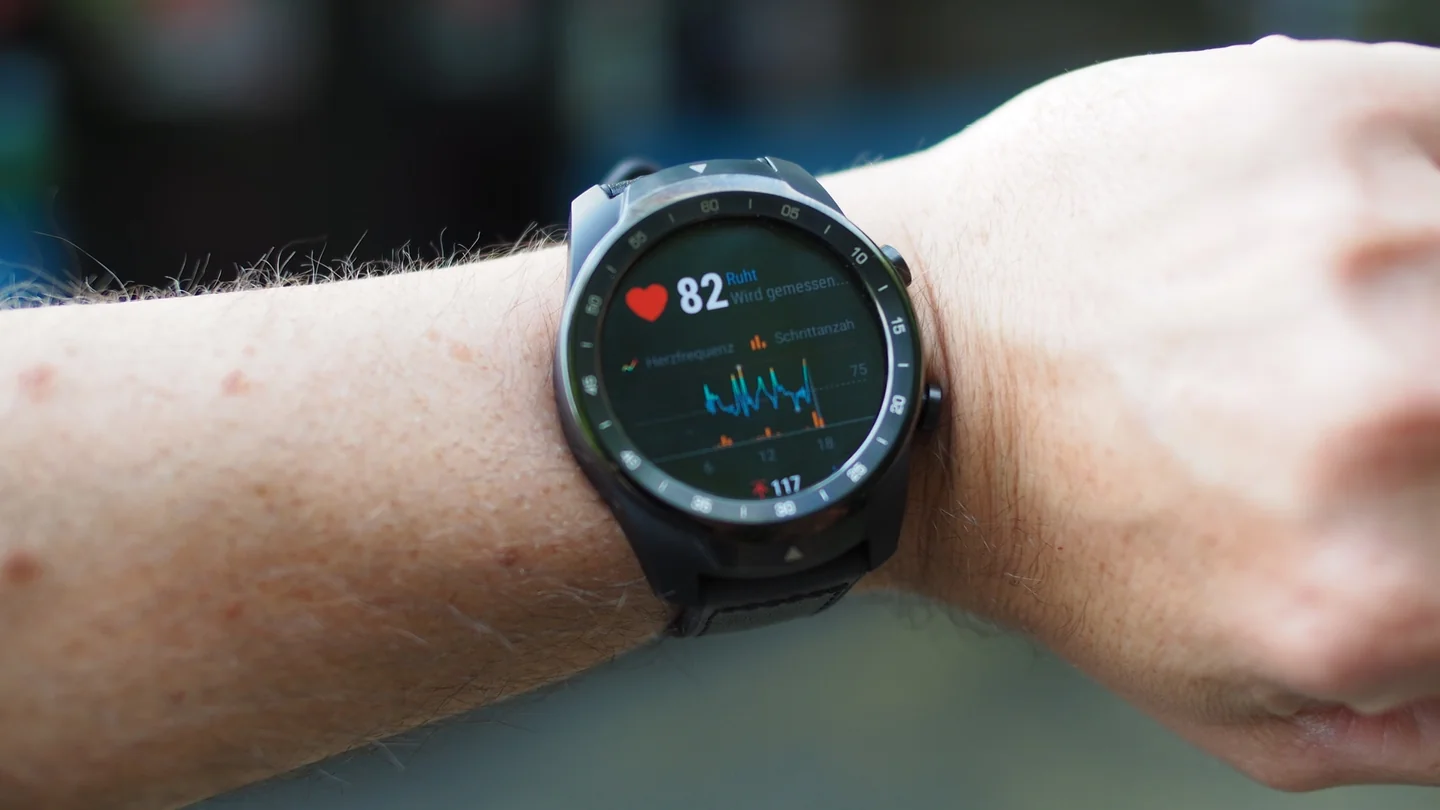
With GPS watches, there are also important differences between wrist optical readings and chest straps. The latter usually provide more stability in intense efforts, sudden changes, and demanding intervals. The finer the data, the less it depends on sensor luck. That does not make the watch useless, but it does mean its values must be interpreted carefully.
What relationship does it have with VO2 max
VO2 max usually comes up in any performance conversation because it represents the body’s ability to take in and use oxygen during effort. It is an important metric, of course, but it does not by itself explain who can sustain a race better. Two athletes can have similar VO2 max values and still perform very differently because one tolerates sustained intensity better and delays fatigue longer.
That is where the anaerobic threshold comes in. In practical terms, the closer that threshold is to VO2 max, the better the ability is usually to compete at high paces for longer. In other words: having a good engine is not enough; you also need fuel management and a transmission that can hold up without breaking halfway through the race.
In moderately trained runners, the threshold is usually around 70% to 80% of VO2 max, while in more trained athletes it can approach 80% or 90%. These are guideline ranges, not a universal rule. The exact reading will depend on training history, discipline, and type of event. The key is that the threshold can move, and that room for improvement is one of the great interests of specific training.
How it is interpreted in running, cycling, and triathlon
In running, the threshold is usually associated with paces that a runner can sustain during a long but clearly demanding effort, often close to half-marathon pace in well-trained profiles. Over shorter distances, it helps explain what intensity can be maintained without entering too early into the hole of acidification and loss of efficiency. It is a compass for race paces.
In cycling, the reference is usually translated more into watts than pace. FTP and the physiological threshold relate to that sustained work a cyclist can maintain without power dropping off. That is why many field tests on the bike are done on a trainer, on steady climbs, or on uninterrupted stretches. The logic is the same as in running, even if the instrument changes.
In triathlon, the interest grows even more, because the accumulated fatigue from several disciplines requires reading the threshold with greater care. Context matters as much as the number. An isolated value is of little use if you do not understand how the athlete behaves after swimming and biking. Endurance does not live in a single number; it lives in the ability to repeat efforts without losing control.
What signs indicate that the threshold is improving
Improvement does not always come with a dramatic rise in heart rate or a spectacular mark in a specific test. Sometimes it shows up in finer details: the pace is sustained with less breathlessness, breathing settles sooner, recovery between intervals is faster, and the same perceived effort produces a better result. Progress is usually silent before it is loud.
It may also appear as greater tolerance for continuous work at medium-high intensities. The runner who used to struggle to hold on for 15 minutes near threshold may now complete 20 or 30 with more control. In cycling, the same uphill stretch may stop triggering fatigue so quickly. These are very valuable signs because they indicate adaptation, not just a momentary good form.
It is worth remembering that the threshold is not improved in isolation or in just one week. It responds to a process of training, rest, and consistency. The body learns to reuse lactate better, distribute effort, and delay metabolic collapse. That takes time, and that is precisely why the test matters: it lets you see whether that time has produced a real adaptation.
The workouts that most influence that point
Threshold-focused work usually combines continuous sessions and interval sets. The goal is not to punish for the sake of punishment, but to teach the body to move efficiently near that uncomfortable edge where effort is still sustainable. Useful intensity is not always the highest; often it is the one that forces the body to learn without breaking it down.
Tempo sessions, prolonged pace changes, long intervals, and certain well-integrated strength workouts often play an important role. General strength training also helps, because it improves running economy, neuromuscular control, and the ability to sustain strides or pedal strokes with less cost. There is no need to dress it up too much: when the body spends less to go just as fast, the threshold behaves better.
In experienced athletes, progression should also be cautious. It is not about piling on intervals by default, but about placing the right stimulus. A workout that is too aggressive can create accumulated fatigue and hide the real state. One that is too easy, on the other hand, barely moves the needle. The precision of the stimulus is worth more than raw volume.
Common mistakes when doing the measurement
The most common one is starting too hard from the outset. If the effort begins above what is reasonable, the test stops measuring threshold and starts measuring the ability to suffer for a few minutes before collapsing. It is also common to do the test without enough warm-up, on a route with too many interruptions, or with a poorly configured device. Bad execution contaminates the result.
Another common mistake is treating one session as if it were a final truth. Threshold changes depending on the point in the season and the day’s condition. A fatigued runner may record a value lower than their true normal level; a very fresh one may come out slightly above. That is why the useful comparison is the trend, not the isolated number.
It is also wise to avoid overreliance on automatic calculations. Formulas are an initial reference, not a verdict. An athlete with a lot of experience, a strong aerobic base, or a peculiar heart-rate response may be very far from the average. Real physiology always has more nuance than a spreadsheet.
What practical value it has for a recreational runner
For the recreational runner, the great appeal is not proving anything, but running better with less improvisation. Knowing the threshold helps organize demanding workouts, avoid overly intense efforts on endurance days, and better understand why certain sessions leave a clear mark while others do not. It turns feeling into a reference.
It also helps compare moments in the season. If after several months of work a runner maintains a high pace longer with the same or lower heart rate, that is a sign of real improvement. That kind of progress is often more useful than an anecdotal personal best on a perfect day. Used well, the test works like a mirror of progress.
In long races, this information also guides strategy. Going out above that point can be costly; sustaining it reasonably can mean the difference between collapsing in the second half or arriving alive at the finish. In short: it not only helps you train better, it also helps you race with fewer surprises. The body appreciates clear maps.
A reference that gains value the better it is interpreted
The anaerobic threshold test is neither an oracle nor a formality. It is a fine-grained performance-reading tool, useful precisely because it forces you to look at effort more deeply than with a single number. When done well, it provides context, sharpens paces, and helps distinguish between sensation, fatigue, and the real ability to sustain intensity. Its usefulness depends as much on the method as on the interpretation.
In a sport where watches, metrics, and tables are everywhere, this indicator keeps one decisive advantage: it connects technology with human behavior in motion. And that remains essential. The threshold does not live on the screen; it lives in the way the body responds when the pace gets hard and there is still work to be done.
That is why it continues to hold a central place in endurance preparation. It does not promise shortcuts, but it does promise clarity. And in sport, as in almost everything else, understanding the terrain better is usually the first step toward moving across it with greater ease.
Este artículo contiene enlaces de afiliado: si compras a través de ellos, se genera una pequeña comisión sin coste adicional para ti. Más información.



How to prevent thigh chafing: causes and real solutions

Women’s running windbreakers: seven jackets and how to choose

Do more workouts get rid of soreness? A guide for runners

Jaén Half Marathon 2026: Record 3,800 Runners Registered

Men’s short running tights: how to choose the right pair

World Triathlon confirms data breach involving medical data

Izan Edo targets podium at Miyazaki World Cup

María Pérez ranks ninth in World Athletics’ 2026 top ten

Dos Santos, Duplantis and Sawe: World Athlete of the Year finalists

San Silvestre Vallecana 2026: 42,000 places, prices and start times

 Races3 months ago
Valencia Half Marathon 2027: date and registration

 Races3 months ago
Valencia Marathon 2026: entry, ballot and course

 Reviews and Comparisons4 months ago
Asics Gel-Roadmiles 3 for men: review and current price

 Reviews and Comparisons4 months ago
Asics Gel Sonoma 8 Gore-Tex: complete analysis for trail and rain

 Sneakers3 months ago
Saucony Endorphin Pro 4: full review and verdict

 News5 months ago
Strava API 2026: what changes for clubs, challenges and runner apps?

 Reviews and Comparisons5 months ago
Nike Alphafly 3: opinions, sensations, and real key points

 Reviews and Comparisons4 months ago
Under Armour running shoes review 2025-2026: models and key features

 Sports Equipment4 months ago
Shoe sizes in cm: a clear guide to getting the right fit for your footwear

 Sneakers3 months ago
Skechers GO RUN Consistent 2.0 analysis: comfort and limits

 News5 months ago
Valencia Marathon 2026 route: key tips to train and run better

 Sneakers4 months ago
Adidas Adizero Boston 13 for men: review and verdict