Training
What is the Cooper test and how is it interpreted
A brief and demanding test to measure endurance, compare times, and estimate aerobic capacity with simple tables.

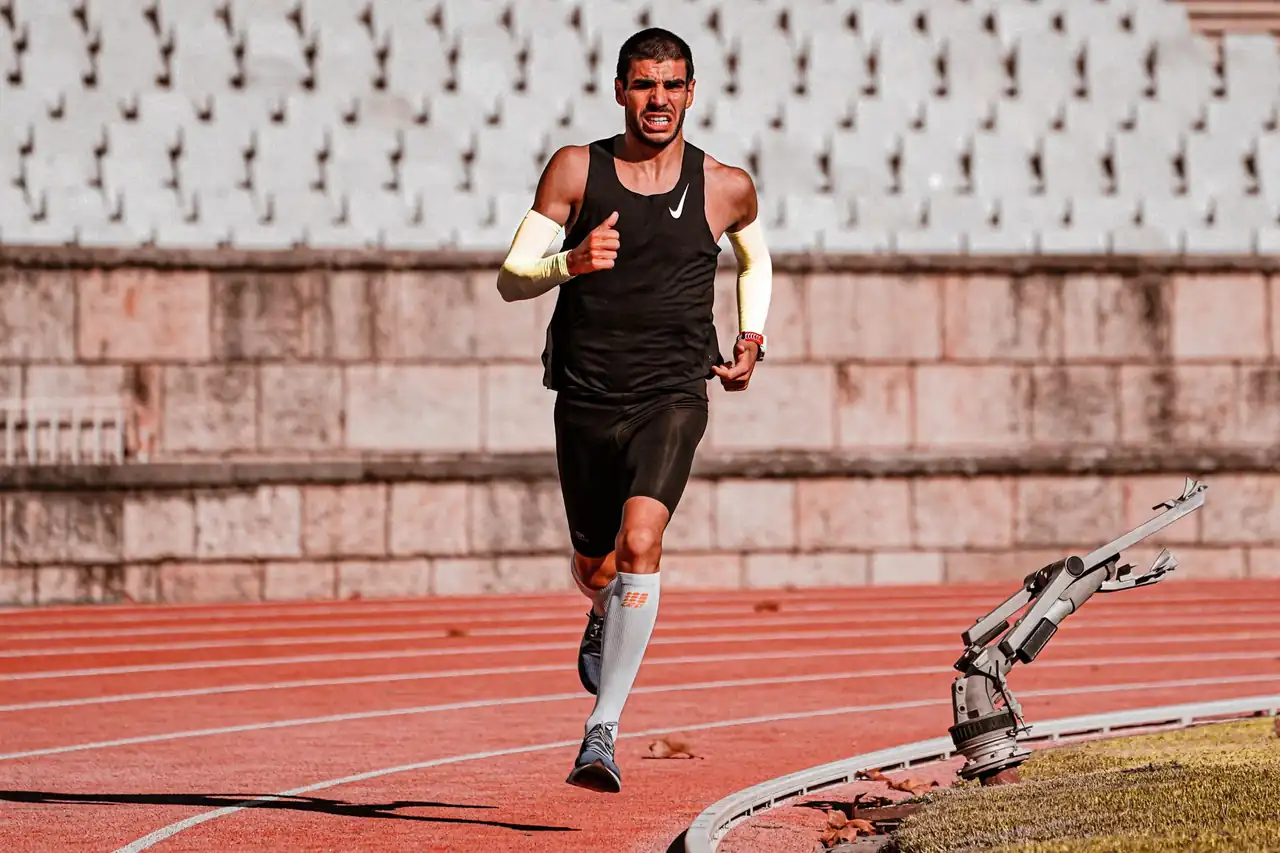
A stopwatch, a flat track, and twelve minutes of continuous effort are enough to put a name and a number to aerobic endurance. The Cooper test was born to measure how much ground a person can cover in that interval and, over time, became a quick reference for assessing physical fitness, comparing progress, and estimating maximal oxygen uptake.
Its relevance has something brutally simple about it at the same time: it requires no laboratory, no complex equipment, and no protocols that are difficult to sustain outside a clinical setting. Run as far as possible for 12 minutes, record the distance, and compare it with tables by age and sex. That simplicity explains why it still appears in schools, civil service exams, training sessions, and entrance tests.
The logic of a test that measures more than meters
Kenneth H. Cooper’s creation in 1968 responded to a very specific need: to have a cheap, repeatable, and useful tool for assessing large groups. In the United States Army, where logistics matter as much as performance, a test was needed that could be carried out under relatively homogeneous conditions and with results that were easy to compare. The idea was to estimate aerobic capacity from a continuous run of sustained effort.
That military origin did not prevent its expansion into other areas. Over the years, the test moved into schools, high schools, security forces, fire departments, and sports contexts. Its logic remained intact: the farther you go in 12 minutes, the greater your aerobic base usually is. It does not measure pure sprint speed or running technique, but it does reflect an essential part of the runner’s internal engine, that reserve that sustains paces when the body is already starting to complain.
The distance covered works as an approximate mirror of VO2 max, that is, the body’s ability to capture, transport, and use oxygen during exercise. It is not the most precise way to measure it, but it is a practical and very widespread approximation. For a survey or a school session, that relationship between simplicity and usefulness explains its staying power.
How to perform it without distorting the result
The test does not require complications, but it does require a minimum of order. The surface should be flat, stable, and free of gradients that alter the stride or the perception of effort. A 400-meter athletics track is the cleanest setting, although it can also be done in a measured open area or on a closed course with clear references. Environmental consistency is key if the final distance is to have real value.
The participant starts and tries to maintain the highest possible pace for 12 minutes, without setting off at a suicidal pace or holding back too much. In practice, success depends on two things that often conflict with each other: running hard and pacing yourself just enough so you do not break down too early. Unlike a short race, here a poor start is paid for at the end, when the air becomes heavy and each lap seems to stretch as if the clock were moving more slowly.
Before starting, a gentle warm-up with light jogging and joint mobility is advisable. A few minutes of activation reduce the risk of starting cold and help the cardiovascular response rise progressively. The time of day, temperature, and overall physical condition also matter; it is not a good idea to do the test after a heavy meal, while running a fever, or with significant respiratory discomfort.
What precautions make the difference
Although it is a popular test, it should not be treated like a game. The test requires pushing close to the limit, and that calls for common sense. Anyone who suspects cardiovascular disease, breathing problems, high blood pressure, poorly controlled asthma, or another relevant condition should obtain medical authorization before undergoing the effort. Caution does not diminish the value of the test; on the contrary, it makes it more reliable and more responsible.
There are also situations in which it is not advisable: fever, flu, menstruation with marked discomfort, insufficient recovery after a tooth extraction, or unusual states of fatigue. The goal is to assess physical capacity, not to expose the body to unnecessary strain. In children under 13, interpretation is additionally complicated because physiological development is not yet consolidated and standard tables do not handle that reality well.
Altitude adds another important variable. Above 2,000 meters above sea level, oxygen availability changes and performance can be significantly affected. That means a mark obtained at altitude is not always comparable with one achieved at sea level. Terrain, climate, and context also play their part in the result, even if the clock only shows a cold number.
How to read the tables without fooling yourself
The value of the test lies not only in absolute distance, but in its relation to age and sex. That is why the classic tables separate bands by decade and establish categories ranging from very poor to excellent. In men under 30, for example, less than 1,600 meters falls into the lowest level, while exceeding 2,800 meters enters the highest range. In women of the same age, the upper threshold is above 2,700 meters and the lower one below 1,500.
This scheme is repeated with adjustments as age advances. Between 30 and 39 years old, the standards narrow slightly; between 40 and 49, they drop again; and from 50 years old onward, the benchmark is adjusted once more. The comparison only makes sense within the correct group, because a distance is not interpreted in the same way for a young runner as for someone with decades of accumulated endurance.
The first categories, very poor, poor, and fair, are considered not fit for purpose in some practical uses. Even so, they should not be read as a dramatic judgment. They serve more as a starting point. In fact, in entrance tests or physical education, a modest result is often simply a snapshot of the current state, not a verdict on future potential. The room for improvement in endurance is usually wide when the work is maintained consistently.
It is worth remembering a central idea: the tables are a guide, not an absolute truth. Some people with good running economy, great tolerance for effort, or a solid aerobic base achieve marks that differ from what is expected, while others who have not yet sharpened their endurance still respond well to training. The test points the way; it does not confine.
From the result to aerobic capacity
The relationship between distance and VO2 max has been one of the main reasons for the popularity of this test. In its original formulation, Cooper proposed a simple estimate to convert the performance into an approximate oxygen consumption value. One of the most widely used expressions in meters is VO2 max equals the distance covered in 12 minutes minus 504.9 divided by 44.73. Another common version uses kilometers and multiplies the distance covered by 22.351 before subtracting 11.288.
These formulas are useful as a reference, but they do not replace an exercise test with direct measurement. The number produced by the equation is an approximation, not a full picture of performance. Even so, it offers a valuable advantage: it allows the same runner’s progress to be compared at different times, provided the protocol is repeated under similar conditions.
That nuance matters a lot. If the route changes, the temperature rises, the terrain has more turns, or the start is at a different time, the comparison loses precision. That is why the test is especially useful as a monitoring tool rather than as an isolated snapshot. Repeating it under similar conditions turns distance into a measure of progress, almost like a ruler marking the length of your aerobic base over the weeks.
The practical value for runners and sports organizations
In the running world, the test has an obvious appeal: it is cheap, quick, and fairly transparent. An amateur runner can do it on a track with a stopwatch, pedometer, or GPS watch and get a reasonable reference for their condition. For coaches, teachers, or group leaders, the logistics are also simple, because all that is needed is to organize the measurement and record each participant’s final distance.
In law enforcement and competitive examination settings, its presence responds to the same underlying logic: what is sought is a sign of general endurance, not extreme specialization. The test has coexisted for decades with other, more modern tools, but it remains useful because it is so easy to apply. When many data points are needed in a short time, its efficiency still matters.
In competitive sports, however, it should not be overemphasized. A 12-minute test does not summarize the full reality of a runner. It leaves out strength, stride economy, acceleration capacity, lactate tolerance, and tactics. Even so, as a gauge of aerobic endurance, it retains considerable value. It is an indicator that moves honestly, even if it does not tell the whole story.
The mistakes that most distort the result
The most common one is starting too fast. The initial sensation is often deceptive, because the first few minutes feel easy and the temptation to rack up meters quickly raises the bill. Then comes the mid-race wall: the chest tightens, breathing speeds up, and the pace loses shape. An overly ambitious start usually destroys more marks than a lack of endurance.
Another classic mistake is not knowing the course. A poorly measured circuit, with tight turns or confusing references, introduces unnecessary variability. The result is also distorted by not having rested enough or by arriving with an ill-placed training load. The test calls for relative freshness, not legs emptied by accumulated work.
Clothing and footwear matter more than they seem. Shoes that are too heavy or uncomfortable gear add noise to the effort. The body already has enough internal conversation without adding more friction. The equipment should almost disappear from awareness, leaving attention focused on the air, the stride, and the passage of time.
What a good, fair, or low mark usually reveals
A high mark generally indicates a good aerobic base, tolerance for sustained effort, and a certain running efficiency. It does not automatically make anyone a good middle-distance or marathon runner, but it does suggest that the engine responds. By contrast, a modest distance can reflect lack of training, little adaptation to continuous effort, or simply a specific moment in which the body was not at its best.
Interpretation also changes with the runner’s experience. Someone who trains regularly and maintains solid weekly paces usually gets closer to the upper ranges of their age group. Someone who runs sporadically may get a result far below expectations, even if they later perform better over short distances or in interval efforts. The test does not measure your résumé; it measures how you are on that day.
That is why its usefulness grows when it is understood as a tracking tool. A runner who goes from 2,100 to 2,350 meters under similar conditions has improved their endurance, even if they are not competing against anyone else. That jump may seem small, but within endurance it represents a real change. In a discipline where progress is cooked slowly, every meter counts like another brick in the foundation.
Why it still appears in physical education and entrance exams
Its longevity is explained by the combination of low cost, simple execution, and immediate interpretation. A school can apply it to large groups with few resources; an entrance exam can use it as an objective filter; a club can use it as a periodic reference for overall condition. It is a test that fits almost any context where endurance must be measured without setting up a laboratory.
Moreover, its fixed-time format avoids many logistical arguments. Instead of measuring how long it takes each person to complete a different distance, everyone runs for the same amount of time and the comparison becomes very direct. That uniformity facilitates evaluation, although the final interpretation should always take into account age, sex, sports history, and environment.
The fact that there are more modern tests has not displaced it entirely. The Course Navette, the Rockport test, or laboratory protocols offer other windows into aerobic capacity. But the Cooper test retains something the others do not always have: an almost pedagogical clarity. It is understood instantly, applied in minutes, and leaves a figure that anyone can repeat, discuss, or improve.
A simple test that still says a lot
The strength of the Cooper test lies in its economy of means. With little equipment and a very basic structure, it manages to provide a fairly useful reading of aerobic endurance and physical progress. It is not perfect, it does not pretend to be, and it does not replace more complete medical or sports evaluations. But as a quick snapshot of endurance, it remains a solid and very current reference.
Its best virtue may be that mix of austerity and honesty. It does not embellish performance or mask it: it measures, compares, and places it. In an era full of sophisticated metrics, there is still something valuable about a test that cuts through the noise and leaves the runner facing an elemental, almost primitive question: how much distance can the body sustain when the clock is ticking?
That is why it remains alive on tracks, in classrooms, and in selection processes. Because the heart, lungs, and legs do not understand gimmicks when it is time to push for 12 minutes. And because, although modern running has incorporated technology, sensors, and analysis platforms, some tests survive precisely because of their mechanical honesty: run, measure, and read what remains at the end of the effort.



How to prevent thigh chafing: causes and real solutions

Women’s running windbreakers: seven jackets and how to choose

Do more workouts get rid of soreness? A guide for runners

Jaén Half Marathon 2026: Record 3,800 Runners Registered

Men’s short running tights: how to choose the right pair

World Triathlon confirms data breach involving medical data

Izan Edo targets podium at Miyazaki World Cup

María Pérez ranks ninth in World Athletics’ 2026 top ten

Dos Santos, Duplantis and Sawe: World Athlete of the Year finalists

San Silvestre Vallecana 2026: 42,000 places, prices and start times

 Races3 months ago
Valencia Half Marathon 2027: date and registration

 Races3 months ago
Valencia Marathon 2026: entry, ballot and course

 Reviews and Comparisons4 months ago
Asics Gel-Roadmiles 3 for men: review and current price

 Reviews and Comparisons4 months ago
Asics Gel Sonoma 8 Gore-Tex: complete analysis for trail and rain

 Sneakers3 months ago
Saucony Endorphin Pro 4: full review and verdict

 News5 months ago
Strava API 2026: what changes for clubs, challenges and runner apps?

 Reviews and Comparisons5 months ago
Nike Alphafly 3: opinions, sensations, and real key points

 Reviews and Comparisons4 months ago
Under Armour running shoes review 2025-2026: models and key features

 Sports Equipment4 months ago
Shoe sizes in cm: a clear guide to getting the right fit for your footwear

 Sneakers3 months ago
Skechers GO RUN Consistent 2.0 analysis: comfort and limits

 News5 months ago
Valencia Marathon 2026 route: key tips to train and run better

 Sneakers4 months ago
Adidas Adizero Boston 13 for men: review and verdict