Training
The World Marathon Record Pace in London 2026
London changed marathon history with an average pace of 2:50 per kilometer and an even faster finish.

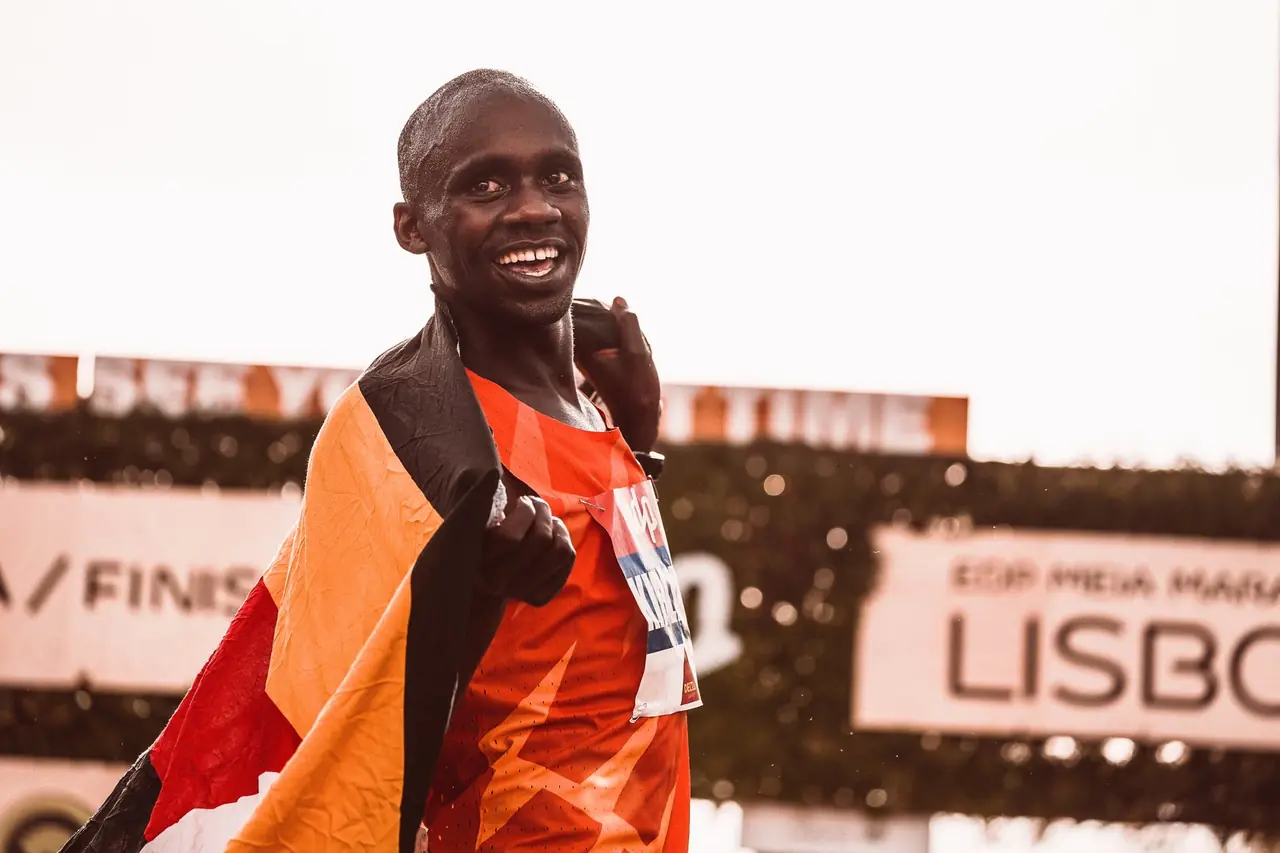
Sabastian Sawe completed the 2026 London Marathon in 1:59:30, turning a symbolic frontier into an official record. The Kenyan athlete sustained an average pace of approximately 2:50 per kilometer throughout 42.195 kilometers, an average speed of 21.17 km/h that until recently seemed possible only in a carefully controlled exhibition.
The decisive detail was not simply breaking two hours. Sawe covered the second half in 59:01, faster than the first, and finished with a progression that better explains the scale of his performance. Yomif Kejelcha also ran under two hours in 1:59:41, while Jacob Kiplimo finished third in 2:00:28. London produced not an isolated exception but a race with three athletes below the previous world record.
The number that changed the marathon scale
Sawe’s time cut 1 minute and 5 seconds from Kelvin Kiptum’s world record, set in Chicago in 2023 at 2:00:35. In such a long race, the difference may look small on a screen, but it means removing around 1.5 seconds per kilometer from a mark that had already pushed distance running into unfamiliar territory.
The final time also surpassed Eliud Kipchoge’s 1:59:40 at the 2019 INEOS 1:59 Challenge. That performance was the first sub-two-hour marathon, although it was not ratified as a record because of the event’s special conditions: rotating pacemakers, mobile drink support and a format unlike ordinary official competition. Sawe achieved the sub-two in a recognized marathon under standard racing rules.
The distinction does not diminish Kipchoge’s achievement. Instead, it shows how the marathon has evolved. The Vienna challenge proved that the body could sustain that speed in an environment designed to remove obstacles; London confirmed that an athlete could bring the same performance into an official race, with rivals, pressure and a less predictable rhythm.
What running 2:50 per kilometer means
Holding 2:50 per kilometer for a marathon requires almost mechanical consistency. That pace means passing every 5 kilometers in around 14:10, reaching 10 kilometers close to 28:20 and completing the half marathon near one hour. For a recreational runner, this is not a demanding training segment but a speed far beyond what could be maintained even for a few minutes.
The comparison helps put the record into perspective. Sawe needed approximately 4 minutes and 33 seconds per mile, a common reference in English-speaking countries. He also ran each 400 meters in about 68 seconds, a lap many amateur athletes would consider a maximum effort on a track. The extraordinary part is repeating that lap more than 105 times, without a break and with rising energy costs.
In a marathon, small deviations accumulate. A kilometer at 2:53 may seem insignificant, but it requires time to be recovered later, usually when glycogen reserves are more compromised. London relied on the opposite approach: a controlled, even and slightly progressive pace, with no spectacular accelerations during the opening half.
A fast start without visible waste
From Greenwich, the lead group went out at close to 2:49 per kilometer. The pacemakers did not set a cautious opening; they placed the race from the first moment inside record pace. The 5-kilometer split, near 14:10, ruled out any tactical interpretation. The goal was to race the clock.
The initial speed, however, did not create nervous movement. Sawe stayed well positioned inside the group and avoided taking unnecessary wind. That apparently quiet management mattered enormously, because running exposed for a few meters can increase energy cost while more than two hours of racing still remain.
London’s conditions helped. Temperatures were mild and the wind did not significantly disrupt the course, two factors that support precise execution. In such a climate-sensitive distance, weather does not create a record by itself, but it can prevent the athlete from losing seconds across every exposed section. Sawe found a favorable road and used it with extraordinary running economy.
From 10K to halfway: precision before spectacle
The 10-kilometer split, around 28:20, confirmed that the plan was working. Each pacemaker rotation kept the group within the expected window and the race progressed without sharp changes. The absence of attacks did not mean a lack of tension: every favorite was paying from the start for an effort that would demand its price much later.
The selection came gradually. The group narrowed without anyone needing to launch a major attack, simply because sustaining that pace began to require an exceptional mix of aerobic capacity, biomechanical efficiency and tolerance for discomfort. Sawe, Kejelcha and Kiplimo remained at the front while other runners lost contact.
The halfway point came close to 1:00:29 for Sawe according to the published splits, although other accounts rounded the passage to about one hour. His second half, in 59:01, was faster. That negative split is one of the race’s most relevant technical features: he did not merely survive an over-aggressive start but preserved enough capacity to accelerate when fatigue was already at its highest.
The decisive section between 25 and 35 kilometers
The 25-kilometer point, around 1:10:50, changed the race. Until then, London had been a collective demonstration of discipline; from that point on, it became the section separating extraordinary preparation from a historic performance. Kiplimo dropped back and the contest narrowed to Sawe and Kejelcha.
The 30-kilometer split, close to 1:25:10, showed that the previous world record was almost within reach. The threat was no longer simply finishing under 2:00:35 but maintaining a projection below two hours. Every split had to fit with uncomfortable precision because the final margin would be measured in seconds.
Between kilometers 32 and 35, Sawe introduced a small acceleration that was decisive in practice. He did not need a sudden surge; a slight increase was enough to force Kejelcha to pay an additional cost. At this level, a change of only a few seconds per kilometer can become a decisive gap when the legs have already been working near their limit for more than 90 minutes.
The fastest finish of a historic race
Sawe passed 35 kilometers in approximately 1:39:20 and kept the possibility of a sub-two finish alive. At that point, the race no longer depended on a major tactical move but on preserving coordination, taking the planned fluids and preventing fatigue from disrupting his stride.
The split between 30 and 40 kilometers was about 27:36. That figure shows extraordinary speed during the phase when most marathoners face the wall, a loss of pace or both. Sawe did not merely resist: he accelerated when metabolic fatigue should have been most severe, a response requiring years of preparation and complete faith in the race plan.
Over the final two kilometers, he reached close to 22.5 km/h according to the published race metrics. That reference equals a pace below 2:40 per kilometer. It was not a speed maintained for the whole race, but it showed the reserve he could still activate on The Mall. The finish came in 1:59:30, with Kejelcha only 11 seconds behind.
Why the mark is official and Vienna was not
Ratifying a marathon performance depends on recognized conditions and the controls applied during the race. The course must meet established criteria, drinks must be provided at authorized points and outside assistance cannot turn the race into a different kind of simulation.
Kipchoge’s INEOS 1:59 Challenge was designed as a sporting experiment. It used a rotating group of pacemakers in a formation to protect the athlete from the wind, a vehicle setting the pace and drinks delivered while running. His 1:59:40 remains the first sub-two performance in history, but not an official world record.
London had pacemakers and an elite racing strategy, as many major marathons do, but it was held as an official competition. Sawe raced alongside other athletes, covered the full distance and received drinks under the rules. That is why his 1:59:30 occupies the position of recognized world record, while the Vienna mark retains a different historical importance.
Kejelcha and Kiplimo complete an unprecedented day
Yomif Kejelcha’s performance deserves its own reading. The Ethiopian finished in 1:59:41, also below two hours, and according to the published data produced the fastest debut in the distance. He was not a casual companion to the record: he held the pace into the closing kilometers and forced Sawe to maintain total concentration.
Jacob Kiplimo finished in 2:00:28. The Ugandan did not break two hours, but his mark also improved Kiptum’s previous world record. Few races have brought together three performances below the previous universal best. The results show the combined influence of the quality of the field, the course, the weather and specific preparation.
The podium also captures the current strength of distance running. Kenya, Ethiopia and Uganda have a formidable competitive tradition, but the result cannot be reduced to geography. Behind it are training systems, altitude camps, race selection, split analysis, sports nutrition and a competitive culture capable of sustaining extreme efforts.
Tigist Assefa’s double record day
The London meeting had another leading figure. Tigist Assefa won the women’s race and set a women-only world record in 2:15:40, improving by 10 seconds on her previous mark, also achieved in London in 2025 according to the reference data.
Hellen Obiri finished second in 2:15:53 and Joyciline Jepkosgei third in 2:15:55. The closeness of the top three shows that the women’s race also unfolded at an exceptional speed, with a tight contest through the final kilometers. Assefa did not need an uncontrolled opening to improve her record; she won through sustained execution and superior closing strength.
This mark should be distinguished from the overall women’s world record in a mixed race. Women-only races create a different competitive dynamic, especially because of the absence of male pacemakers and the conditions of the event. Both categories are official and important, but comparing them without context can lead to mistaken conclusions about the evolution of women’s performance.
The future after the first official sub-two
Sawe’s record does not automatically make the marathon easy, nor does it mean that 1:59 will fall immediately. The human body still faces the same problem: sustaining extremely high energy output for more than 42 kilometers, managing heat, absorbing carbohydrates and preserving coordination when fatigue changes every stride.
What changes is the mental map of the distance. For years, sub-two was a theoretical possibility or a laboratory project. Since London, the sub-two belongs to the official history of the marathon. Future contenders will not need to imagine whether it is possible but study where seconds can be gained: at the start, on turns, in wind protection, through fueling or during the final 10 kilometers.
The evolution should not be measured only by the record. In elite athletics, an extreme mark pushes other runners and changes the strategy of major races. Organizers will seek fast courses, federations will monitor ratification conditions and athletes will accept that the reference pace has risen. For recreational runners, the lesson is different: Sawe’s splits belong to another physiological scale, although his progressive management confirms a general principle, the marathon rewards efficiency and control more than the excitement of the opening kilometers.
London creates a new reference for 42.195 kilometers
The 1:59:30 record brings together a series of details: a pace near 14:10 every 5 kilometers, a first half controlled within absolute speed, a second half in 59:01 and a finish capable of preserving the record when the race entered its hardest section.
Sawe crossing The Mall is not merely an image of an individual victory. It marks the point at which the official marathon reached a boundary that had seemed immovable for decades. London 2026 will be remembered for its pace, but above all for the precision needed to sustain it: 2:50 per kilometer for more than 119 minutes, without a pause, shortcut or margin for fatigue to write a different ending.



How to prevent thigh chafing: causes and real solutions

Women’s running windbreakers: seven jackets and how to choose

Do more workouts get rid of soreness? A guide for runners

Jaén Half Marathon 2026: Record 3,800 Runners Registered

Men’s short running tights: how to choose the right pair

World Triathlon confirms data breach involving medical data

Izan Edo targets podium at Miyazaki World Cup

María Pérez ranks ninth in World Athletics’ 2026 top ten

Dos Santos, Duplantis and Sawe: World Athlete of the Year finalists

San Silvestre Vallecana 2026: 42,000 places, prices and start times

 Races3 months ago
Valencia Half Marathon 2027: date and registration

 Races3 months ago
Valencia Marathon 2026: entry, ballot and course

 Reviews and Comparisons4 months ago
Asics Gel-Roadmiles 3 for men: review and current price

 Reviews and Comparisons4 months ago
Asics Gel Sonoma 8 Gore-Tex: complete analysis for trail and rain

 Sneakers3 months ago
Saucony Endorphin Pro 4: full review and verdict

 News5 months ago
Strava API 2026: what changes for clubs, challenges and runner apps?

 Reviews and Comparisons5 months ago
Nike Alphafly 3: opinions, sensations, and real key points

 Reviews and Comparisons4 months ago
Under Armour running shoes review 2025-2026: models and key features

 Sports Equipment4 months ago
Shoe sizes in cm: a clear guide to getting the right fit for your footwear

 Sneakers3 months ago
Skechers GO RUN Consistent 2.0 analysis: comfort and limits

 News5 months ago
Valencia Marathon 2026 route: key tips to train and run better

 Sneakers4 months ago
Adidas Adizero Boston 13 for men: review and verdict