Reviews and Comparisons
Alphafly vs Vaporfly: differences, ideal use, and which one to choose
Two models that look very similar, but with clear differences in fit, cushioning, and running use.

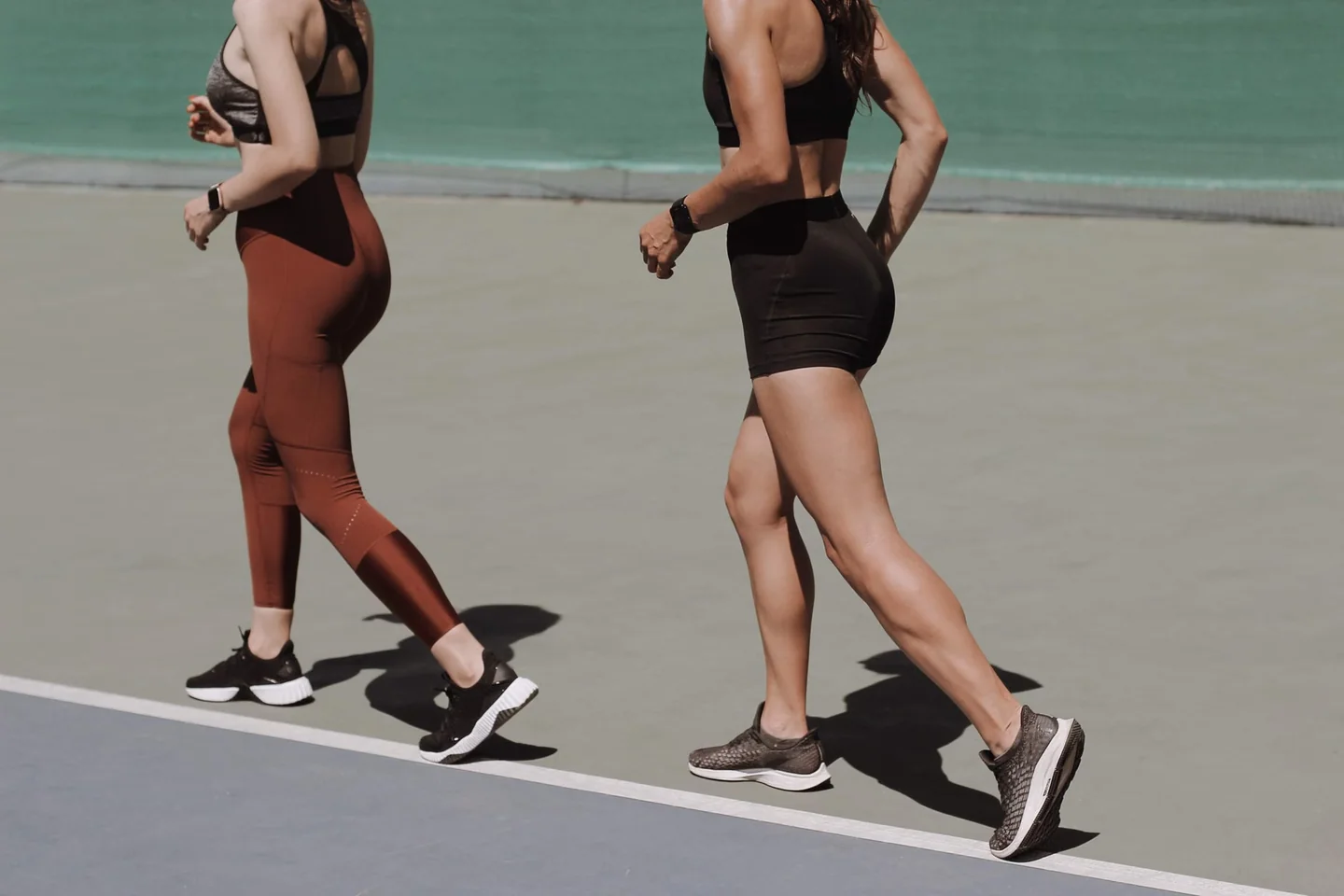
The Nike Alphafly and the Nike Vaporfly remain two of the most influential racing shoes on the market, but they don’t exactly play the same game. The former has established itself as the option more focused on the marathon and on maximum protection at fast paces; the latter, lighter and more direct, keeps a more versatile profile for distances ranging from 10K to the marathon. The difference is not just a few grams up or down: it changes the feel underfoot, the stability, and the way each model responds when the legs are already at their limit.
In practical terms, the Alphafly aims to sustain speed over more kilometers with a more cushioned and enveloping stride, while the Vaporfly prioritizes a quick transition and a cleaner, almost sharper sensation with each landing. For the everyday runner, that translates into a decision that is easy to frame and less obvious to solve: it’s not about which is better in the abstract, but which fits each person’s pace, distance, and running style.
Two super shoes with a shared DNA, but a different character
Both come from the same technical ecosystem: ZoomX foam, a carbon fiber plate, and a geometry designed to gain efficiency. Nike took that concept to the extreme with a family of shoes that broke barriers in the marathon and pushed the whole industry toward the so-called era of supershoes. That kinship, however, should not hide the underlying difference. In one, the sensation of propulsion and cushioning is more noticeable; in the other, lightness and immediate response matter more than the amount of cushioning.
The comparison between the two has changed over the generations. Today, in their latest versions, the Alphafly presents itself as a long-distance machine with more material underfoot and a more protective feel. The Vaporfly, for its part, maintains a more restrained philosophy, with a less obvious platform and a simpler reading for anyone who wants to race without so much structure around the foot. That nuance matters, because in a race not all runners interpret a fast shoe in the same way: some look for a trampoline; others, a well-sharpened blade.
There’s also a historical detail that helps explain their relevance: both models have been linked to top-level performances at major international events. That explains part of their aura, but it doesn’t exhaust their value. Their real interest lies in how they organize energy, how they reduce fatigue, and how they behave when the pace is sustained for a long time on asphalt.
Alphafly: more protection, more structure, and the marathon at the center
The Nike Alphafly was designed to run fast without sacrificing so much comfort in the final part of the effort. Its calling card is easy to recognize: a very generous midsole with ZoomX foam, a carbon plate running the full length, and Air Zoom units in the forefoot, which provide a more pronounced rebound sensation during toe-off. That combination creates a stride that seems to push from beneath the metatarsals, as if the shoe were collecting the impact and returning it with a slight elastic tension.
The presence of those air units adds an extra layer of cushioning and responsiveness that many runners notice especially as the miles go by. It’s not just a matter of comfort; it also affects running economy. The Alphafly, when used well, can help maintain a more stable form in the marathon, where fatigue usually punishes technique and any help underfoot becomes valuable. In a long race, that cushion matters as much as the reactivity.
Its volume also comes with a trade-off. The Alphafly usually feels taller and somewhat more demanding in tight turns or very changing paces. For a runner with good technique and a firm stride, it can be a powerful ally; for someone looking for a lower, more direct sensation, it may feel like too much shoe for shorter races. In other words: it’s not a shoe that tries to go unnoticed. It has presence, personality, and a clear marathon intent.
The upper reinforces that idea. The fit is usually more enveloping, with a hold that conveys security and a toe box that, in recent versions, has gained a bit more room. That detail is not minor over 42.2 kilometers, where the foot tends to expand with heat and effort. The stability of the whole improves when the foot isn’t fighting inside the shoe, and that’s where the Alphafly usually makes the most of its more refined architecture.
Vaporfly: less artifice and a cleaner feel in the stride
The Vaporfly keeps the original spirit of the modern supershoe: very light, very responsive, and focused on running fast with as little extra weight as possible. Its ZoomX midsole remains the star, but the platform gives a less bulky impression than the Alphafly’s. The result is a shoe that fits better at 10K, half marathon, and also marathon paces, especially for those who prefer a closer-to-the-ground feel and a more neutral behavior.
On the run, the Vaporfly feels agile. The transition from heel to toe is quick, the rocker helps you roll smoothly, and the carbon plate provides controlled stiffness that favors toe-off. Compared with the Alphafly, it offers a less cushioned and more precise experience. It doesn’t push as much from the forefoot, but it makes up for it with a feeling of lightness that many runners appreciate in shorter races or at paces where every second counts.
Its smaller volume also affects how it behaves when the legs get tired. In a marathon, the Vaporfly can feel more demanding for runners who need more cushioning after kilometer 30. However, for technical profiles, efficient striders, and moderate body weights, its direct response can be a real advantage. It’s a shoe that asks for commitment, not hesitation; the cleaner the stride, the better it speaks to the runner.
The upper is usually more minimal and precise, with a fit that feels tighter through the midfoot. That favors a sense of control, especially during pace changes or in races where quick reactions matter. The Vaporfly is less bulky and easier to read: the stride is understood quickly, and that clarity is part of its appeal.
Real differences in design, feel, and behavior
The gap between the two can’t be reduced to a spec sheet. Yes, they share a carbon plate, high-rebound foam, and a competitive focus, but their architecture creates different sensations. The Alphafly is usually taller, more protective, and more stable when the runner maintains a strong cadence over a prolonged effort. The Vaporfly, by contrast, offers a lighter, less imposing experience and suits those who value simplicity of feel.
A key difference lies in the forefoot. The Alphafly includes those twin air units that add bounce and a kind of small elastic chamber under the metatarsals. That contributes to a more pronounced sense of propulsion and more generous cushioning in the final phase of the stride. The Vaporfly does without that element and opts for a more direct solution, lighter and quieter in its contact with the asphalt.
Perceived stability also changes. The Alphafly, because of its greater height and more complex build, can feel more planted for runners who land decisively and keep a consistent running pattern. The Vaporfly, being lighter and less massive, can feel a bit more nervous for those who need a lot of guidance or who don’t tolerate very high platforms well. It’s not a question of quality, but of biomechanical affinity.
In weight, the difference is there, though for many everyday runners it will be secondary to the feel. The Vaporfly is usually lighter, and that adds up in shorter races or when a livelier response is desired. The Alphafly, on the other hand, offsets that small penalty with more cushioning and a stronger sense of support in the decisive kilometers of a long race. In the marathon, the shoe that best preserves the legs often wins, not necessarily the one that weighs less in your hand.
Ideal use according to distance, pace, and runner profile
The Alphafly fits best in the marathon and in very ambitious half marathons, especially for runners who already have experience at high paces and want to squeeze out extra help in the second half of the race. Its profile favors those who value cushioning over pure immediacy. If the goal is to hold a strong pace for a long time, its more substantial platform makes sense.
The Vaporfly moves more naturally in 10K races and half marathons, though it can also work in the marathon for lighter or very efficient runners. It’s an easier shoe to carry when the effort is intense but not as long, because its quick response and smaller presence underfoot fit well with races where the pace changes less and the ability to react matters more. For some runners, the Vaporfly is Nike’s most balanced super shoe.
Body weight and technique also tip the scales. Someone who weighs more, lands harder, or tends to appreciate more cushioning will usually feel better in the Alphafly. Someone with a light stride, who wants a closer-to-the-ground feel or doesn’t want such a structured shoe may prefer the Vaporfly. There’s no universal formula, but there is a fairly clear logic: the greater the need for protection, the more sense the Alphafly makes; the more agility is prioritized, the more ground the Vaporfly gains.
Among everyday runners, another less visible but very important factor appears: tolerance for aggressive shoes. Some people run more steadily with a model that almost directs the stride, while others feel better with a platform that leaves more freedom. The best shoe is the one that reduces friction in the race, not the one that impresses most outside it. That difference is often felt more on a long run than on a ten-minute test jog.
What runners notice when they line up to race
In a race-pace start, the Alphafly usually gives a more cushioned and more elastic running sensation. The foot lands on a platform that absorbs a lot and returns it with a powerful push-off. On straight courses and with a steady pace, that quality can become a kind of continuous boost. On the other hand, on courses with frequent turns or abrupt pace changes, the extra volume demands a bit more adaptation.
The Vaporfly, meanwhile, gives a more immediate reading of the ground. The runner feels the asphalt sooner, perceives the landing more clearly, and gets the impression that the shoe is accompanying without imposing so much structure. That can be ideal in races where the goal is to start controlled and build, respond to attacks, or run at a high cadence from the beginning. Its feel is less exuberant, but more transparent.
There’s also the issue of muscular fatigue. The Alphafly usually spreads the effort better in long races, which can help preserve calves and soleus muscles at the end of a marathon. The Vaporfly, being more direct, can load the calf muscles a bit more in runners who aren’t used to this kind of geometry. None of that rules it out; it just means its use makes more sense when movement economy is good and the runner accepts a livelier sensation underfoot.
In both cases, running technique matters more than it might seem. A supershoe doesn’t magically fix a messy stride or make a pace easy if you’re not ready for it. It works better as an amplifier than as a solution: if the runner already runs efficiently, both multiply that virtue; if the form is unstable, the response can feel less controllable.
Price, availability, and what to look at before deciding
The price difference between the Alphafly and the Vaporfly is usually clear. The Alphafly normally sits in a higher range, with official prices in its latest versions hovering around 300 euros or more, while the Vaporfly usually comes in a bit lower, around 260 euros in many recent references. That gap is not small, especially if you’re thinking about very occasional use for a few races a year.
Still, price alone doesn’t settle the choice. If a more expensive shoe fits the runner’s main distance better, it may make more sense than a slightly cheaper model that’s less comfortable on race day. In this kind of product, cost has to be read together with the expected performance, not in isolation. The investment only really makes sense when it’s matched with the sporting goal.
It’s also worth looking at size and fit. The Alphafly usually feels a bit roomier in the forefoot in its more recent updates, while the Vaporfly can feel tighter and more precise. A runner who is between sizes in a marathon often appreciates a bit of extra room to deal with foot swelling during the race. By contrast, someone racing shorter distances may prefer a more compact and aggressive fit.
Asphalt remains their natural territory. These are shoes made for road racing, not for daily training or just racking up miles. Their durability is real, but their best version appears when the start line matters and the pace is high. They are not general-purpose tools, but specialized racing pieces.
The final balance between Alphafly and Vaporfly
The best choice is not the loudest one, but the one that makes the most sense for the runner. The Alphafly stands out when the goal is the marathon, when the body needs more protection, and when a sense of bounce and support is wanted to help hold pace for hours. The Vaporfly shines when a lighter, simpler shoe is desired, one that is more flexible in use across 10K, half marathon, and marathon.
If the runner comes from ambitious long-distance performances, has good technique, and appreciates a more generous platform, the Alphafly usually offers a more complete experience. If, on the other hand, agility comes first, they run better with less material underfoot, and they want a shoe that feels fast from the very first meter, the Vaporfly still follows a very solid logic. In practice, the difference is like choosing between a continuous-thrust engine and a very fine blade.
The competition between the two has been so intense that they’re sometimes compared as if one canceled out the other. That’s not the case. Each occupies a different space within Nike’s racing range and responds to different needs. Understanding that separation avoids purchases driven only by the model’s fame. And in a market where technology moves fast, that nuance remains the most valuable one.
A duel that continues to shape the direction of racing shoes
The comparison between the two says much more than a simple brand preference. It sums up how elite running has evolved and how that has been transferred, with nuances, to everyday runners. A shoe is no longer just a cover for the foot: it’s an engineered piece that influences running economy, the perception of effort, and the way decisive kilometers are approached.
In that context, the Alphafly represents the idea of maximum help for sustaining long, hard efforts. The Vaporfly embodies a more purist vision of efficient speed. Neither is designed for daily training, neither is neutral in its sensations, and neither should be chosen by inertia. The duel is ultimately decided by the relationship between distance, pace, and personal feel.
That’s why, more than looking for a universal winner, it’s better to read them as two different answers to the same sporting question. One looks at the marathon with more protection; the other, at speed with less artifice. A large part of their appeal lives in that boundary, and also in the reason they keep sparking debate among runners of all levels.
Este artículo contiene enlaces de afiliado: si compras a través de ellos, se genera una pequeña comisión sin coste adicional para ti. Más información.



How to prevent thigh chafing: causes and real solutions

Women’s running windbreakers: seven jackets and how to choose

Do more workouts get rid of soreness? A guide for runners

Jaén Half Marathon 2026: Record 3,800 Runners Registered

Men’s short running tights: how to choose the right pair

World Triathlon confirms data breach involving medical data

Izan Edo targets podium at Miyazaki World Cup

María Pérez ranks ninth in World Athletics’ 2026 top ten

Dos Santos, Duplantis and Sawe: World Athlete of the Year finalists

San Silvestre Vallecana 2026: 42,000 places, prices and start times

 Races4 months ago
Valencia Half Marathon 2027: date and registration

 Races4 months ago
Valencia Marathon 2026: entry, ballot and course

 Reviews and Comparisons4 months ago
Asics Gel-Roadmiles 3 for men: review and current price

 Reviews and Comparisons4 months ago
Asics Gel Sonoma 8 Gore-Tex: complete analysis for trail and rain

 Sneakers3 months ago
Saucony Endorphin Pro 4: full review and verdict

 News5 months ago
Strava API 2026: what changes for clubs, challenges and runner apps?

 Reviews and Comparisons5 months ago
Nike Alphafly 3: opinions, sensations, and real key points

 Reviews and Comparisons4 months ago
Under Armour running shoes review 2025-2026: models and key features

 Sports Equipment4 months ago
Shoe sizes in cm: a clear guide to getting the right fit for your footwear

 Sneakers3 months ago
Skechers GO RUN Consistent 2.0 analysis: comfort and limits

 News5 months ago
Valencia Marathon 2026 route: key tips to train and run better

 Sneakers4 months ago
Adidas Adizero Boston 13 for men: review and verdict