Sneakers
Best shoes for running 10K on asphalt
Keys to choosing a fast and comfortable model for 10 kilometers according to your pace, technique, and level of demand.

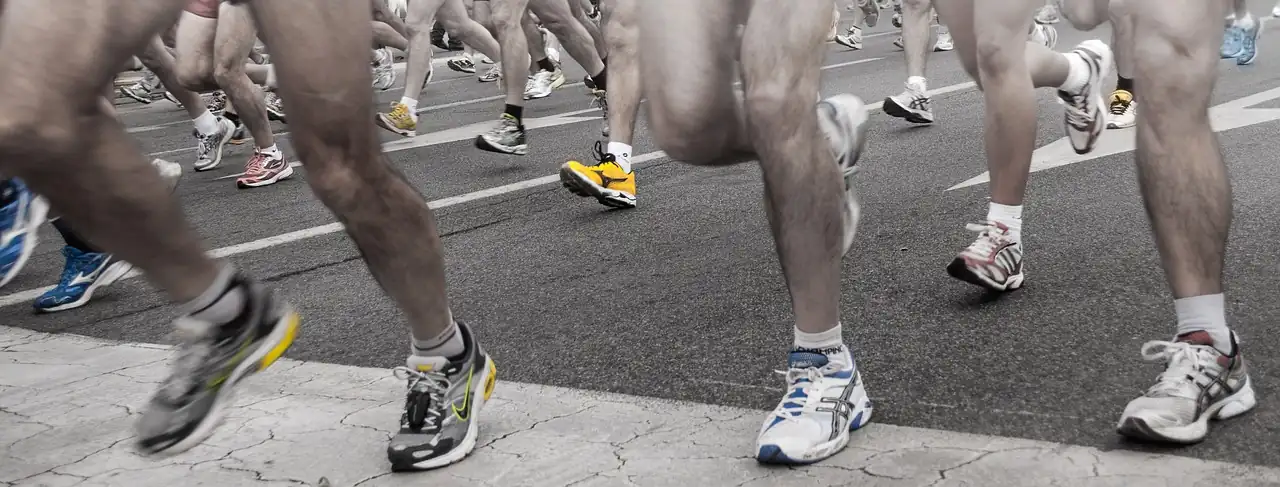
Imagen: stevepb / Pixabay
Choosing the right shoes for a 10-kilometer race isn’t about fashion or marketing; it’s about understanding a distance that mixes endurance, pace, and a lot of ability to suffer in an orderly way. In an event that usually lasts between 30 minutes and an hour, the margin between running smoothly or running beaten up can depend as much on fitness as on the shoe’s geometry, its foam, and how it responds when your stride starts to feel tired in the fourth or fifth kilometer.
The right decision changes depending on the runner. Someone chasing a personal best doesn’t need the same thing as someone who just wants to finish feeling good, and someone who weighs more or lands heavily on the heel won’t feel an aggressive shoe the same way as a more stable, more protective one. That’s why, more than chasing a single ideal model, it’s worth learning to read what really matters: lightness, cushioning, fit, response, and real durability.
What a 10K really asks from your shoes
A 10K is a tricky distance: it seems short for the recreational runner, but it demands more than it looks like it does. It’s not a sprint, even if the pace can get pretty close to your threshold; it’s not a long run either, even though fatigue shows up sooner than expected. The foot keeps repeating impacts for thousands of steps and, if the shoe doesn’t help, the tiredness becomes harsher, rougher, harder to hide in the final stretch.
At this distance, the models that usually work best are the ones that combine contained weight, agile transition, and enough cushioning underfoot. If the runner is aiming to go under 40 or 45 minutes, the priority is usually reactivity, a sense of propulsion, and stability when running fast. If, on the other hand, the goal is closer to 55 or 60 minutes, a more forgiving midsole becomes more valuable, one that can protect the calf, the sole of the foot, and the hip without turning the stride into a burden.
The terrain matters too. On smooth asphalt, a very lively and slightly firmer shoe can shine; on routes with turns, moisture, or uneven pavement, a somewhat wider platform and a sole with good grip bring a kind of peace of mind you can feel. In the 10K, the difference between feeling like you’re on a blade or on a well-tuned board lies in that balance, sometimes invisible, between control and dynamism.
The signs that separate a good model from a mediocre one
The first filter is fit. If the forefoot feels compressed, if the heel slips, or if the tongue moves too much, the shoe may be technically brilliant and still feel uncomfortable in a race. In a 10K, where the foot swells slightly and the pace gets demanding, a clean fit prevents chafing, black toenails, and that feeling of fighting the shoe when you should only be fighting the clock.
Then comes the midsole, which is the heart of the matter. Some foams offer a spongy, almost soft feel, designed to add comfort, while others aim for a drier touch and a clearer rebound. Carbon fiber or nylon plates can provide extra leverage, but they’re not mandatory to run this distance well. In fact, in many cases a lively foam without a plate feels more natural and more useful for training and racing if you’re not running at very high speeds.
The outsole and the width also matter. A very narrow racing shoe can feel fast in a straight line, but it can punish more on turns, roundabouts, or narrow passages. By contrast, a slightly more generous base usually gives more confidence, especially when the runner reaches the end with tired legs. The fastest shoe on the scale doesn’t always win; often the winner is the one that lets you run without fighting it.
Fast models for those chasing a time
When the goal is to squeeze the clock, the more aggressive shoes come into play. These are the ones that rely on very responsive foams, high stack heights, and, in many cases, carbon plates. They usually offer a clear sense of propulsion and improved running economy, especially for runners with stable technique and lively paces. In a 10K, that effect can feel like a looser stride, almost assisted, though it also demands clean mechanics to get the most out of them.
Within that group, models like Vaporfly, Adios Pro, Metaspeed, or similar have become the benchmark for racing when every second counts. Their strong point is the combination of lightness and energy return, but their weak point is well known too: they’re not always the best choice for everyday training, nor for runners who still don’t handle high paces with ease. The more modest the runner’s speed, the less obvious the advantage will be and the easier it will be to notice instability or muscular fatigue in specific areas.
The key is understanding their role. These shoes don’t turn anyone into a different runner; they sharpen what’s already there. In a 10K run close to your personal limit, they can save a small amount of effort per kilometer. Over ten kilometers, that saving adds up enough to change a time and also to change the overall feeling of the race, which goes from a tight battle to a more elastic run.
Balanced options for racing and training
Not everyone needs an elite model to perform well. There are fast training shoes that have won over many runners precisely because they offer a very useful mix of response and forgiveness. This is where families like Endorphin Speed, Tempo, Boston, Hyperion Tempo, or similar fit in, models that don’t always have the aggression of a super shoe, but do have plenty of spark for intervals, progression runs, and short or middle-distance races.
These options are especially interesting for runners who train several times a week and don’t want to reserve a pair exclusively for racing. The advantage isn’t just financial; it’s functional too. A versatile shoe lets you do intervals, fartlek, and a 10K with the same reasonably consistent behavior, without depending on overly delicate materials or extreme sensations. They usually have more durable foams and a less temperamental feel, something that’s appreciated in the long run.
For a recreational runner with a decent aerobic base, this kind of model is usually the smartest middle ground. It doesn’t promise fireworks, but it does promise consistency. And in a 10-kilometer race, where the second kilometer can already test your head, that consistency is worth gold: a stride that doesn’t sink, a landing that doesn’t shift, and a transition that doesn’t force you to think too much.
When comfort matters more than the clock
There are many 10Ks that aren’t run to fly, but to finish well. The runner making their debut at the distance, the one coming back from a recent injury, or the one who simply wants to enjoy it without going to the limit needs a different logic. That’s where shoes with more cushioning, a friendlier feel, and a less demanding toe box come in, capable of reducing impact and offering a smooth run even if the pace isn’t especially impressive.
Models like some versions of the Novablast, Pegasus, Fresh Foam, or equivalents do that job well because they don’t force the foot to work harder than necessary. Comfort is not a minor concession; in many cases it’s the condition that makes it possible to sustain the run consistently. A runner who feels comfortable lands better, breathes more calmly, and reaches the finish with less accumulated tension in the soleus, plantar fascia, and hip.
That doesn’t mean giving up on ambition. A comfortable shoe can also be fast if the runner has enough technique and strength. What changes is the way effort is understood: less aggressive, more stable, easier to manage. For someone running around 50, 55, or 60 minutes in the 10K, that choice is usually more sensible than a radical shoe designed for paces that still aren’t part of their usual racing life.
The weight, drop, and height that you can actually feel
A shoe’s weight matters, but not in the abstract. A light model helps move the legs with less inertia, especially when the pace picks up. However, a poorly executed reduction in grams can lead to worse landings, less platform underfoot, or a feel that’s too twitchy. Over 10 kilometers, what you’re looking for isn’t the lowest number on the spec sheet, but the best balance between liveliness and safety.
The drop, that is, the height difference between heel and forefoot, also has an effect. A higher drop usually favors runners who load the heel more or who appreciate more help for the calf and Achilles tendon; a lower one can give a more natural and agile stride, though it demands better muscular adaptation. Between 4 and 10 millimeters lies much of the useful range for this distance, with nuances that depend on each runner’s technique and physical history.
The height of the midsole, for its part, shapes the overall feel. Many current shoes carry more foam than they did a few years ago, and that brings clear benefits in protection, but it can also reduce ground feel. In a 10K, some runners prefer to feel more of the track or asphalt; others want the sensation of running on a platform that filters impact better. There isn’t one correct answer, only one that makes sense for the runner wearing it.
Which runner profile fits each type of model
The fast, technical runner usually gets the most out of the more aggressive shoes. If you already run under 40 minutes or move close to that threshold with good mechanics, a super shoe or a plated tempo model can give you very real help. The stride stays livelier and the economy of movement is noticeable, especially when fatigue hasn’t yet broken your form.
Runners between 40 and 50 minutes usually find their best ground in mixed or fast-training models. There, response is still important, but so is stability from kilometer 6 to 9. The big mistake is choosing based only on ambition; a shoe that’s too radical may work well in the first few minutes and become a nuisance when the body starts charging interest.
For calmer paces, or for runners who prioritize finishing strong, cushioning and fit take on more importance. The goal isn’t to become slower, but to run with less wear and tear. That difference shows when you cross the finish line, but also the next day, when less battered legs let you keep training normally.
What’s worth checking before you buy
The most useful test doesn’t start at the starting line, but in the spec sheet and in real use. It’s worth checking the weight, the type of foam, the level of support, the forefoot space, and how the outsole behaves on asphalt. It’s also important to think about whether the model will be only for racing or whether it will need to handle quality sessions, warm-ups, and short runs. That question changes the selection filter a lot.
Size deserves special attention. In 10-kilometer races, being too tight can ruin the experience through simple pressure on the toes, while being too loose takes away precision. The ideal is usually a small amount of space in front of the longest toe, enough for the foot to expand without losing lockdown. A proper last is worth more than a handful of grams saved.
It’s also worth being wary of two extremes: shoes that are too soft to run fast and shoes that are too hard to handle the whole distance comfortably. In between lies the most interesting territory, that space where a foam responds without bouncing too much and a sole helps without getting in the way. That’s where a 10K feels like a tuned race and not like a fight with the shoe.
The evolution of the market has changed the way this distance is run
A few years ago, the 10K was almost always associated with light, fairly simple shoes. Today the picture is different. New-generation foams, plates, and higher stack heights have opened up a much wider range. That has improved the performance of many runners, but it has also made the choice harder because now almost everything seems fast, comfortable, or technological at first glance.
The most visible effect is that the line between training shoes and racing shoes has blurred. Many modern models work for intervals, tempo runs, and race day. This benefits runners who don’t want three different pairs, though it does demand more judgment. It’s no longer enough to think about weight and color; you have to read how the shoe behaves when the foot is tired and the pace still has to be held.
For Spanish readers, context matters too. In cities with hard asphalt, heat, and popular races with somewhat twisty routes, a shoe that’s too radical can lose part of its advantage. By contrast, a balanced model, with good ventilation and a reliable outsole, usually performs better in real life than in catalog theory. The best choice is the one that fits your specific race, not the display window.
One last look before tying your laces
If the goal is to race for a time, choose lightness, response, and a geometry that favors pace. If the plan is to finish strong without punishing the body, prioritize cushioning, fit, and stability. And if you want one shoe for both training and racing, look for that increasingly valuable middle ground: enough dynamism to push, enough comfort to add kilometers without excessive punishment.
At the end of the day, a good pair for 10 kilometers isn’t defined only by what it promises in the box, but by what it lets you do once you’re several thousand steps into the race. The right shoe disappears a little: it stops being the star and becomes a coherent extension of the movement. That is, in the end, the best sign that you got it right.
And even if the market keeps filling up with new releases, the basic criteria don’t change. For this distance, the winner is the one who knows how to balance speed and protection, ambition and common sense, technology and feel. On a short but demanding course, that mix is what turns a time into a well-run race.



How to prevent thigh chafing: causes and real solutions

Women’s running windbreakers: seven jackets and how to choose

Do more workouts get rid of soreness? A guide for runners

Jaén Half Marathon 2026: Record 3,800 Runners Registered

Men’s short running tights: how to choose the right pair

World Triathlon confirms data breach involving medical data

Izan Edo targets podium at Miyazaki World Cup

María Pérez ranks ninth in World Athletics’ 2026 top ten

Dos Santos, Duplantis and Sawe: World Athlete of the Year finalists

San Silvestre Vallecana 2026: 42,000 places, prices and start times

 Races3 months ago
Valencia Half Marathon 2027: date and registration

 Races3 months ago
Valencia Marathon 2026: entry, ballot and course

 Reviews and Comparisons4 months ago
Asics Gel-Roadmiles 3 for men: review and current price

 Reviews and Comparisons4 months ago
Asics Gel Sonoma 8 Gore-Tex: complete analysis for trail and rain

 Sneakers3 months ago
Saucony Endorphin Pro 4: full review and verdict

 News5 months ago
Strava API 2026: what changes for clubs, challenges and runner apps?

 Reviews and Comparisons5 months ago
Nike Alphafly 3: opinions, sensations, and real key points

 Reviews and Comparisons4 months ago
Under Armour running shoes review 2025-2026: models and key features

 Sports Equipment4 months ago
Shoe sizes in cm: a clear guide to getting the right fit for your footwear

 Sneakers3 months ago
Skechers GO RUN Consistent 2.0 analysis: comfort and limits

 News5 months ago
Valencia Marathon 2026 route: key tips to train and run better

 Sneakers4 months ago
Adidas Adizero Boston 13 for men: review and verdict