Reviews and Comparisons
Apple Watch Series 10 GPS + Cellular: complete guide and prices
Mobile connectivity, two sizes, and more screen: this is how Apple’s watch is moving in 2024 and what it offers compared to its rivals.

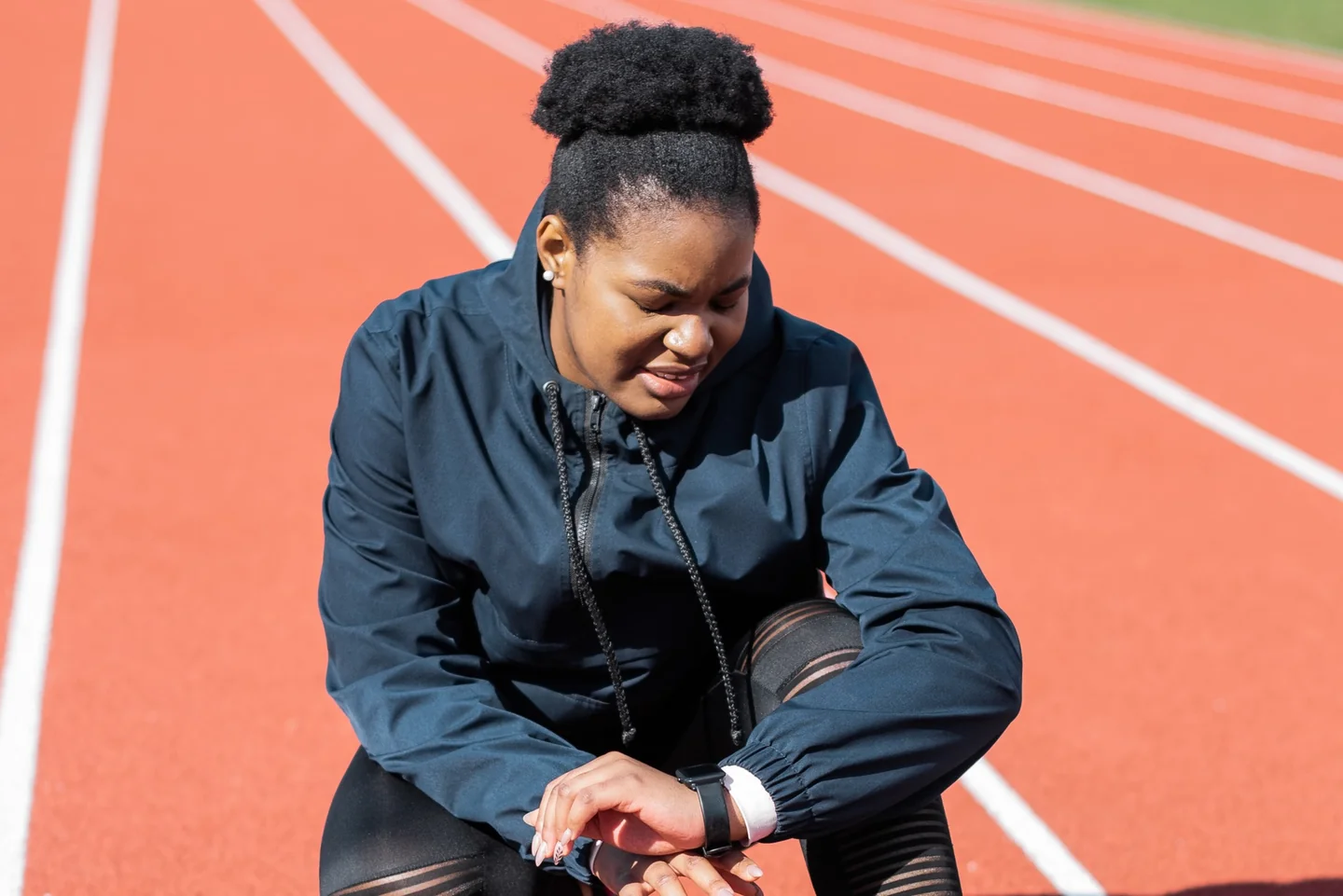
The Apple Watch Series 10 with cellular connectivity is presented as the most self-sufficient version of Apple’s standard range: it lets you make calls, send messages, listen to music, and use services on the go without depending on a nearby iPhone. In practice, that freedom is paired with a larger display, a thinner body, and a leap in fast charging that bring it closer to the idea of a watch that gets through the whole day without asking for too many concessions.
Its proposition is not designed only for people who train. It also fits into workdays, long commutes, or runs where the phone gets in the way more than it helps. For running, the GPS + Cellular variant gains weight because it keeps safety functions, notifications, and music over the mobile network, a clear advantage when heading out for a light run through the city, along the seafront, or on park trails.
The cellular version of the Series 10 and what changes in real use
The main difference is independence. The GPS version depends on the iPhone or Wi-Fi for several connected functions, while the model with eSIM can use the mobile network if the carrier allows it and the plan is activated. That means the watch can keep receiving alerts, handling calls, and streaming content even if the phone is left at home, in a gym locker, or in a work bag.
That detail, which on paper seems small, changes how you wear it day to day. A short run feels cleaner; a workout session no longer means carrying a phone; a walk around the city doesn’t interrupt the music when you step out of Wi-Fi range. The experience is smoother because the watch stops being an appendage of the phone and starts behaving like its own device, with the logical limits of battery life and coverage, but with much more freedom.
Apple supports that idea with safety and communication features that are already common in its lineup: Emergency SOS, fall detection, and crash detection, as well as international emergency calls in compatible models and countries supported by the carrier. In the Series 10, cellular compatibility is added to hardware that bets on thinness, a larger display, and fast charging, a trio aimed at improving everyday use more than dazzling with gimmicks.
Design, sizes, and materials: two clearly separated paths
The Series 10 is sold in two case sizes, 42 and 46 mm, and that choice has a big impact on wrist presence. The 42 mm version is more compact and discreet; the 46 mm offers more usable surface for reading alerts, viewing metrics, or tracking paces without straining your eyes. Apple has reduced thickness compared with previous generations, and that helps the watch feel lighter, more integrated into the arm, and less bulky under a sleeve.
In the GPS + Cellular range, there are two finish families. The aluminum version is offered in Jet Black, Rose Gold, and Silver, with Ion-X glass and an aluminum back. The titanium version goes a step up in materials, with Natural, Slate, and Gold tones, sapphire crystal, and a titanium back. There is also a Hermès edition in silver titanium with the brand’s own details. The choice is not just aesthetic: it makes a difference in weight, hand feel, and final price.
The overall design follows a very Apple logic: rounded shapes, clean surfaces, and hardware that barely draws attention until it is used. The digital crown with a colored ring helps distinguish cellular versions, a subtle but useful detail for identifying at a glance which variant you are wearing on your wrist. Add 50-meter water resistance and IP6X dust resistance, enough for pool use, rain, sweat, and intensive city wear, though not for diving or high-speed water sports.
Display, brightness, and readability on the move
The display is one of the Series 10’s biggest selling points. Apple talks about up to 30% more usable surface compared with previous generations, and that shows in menus, notifications, and workouts. Resolution also rises to 374 x 446 pixels on the 42 mm model and 416 x 496 pixels on the 46 mm model, enough to show more data without feeling cramped.
The OLED panel with LTPO technology and always-on mode keeps the time and basic metrics visible with efficient power use. Outdoors, the difference is not only about size; legibility in bright light also matters, as does the distance at which you can glance at your wrist without breaking stride and how quickly you can understand a notification while running or walking. That balance between clarity and discretion is part of the watch’s appeal.
For runners, the extra surface helps with something very specific: reading pace, distance, heart rate, or splits without having to twist your wrist as much. It does not turn the watch into a bike computer or an extreme sports watch, but it does make it more comfortable for mixed use, where work, health, and training overlap throughout the day like lanes on the same avenue.
Connectivity: LTE, 5G, and the fine print worth checking
The GPS + Cellular version works with eSIM and requires a compatible wireless service plan. Apple indicates 5G compatibility in specific markets and with certain carriers, although availability varies by country, coverage, and provider. In practice, the watch can use LTE or 5G where supported, but it is not wise to imagine a tiny phone with unlimited autonomy: coverage and signal still rule.
This has direct implications for anyone who runs or moves around the city a lot. If the watch is activated with cellular, it can handle messages, calls, and certain functions without the iPhone being nearby. It also allows the use of Apple Watch For Your Kids in compatible setups, a feature designed for family members without their own iPhone. Mobility is no longer tied to your pocket, although always within Apple’s ecosystem and the carrier’s restrictions.
Connectivity also enables safety and location services that become more valuable when the phone is left behind. Emergency SOS can work with cellular or Wi-Fi calling, and in some contexts even via satellite in the Ultra family, not in this model. In the Series 10, the key is having active mobile service and the correct setup, something that still depends on the country and the carrier contract.
Battery and charging: the factor that matters most in daily use
The official battery life remains 18 hours for daily use and up to 36 hours in Low Power Mode, figures already familiar in Apple’s standard range. These are not multi-day sports-watch numbers, but they are enough to cover a full day with notifications, activity, moderate workouts, and some music or calls. The cellular version, however, uses more power when it spends time connected to the mobile network, so real-world endurance depends a lot on usage patterns.
Where the Series 10 makes gains is in fast charging. Apple says it can reach 80% in about 30 minutes with the included USB-C magnetic fast charger and an appropriate adapter. That changes the device’s day-to-day rhythm quite a bit: a few minutes plugged in before heading out is enough to recover enough battery for the rest of the day. Charging stops feeling like a long ritual and becomes a brief, almost transitional gesture.
For people who use it while running, fast charging has a simple consequence: spontaneous routines are easier to accommodate. An early workout, a day full of meetings, and an evening session no longer depend so much on rigid planning. It does not solve limited battery life, but it softens everyday friction and reduces battery-level anxiety, which in smartwatches always ends up being a central issue.
Health and sport: what it adds over a basic watch
The Series 10 inherits Apple’s best-known health package: ECG, irregular heart rhythm alerts, high and low heart rate notifications, sleep tracking, wrist temperature overnight, and the Vitals app, which brings together metrics such as heart rate, respiratory rate, and sleep duration. These are features designed for wellness and general tracking, not medical diagnosis, a distinction worth keeping in mind.
In sports, Apple keeps activity metrics, move rings, automatic workout detection, VO2 max estimation, and training load. For running, that translates into a fairly solid reading of pace, distance, and effort, supported by the built-in GPS and, in this model, the peace of mind of staying connected without a phone. The watch does not replace a training plan, but it does fit well into the routine of someone who wants to measure progress with a simple interface.
There are also important nuances in sensors and navigation. The Series 10 includes GPS, GLONASS, Galileo, QZSS, and BeiDou, plus a compass, always-on altimeter, and high-g accelerometer. It does not reach the Ultra models’ dual-frequency GNSS or extreme durability, but it performs reliably on roads, in the city, and on gentle trails. In a road race, a long run, or a coastal jog, it offers more than enough for most runners.
Who it suits best and what you should not expect
The Apple Watch Series 10 GPS + Cellular fits best with users who value full-day connectivity, iPhone integration, and the convenience of leaving the phone behind at specific times. It makes especially good sense for people who do urban sports, travel light, get lots of notifications, or frequently use music and calls. It is also appealing for those who want a watch that can be used for training without giving up a more understated look than a rugged model.
It is not, however, the best watch for anyone who prioritizes battery life above all else. Compared with Garmin, Huawei, or Amazfit alternatives, battery life remains short. Nor is it a device for diving, hard technical trail use, or long expeditions without recharging. Its natural territory is versatility: schedule, health, light or moderate sport, and communications in the same wrist-worn object.
There is another less visible issue: the real cost. The cellular variant raises the purchase price and may involve a monthly carrier fee. In Europe, the Series 10 GPS + Cellular launched in configurations whose starting price on the market has been around 400 euros for aluminum and above 500 euros for titanium, with notable differences depending on size, color, and sales channel. In stores and resale, the numbers vary easily, but the entry point is clearly higher than in the GPS-only model.
Comparison with other Apple watches and with the competition
Within Apple’s own catalog, the Series 10 sits in a very balanced position. Above it are the Ultras, designed for adventure, durability, and extended battery life; below it is the SE, which cuts back on advanced features and materials. Compared with the Series 9, the Series 10 gains in design, display size, and ergonomics; compared with the Ultra 2 or Ultra 3, it loses in battery life, toughness, and extreme-environment tools.
The comparison with Garmin or Samsung paints a very recognizable picture. Garmin usually wins on battery life and sports focus, while Apple responds better in user experience, software, calls, apps, and health tracking within the iPhone ecosystem. The Series 10’s big strength is balance: it is not the best at everything, but it is one of the most well-rounded options for anyone who wants a real smartwatch and not just a sports monitor with notifications.
In the second-hand market and on major selling platforms, demand also reflects that hybrid profile. Aluminum units, 46 mm variants, and eSIM versions are common, suggesting an audience looking for display size and mobile connectivity over the lowest price. The titanium edition appears with higher prices and lower volume, a predictable logic in a product where materials also buy a sense of category.
The final tally: what really matters when buying it
The most valuable thing about the cellular Series 10 is not a single feature, but the sum of several small improvements that show up every day: more screen, a thinner body, fast charging, independent connectivity, and a fairly complete health package. None of those traits alone redefine the market, but together they create a watch that is easier to wear, easier to read, and easier to fit into a routine.
The final decision usually comes down to two practical questions: how much the mobile connection will be used and how much battery life matters. If the answer favors the freedom to go out without an iPhone, the eSIM model makes sense. If the priority is lasting several days and recording long sessions without thinking about the charger, there are more suitable options from other brands and within Apple itself in the Ultra family.
For running, the GPS + Cellular version has a very clear argument: it lets you run with less physical load and less dependence on the phone, without giving up metrics, messages, or music. For someone whose life is split between pavement, office, and short workouts, that mix is especially coherent. It is a watch designed to move easily through the city, not to disappear from it.
Its value lies precisely there, in a well-resolved normality. It does not aim to impress through excess, but to avoid small inconveniences. And in the smartwatch market, where almost everything is measured in numbers and promises, that is sometimes the most convincing advantage.
You may also like: Apple Watch Series 9 GPS + Cellular 45mm: complete guide.
Este artículo contiene enlaces de afiliado: si compras a través de ellos, se genera una pequeña comisión sin coste adicional para ti. Más información.



How to prevent thigh chafing: causes and real solutions

Women’s running windbreakers: seven jackets and how to choose

Do more workouts get rid of soreness? A guide for runners

Jaén Half Marathon 2026: Record 3,800 Runners Registered

Men’s short running tights: how to choose the right pair

World Triathlon confirms data breach involving medical data

Izan Edo targets podium at Miyazaki World Cup

María Pérez ranks ninth in World Athletics’ 2026 top ten

Dos Santos, Duplantis and Sawe: World Athlete of the Year finalists

San Silvestre Vallecana 2026: 42,000 places, prices and start times

 Races3 months ago
Valencia Half Marathon 2027: date and registration

 Races3 months ago
Valencia Marathon 2026: entry, ballot and course

 Reviews and Comparisons4 months ago
Asics Gel-Roadmiles 3 for men: review and current price

 Reviews and Comparisons4 months ago
Asics Gel Sonoma 8 Gore-Tex: complete analysis for trail and rain

 Sneakers3 months ago
Saucony Endorphin Pro 4: full review and verdict

 News5 months ago
Strava API 2026: what changes for clubs, challenges and runner apps?

 Reviews and Comparisons5 months ago
Nike Alphafly 3: opinions, sensations, and real key points

 Reviews and Comparisons4 months ago
Under Armour running shoes review 2025-2026: models and key features

 Sports Equipment4 months ago
Shoe sizes in cm: a clear guide to getting the right fit for your footwear

 Sneakers3 months ago
Skechers GO RUN Consistent 2.0 analysis: comfort and limits

 News5 months ago
Valencia Marathon 2026 route: key tips to train and run better

 Sneakers4 months ago
Adidas Adizero Boston 13 for men: review and verdict