Reviews and Comparisons
Apple Watch Series 9 GPS + Cellular 45mm: complete guide
Key features of the 45 mm model with mobile data: battery life, health, compatibility with iPhone, and sports use.

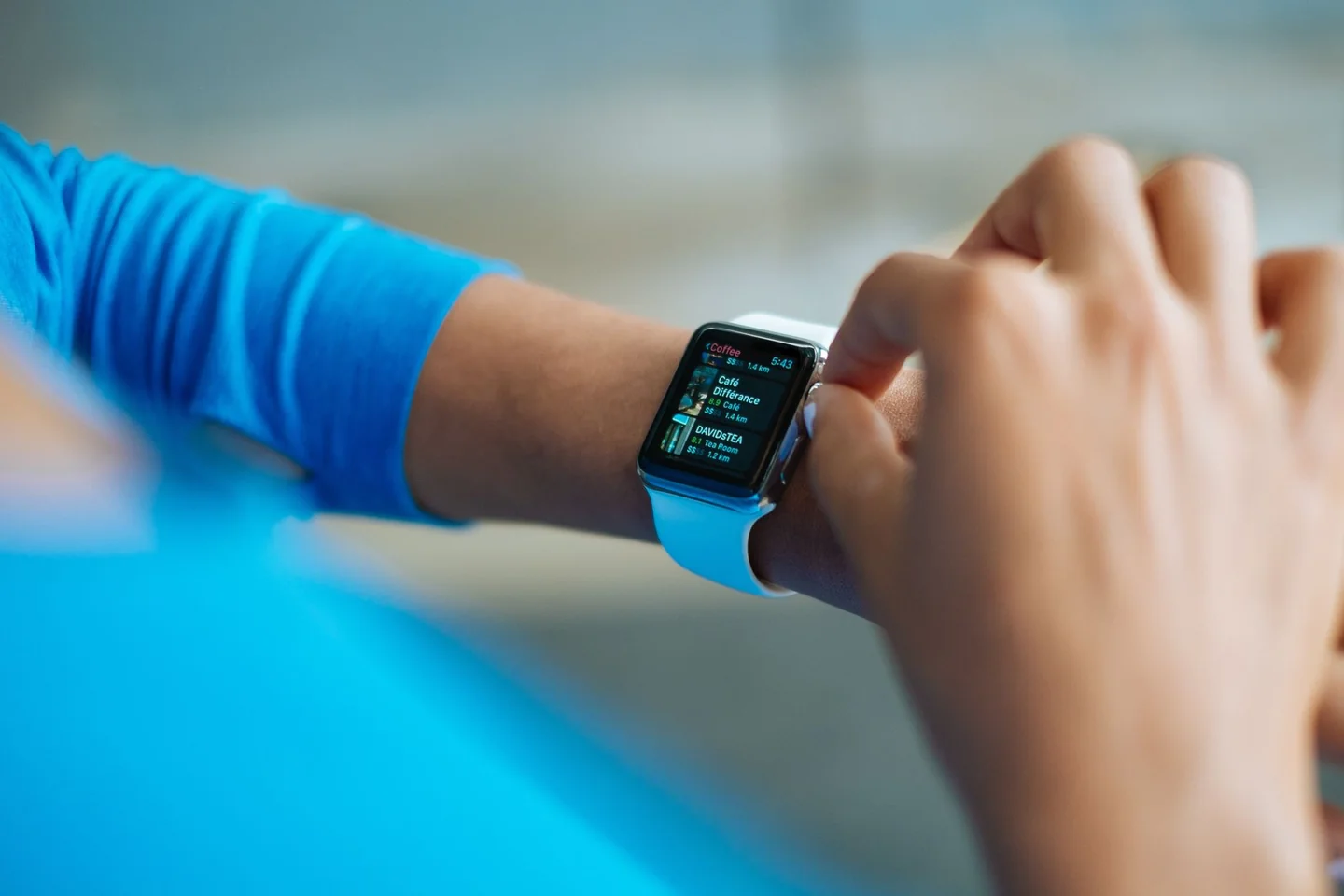
The Apple Watch Series 9 45 mm with cellular connection remains one of the most complete smartwatches for those who live glued to their iPhone and go out to train, work away from home, or want to leave the phone at home for a while. Its big selling point is that mix of large screen, smoothness, and enough battery life to cover a normal day, with the added value of being able to receive calls, messages, and notifications without relying on the phone when a compatible data plan is activated.
In the running arena, that combination makes a lot of sense: the watch records pace, distance, and route with its built-in GPS, withstands sweat and water up to 50 meters, and adds safety features that, in a solo workout or at dusk, matter more than they might seem on paper. It is not the newest in the range, but it is one of the most balanced for anyone looking for a comfortable case size and a mature user experience.
What the 45 mm model with mobile data offers
The 45 mm case is the large option in the Series 9 generation, and that is immediately noticeable when reading metrics, notifications, and text. For medium and large wrists, the screen has more presence without reaching the bulk of the Ultra, so the watch keeps a versatile silhouette for everyday use as well as sports. The GPS + Cellular version adds the extra independence that many users value when they go running without their phone or spend much of the day away from a stable connection.
The model combines aluminum or stainless steel depending on the configuration, with a build designed for the normal wear and tear of daily routines. In the aluminum version with Cellular, the weight is around 39 grams, a very modest figure for a device with so many functions. The always-on Retina OLED LTPO display reaches up to 2,000 nits, an important figure outdoors because it makes it easier to check pace or lap time in the midday sun, where many more modest watches fall short.
Compared with other smartwatches, the experience is very refined by watchOS and Apple’s ecosystem. The watch responds quickly, the double-tap gesture simplifies everyday actions, and Siri can run on the device itself for some requests. It is a proposition designed for those who prefer a polished interface over an endless catalog of scattered features. In real use, that sense of order matters almost as much as the hardware.
The real difference between GPS and Cellular
The GPS + Cellular model is not designed to live completely disconnected from the iPhone, but rather to gain more flexibility. With a mobile data plan, the watch can send and receive messages, answer calls, play music or podcasts, and show notifications without the phone being within reach. On a short outing, during an interval session, or on a long run, that independence changes the experience quite a bit.
The GPS-only version, by contrast, needs to stay linked to the iPhone via Bluetooth or Wi‑Fi for many of those tasks. Its strength is simpler: it still records physical activity accurately thanks to built-in GPS, even when the phone is not with you. For those who mainly use the watch as a sports band and do not need to answer calls away from the phone, the model without cellular connectivity may make more financial sense. But the Cellular variant makes a difference on days when the phone stays in the backpack or on the work desk.
There is another useful nuance: mobile connectivity also adds safety and continuity. Emergency calls, location tracking, and certain critical notifications can be handled more independently if there is coverage and the service is properly activated. In a city, on a quiet road, or during a workout in less crowded areas, that extra layer of independence can be more valuable than a flashy demo feature.
Why the 45 mm size appeals so much to runners and active users
The large screen not only looks better, it is also easier to read while moving. When running, every second counts; glancing at a metric without straining your eyes or navigating small menus reduces friction. On the 45 mm Series 9, reading heart rate zones, average pace, or workout time is more comfortable than on smaller cases, and that is especially noticeable in interval sessions or long runs.
For urban running, where traffic lights, corners, and pace changes alternate, the combination of size and brightness helps you check information quickly. No need to stop. A brief glance is enough. That is the kind of detail that ends up defining whether a watch helps or gets in the way. The 45 mm Series 9 handles that well because it does not sacrifice visual presence for lightness.
There is also an aesthetic and balance issue. The 45 mm case usually fits better on medium to larger wrists, and the whole package conveys a more solid feel without becoming unwieldy. For users who switch between training, office, and everyday use, that versatility is important. It does not look like a purely sports watch, but neither does it look like a delicate display piece. It sits in the middle, like technical outerwear that works for running and then for grabbing a coffee afterward.
Health features that really matter in everyday life
Apple has built this model around preventive health and daily tracking. The Series 9 includes an electrical heart rate sensor, a third-generation optical sensor, an ECG app, and irregular rhythm notifications. It also measures blood oxygen, includes a temperature sensor, and offers sleep tracking with stages and useful estimates to better understand recovery.
In a sports context, these features do not replace a medical assessment, but they do provide very valuable signals. Seeing how your pulse responds during hill training, spotting insufficient rest, or checking whether a poor night coincides with a hard session offers practical information. The watch does not work miracles, but it organizes data that used to remain scattered in vague sensations.
A realistic reading is important. The ECG app can generate an electrocardiogram similar to lead I, but it is intended for adults and its use does not replace a clinical diagnosis. Sleep apnea notifications are available on the Series 9 or later, although they are aimed at detecting signs of moderate to severe sleep apnea in adults without a previous diagnosis. The value lies in alerting and helping observe patterns, not in making health conclusions on its own.
Training, pace, and usefulness on runs
The Apple Watch Series 9 fits very well as a running watch because the hardware and watchOS work with a straightforward logic. The Workout app lets you record runs, intervals, walks, cycling, pool swimming, and other profiles, with clear metrics and without a steep learning curve. For someone who goes running several times a week, that kind of accessibility is worth more than a very long list of rarely used menus.
The built-in GPS captures distance, pace, and route without needing to carry the iPhone, which is already enough for most runs. The watch also adds a compass, always-on altimeter, high-g accelerometer, and gyroscope, a set that helps interpret movement and elevation. We are not looking at a specialized high-mountain device, but rather a solid tool for roads, parks, and tracks.
In everyday sports use, fast charging also matters. Apple says the Series 9 can reach up to 80% in about 45 minutes, a figure that significantly reduces battery anxiety when the watch is used in the morning, left on the table for a while, and then worn again in the afternoon. Official battery life reaches up to 18 hours in normal use and up to 36 hours in Low Power Mode. In real life, duration depends a lot on how many notifications you receive, how much exercise you do, and how long you keep cellular connectivity active.
Battery life, charging, and the role of cellular connection
Battery life remains the most debated point of the Apple Watch Series 9. Not because it is bad, but because its philosophy is different from that of other sports watches with several days of margin. Apple designs the product to be charged often, almost as if it were part of a daily ritual. That works well for the overall user experience, although it does require discipline from those who would rather forget about the charger during the week.
The Cellular version consumes a little more when using the mobile network, although the real impact depends on coverage and the usage pattern. If the watch spends many hours linked to the iPhone, the difference may be moderate; if it relies continuously on mobile data, consumption increases. That is why it makes sense to evaluate the 45 mm model with mobile data not only for its features, but also for how it will fit into the user’s routine.
For training, the advantage is clear: you do not need to leave with your phone to stay connected. The same applies to everyday commuting. For those who live in cities with good coverage and have dynamic habits, the comfort boost is tangible. For those who mostly use the watch at home, in the office, or at the gym with the phone at hand, that independence may take a back seat to the price and the need to contract an additional plan.
Compatibility, required iPhone, and usage requirements
This watch does not work independently with Android. The Apple Watch Series 9 requires an iPhone Xs or later with iOS 17 or later, and in practice Apple keeps it as an accessory deeply integrated into its own ecosystem. That means clear advantages in synchronization, health, messaging, and continuity between devices, but also a closed boundary for anyone who does not use an iPhone.
To activate the Cellular part, you also need a compatible mobile data plan with the carrier. Compatibility depends on the country and network, and although many carriers offer specific plans for watches, the terms may vary. It is also worth remembering that some functions are not available in all geographic areas or languages. In a product like this, the fine print is not decorative: it determines the real experience.
The 45 mm version includes 64 GB of internal storage, enough to store apps, music, and content without running short. And Bluetooth 5.3, together with Wi‑Fi 4 and second-generation Ultra Wideband, provides modern and fast connectivity. That translates into the feeling of a well-assembled product, where software and hardware do not compete, but support each other.
Safety and durability for training without fear of the environment
Safety features are one of the strongest reasons to choose this model. The watch includes Emergency SOS, fall detection, and crash detection, a combination that can call for help in serious situations if there is adequate connectivity. For a runner who goes out alone in the morning, a cyclist sharing a lane with traffic, or a user who moves around the city frequently, that backup changes the feel of the device.
Its 50-meter water resistance certified under ISO 22810:2010 makes it suitable for swimming in a pool or the sea, though not for diving, waterskiing, or deep dives. It also has IP6X dust resistance. In other words: it handles sweat, rain, and sports routines well, but it is not meant for extreme water adventures. Durability, moreover, is not eternal; over time it can decrease.
In a technical article like this, it is worth emphasizing something important: safety does not replace common sense. The watch helps, warns, and can call, but it still depends on coverage, setup, and the condition of the linked device. Even so, the combination of sensors, connectivity, and quick response gives it a very solid profile for those who value peace of mind as much as performance.
How it stands compared with other Apple watches
Within Apple’s catalog, the Series 9 occupies a very sensible position. It sits above the SE in health features and display, but below the Ultra in battery life, raw size, and extreme durability. That balance makes it especially attractive for those looking for an advanced watch without jumping to a more bulky and expensive high-end design.
Compared with an SE, it gains an always-on display, more complete measurements, and a richer health experience. Against the Ultra, it gives up battery life and a clearly more adventurous focus, but it offers a more discreet design and a 45 mm case that fits better into everyday urban life. For road running, gyms, and mixed training, that proportion is usually enough, even preferable.
In practice, many buyers come to this model because they want something more than a smart band, but do not need the almost exaggerated toughness of the Ultra. The Series 9 with Cellular is the point where Apple fine-tunes the product for broad use: work, sport, health, music, messaging, and safety. It is not a pure specialty watch. It is an everyday device that earns its place through balance.
What to consider before choosing this model
The key question is not just the watch, but the context in which it will be used. If the iPhone always goes with you and you do not mind charging daily, the Cellular version may seem like a luxury. If, on the other hand, you usually go running without your phone, move around the city a lot, or value being able to answer a call without taking out your phone, the investment starts to make sense. The extra price does not buy a radical transformation, but a very specific kind of freedom.
It is also worth thinking about the wrist and screen readability. The 45 mm format favors visibility, but it is not comfortable for everyone. In a case like this, the watch is more noticeable, takes up more space, and also communicates more information. For users who train frequently, that extra readability pays off. For smaller wrists or for those looking for a more discreet presence, the smaller case may fit better.
In the end, the Apple Watch Series 9 GPS + Cellular 45 mm still stands out for its mix of large display, mobile connectivity, health features, and reliable sports use. It is not the newest model, but it is one of the most well-rounded for those who want a serious smartwatch, well executed, and with enough room to accompany runs, work, and daily life without feeling like a passing whim.
A watch that remains very relevant in real use
Time has not aged the Series 9 badly. Its design still feels current, its performance remains snappy, and its proposition makes sense for an iPhone user looking for more than notifications on the wrist. Compatibility with 5G in compatible Cellular models, the bright display, and fast charging keep it appealing in a market full of watches that promise a lot and deliver little.
For the regular runner, for the worker who needs occasional independence from the phone, and for those who prioritize the Apple ecosystem above all else, this watch still offers very clear usefulness. The key is to understand it for what it is: a very capable general-purpose smartwatch, with good outdoor readability, advanced health features, and real mobile connectivity. It does not aim to replace a phone or a medical tool. It does aim to simplify an entire day, step by step, notification by notification, kilometer by kilometer.
In that sense, the Apple Watch Series 9 45 mm with Cellular is not an impulsive purchase or an empty tech indulgence. It is a well-tuned piece of connected life, especially when running, working, and getting around the city are all part of the same day.
Este artículo contiene enlaces de afiliado: si compras a través de ellos, se genera una pequeña comisión sin coste adicional para ti. Más información.



How to prevent thigh chafing: causes and real solutions

Women’s running windbreakers: seven jackets and how to choose

Do more workouts get rid of soreness? A guide for runners

Jaén Half Marathon 2026: Record 3,800 Runners Registered

Men’s short running tights: how to choose the right pair

World Triathlon confirms data breach involving medical data

Izan Edo targets podium at Miyazaki World Cup

María Pérez ranks ninth in World Athletics’ 2026 top ten

Dos Santos, Duplantis and Sawe: World Athlete of the Year finalists

San Silvestre Vallecana 2026: 42,000 places, prices and start times

 Races3 months ago
Valencia Half Marathon 2027: date and registration

 Reviews and Comparisons4 months ago
Asics Gel-Roadmiles 3 for men: review and current price

 Races3 months ago
Valencia Marathon 2026: entry, ballot and course

 Reviews and Comparisons4 months ago
Asics Gel Sonoma 8 Gore-Tex: complete analysis for trail and rain

 Sneakers3 months ago
Saucony Endorphin Pro 4: full review and verdict

 News5 months ago
Strava API 2026: what changes for clubs, challenges and runner apps?

 Reviews and Comparisons5 months ago
Nike Alphafly 3: opinions, sensations, and real key points

 Reviews and Comparisons4 months ago
Under Armour running shoes review 2025-2026: models and key features

 Sports Equipment4 months ago
Shoe sizes in cm: a clear guide to getting the right fit for your footwear

 Sneakers3 months ago
Skechers GO RUN Consistent 2.0 analysis: comfort and limits

 News5 months ago
Valencia Marathon 2026 route: key tips to train and run better

 Sneakers4 months ago
Adidas Adizero Boston 13 for men: review and verdict