Reviews and Comparisons
Garmin Venu 2S vs. Vivoactive 4S: which one is more worth it
Two watches that are very similar in sports and health, but with key differences in display, battery life, and advanced features.

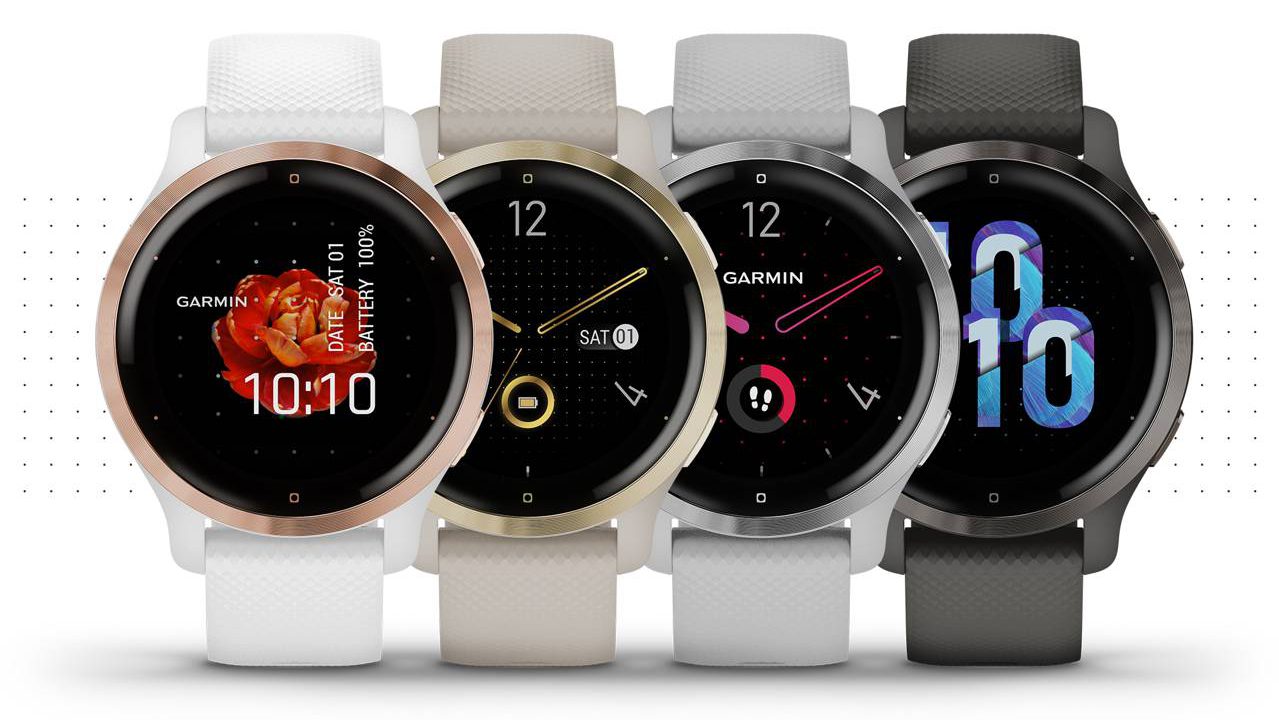
Venu(r) 2S_Bisel de acero inoxidable de color Light Gold con caja y correa de silicona beige_img_11_opt
The Garmin Venu 2S and the Garmin Vivoactive 4S are still two very present names among those looking for a compact sports watch, complete and comfortable for everyday use. Both handle activity tracking, health, and workouts well, but they are not playing the same game: one goes for a more modern visual experience and more refined metrics, while the other keeps a more practical and understated philosophy, with a price that usually feels friendlier.
The real difference is not in an isolated detail, but in the whole package. The Venu 2S is more ambitious in screen, battery life, and health analysis; the Vivoactive 4S, on the other hand, keeps a balanced approach, with enough functions for most recreational runners and active users who do not need the extra layer of refinement of the newer model.
What really separates these two watches
If you look at them side by side, the first gap appears on the screen. The Venu 2S mounts a 1.1-inch AMOLED panel with a resolution of 360 x 360 pixels and a density of 339 ppi, compared with the MIP panel of the Vivoactive 4S, which stays at 218 x 218 pixels and 280 ppi. In everyday use, the first offers deeper blacks, better contrast, and a feel closer to that of a modern smartwatch; the second prioritizes readability under the sun and energy savings.
The overall tone of the device also changes. The Venu 2S feels more polished and more current, with an interface that is easier on the eyes and a more striking visual response when navigating menus, workouts, and metrics. The Vivoactive 4S, without being ugly or rough, conveys a different idea: that of a watch that wants to be reliable before eye-catching, almost like a well-made work tool, without unnecessary makeup.
In size, both move in a very compact range, ideal for small or medium wrists. Both are around a 40 mm case and share a 5 ATM water resistance, enough for pool swimming and for handling everyday use without drama. The weight difference is minimal, but the Venu 2S usually feels a bit slimmer in the hand because of its construction and the way it distributes the visual front.
Screen, design, and feel in use
In day-to-day use, the screen is the feature that most defines a watch’s personality. The Venu 2S AMOLED completely changes the way data is read: pace, heart rate, steps, or notifications look more vivid and clearer. For someone who also uses the watch as an urban accessory, that improvement matters, because not everything happens while running or at the gym; it also matters how good it looks in a café, in the office, or when checking an alert with the wrist at rest.
The Vivoactive 4S, on the other hand, keeps Garmin’s classic language. Its transflective screen responds very well outdoors and performs especially well when the sun is beating down on the dial. It is a less flashy technology, but more efficient, like those shoes that do not draw attention when you take them out of the box, but end up convincing you because they deliver on almost any terrain.
In materials, both share a robust base, with Corning Gorilla Glass 3 and a stainless steel bezel. The Venu 2S usually adds a somewhat more premium perception, but the difference is not in toughness, rather in the visual finish and in the way information is presented. The user experience, in the end, feels more like moving from a functional car to one with a better instrument cluster than like a leap in absolute category.
Battery life and autonomy: where each one wins
Battery life is one of the clearest arguments in favor of the Venu 2S. Garmin rates its autonomy at up to 10 days in smartwatch mode, up to 19 hours with GPS without music, and up to 7 hours with GPS and music. The Vivoactive 4S, for its part, stays at up to 7 days in smartwatch use and about 5 hours with GPS and music. The difference may not seem huge on paper, but in a week of real use it is noticeable, especially if the watch is used a lot for training and listening to music without the phone.
That advantage of the Venu 2S shows up in two very specific scenarios. The first is intensive use with the screen active, notifications, health metrics, and several weekly workouts. The second is the combination of music and GPS, a field where the newer watch holds up better. Longer battery life does not just bring convenience; it also reduces the feeling of always carrying a small device on the wrist rather than a watch.
The Vivoactive 4S, however, keeps a useful logic: its battery, although smaller, is still enough for someone who trains a few days a week and does not need to squeeze GPS for hours. In moderate use, its behavior is very stable. For many runners, that stability matters more than a slightly higher autonomy figure if the price difference is significant.
Sensors and health metrics: more depth in the newer model
Both watches cover the essentials: wrist heart rate, pulse oximeter, GPS, accelerometer, compass, barometer, and gyroscope. They also measure sleep, steps, calories, distance, floors climbed, and other signals that make up the daily activity picture. In that area, Garmin was already well served in both models, so the discussion is not about whether they are useful or not, but about how much they refine the reading.
Here the Venu 2S takes the lead with a more modern optical sensor generation and more complete analysis tools. It includes advanced sleep tracking and Health Snapshot, a function that condenses several body variables into a quick report over a few minutes. It does not replace a medical evaluation and should not be interpreted as such, but it does add useful context to understand how the user arrives at a workout or a particularly demanding day.
The Vivoactive 4S also offers solid monitoring, with Body Battery, stress control, and daily records well integrated into Garmin Connect. The difference lies in the level of reading and the layer of detail. The first thinks more in terms of the full picture; the second, in terms of a basic panel that is well resolved. For most users, both are enough; for those who enjoy breaking down metrics, the Venu 2S leaves more room.
Workouts, running, and real sports use
In running, both perform solidly, but they do not convey the same ambition. The Venu 2S adds functions such as HIIT, on-screen muscle maps, and more activity profiles, bringing it closer to a watch designed not only to record, but also to support more structured sessions. The reading of data on screen is more comfortable and the ecosystem of guided workouts feels more alive.
The Vivoactive 4S remains a correct option for someone who goes running, does gym sessions, swims in the pool, or alternates activities without complications. Its sports profiles are varied and sufficient, and its handling remains simple. It does not try to impress with a huge catalog, but to neatly solve what an active user needs in 80% of cases.
There are, however, important nuances. The Venu 2S adds route tracking, while the Vivoactive 4S does not include it in the same way. In addition, the newer model adds more outdoor leisure options, such as hiking or indoor climbing, and feels more versatile when training moves off the asphalt and into somewhat more varied scenarios. We are not talking about advanced mountain navigation, but about a more complete experience for those who mix disciplines.
In cycling, swimming, and mixed activities, both behave in a similar way, with support for external sensors, ANT+ compatibility, and enough recording for recreational use. The Vivoactive 4S keeps a multispot mode that can be useful for triathletes or for those who chain disciplines; the Venu 2S, even without wearing that hat so explicitly, offers a more modern reading and a clearer presentation of transitions and metrics.
Connectivity, music, and smart experience
The connected side also tilts the balance slightly toward the Venu 2S. Both allow phone notifications, music control, Garmin Pay payments, and synchronization with iPhone and Android. But the Venu 2S adds Wi-Fi for faster syncing, as well as a larger internal memory for music, with capacity for about 650 songs compared with the 500 of the Vivoactive 4S.
In practice, that means less dependence on the phone in certain routines. Someone who goes out running with Bluetooth headphones, carries downloaded playlists, and wants to leave home without thinking about cables or transfers, finds a slightly more comfortable margin in the newer model. It is not a revolution, but it is the sum of small advantages that, taken together, make the experience smoother.
Both also rely on Garmin Connect and Connect IQ, where you can review stats, change watch faces, and add an extra app or widget. The platform is the same, but the Venu 2S shows it off better thanks to the screen and a general feeling of greater responsiveness. In watches like these, aesthetics are not just decoration; they affect how information is checked and how often you feel like looking at the device.
Price, availability, and real buying value
The market has already moved since both models launched, and that matters a lot in any serious comparison. The Vivoactive 4S is usually found at lower prices, sometimes clearly below the Venu 2S in retail channels or remaining stock. The Venu 2S, having arrived later and offering more functions, retains better technical value, but not always the best entry price.
This completely changes the buying picture. If the price difference is small, the Venu 2S feels more complete and more current. If the Vivoactive 4S appears with a significant discount, its proposal becomes more attractive because it still offers GPS, heart rate monitor, music, payments, health tracking, and a screen that performs very well in full sun. In watches like these, price matters more than is sometimes admitted.
The key is to avoid the trap of comparing only specifications. A watch can win on screen and battery life, but lose if the budget is tight and the intended use is normal. The Vivoactive 4S ages well precisely because it covers the essential part in a stable way. The Venu 2S, on the other hand, ages better in technology and visual experience. One buys utility; the other, ease of use and more refinement.
Which model fits each type of user better
The Venu 2S fits better with someone who wants a compact sports watch but with the look of a premium smartwatch, especially if they value the screen, battery life, and detailed health metrics. It is a more convincing option for someone who checks the watch often throughout the day, listens to music from the wrist, and wants a more modern feel in the interface.
The Vivoactive 4S remains a sensible buy for profiles that prioritize the balance between price, features, and simplicity. It is a less spectacular watch, but very competent, ideal for daily activity, recreational training, and mixed use without advanced demands. Those who do not need the visual extra of AMOLED or the latest metrics may find here a balanced and reliable solution.
In running, the gap between the two exists, but it is not huge in basic use. For easy paces, regular outings, and tracking progress, both work. For those who want a richer reading, a cleaner interface, and a more generous battery, the Venu 2S takes the lead. For those buying with the calculator in hand, the Vivoactive 4S still makes sense.
A choice that depends more on use than on the name
In this comparison there is no absolute winner, because they are not designed for exactly the same kind of priority. The Garmin Venu 2S is the more complete and the more modern one, with a better screen, more battery life, more music memory, and more advanced health functions. The Garmin Vivoactive 4S keeps the charm of practicality, with a price that is usually more contained and an experience that is sufficiently capable for most active users.
The final decision usually comes down to a simple question, although it is not worth turning it into a slogan: how much value does a sharper screen, richer analysis, and a few extra hours of battery life have for each person. If that matters a lot, the newer model comes out stronger. If what matters is getting a compact, useful, and less expensive watch right, the other still holds its place in the catalog well.
In the Garmin ecosystem, both have left their mark for different reasons. One represents the more polished evolution; the other, the balanced formula that ages with dignity. And that is precisely the kind of comparison that is not settled by a number, but by the use each wrist ends up making of it.
Este artículo contiene enlaces de afiliado: si compras a través de ellos, se genera una pequeña comisión sin coste adicional para ti. Más información.



How to prevent thigh chafing: causes and real solutions

Women’s running windbreakers: seven jackets and how to choose

Do more workouts get rid of soreness? A guide for runners

Jaén Half Marathon 2026: Record 3,800 Runners Registered

Men’s short running tights: how to choose the right pair

World Triathlon confirms data breach involving medical data

Izan Edo targets podium at Miyazaki World Cup

María Pérez ranks ninth in World Athletics’ 2026 top ten

Dos Santos, Duplantis and Sawe: World Athlete of the Year finalists

San Silvestre Vallecana 2026: 42,000 places, prices and start times

 Races4 months ago
Valencia Half Marathon 2027: date and registration

 Races4 months ago
Valencia Marathon 2026: entry, ballot and course

 Reviews and Comparisons4 months ago
Asics Gel-Roadmiles 3 for men: review and current price

 Reviews and Comparisons4 months ago
Asics Gel Sonoma 8 Gore-Tex: complete analysis for trail and rain

 Sneakers4 months ago
Saucony Endorphin Pro 4: full review and verdict

 News5 months ago
Strava API 2026: what changes for clubs, challenges and runner apps?

 Reviews and Comparisons5 months ago
Nike Alphafly 3: opinions, sensations, and real key points

 Reviews and Comparisons4 months ago
Under Armour running shoes review 2025-2026: models and key features

 Sports Equipment4 months ago
Shoe sizes in cm: a clear guide to getting the right fit for your footwear

 Sneakers3 months ago
Skechers GO RUN Consistent 2.0 analysis: comfort and limits

 News5 months ago
Valencia Marathon 2026 route: key tips to train and run better

 Sneakers4 months ago
Adidas Adizero Boston 13 for men: review and verdict