Reviews and Comparisons
How the protected version of the Endorphin Speed 3 performs in the rain
Adds moisture resistance, keeps up the pace, and provides confidence on wet asphalt without losing agility or quick feel.

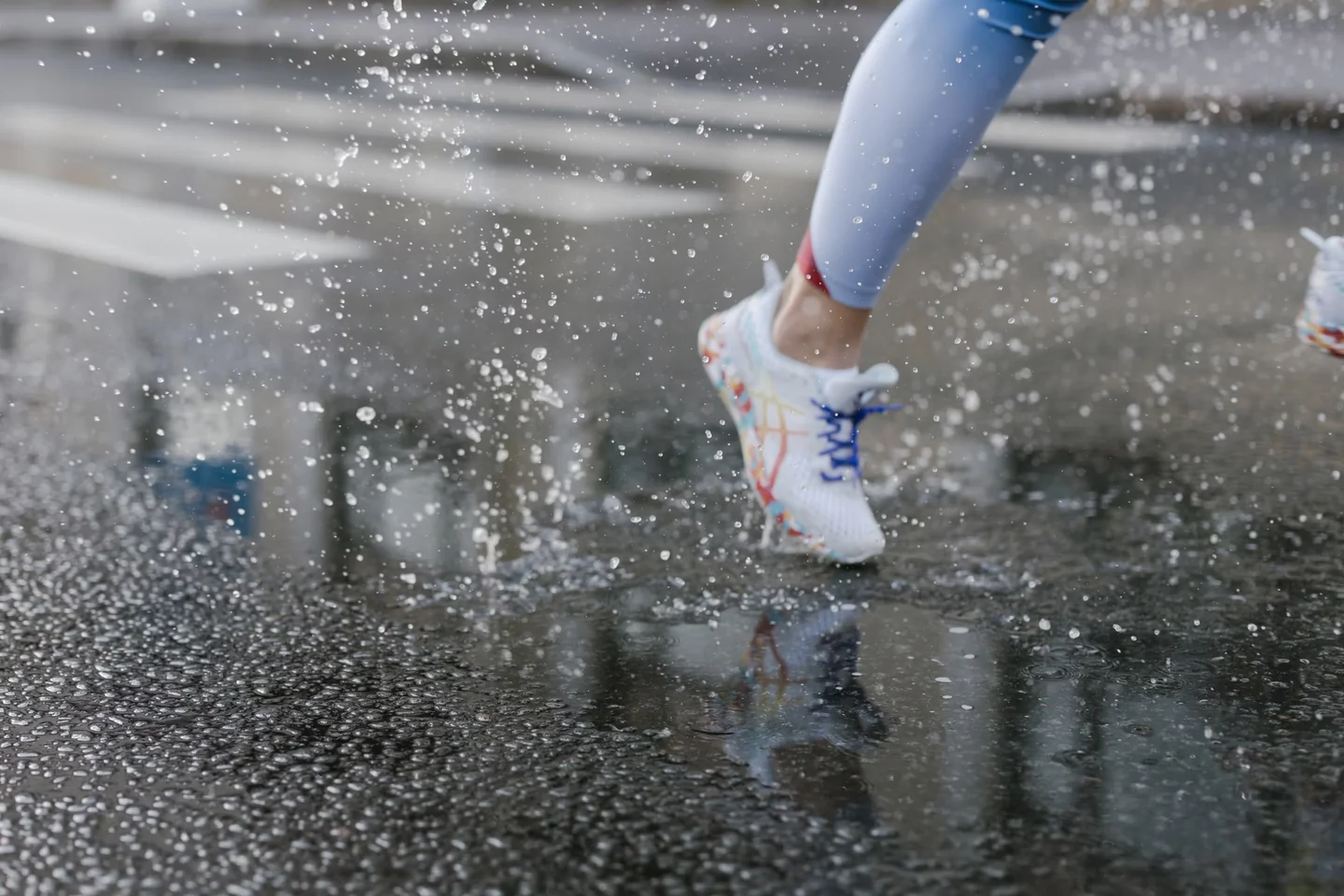
Training in light rain, cold wind and wet asphalt stops being a minor issue when a fast shoe adds protection without becoming heavy. That is the idea that defines this version prepared for bad weather: keeping the agile character of the original model and adding a useful barrier against splashes and moisture. It does not aim to turn the foot into a dry capsule or compete with a winter boot; its value lies elsewhere, in allowing a quality session to depend less on the sky.
In practice, we are talking about a road shoe with a very specific purpose. It keeps the response, the smooth transition and the lively feel that have made the family popular, but introduces an outer layer designed to delay the water getting in. For anyone who trains often in grey months, that difference matters much more than it seems: it reduces the feeling of cold, protects against short downpours and avoids the discomfort of running with a soaked foot from the first few minutes.
Protection without losing its edge
The beauty of this edition lies in the balance. Many shoes designed for adverse weather fall into one of two extremes: either they let moisture in too easily or they seal the foot so much that they turn it into a little oven when the effort goes up. Here the construction opts for a more sensible solution, with an upper that insulates enough to delay water entry, but without giving up a certain level of breathability or the flexibility typical of a fast shoe.
That approach fits very well into the everyday life of the urban runner. You do not need a downpour to appreciate a protective layer; a dense foggy morning, puddles on the road or a route with cold wind are enough to notice the difference. The foot still breathes better than in a closed membrane, and the overall sensation is nothing like a trail shoe or a heavy winter model. It is, rather, a light mid-season garment applied to running.
What does not change also matters. The essence of the whole remains that of a lively shoe, built for pace and with a stride that is easy to accelerate. That continuity is part of its appeal, because it does not force the runner to give up the spark of the base model just because they are heading out when it rains. The protection adds context; it does not rewrite the shoe’s personality.
The midsole still sets the pace
If the upper provides the shield, the midsole provides the pulse. The PWRRUN PB compound is the main reason this kind of shoe does not just survive bad weather, but remains useful for upbeat sessions, pace changes and fast runs. Its feel is not meant to be the softness of a sofa or the hardness of a board; what is interesting is that springy foam sensation, like a taut surface that absorbs and gives back with energy.
In a fast training shoe, that combination is decisive. Good rebound makes fatigue arrive later, makes the movement more efficient and keeps the stride from feeling crushed by weight or by water building up in the upper. It does not turn the session into a walk, of course, but it does remove friction. And on wet days, where every landing seems to require a small negotiation with the ground, that ease adds more than the technical specs suggest.
The S-shaped nylon plate adds another layer of logic to the whole. It is not trying to be as aggressive as a carbon plate built for racing at the limit, but rather a friendlier, more stable assistance, suitable for frequent training. That difference matters because many very fast shoes work wonderfully for a few minutes, but become demanding when the run gets longer. Here the goal is to support the pace, not impose it.
The Speedroll geometry completes the job. It organizes the transition and helps the step flow with fewer interruptions, something that is even more appreciated on wet asphalt. When the surface reflects the light and the paint on pedestrian crossings or the joints in the pavement become more treacherous, any help that smooths out the mechanics is noticeable. It is not magic, but it is a smart way to reduce small rough edges in the stride.
Fit, feel and real-world use in running
The fit usually runs true to size and with a last that does not squeeze too much. That is especially useful in a shoe like this, because the foot can swell a little during long sessions or when humidity and cold alter the perception of comfort. The forefoot offers reasonable room, without falling into exaggerated width, and the overall hold keeps the package stable when pace changes come into play.
The key is not to feel wrapped up like in a perfect glove, but to sense control. The midfoot is held securely and the heel does not give a feeling of free movement that could distract when the pace picks up. That balance makes it versatile for a wide range of runners, although those coming from maximalist models will notice more ground contact and a slightly lower volume underfoot.
It is also worth paying attention to practical details that do not always grab the headlines. The removable insole and compatibility with custom orthotics widen the range of use without changing the model’s philosophy. They are not flashy arguments, but they are important for those who need to adapt the shoe to a specific stride. In a shoe that already seeks balance between speed and protection, that extra margin reinforces its role as a versatile tool.
The numbers explain why it moves so easily
The weight figures help explain its behavior on asphalt. The men’s version is around 229 grams and the women’s version sits at about 204 grams, contained numbers for a shoe with a plate and generous cushioning. They are not pure racing figures, but they do belong to a model that avoids carrying unnecessary ballast. That relative lightness is felt more on the move than on the scale, especially when the session calls for several accelerations.
The 8-millimeter drop places it in familiar territory for many road runners. It offers a comfortable transition, without forcing a very specific technique or a radically different foot strike. Added to that is a 36-millimeter heel height and 28 in the forefoot, a platform with enough presence to cushion and respond, but without that block-like feeling that sometimes penalizes agility.
The most useful reading of those figures is simple. This shoe is not trying to be a pure racer or a soft recovery companion. Its natural place is in the middle, where some of the most interesting training models live: those that work for stacking up miles, pushing when needed and not forcing you to save them for just one kind of run.
Grip on wet asphalt and limits outside the city
The XT-900 rubber outsole is one of the most practical elements of the whole package. It is not designed for mud, broken trails or loose ground, but to offer reliable grip on streets, hard paths and smooth surfaces. On a wet day, that is almost gold. It is not only about avoiding a clear slip; it also matters to feel secure when the pace rises, when taking a corner or when crossing painted areas and thin puddles.
On wet asphalt it performs solidly, and that is exactly its terrain. It is not worth asking it for what it does not promise. On uneven paths, loose dirt or very unstable surfaces, the geometry and tread are not designed to compete with a trail shoe. The honesty of the concept is precisely one of its virtues: it works where it should work and does not pretend to cover everything.
In an era when many shoes want to be all-rounders, that clarity is appreciated. Here the combination makes sense because the upper protection and the lower grip work for the same scenario: city, moderate rain, cold pavement and sessions where the important thing is to keep the pace without fighting every landing. The result is less spectacular than other more eye-catching proposals, but more coherent.
Who it suits and who it does not quite make sense for
Its ideal profile is the road runner who does not stop training when the weather turns. It also suits anyone who wants one shoe for lively sessions, upbeat runs, pace changes and the occasional demanding outing without looking at the forecast in resignation. The extra protection makes sense when rain is intermittent, the cold bites and the priority is to keep a nimble running feel.
On the other hand, it loses logic in other contexts. Those who run almost always in warm weather, those looking for extremely soft cushioning or those who need aggressive traction off-road will probably find more suitable options. It is not the most natural choice for very easy, recovery runs either, where a simpler shoe can be enough and even more comfortable.
Neutral stride is another point to keep in mind. Its structure supports, but does not correct. That makes it more transparent and, in a way, more honest: it provides support within its philosophy, it does not solve biomechanical needs that belong to another category. For runners with a natural or midfoot strike, the reading is usually quick and favorable.
How it differs from the standard model
Compared with the conventional version, this variant gains weather context and loses a little freshness. The trade-off is logical. The protective layer adds security on wet and windy days, but it also introduces a small penalty in ventilation, especially noticeable when temperatures rise or when use shifts to dry months. There is no surprise there: every specialization has a cost.
What matters is that it does not sacrifice the traits that made the family popular. The transition remains smooth, the response stays lively and the whole keeps that ability to support upbeat paces without becoming overly demanding. In that sense, it does not seek to replace the base model, but to expand its range into weeks when the asphalt looks like a dark sheet and the wind cuts across the face.
That logic fits well with the evolution of the line within Saucony’s catalog. The series has been refining the balance between performance and everyday use, and this protected edition adds a very specific layer of utility. It does not aim to be a shoe for everything or the fastest in the range. What it does is extend the original concept’s useful life when the weather stops cooperating.
What it really brings over a long season
Beyond the technical sheet, its value appears in the runner’s real schedule. There are weeks when going out to train costs more because of the context than because of fitness. Cold early mornings, light rain, wet streets and the feeling of frozen feet can drain a session of energy before it even starts. In that scenario, a shoe that reduces thermal discomfort and delays water entry can make the difference between going out or staying home.
That role as a facilitator is less flashy than a major innovation, but much more useful. Consistency in training is often built with small supports, not heroic gestures. If a shoe removes friction from a grey day, it is already solving an important part of the problem. That is why its usefulness is better understood from continuity than from spectacle.
It also occupies a very practical place in an increasingly specialized shoe rack. It does not compete with a pure racer, nor with a max-cushion shoe, nor with a trail model. It acts as a bridge between performance and weather, a territory that is usually less glamorous but much more real. In urban races, intervals on wet pavement or controlled runs in the middle of winter, that middle position is especially valuable.
A sober proposal for running when the weather does not help
Its main virtue is not exaggerating anything. It does not dramatize the rain, it does not sell extreme protection and it does not promise racing sensations when the context is adverse. It protects enough, responds as it should and keeps the fast character of the line. That sobriety, well measured, makes it a very sensible option for urban winter and for those weeks when the sky seems determined to complicate any plan.
Looked at calmly, the shoe understands well which problem it wants to solve. It does not eliminate bad weather, but it does soften its impact on the running experience. That is much more useful than it seems. When the pavement shines, the air is heavy with moisture and the watch calls for quality, a tool like this keeps the weather from deciding the training entirely.
That is where its journalistic and sporting value lies: it does not invent a new category, but it sharpens a very specific need. For anyone looking to keep pace without depending on the sun, this protected version shows that an extra layer of shelter can coexist with a lively stride. In the end, its proposal is simple and quite mature: putting on a coat without losing the stride.



How to prevent thigh chafing: causes and real solutions

Women’s running windbreakers: seven jackets and how to choose

Do more workouts get rid of soreness? A guide for runners

Jaén Half Marathon 2026: Record 3,800 Runners Registered

Men’s short running tights: how to choose the right pair

World Triathlon confirms data breach involving medical data

Izan Edo targets podium at Miyazaki World Cup

María Pérez ranks ninth in World Athletics’ 2026 top ten

Dos Santos, Duplantis and Sawe: World Athlete of the Year finalists

San Silvestre Vallecana 2026: 42,000 places, prices and start times

 Races4 months ago
Valencia Half Marathon 2027: date and registration

 Races4 months ago
Valencia Marathon 2026: entry, ballot and course

 Reviews and Comparisons4 months ago
Asics Gel-Roadmiles 3 for men: review and current price

 Reviews and Comparisons4 months ago
Asics Gel Sonoma 8 Gore-Tex: complete analysis for trail and rain

 Sneakers4 months ago
Saucony Endorphin Pro 4: full review and verdict

 News5 months ago
Strava API 2026: what changes for clubs, challenges and runner apps?

 Reviews and Comparisons5 months ago
Nike Alphafly 3: opinions, sensations, and real key points

 Reviews and Comparisons4 months ago
Under Armour running shoes review 2025-2026: models and key features

 Sports Equipment4 months ago
Shoe sizes in cm: a clear guide to getting the right fit for your footwear

 Sneakers3 months ago
Skechers GO RUN Consistent 2.0 analysis: comfort and limits

 News5 months ago
Valencia Marathon 2026 route: key tips to train and run better

 Sneakers4 months ago
Adidas Adizero Boston 13 for men: review and verdict