Reviews and Comparisons
Huawei Watch Fit 4 Pro: opinions, price and full analysis
Lightweight watch, very visible screen, long-lasting battery, and full sports features: the best and worst of Huawei’s model.

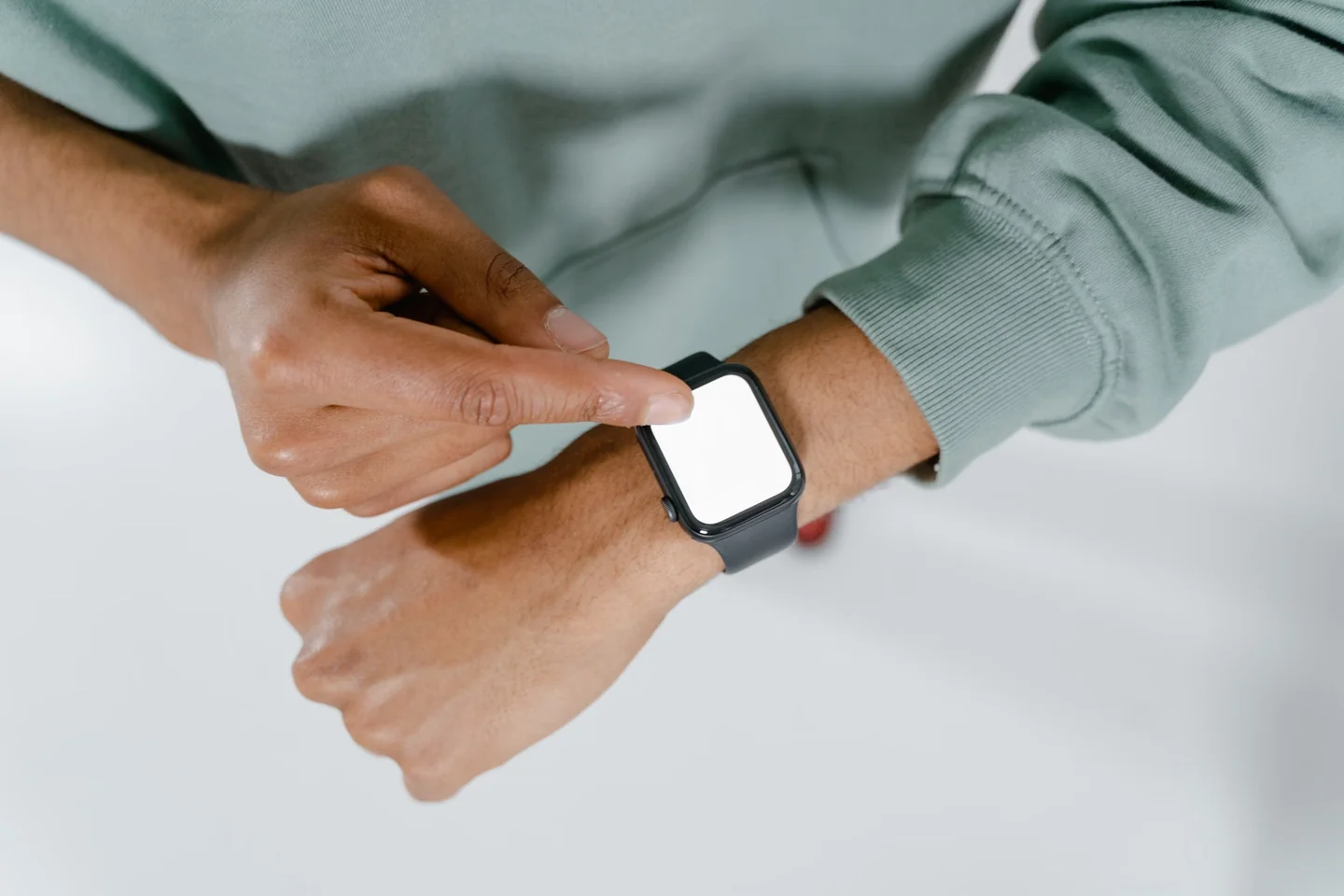
The HUAWEI Watch Fit 4 Pro has burst into the upper-mid range with a clear message: plenty of screen, good battery life, and a more serious sports focus than its price suggests. In recent tests, the watch has established itself as one of the most complete models for anyone looking for a lightweight smartwatch, with capable health sensors and an experience that doesn’t fall short outside training.
Its combination of titanium, sapphire crystal, a 1.82-inch AMOLED display, and up to 3,000 nits of brightness places it above many rivals in visibility, durability, and comfort. It also brings dual-band GPS, ECG, blood oxygen measurement, sleep tracking, and modes designed for running, hiking, swimming, or golf, all with a battery that can last well over a week without drama.
A lightweight design that you notice from the very first minute
The first impression of the Watch Fit 4 Pro is that of a well-executed watch, without visual excess and with an aesthetic that blends sportiness with a certain premium feel. The 44.5 x 40 x 9.3 mm case and its weight of just 30.4 grams without the strap make it a wearable that’s easy to forget on the wrist, something that in daily use is appreciated more than it seems. It doesn’t weigh you down, it doesn’t get in the way, and it doesn’t force you to keep checking it every time you put on a jacket or rest your arm on the table.
Huawei has opted for materials that convey solidity: aerospace-grade aluminum, a titanium-alloy bezel, and sapphire crystal protection. That combination not only improves the feel in hand; it also helps the watch better withstand training sessions, minor knocks, and continuous use. The nylon strap on the green version provides a more textile-like, lighter feel, while the fluoroelastomer straps on the other colors are more suitable for water, sweat, and intense sessions.
In practice, the watch feels closer to an everyday accessory than to a purely sports device. That explains much of its favorable feedback: it works on an early-morning run, on an afternoon walk, and in a more formal setting without drawing too much attention. It doesn’t try to look like a wrist computer; it aims to be useful without imposing itself.
Screen and smoothness: what impresses most when using it outside the home
The 1.82-inch AMOLED display is one of the watch’s strongest selling points. Its peak brightness of 3,000 nits is not just a decorative number: under sunlight, readability remains clear, maps are easy to understand, and metrics don’t force you to squint. For anyone who runs, walks, or trains outdoors, that visibility changes the experience, especially in summer, when many watches lose legibility precisely when it matters most.
The panel also responds with notable smoothness. The rotating crown and side button offer fast, intuitive navigation without stuttering. HarmonyOS 5.1 runs smoothly and gives a polished feel, even if it doesn’t compete in app breadth with Wear OS or watchOS. Even so, everyday use feels cleaner than what you usually see in watches that try to do everything and end up feeling heavy.
The flat screen also reduces odd reflections and gives the device a more sporty look than the FIT 3. That’s not a minor detail: it changes how the watch looks on the wrist and how its bezels are perceived. The result may look less sleek in photos, but it gains in readability and functional consistency, which is where this model ultimately wants to be judged.
Training and running: a watch that goes beyond the basics
In sports, the Watch Fit 4 Pro performs very well. It integrates dual-band GPS with compatibility across multiple positioning systems, including Huawei Sunflower technology, and that translates into more stable routes and fewer deviations in urban areas or tree-covered zones. For running in the city, on bike lanes, or on open trails, tracking behaves with considerable reliability and provides useful data such as distance, pace, calories, and route.
The watch supports more than 100 sports modes, but the interesting part is not the number, but how certain profiles are handled. Running gets enough metrics and tracking for anyone who trains frequently, while other disciplines such as trail running, hiking, swimming, diving, or golf show that Huawei didn’t design this model with the gym in mind alone. In fact, altitude, pressure, and movement readings add context for mountain activities or routes with elevation changes.
For regular runners, the ability to carry offline maps and import routes from Komoot is also useful. That makes it possible to follow a route without depending on your phone and with a clearer visual reference, something that brings peace of mind on long outings or in unfamiliar areas. It doesn’t turn the watch into an elite marathon device, but it does place it above many competitors in practical clarity.
In water sports, the watch also raises the bar. Its 5 ATM water resistance and support for dives of up to 40 meters open a fairly uncommon door in this price range. That’s no small detail for those who alternate between running, pool sessions, and outdoor activities, because it reduces the need to use different devices depending on the workout.
Health and sleep: where Huawei continues to set the pace
Huawei has spent years refining its health sensors, and the Watch Fit 4 Pro continues that trend. The TruSense system measures heart rate, blood oxygen saturation, ECG, stress, skin temperature, and arterial stiffness, in addition to including women’s health tracking. None of these metrics replaces a medical evaluation, but together they paint a fairly complete picture for observing trends and spotting changes worth paying attention to.
The ECG and arterial stiffness add real value because they take the watch a step beyond simple step counting. Their usefulness lies in daily tracking, pattern observation, and detecting signs that may warrant attention. Heart-rate monitoring, for its part, has proven consistent in normal sessions and medium-intensity workouts, which provides confidence for everyday use.
Where Huawei especially stands out is in sleep tracking. The Fit 4 Pro analyzes rest in considerable depth, including breathing interruptions, sleep stages, and possible signs of apnea. The overnight report is among the most complete in its category, and that has clear value for anyone who wants more than just to know how many hours they slept, but also how they slept and at what points the body seemed not to have rested well.
The Huawei Health app organizes all that information with a fairly visual presentation. It can feel dense at first, but in return it offers charts, summaries, and explanations that help interpret the data. The watch doesn’t replace a medical appointment, but it does build a useful picture of habits and physical progress, something important in a sport like running, where load and recovery make the difference.
Battery and charging: one of the reasons it is so well liked
Battery life is another major selling point of the Watch Fit 4 Pro. Its 400 mAh battery can last up to 10 days in typical use, although in real-world scenarios with notifications, sports, and active sensors, the reasonable expectation is a long week, around 6 to 8 days depending on use. That puts it in a very comfortable position compared with watches that need to be charged almost daily.
Fast charging also helps keep battery life from becoming a problem. It can return to 100% in about an hour, which greatly reduces everyday friction. You don’t need to reorganize your routine around the watch: charge it while you have breakfast, while you shower, or during any downtime, and then it can accompany you for several days without special attention.
There is, however, a small catch: the charger is proprietary. It’s not a disaster, but it is something to keep in mind if you travel frequently or want a more universal solution. In return, the energy performance more than makes up for it. In a market where many attractive smartwatches don’t last long, Huawei is still playing a very powerful card here.
Connectivity, calls, and operating system: real strengths and limits
Compatibility with iOS and Android broadens the potential audience considerably. Bluetooth pairing is simple and notifications work naturally in both ecosystems. The watch lets you read messages, reply with an on-screen keyboard, and use quick replies, an important improvement over previous generations that left that part more limited.
Bluetooth calls, however, do not fully round out the experience in all tests published by specialized media. It also lacks deep integration with powerful voice assistants, and it doesn’t offer the app breadth of more mature systems. HarmonyOS 5.1 is smooth and stable, but it still lives within a more closed garden than some users expect in 2025.
For mobile payments, Huawei has been expanding options with solutions like Quicko Wallet in some markets, although availability and the experience can vary by region. That nuance matters because the value of the watch depends not only on its technical sheet, but also on the functions that can actually be used in each country. In Spain, the most sensible way to see it is as a very complete sports and health watch, not as a full smartphone replacement.
What the market opinions say, and what really matters when buying it
Opinions about the Watch Fit 4 Pro usually agree on three points: comfort, screen, and battery life. No surprise there. Those are precisely the areas where the watch delivers the most rounded experience. Its level of detail in health and sports is also often highlighted, as well as the feeling of getting a premium-looking watch without entering true premium pricing.
Against that come the usual doubts: the lack of a rich app store, some system limitations, the absence of NFC in certain markets, or the proprietary strap attachment. These are real drawbacks, but they should be weighed in context. This is not a smartwatch for someone who prioritizes the app ecosystem, but rather a device that bets on doing a few key things very well.
The overall perception improves even more when compared with its official price of 279 euros. In that range, competing with such a bright screen, such high battery life, and such careful construction is not easy. That’s why the most favorable opinions present it as a very balanced watch for recreational athletes, active users, and people looking for 24/7 use without living attached to the charger.
Price, rivals, and the type of user it suits best
Its launch price, 279 euros, places it in a very sensitive buying zone. It’s not a cheap whim, but it’s not in the unaffordable category either. In that range, it faces models from Garmin, Samsung, or Apple with different approaches: some win on ecosystem, others on smart features, and others on more advanced sports metrics. The Watch Fit 4 Pro stands out when the main criterion is balance.
Its strongest point is precisely the sum of its parts. It doesn’t impress with a single showy feature; it wins over users with the whole package. It’s comfortable to sleep with, durable for training, readable in the sun, capable on routes, and reasonably elegant for daily use. For running, casual cycling, long walks, or mixed use, that combination makes a lot of sense.
It also fits well for people looking for a watch to accompany their routine without technical complications. Anyone who wants to install lots of apps, pay anywhere without thinking, or use a deeply integrated voice assistant will likely look elsewhere. Anyone looking for a sports smartwatch with good battery life and an outstanding display will find one of the strongest candidates in the range here.
A very solid watch for training, living, and forgetting about the charger
The most reliable opinions about the HUAWEI Watch Fit 4 Pro point in the same direction: it is one of the most balanced watches in its segment and a well-thought-out evolution of the Fit series. Its greatest virtue is that it doesn’t need to make noise to convince you; just using it for a few days is enough to notice that the screen responds, the battery lasts, and the health and sports data make sense.
In a market that often rewards the number of features over coherence, this model stands out for something less flashy and more valuable: the feeling of being well put together. It runs, measures, accompanies, and lasts. It doesn’t aim to replace everything, but it does deliver reliably on almost everything it promises. And that, on the wrist of someone who trains and lives with the watch on for hours, matters far more than an endless list of half-polished features.
The result is a smartwatch that leaves a clear impression: it may not be the most open or the most ambitious on the market, but it is one of the best combinations of design, battery life, screen, and sports tracking in its price range. In the wearable ecosystem, where so many offerings look alike, that balance remains a hard advantage to ignore.
Este artículo contiene enlaces de afiliado: si compras a través de ellos, se genera una pequeña comisión sin coste adicional para ti. Más información.



How to prevent thigh chafing: causes and real solutions

Women’s running windbreakers: seven jackets and how to choose

Do more workouts get rid of soreness? A guide for runners

Jaén Half Marathon 2026: Record 3,800 Runners Registered

Men’s short running tights: how to choose the right pair

World Triathlon confirms data breach involving medical data

Izan Edo targets podium at Miyazaki World Cup

María Pérez ranks ninth in World Athletics’ 2026 top ten

Dos Santos, Duplantis and Sawe: World Athlete of the Year finalists

San Silvestre Vallecana 2026: 42,000 places, prices and start times

 Races3 months ago
Valencia Half Marathon 2027: date and registration

 Races3 months ago
Valencia Marathon 2026: entry, ballot and course

 Reviews and Comparisons4 months ago
Asics Gel-Roadmiles 3 for men: review and current price

 Reviews and Comparisons4 months ago
Asics Gel Sonoma 8 Gore-Tex: complete analysis for trail and rain

 Sneakers3 months ago
Saucony Endorphin Pro 4: full review and verdict

 News5 months ago
Strava API 2026: what changes for clubs, challenges and runner apps?

 Reviews and Comparisons5 months ago
Nike Alphafly 3: opinions, sensations, and real key points

 Reviews and Comparisons4 months ago
Under Armour running shoes review 2025-2026: models and key features

 Sports Equipment4 months ago
Shoe sizes in cm: a clear guide to getting the right fit for your footwear

 Sneakers3 months ago
Skechers GO RUN Consistent 2.0 analysis: comfort and limits

 News5 months ago
Valencia Marathon 2026 route: key tips to train and run better

 Sneakers4 months ago
Adidas Adizero Boston 13 for men: review and verdict