Reviews and Comparisons
Italian size 42: equivalence, measurements, and differences
Italian size 42 varies depending on the garment and the sizing system, and it’s best to check it against actual measurements to avoid getting it wrong.

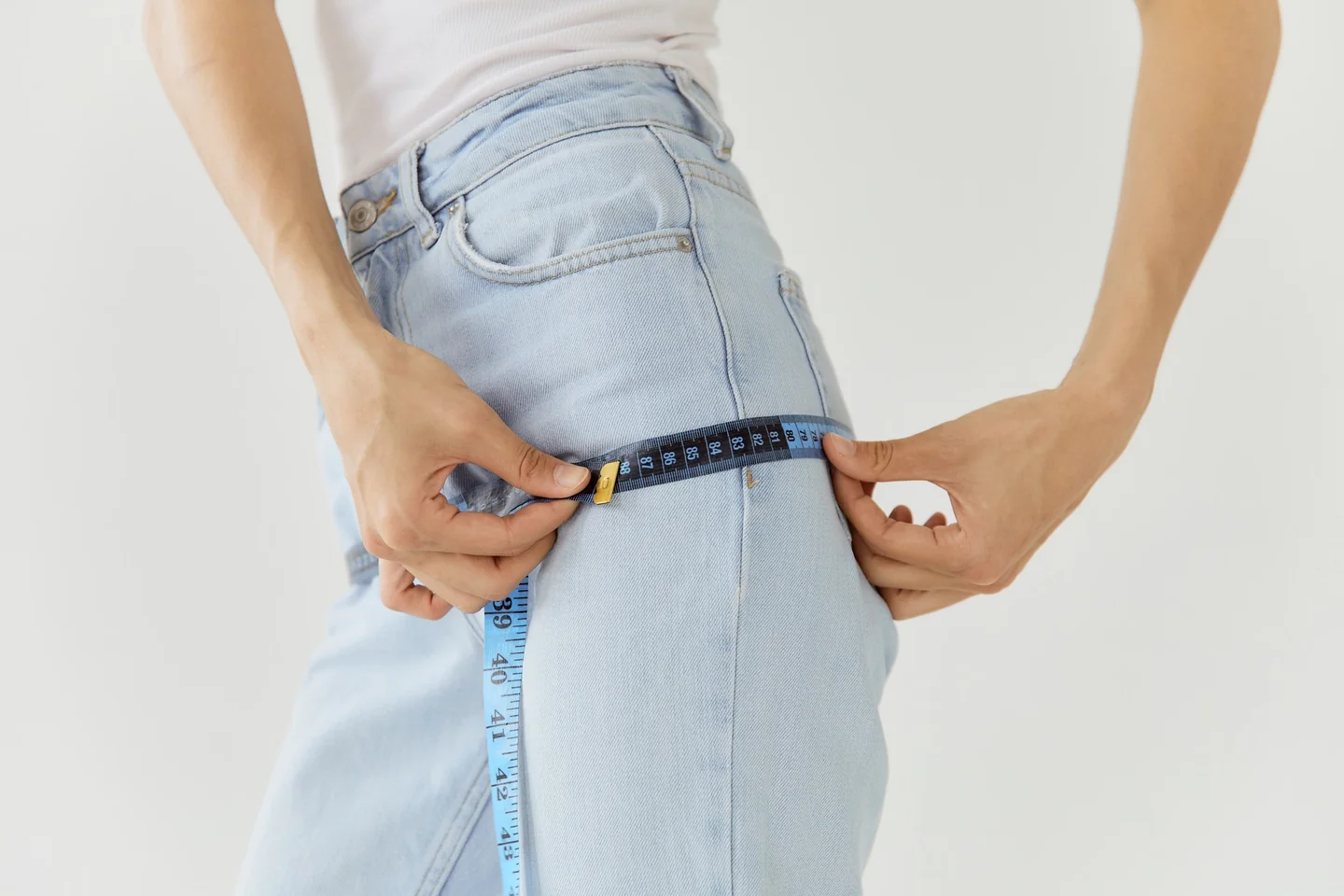
Italian size 42 does not mean the same thing in every garment or in every country. In women’s clothing it usually corresponds to a Spanish 38, while in many men’s charts the Italian 42 matches different equivalents depending on the type of garment. In footwear, moreover, Italian sizing follows another logic and is based on foot length, not body circumference.
The confusion comes from the fact that size 42 can refer to a shirt, trousers, a dress, or a shoe, and each manufacturer applies its own scale. That is why the useful equivalence is not an isolated number, but the combination of sizing system, garment type, and body measurement. The most reliable reference is still the manufacturer’s chart and, when available, the measurement in centimeters.
A size that changes meaning depending on the garment
In fashion, Italian size 42 is a moving piece within an international board. It does not have a fixed universal value because European, British, American, and Italian size scales do not always progress at the same pace. In a shirt it may correspond to a specific neck size; in trousers, to a waist; in a dress, to bust and hip measurements; and in shoes, to foot length. What looks like a fixed number actually works as an approximate translation.
In the case of women’s clothing, Italian 42 is usually placed around a Spanish 38 and a European 40, although some brands shift that correspondence half a size up or down. In men’s clothing, the charts observed show different systems: a 42 can be a Spanish waist size in trousers, but it does not always match the same reading in shirts or jackets. The logic depends on the garment pattern and on whether the brand sizes generously or narrowly.
This nuance matters more than it seems. The same number may fit well in a jacket and be too tight in trousers, just as sneakers with the right size may fail because of the last. The safe way to read sizing is not only to look at the number, but to compare it with real measurements of the chest, waist, hips, or foot.
Common equivalence of Italian size 42 in women
The most repeated correspondence for women places Italian size 42 as a Spanish 38. In international equivalence, this usually comes close to M, although it depends on the cut and the brand. In charts such as women’s clothing sizing tables, Italian 42 is associated with a waist measurement close to 66–69 cm in trousers, while in other guides the same size shifts to slightly larger ranges depending on the fabric or fit.
In women’s trousers, an Italian 42 may fit an approximate waist of 66 to 69 cm and hips around 94 to 97 cm in certain charts. In long trousers, some guides place the equivalent at a European 38 or 40, which confirms that memorizing an automatic conversion is not enough. When the fabric has stretch, the same size can allow more room; if it is rigid, the garment demands greater accuracy.
In dresses, blouses, and blazers, the reference is also usually based on the bust. The women’s equivalence charts consulted place mid-sizes such as L or M within ranges from 86/90 to 98/102 in bust measurement, depending on the system. In that map, a women’s Italian 42 usually moves between European 38 and 40, with visible variations between classic Italian brands and more generous labels.
What happens with Italian size 42 in men
In men’s clothing, Italian size 42 is not read the same way as in women’s and is usually linked to other body measurements. In shirts and jackets, the most common logic is based on neck or chest circumference. The charts observed place Spanish size 42 in men’s shirts at a neck size close to 42 cm, and in international equivalences such as XS or S depending on the garment and manufacturer. That overlap shows that the same number does not work as a literal translation between sexes or categories.
In men’s trousers, a size 42 may work as a European or Spanish reference depending on the chart, but in Italy and the UK the system changes. Competitor charts show, for example, a frequent equivalence where Spanish size 42 in trousers corresponds to a waist of about 80 to 84 cm or, in other guides, to a size 44, 46, or 48 depending on the pattern. The key word is the garment: a size 42 in trousers is not the same as a 42 in a shirt or a 42 in shoes.
In classic-cut men’s clothing, Italian brands are usually more precise with the measurement than with the letter or number. A coat may fit well in a 42 if the chest fits, but a slim blazer in the same size may be tight across the shoulders and back. The difference between snug and correct in these garments is often measured in a single centimeter.
Italian footwear: another numbering system, another reading
In shoes, Italian size 42 usually corresponds to a European 42 in many brands, but not always to the same foot length. The footwear equivalence charts consulted show that a size 42 in European numbering can be associated with about 26.24 cm of foot length in men, while in women the 42 may be around 26.37 cm. The difference is minimal, but enough to be noticeable if the shoe has a narrow last or a pronounced toe box.
In men’s shoes, the equivalences observed place European size 42 at around UK 8 and US 8.5, with a foot length of 26.24 cm. In women, size 42 can correspond to a US 10 and a UK 7.5, also with a length close to 26.37 cm. Italian footwear sizing usually stays very close to the European system, but the actual fit depends on the last, the material, and the brand.
This explains why two sneakers with the same size can feel different when tried on. One with a wider sole and flexible fabric forgives a few millimeters; another, designed for more precise support, is more demanding. In running shoes, moreover, the foot tends to expand during exertion, so the right size is not always the one you wear on the street. A small amount of space in front of the toes is usually wiser than a fit at the limit.
Measurements that really matter to get it right
The most reliable way to translate an Italian 42 is to measure the body or the foot and compare it with the brand’s chart. In clothing, the basic measurements are chest, waist, and hips. In trousers, waist and hips matter more than chest; in shirts, neck and back measurements lead; in shoes, foot length is key. A lone number without context is like reading a coordinate without a map.
The guides consulted provide specific references. In women, an Italian 42 usually comes close to a waist of 70 to 73 cm in some trousers and a hip of 98 to 101 cm in short garments or fitted styles. In other charts, the same number is linked to a 81 to 83.5 cm waist and a 103 to 104.5 cm hip, proving that sizing changes according to the garment type and manufacturer.
In footwear, the foot is measured in centimeters from the heel to the longest toe, always with body weight applied. That figure is then compared with the brand’s chart and, if there is doubt between two sizes, it is usually wise to check whether the design has a narrow toe box, low instep, or non-stretch fabric. The best size is not always the one that matches the number, but the one that respects the shape of the foot or body.
Why equivalences fail so often between brands
Sizes are not perfectly standardized, even if they share similar names. An Italian 42 from a tailoring brand may be tighter than another from casual fashion. In women’s garments, brands that work with fitted patterns tend to reduce the space slightly compared with a classic chart. In sportswear or more relaxed clothing, the same number can offer more room.
Country of origin also plays a role. Italian sizes have historically been more fitted in certain categories, especially in dress fashion, while other markets prioritize a looser fit. That mismatch is visible in jeans, slim-cut shirts, and shoes with narrow lasts. The label says one thing; the pattern says another.
The same thing happens with running shoes. Two models of the same size can behave differently because of the last, padding, or forefoot width. A runner who wears 42 in one model may need 42.5 or even 43 in another if the half size exists. The foot, like clothing, cannot be reduced to a rigid number.
Useful equivalences to understand Italian size 42 without getting lost
The most practical way to orient yourself is to convert the size by category rather than by intuition. In women, Italian 42 usually approximates a Spanish 38 and a European 40; in some trouser guides it may fall within a waist of 66 to 73 cm and hips of 94 to 101 cm; in footwear, the reading depends on foot length and usually hovers around a European 42. In men, the equivalence changes a lot between shirts, trousers, and shoes, so you need to read the specific chart for each item.
When shopping online, the difference between getting it right and returning a garment often comes down to a simple detail: measuring a similar item you already own and comparing it with the product page. That step, more than focusing only on the number, reduces mistakes with jeans, blazers, shirts, and sneakers. An Italian size is not a promise; it is a clue.
In the case of shoes for running or walking, it is also worth checking whether the manufacturer offers standard width or wide width. The size may match, but the internal space may not. Sometimes the foot fits, but does not work well; other times the sneaker seems big in hand and tight while running. The final feeling is decided in motion, not by reading the box.
Italian size 42 in the everyday practice of the runner
For anyone buying clothing or sneakers with training in mind, the equivalence of Italian size 42 should not be read as a verdict. A runner may wear Italian 42 in street clothes and need another reference in technical garments. Running T-shirts, for example, are usually cut looser in the shoulders and chest to promote ventilation, while leggings or shorts prioritize fit at the hips and waist.
In sneakers, the right margin is usually slightly larger than in dress shoes. The foot expands with heat, humidity, and repeated impact. A size that feels right in the store may end up too short after a few miles. That is why numerical correspondence between systems matters less than the real space in front of the toes, heel lockdown, and the absence of hard pressure points on the instep.
The final key is not to turn a number into dogma. Italian size 42 often corresponds to a Spanish 38 in women and to a similar measure in other scales, but each garment needs its own dictionary. Dress clothes, jeans, shirts, city shoes, and running sneakers live under similar rules, though never identical ones. Reading them with measurements, not haste, avoids the most common mistake: believing that a size is always the same thing.
A useful reference, but never separate from the pattern and the measurement
The equivalence of Italian size 42 is best understood as guidance rather than exact translation. In women, the most repeated match points to Spanish 38; in men, the number changes meaning depending on the garment; in footwear, foot length and the last are what matter. That map does not solve everything, but it does organize terrain that often seems confusing and full of exceptions.
Equivalence charts are useful because they reduce uncertainty, but the body does not fit neatly into a universal formula. Two people of the same height may need different sizes because of chest, waist, instep, or shoulder width. The right size is the one that works well with the pattern, not the one that merely copies a number from a foreign label.
That is why, when talking about an Italian 42, it makes sense to think in terms of measurements, cuts, and context. This approach avoids bad purchases and explains why the same number can work differently in a jacket, trousers, or sneakers. In fashion, as in running, the small detail makes the difference between being comfortable and moving with constant discomfort.



How to prevent thigh chafing: causes and real solutions

Women’s running windbreakers: seven jackets and how to choose

Do more workouts get rid of soreness? A guide for runners

Jaén Half Marathon 2026: Record 3,800 Runners Registered

Men’s short running tights: how to choose the right pair

World Triathlon confirms data breach involving medical data

Izan Edo targets podium at Miyazaki World Cup

María Pérez ranks ninth in World Athletics’ 2026 top ten

Dos Santos, Duplantis and Sawe: World Athlete of the Year finalists

San Silvestre Vallecana 2026: 42,000 places, prices and start times

 Races3 months ago
Valencia Half Marathon 2027: date and registration

 Races3 months ago
Valencia Marathon 2026: entry, ballot and course

 Reviews and Comparisons4 months ago
Asics Gel-Roadmiles 3 for men: review and current price

 Reviews and Comparisons4 months ago
Asics Gel Sonoma 8 Gore-Tex: complete analysis for trail and rain

 Sneakers3 months ago
Saucony Endorphin Pro 4: full review and verdict

 News5 months ago
Strava API 2026: what changes for clubs, challenges and runner apps?

 Reviews and Comparisons5 months ago
Nike Alphafly 3: opinions, sensations, and real key points

 Reviews and Comparisons4 months ago
Under Armour running shoes review 2025-2026: models and key features

 Sports Equipment4 months ago
Shoe sizes in cm: a clear guide to getting the right fit for your footwear

 Sneakers3 months ago
Skechers GO RUN Consistent 2.0 analysis: comfort and limits

 News5 months ago
Valencia Marathon 2026 route: key tips to train and run better

 Sneakers4 months ago
Adidas Adizero Boston 13 for men: review and verdict