Reviews and Comparisons
Moab Speed 2 Gore-Tex for men: review and price
Merrell signs off on a lightweight, waterproof boot with good grip, generous cushioning, and a roomy fit for demanding routes.

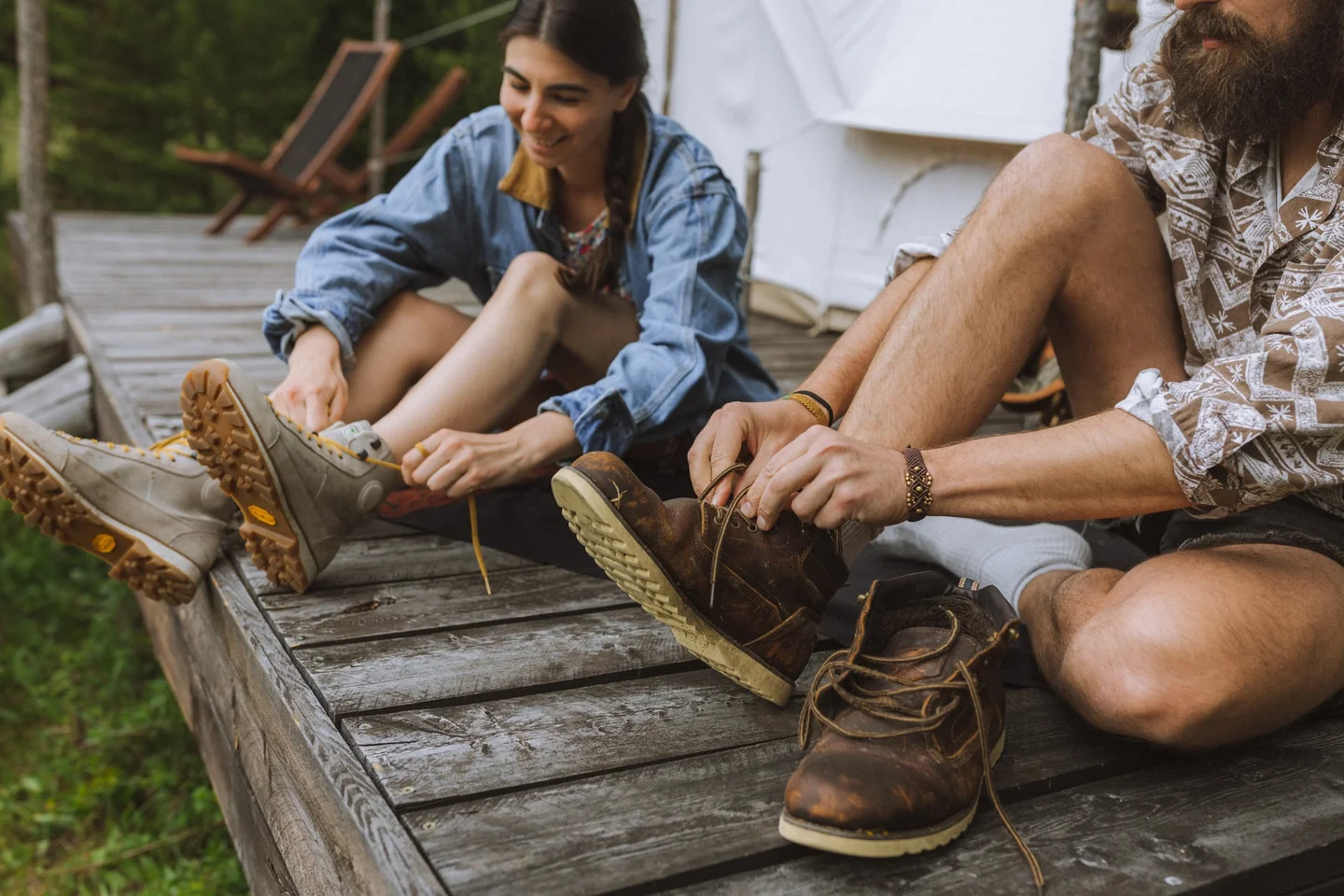
The Merrell Moab Speed 2 GORE-TEX for men has established itself as one of the most interesting options for hiking and long walks for a simple reason: it blends the heritage of the Moab family with a lighter, more flexible construction that is better prepared for bad weather. It is not a classic, stiff mountain boot, but neither is it an urban shoe with technical ambitions; it sits right in that spot many hikers look for when they want to move with ease without giving up protection.
Its official price is set at 170 euros on the Merrell website, a figure that places it in the mid-to-high range of waterproof trekking footwear. In return, it offers a GORE-TEX membrane, a Vibram TC5+ outsole, a FloatPro midsole with 30% more foam underfoot, and a set of reinforcements designed for changing terrain, mud, rain, and loose-stone trails. It is a very specific proposition: long-distance comfort, moderate stability, and water resistance without entering the territory of heavy winter boots.
An evolution that prioritizes stride and grip
The second generation of the Moab Speed does not aim to impress with bulk, but with balance. Merrell takes the base of its best-selling saga and reinterprets it with an aesthetic closer to agile trail footwear, but with enough structure to handle demanding routes. The result is noticeable in the walking feel: the foot is not enclosed like it is in a rigid boot, and the stride retains a certain flow even when the path steepens or breaks apart under the stones.
The Vibram TC5+ outsole is one of its key features. The brand designed it exclusively for Merrell, and here it appears with 4 mm lugs, intended to provide grip on dirt, rock, wet trails, and terrain where mud tends to stick to the base. It is not an aggressive mountaineering outsole, but it is a very capable solution for walking many hours with reasonable confidence. In practice, that tread helps plant each step on descents and build confidence when the ground becomes uneven.
The midsole work also matters. FloatPro foam provides softer cushioning than many traditional boots, and the increase in foam compared with the previous version is noticeable in a less harsh underfoot feel. That does not turn the shoe into a mountain sofa, but it does reduce fatigue on long days. For those logging miles on forest tracks, mid-mountain trails, or weekend treks, that difference ends up mattering more than a flashy spec sheet.
Real waterproofing without sacrificing too much breathability
The standout feature of this version is the GORE-TEX membrane, a benchmark standard when you want waterproofing with some ability to release internal vapor. In a country like Spain, where a route can begin in dry cold, continue under persistent drizzle, and finish in sunshine, that balance is useful. It does not prevent heat, because no sealed system can do that completely, but it does reduce the risk of ending up with soaked feet from puddles, wet grass, or sudden rain.
Merrell has also improved breathability by drawing on learnings from its trail running line. That results in an interior that feels less stifling than many classic waterproof boots. The difference matters because the user of this model often walks quickly, changes pace, and moves on routes where ventilation helps maintain comfort. On mild days it will still be more closed-in than a mesh shoe, of course, but it does not give the impression of a sealed suit of armor that so many runners and hikers try to avoid.
In the upper, the vamp combines ripstop nylon and TPU, two materials that point to a clear idea: durability without adding too much weight. Ripstop better resists small tears, while TPU adds structure and protection in exposed areas. Added to that are the 100% recycled laces and reinforcements, a detail that does not immediately change the wearing experience, but does reflect an increasingly common trend in outdoor footwear: reducing virgin materials without giving up performance.
Walking comfort: foam, support, and details you can feel
Comfort in the mountains rarely depends on a single element. Several are involved here. The padded collar prevents ankle rubbing, the gusseted tongue helps keep debris out, and the overall last keeps the foot held securely without excessive pressure. These are subtle, almost invisible design decisions, but they make a difference when the route gets longer and the body starts registering every poorly finished seam as if it were a small stone inside the sock.
The FlexPlate structure adds torsional rigidity and forefoot stability. Plainly put: it helps the shoe avoid twisting too much when you step on broken ground or land at awkward angles. That stiffness is not total, nor does it need to be for this use case, but it is enough to create a sense of control that many users appreciate on rocky trails or in sections where the foot must constantly correct its path.
Another plus is the double loop at the heel and tongue, designed to make the shoe easier to put on and compatible with carabiners. It is not a detail that changes day-to-day use, but it speaks to a product conceived for a real outdoor environment. The abrasion-resistant synthetic toe and heel add protection against impacts with rock, branches, or natural steps in the terrain. The sum of all these parts explains why the Moab Speed 2 GORE-TEX feels like a purpose-built shoe, not just a reinforced sneaker.
What kind of routes it fits best
Merrell positions it for moderate-difficulty hiking, and that description is quite accurate. It performs well on routes with reasonable elevation gain, compact dirt paths, loose-stone trails, and sections where the terrain changes pace or incline intermittently. It is not meant for heavy loads or technical alpine approaches, but it is well suited to long, gentle mountain days, weekend getaways, and walks that mix speed with stability.
In practice, that makes it interesting for very different profiles. Runners coming from trail running may recognize a more agile feel than in a heavy boot, while hikers will appreciate the extra protection and dry feet on unpredictable days. It also works well for activities like the Camino de Santiago, where daily mileage, occasional asphalt, and changing weather demand footwear that does not fall apart by the third day.
The Vibram outsole and structural reinforcement make it capable on uneven ground, and the waterproofing gives it a clear advantage over ventilated or summer versions. That said, in the middle of July heat in very humid areas or in intense heat with little elevation change, its closed nature can feel warmer than desirable. In that case, it helps to understand that its main virtue is not freshness, but the ability to combine protection, grip, and a certain agility in a single package.
Sizes, width, and fit: what to know before buying
The available size range on the official website runs from 40 to 50, with half sizes in between and several color versions. The standard width is M, equivalent to medium, and there is also a wide-width variant in some references. That is no small detail, because the fit of a hiking shoe often shapes the experience more than the brand or color. A slightly wider foot may appreciate that extra room, especially on long routes, when natural swelling from effort starts to show.
The manufacturer’s size guide places, for example, European size 43 at UK 8.5 and US 9, 44 at UK 9.5 and US 10, and 46 at UK 11 and US 11.5. These equivalences are useful for avoiding mistakes, especially when comparing with other brands that do not always calibrate actual length the same way. In a hiking boot, a few millimeters can translate into bruised toenails on descents or too much heel play.
Merrell also states a 30-day size guarantee for returns as long as the product is unused, unwashed, and in perfect condition. In its retail ecosystem, returns are also free for 30 days from purchase, and free shipping applies to orders over 75 euros. These are relevant purchasing conditions for consumers, although they do not alter the product itself. Even so, they help explain why this range tends to have a strong presence in the official channel and among sports retailers.
Weight, drop, and feel on the trail
The official spec lists a weight of 365 grams per shoe, while some retailer listings round the unit to around 400 grams per half pair. The variation is normal depending on how it is measured and the reference size, but in any case this is relatively light footwear for what it offers. It does not approach minimalism, but it also does not fall into the heaviness of a classic boot with a high shaft and more robust construction.
The 10 mm drop and the 34-24 mm stack height help place it in a familiar range for many hikers. That difference between heel and forefoot favors a comfortable transition for those coming from traditional shoes and who do not want a sudden shift toward lower-profile footwear. On descents, that slightly elevated heel also adds a bit of familiarity, especially for users who do not want to give up a more pronounced cushioning feel under the rearfoot.
Usage tests and product references agree on one thing: the boot performs best when the terrain is punishing, but without requiring the user to have highly refined technique. It is not trying to master the mountain as a millimeter-precise tool, but to offer stable, secure, and relatively lightweight movement. That combination explains part of its appeal in today’s market, where many walkers have started to flee bulky boots but still do not want to step down in protection.
Comparison with other Moab models and direct rivals
Within Merrell’s own family, the Moab Speed 2 GORE-TEX occupies a different position from the Moab 3 GORE-TEX. The latter stays closer to traditional trekking philosophy, with a somewhat more classic character and a very broad range of uses. The Moab Speed, by contrast, takes the saga’s spirit and makes it lighter, sleeker, and more dynamic. Those who prioritize pure ruggedness usually look first at the Moab 3; those seeking a livelier stride usually lean toward the Speed.
Against rivals from Salomon, Columbia, or The North Face, the Merrell competes from a very recognizable balance: it is not the most aggressive in traction nor the softest in cushioning, but it is one of the most well-rounded for mixed use. Its strength lies in the sum of small, well-aligned decisions. The Vibram grip, the GORE-TEX membrane, the FloatPro foam, and the FlexPlate structure form a coherent package. There is no revolutionary element, but there is a mature reading of what many hikers actually use day to day.
The official price of 170 euros also places it in a bracket where buyers expect more than a waterproof label. And it delivers: recycled materials, a last available in multiple widths, and a technical approach that goes beyond marketing. During discount periods, some retailers have priced it below that figure, although the price can vary depending on stock, color, and size. The underlying value, more than the exact figure, lies in its balance of performance and versatility.
The role of this boot in a modern mountain wardrobe
The hiking market has changed. For years, the idea dominated that more weight meant more protection, but technical footwear has since refined that logic. Today many people want to move with a more natural stride, save energy, and reduce the feeling of carrying a block on each foot. The Moab Speed 2 GORE-TEX responds exactly to that outdoor cultural shift: less burden, more efficiency, without abandoning the basic safety that the mountains demand.
That explains why it works well as a main shoe for those who alternate medium-distance routes, countryside outings, and occasional hiking trips. It can also be a solid choice for anyone who needs a waterproof boot that does not look like a heavy boot. In unstable climates, with wet ravines, mud, or waterlogged paths, that versatility becomes very practical. And on outings with a light backpack, its restrained weight makes it more pleasant than other models in the same segment.
In the Valencian Community, where the terrain can quickly shift from a dry track to a damp trail or a rocky, shaded section with moisture, a shoe of this profile makes sense. It does not replace a high-mountain boot or a winter boot, but it does cover a large part of the real route calendar with confidence. That is perhaps its greatest virtue: it does not promise everything, but it solves a lot with a very natural and fairly effective feel.
A model designed to last beyond the first impression
The construction choices point to reasonable durability. The abrasion-resistant toe and heel, the use of TPU, the recycled reinforcements, and the Vibram outsole suggest a competent lifespan for frequent use. In this type of footwear, wear depends greatly on the terrain and on how each user walks, but the material foundation is there to withstand repeated sessions without falling apart at the first hurdle.
It also helps that Merrell has opted for a design that is not overly specialized. The more extreme a product is, the more likely it is to age poorly outside its niche. The Moab Speed 2 GORE-TEX, by contrast, can work on trails, tracks, and even in urban winter settings without feeling out of place. That breadth of use explains part of the interest it generates among those who do not want three separate pairs for each season.
Its combination of waterproofing, grip, and comfort places it in a very specific market category, one of the most hotly contested, precisely because it answers a daily need rather than a technical whim. It is not designed to sit on a table and be admired, but to handle mud, stones, light rain, and hours of walking. And at that, which is what really matters in the mountains, it performs very well.
Merrell’s commitment to less rigid, more livable performance
The Moab Speed 2 GORE-TEX captures well the direction part of the outdoor footwear world is taking: more lightness, a more rolling feel, and less unnecessary stiffness. The mountain is still the same, but the way of approaching it changes. Users are no longer looking only for protection; they also want the foot to move with some freedom, for the shoe not to sap energy with each step, and for comfort not to be an abstract promise but something you can feel from the very first kilometer.
That is why this model stands out so much in an editorial space like running and sports gear. Even though it is not a running shoe, it shares an important part of trail philosophy: supporting movement, not hindering it. And although its name points back to the Moab saga, here there is less nostalgia and more adaptation to the current demands of light hiking. It is a boot for walking fast, with dry feet and the terrain under control, which is no small thing.
In practice, that makes it a very solid option for anyone who values comfort without giving up protection from rain and rough ground. It does not aim to be the toughest boot or the softest, but one of the most balanced in its category. And in a market saturated with adjectives, that technical restraint ends up carrying much more weight than any flashy gimmick.
You may also like: Merrell Moab Speed 2 Gore-Tex: key features, price and specifications and Merrell Moab Speed 2 Gore-Tex men’s: analysis and key usage tips.
Este artículo contiene enlaces de afiliado: si compras a través de ellos, se genera una pequeña comisión sin coste adicional para ti. Más información.



How to prevent thigh chafing: causes and real solutions

Women’s running windbreakers: seven jackets and how to choose

Do more workouts get rid of soreness? A guide for runners

Jaén Half Marathon 2026: Record 3,800 Runners Registered

Men’s short running tights: how to choose the right pair

World Triathlon confirms data breach involving medical data

Izan Edo targets podium at Miyazaki World Cup

María Pérez ranks ninth in World Athletics’ 2026 top ten

Dos Santos, Duplantis and Sawe: World Athlete of the Year finalists

San Silvestre Vallecana 2026: 42,000 places, prices and start times

 Races3 months ago
Valencia Half Marathon 2027: date and registration

 Races3 months ago
Valencia Marathon 2026: entry, ballot and course

 Reviews and Comparisons4 months ago
Asics Gel-Roadmiles 3 for men: review and current price

 Reviews and Comparisons4 months ago
Asics Gel Sonoma 8 Gore-Tex: complete analysis for trail and rain

 Sneakers3 months ago
Saucony Endorphin Pro 4: full review and verdict

 News5 months ago
Strava API 2026: what changes for clubs, challenges and runner apps?

 Reviews and Comparisons5 months ago
Nike Alphafly 3: opinions, sensations, and real key points

 Reviews and Comparisons4 months ago
Under Armour running shoes review 2025-2026: models and key features

 Sports Equipment4 months ago
Shoe sizes in cm: a clear guide to getting the right fit for your footwear

 Sneakers3 months ago
Skechers GO RUN Consistent 2.0 analysis: comfort and limits

 News5 months ago
Valencia Marathon 2026 route: key tips to train and run better

 Sneakers4 months ago
Adidas Adizero Boston 13 for men: review and verdict