Reviews and Comparisons
Salewa Alp Trainer 2 Mid GTX: complete analysis and price
Performance, fit, technology, and price of the Salewa Alp Trainer 2 Mid GTX in a clear review for mountain and trekking.

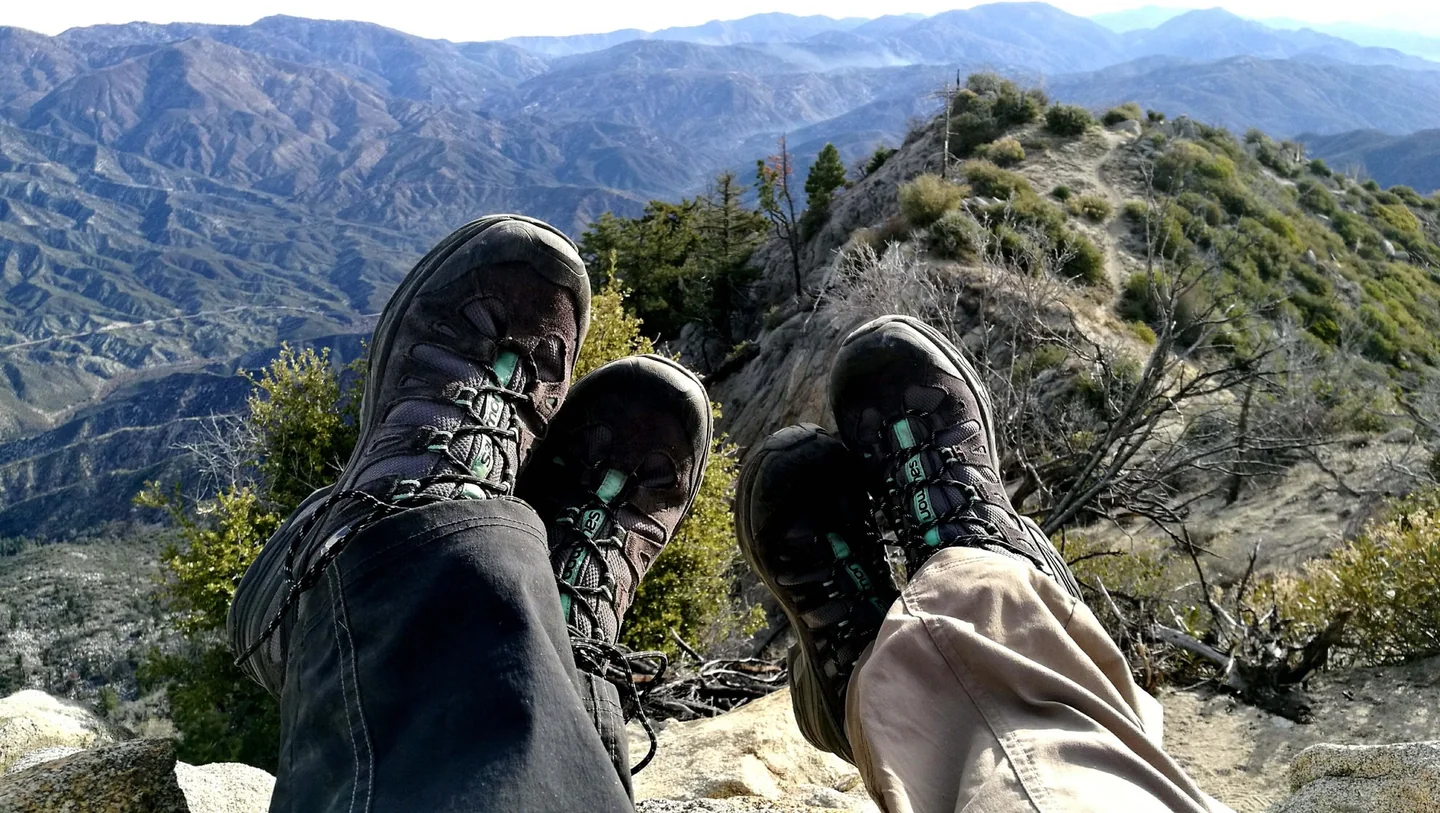
The Salewa Alp Trainer 2 Mid GTX has earned a place of its own among trekking boots thanks to a very recognizable formula: split suede leather, a waterproof membrane, mid-cut stability, and a sole designed for uneven terrain. It is neither a hard mountaineering boot nor a light fast-hiking shoe; it sits in a very sensible middle ground for mountain routes, rocky trails, and outings with changing weather. Its purpose is clear at first glance: protection and grip before extreme lightness.
Its range of use works well for day hikes, moderate treks, and walks with a backpack where the terrain mixes loose stone, mud, roots, and stretches of path. The combination of GORE-TEX Extended Comfort, perimeter reinforcements, and the Vibram Alpine Hiking outsole makes for a reliable shoe for anyone looking for security without moving up to a stiff boot. In today’s market, that balance explains much of its appeal.
A design made for real mountains, not for the photo
The model’s first virtue lies in its construction. The 1.4 to 1.6 mm split suede upper provides abrasion resistance, a very welcome feeling of solidity, and a classic look that ages better than many synthetic materials. On top of that base, a flexible fabric is used in strategic areas, so the overall build is not as bulky as other mid-cut boots. The result is a boot with presence, yet still manageable on the move.
The rubber toe cap and the perimeter rand around the structure protect against edges, rocks, and repeated impacts. In the mountains, that detail matters more than it seems: wear comes not only from moisture, but from the mechanical punishment of every step. On rocky trails or scree slopes, that lower armor acts like a bumper that extends the shoe’s service life and reduces the feeling of foot vulnerability.
The mid-cut also helps, rising enough to support the ankle without enclosing it. It is not a high boot in the usual sense, but it does offer useful containment on long descents and broken terrain. For many hikers, that middle point is the most balanced: it protects more than a shoe and demands less than a classic mountain boot.
Waterproofing and breathability: the balance that defines its use
The GORE-TEX Extended Comfort membrane is one of the model’s key features. Its function is easy to explain and hard to replace well: keep water out while helping to wick away moisture generated by effort. On routes with drizzle, wet grass, or mud, that behavior makes the difference between finishing with warm feet or suffering through an uncomfortable day from kilometer two onward.
That said, it is worth noting that no membrane magically makes a boot dry inside. If water rises above the cuff, it comes in from the top; if the heat is intense, breathability improves but sweat build-up does not disappear. The real value of this kind of membrane is to widen the usable range in variable climates, exactly where these boots are used most: autumn, spring, gentle alpine treks, and weekend getaways with changing weather.
In the case of the Alp Trainer 2 Mid GTX, the outer fabric and overall construction help ventilation avoid being as penalized as in some more closed boots. It is still more robust footwear than a trail-running shoe, but its thermal behavior is reasonable for a boot in this segment. That combination explains why it appeals so much to those who want one pair for much of the year.
Fit, stability, and the importance of keeping the foot from moving around
For years, Salewa has insisted on a very specific concept: the foot should be held securely, but without a feeling of constriction. In this model, the 3F system connects the instep, sole, and heel to improve lateral support and provide more security on sloped footholds. Put into real-world use: the ankle moves naturally, but the shoe does not fall apart when the terrain forces you to turn, brake, or correct your step.
Added to that is the Flex Collar, a rear collar that is kinder to ankle movement on descents and repeated flexing. It sounds like a minor detail until you reach long downhill sections, where friction and poorly managed stiffness punish the tendon and multiply fatigue. Here the behavior is more forgiving, without losing the sense of support expected from a mid-cut boot.
The MFF+ footbed adds another interesting point. It is not a decorative piece, but a layer-based system that allows the internal volume to be adjusted. That helps fine-tune the fit if the foot is narrower or if a bit more room is needed for thick socks. In practice, it is a way to refine the fit without relying only on raw sizing, something useful in footwear meant to serve both light hiking and longer routes.
Vibram outsole and traction on changing terrain
The Vibram Alpine Hiking outsole is probably the model’s most visible technical argument. Its tread combines well-spaced lugs, uphill traction zones, and areas designed to improve braking on descents. On wet ground, in mud, or on dirty rock, that geometry adds a boost of confidence that is especially noticeable when the trail stops being forgiving.
We are not talking about a climbing sole or an option for very technical via ferratas. Its natural terrain is mountain hiking, with stable support, proper grip, and smooth walking. It is a sole designed to handle well the 80% of situations a regular hiker encounters in mid and high mountains. That is where its value lies: it does not promise the impossible, but it does provide a serious response when the ground becomes unpredictable.
On long descents, the tread and rubber compound help control braking. On climbs, the toe offers useful support on slightly steeper steps or when you need to find small ledges. The overall feeling is one of progressive, not aggressive, security. It does not aim to bite into the terrain like a highly specialized approach rubber, but it does maintain enough traction for a wide variety of routes.
Weight, walking feel, and who it suits best
At an average of around 1104 grams per pair in the reference sheet, this boot is not playing in the ultra-lightweight league. And yet that figure should not automatically be seen as a disadvantage. In the mountains, weight is offset when footwear protects, stabilizes, and reduces fatigue from poor foot placement. A slightly heavier shoe can be more effective if the terrain demands more precision than speed.
The walking feel is that of a boot that follows movement without becoming soft. Cushioning is present, but it does not stand out like in a trail shoe. That middle-ground character makes it especially logical for hikers who prioritize a stable ground feel and a secure base underfoot. Anyone coming from a more athletic shoe will notice more structure; anyone who has spent years in classic boots will probably perceive more flexibility and less bulkiness.
It is especially well suited to people who do medium- and long-distance mountain routes, outings with a moderate backpack, and trips where the weather can turn. It also works for users who move across mixed terrain in different seasons and prefer one versatile pair instead of accumulating several highly specialized models. It is not the natural choice for trail running or technical mountaineering, but it is for everyday demanding mountain use.
Price, variants, and position compared with other Salewa models
In the references consulted, the price has ranged around 666.66 euros in one offer and 799 euros in another, with regular prices reaching 869.91 euros or 1,069.99 euros depending on the retailer and variant. That range makes it clear the model sits in the mid-high bracket of mountain footwear. It is not an entry-level product, but a proposal with materials and technology that justify part of the cost.
Color variations also affect the product’s presence, although they do not change its technical approach. The black version is more understated and easier to match with mountain clothing; other combinations, such as wallnut fluo orange or dark denim/fluo orange, add more visibility and a sportier touch. In this type of footwear, color is secondary to fit, durability, and grip, but it remains an important choice factor for many users.
Compared with other models from the same brand, the Alp Trainer 2 Mid GTX occupies a very specific space. It is less technical and more forgiving than a series designed for approach or via ferrata use, and more structured than a lightweight trekking shoe. That middle position makes it a sensible choice for anyone who wants protection without the burden of a rigid boot, especially on routes where the foot needs stability but not that much specialization.
What it brings on routes, treks, and mountain getaways
On a hiking day with elevation gain, the boot’s behavior shows up in details that at first seem invisible: how the heel lands on descents, how much the last gives by the end of the day, whether the toe cap suffers from hitting a rock, or whether the interior remains comfortable after several hours. In all those small tests, the Salewa Alp Trainer 2 Mid GTX responds with a conservative and effective logic.
Its profile is especially interesting on routes where the terrain changes constantly. A clean ascent on a track, a stretch of loose stone, a descent through damp woodland, and a section of broken rock do not call for the same footwear as a walk on a uniform path. Here, the mix of stability, protection, and a grippy outsole makes sense because it reduces the need to change boots depending on the day.
It also adds something on mountain getaways with unsettled weather. The membrane does not replace smart layering, but it does add a margin when unexpected rain falls or the trail stays damp for hours. In that sense, the model acts more like a walking insurance policy than a luxury. In the mountains, that usually counts for a lot.
Size, real-world use, and the small details that matter
Fit is one of the points that most affects satisfaction with any mountain shoe, and it matters even more here because of the model’s construction. The references analyzed show broad sizing, from numbers below 40 to sizes close to 48, with a footbed length of 28.5 cm in the size 44 mentioned in one commercial sheet. That kind of data helps ground the purchase, but it does not replace trying them on with the socks that will be used on the route.
Trekking boots rarely forgive a choice that is too tight. During a long climb, the foot expands; on descents, it needs room so it does not hit the toe cap. That is why a last that is too snug eventually takes its toll. In this model, the possibility of adjusting the internal volume via the footbed and the extended lacing loop works in favor of a finer fit.
Another relevant detail is the rubber mudguard that surrounds the base. It not only protects against impacts, but also makes cleaning easier after a muddy outing. The mountains leave marks, of course, but a boot with this kind of reinforcement usually ages better than one that is too textile-heavy or lacks front protection. It is a small advantage in appearance, a big one over the course of use.
A mountain boot with a very clear usage logic
The appeal of the Salewa Alp Trainer 2 Mid GTX is not in selling a grandiose idea of adventure, but in solving well the kind of outing most serious hikers actually do. Mid-mountain terrain, sudden weather changes, uneven ground, long days, and the need for confidence underfoot. In that scenario, its proposal is coherent from top to bottom.
There are lighter boots, stiffer boots, and more technical boots. This one plays a different card: well-measured balance. It offers waterproofing, stability, and traction without making the stride overly rigid, and adds a durable build suited to those who prefer investing in solid footwear rather than replacing it every season. It is not a piece for every taste, but it is for a very realistic kind of use.
In a market saturated with models that promise versatility without being very specific, this boot stands out precisely for the opposite reason: it clearly defines its limits. And that, far from reducing its value, makes it more trustworthy. The mountains usually reward what does not try to disguise itself. Here the formula is simple, visible, and fairly honest: protected foot, secure outsole, and a cuff that supports without imposing. That combination still makes a lot of sense in trekking.
You may also like: Salewa Alp Trainer 2 Mid Gore-Tex: complete guide and analysis.
Este artículo contiene enlaces de afiliado: si compras a través de ellos, se genera una pequeña comisión sin coste adicional para ti. Más información.



How to prevent thigh chafing: causes and real solutions

Women’s running windbreakers: seven jackets and how to choose

Do more workouts get rid of soreness? A guide for runners

Jaén Half Marathon 2026: Record 3,800 Runners Registered

Men’s short running tights: how to choose the right pair

World Triathlon confirms data breach involving medical data

Izan Edo targets podium at Miyazaki World Cup

María Pérez ranks ninth in World Athletics’ 2026 top ten

Dos Santos, Duplantis and Sawe: World Athlete of the Year finalists

San Silvestre Vallecana 2026: 42,000 places, prices and start times

 Races3 months ago
Valencia Half Marathon 2027: date and registration

 Reviews and Comparisons4 months ago
Asics Gel-Roadmiles 3 for men: review and current price

 Races3 months ago
Valencia Marathon 2026: entry, ballot and course

 Reviews and Comparisons4 months ago
Asics Gel Sonoma 8 Gore-Tex: complete analysis for trail and rain

 Sneakers3 months ago
Saucony Endorphin Pro 4: full review and verdict

 News5 months ago
Strava API 2026: what changes for clubs, challenges and runner apps?

 Reviews and Comparisons5 months ago
Nike Alphafly 3: opinions, sensations, and real key points

 Reviews and Comparisons4 months ago
Under Armour running shoes review 2025-2026: models and key features

 Sports Equipment4 months ago
Shoe sizes in cm: a clear guide to getting the right fit for your footwear

 Sneakers3 months ago
Skechers GO RUN Consistent 2.0 analysis: comfort and limits

 News5 months ago
Valencia Marathon 2026 route: key tips to train and run better

 Sneakers4 months ago
Adidas Adizero Boston 13 for men: review and verdict