Reviews and Comparisons
Men’s shoe sizes US to Spain: equivalences and measurements
Equivalences, foot measurements, and tips to avoid mistakes when buying men’s shoes between the U.S. and Spain.

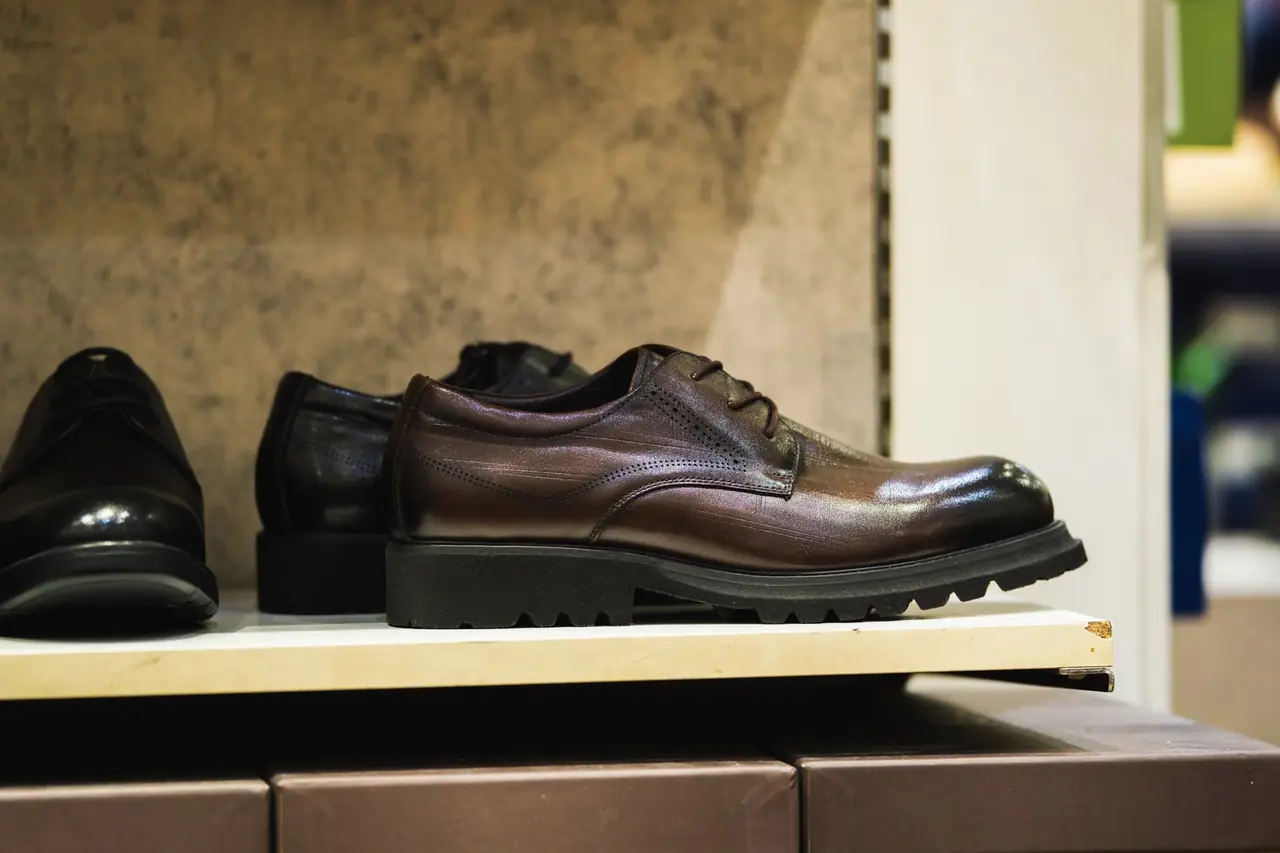
The conversion between men’s shoe sizes in the U.S. and Spain remains one of the most repeated queries in online shopping because the same number can hide different fits depending on the brand, the last, and the sizing system. In practice, a European 42 does not always behave like a U.S. 9, and that difference, small on paper, is enough for a shoe to rub, slip, or pinch from the very first step.
The useful fact is this: in men’s sizing, the U.S. usually runs about one size below Spain in the mid range, although the exact equivalence depends on the length of the foot in centimeters. That is why the most reliable reference is not the isolated number, but the actual foot measurement, the manufacturer’s chart, and the allowance each model needs for a comfortable fit while walking.
The foot measurement matters more than the number
In men’s footwear, the logic of sizes seems simple until different systems are compared. Spain and much of Europe work with a scale linked to the length of the foot or the last, while the United States uses its own numbering that does not directly match the European one. The result is a kind of imperfect translation in which the same foot can fall between two numbers without either one being exactly wrong.
The most solid way to clear up any doubts starts at home, with a sheet of paper on the floor, a straight pencil, and a ruler. The foot should be placed barefoot, with the heel against a wall, and it is advisable to mark the point of the longest toe. The useful measurement is that of the larger foot, because just a few millimeters of difference between one foot and the other can change the correct size. Measuring in the afternoon also helps, since the foot is usually slightly more expanded than in the morning.
For runners and people who wear sneakers for many hours, this detail matters even more. A foot slightly swollen from heat, activity, or simply the passage of the day can turn an apparently correct size into an uncomfortable choice. That is why, in the world of running, where the forefoot needs some room to work, the actual foot length and the space in the toe box count as much as the number on the box.
How the equivalences between Spain and the United States are understood
The most common men’s equivalence places a European 42 at around a U.S. 9, a 43 at around a 9.5 or 10, and a 44 close to a 10 or 10.5, depending on the brand. It is not a fixed mathematical rule, but it is a reasonable guide for getting oriented when the store does not offer its own converter. At the other end, a European 39 usually sits close to a U.S. 6, and a 40 around a 7.
That margin of variation explains why it is not wise to buy based only on intuition. The U.S. system also allows small differences between manufacturers and between dress, casual, or athletic models. Sneakers usually tolerate a millimeter-level fit better than rigid shoes, while a leather shoe or a low-boot design punishes any sizing error more, especially in the instep and toe box.
In practical terms, the conversion should be read as a compass, not as a verdict. If the foot measures 27 centimeters, it is common for the European reference to be around 42 and the U.S. one close to 9. If the measurement rises to 27.5 or 28 centimeters, the reference usually moves to 42.5 or 43 in Europe and to 9.5 or 10 in the United States. The length in centimeters is the most stable piece of the whole equation.
Guideline chart for men: centimeters, Spain, and the U.S.
Charts help ground the conversion, as long as they are used as a guide and not as an absolute truth. In men’s sizing, the distance between one number and the next is usually around half a centimeter or a little less, but each manufacturer may adjust the last differently. That is why two 42s do not feel the same if they come from different brands.
As a general reference, a 25-centimeter foot usually comes close to a European 39 or 40 and a U.S. 6. With 26 centimeters, the usual range shifts toward a 40.5 or 41 in Spain and a 7 or 7.5 in the United States. At 27 centimeters, the most common equivalence is a European 42 and a U.S. 8.5 or 9, while 28 centimeters usually already leads to a European 43 or 44 and a U.S. 9.5 or 10.
This scale shows a very simple reality: one centimeter can be a lifetime in footwear. That is not an exaggeration. In a narrow shoe, that margin decides whether the big toe stays free or hits the toe box; in a training shoe, it determines whether the foot can expand without friction on long runs. That is why charts should not be used as a quick trick, but as contextual reading.
Why shoe sizes vary so much between brands
The numbering is not as standardized as many buyers imagine. Two brands can use the same number and still build the shoe with different lasts, materials, and instep heights. Leather gives with use, textile mesh adapts sooner, and rigid compounds keep their shape more stubbornly. The raw material changes the real feel of the size almost as much as the numbering system.
Design also plays a role. A dress shoe with a tapered toe can seem smaller than a sports sneaker of the same number even if both measure the same inside. And vice versa: a wide model can leave too much lateral room and give the impression that it runs large. In men’s footwear, where the foot often has more volume in the instep and forefoot, that difference is noticed quickly when laces are tightened or a buckle is fastened.
Another nuance is worth adding: U.S. brands do not always translate their numbering to the European market in the same way. Some work with very close equivalents, while others shift half a size up or down to better fit their audience. The manufacturer’s chart remains the most reliable source, especially when the model is sold in different countries and the product page includes centimeters, width, or fit recommendations.
The correct toe-box room and the role of width
Choosing well is not just about avoiding a shoe that is too short. Width, internal height, and front space influence as much as length. A foot that fits just right in length but is compressed at the sides ends up causing rubbing, black toenails, or a constant feeling of pressure in the metatarsal area. The correct size can still fail if the last does not respect the width of the foot.
In men’s footwear, some U.S. brands offer different widths, from narrow models to wide or extra-wide versions. That scale does not always appear in European stores, but it can make a huge difference for bulky feet or high insteps. In practice, a properly sized shoe leaves about one centimeter in front of the longest toe, enough for the foot to move forward while walking without hitting the toe box.
In running shoes, that margin can be even more relevant because the foot moves forward with every stride. A closure that is too short causes repeated pressure, and a model that is too loose increases friction. The ideal feel is firm, never crushed: the heel held securely, the toes with room, and the midfoot stable without being squeezed like a vise.
Buying athletic footwear between the U.S. and Spain without losing the reference
In running, the conversion between U.S. and European sizing deserves extra caution. Sneakers are usually bought with a bit of extra room to account for foot expansion during exercise, but not so much that the foot slides inside. That is why a runner who normally wears a 42 in Spain should not automatically assume that their U.S. size will always be exactly a 9 in every brand.
Some models fit a little shorter, others longer, and others have a very tight toe box. This diversity affects especially runners with wide feet or very long toes, who quickly notice if the conversion has been made only with a generic chart. In sneakers, half a size can completely change the experience, especially on runs longer than an hour or in hot-weather training.
The smartest advice is to compare three pieces of data at once: your usual European size, the U.S. equivalence provided by the brand, and your foot length in centimeters. When the three match, the margin for error drops a lot. When only one matches, the purchase becomes a gamble. In sports gear, that difference is not minor, because a bad fit ends up affecting your stride, comfort, and even how often you use the pair.
Common mistakes when converting men’s sizes
One of the most common mistakes is believing that all models from the same brand follow the same sizing feel. That is not the case. Training shoes can feel roomier than the brand’s racing models, and leather shoes may need more initial space because the material gives over time. The number gives guidance, but the model is what really matters.
Another common error is measuring the foot in a hurry or measuring only one side. The dominant foot is usually slightly larger, and choosing the size of the smaller foot often causes pressure problems in the longer foot. People also tend to measure in the morning, when the foot is less expanded, and then the shoe feels tight by the end of the day. The margin that seems excessive at first can become the only reasonable space after walking for several hours.
There is also confusion around the European reference number. In some stores they talk about Spanish sizes, in others about EU sizes, and sometimes they mix scales that are practically very close but not identical. The safest reading always starts with the actual centimeter measurement, because that data does not depend on language, country, or the commercial translation each website uses.
A simple way to read a chart without getting lost
A useful chart should not be a maze of columns, but a bridge between systems. The correct way to read it begins with the data you already know, usually your habitual size in Spain or your foot length in centimeters. From there, look for the U.S. equivalent, paying special attention to half sizes if the model allows them. Accuracy improves a lot when you work with ranges, not isolated numbers.
If the foot falls between two measurements, the larger size usually wins, especially in athletic footwear or boots. That choice avoids pressure on the longest toe and leaves room for thicker socks, insoles, or simply the foot’s natural expansion during the day. By contrast, in a very formal and structured shoe, too much extra space can also be uncomfortable if the heel loses support.
The key is to think of footwear as a functional item, not as a decorative number. A nice number is useless if the foot feels trapped. Comfort begins when the shoe follows the foot, not the other way around, and that requires a conversion that is less automatic and more attentive to detail.
What is really worth remembering when buying online
Buying men’s shoes from a U.S. store while in Spain should not be a lottery, but it should not be a mechanical operation either. The approximate equivalence helps, the manufacturer’s chart refines it, and the foot measurement resolves most errors. When the three elements match, the result is usually reliable; when one falls outside the pattern, it is worth reviewing the model before paying.
In practice, a 27-centimeter foot usually lives between a European 42 and a U.S. 9, but that fact does not replace checking the last, width, and intended use. Running shoes do not behave like leather derbies or urban boots. Each category steps differently, as if each were playing its own music and asking for its own rhythm.
The best summary does not fit into an automatic formula, but into a simple idea: size only works well when the foot is measured calmly, the manufacturer provides clear data, and the buyer understands that the number is not universal truth. Between the U.S. and Spain, the right size is found in the measurement, not in habit.
When the equivalence stops being a number and becomes a real fit
The difference between a good purchase and an awkward return often comes down to a few millimeters. In men’s footwear, where many feet need more volume and some sports models use very technical materials, the correct size is not just a matter of conversion, but of careful reading of the fit. The foot changes throughout the day, the brand changes from one collection to the next, and the model changes from one category to another.
That is why the best decision is not to trust a fixed equivalence blindly, but to use it as a starting point. The U.S. and Spanish sizes may speak different languages, but the foot always says the same thing: it needs enough length, reasonable width, and stability to move without punishment. When those three elements fit together, the number matters less and the shoe begins to do its most basic job, which is to accompany your step without being noticed.
Este artículo contiene enlaces de afiliado: si compras a través de ellos, se genera una pequeña comisión sin coste adicional para ti. Más información.



How to prevent thigh chafing: causes and real solutions

Women’s running windbreakers: seven jackets and how to choose

Do more workouts get rid of soreness? A guide for runners

Jaén Half Marathon 2026: Record 3,800 Runners Registered

Men’s short running tights: how to choose the right pair

World Triathlon confirms data breach involving medical data

Izan Edo targets podium at Miyazaki World Cup

María Pérez ranks ninth in World Athletics’ 2026 top ten

Dos Santos, Duplantis and Sawe: World Athlete of the Year finalists

San Silvestre Vallecana 2026: 42,000 places, prices and start times

 Races3 months ago
Valencia Half Marathon 2027: date and registration

 Races3 months ago
Valencia Marathon 2026: entry, ballot and course

 Reviews and Comparisons4 months ago
Asics Gel-Roadmiles 3 for men: review and current price

 Reviews and Comparisons4 months ago
Asics Gel Sonoma 8 Gore-Tex: complete analysis for trail and rain

 Sneakers3 months ago
Saucony Endorphin Pro 4: full review and verdict

 News5 months ago
Strava API 2026: what changes for clubs, challenges and runner apps?

 Reviews and Comparisons5 months ago
Nike Alphafly 3: opinions, sensations, and real key points

 Reviews and Comparisons4 months ago
Under Armour running shoes review 2025-2026: models and key features

 Sports Equipment4 months ago
Shoe sizes in cm: a clear guide to getting the right fit for your footwear

 Sneakers3 months ago
Skechers GO RUN Consistent 2.0 analysis: comfort and limits

 News5 months ago
Valencia Marathon 2026 route: key tips to train and run better

 Sneakers4 months ago
Adidas Adizero Boston 13 for men: review and verdict