Reviews and Comparisons
Definitive guide to Vivobarefoot’s minimalist model for running with greater sensitivity
What does this ultraflexible model offer, what does it feel like when running, and when does it really fit into training.

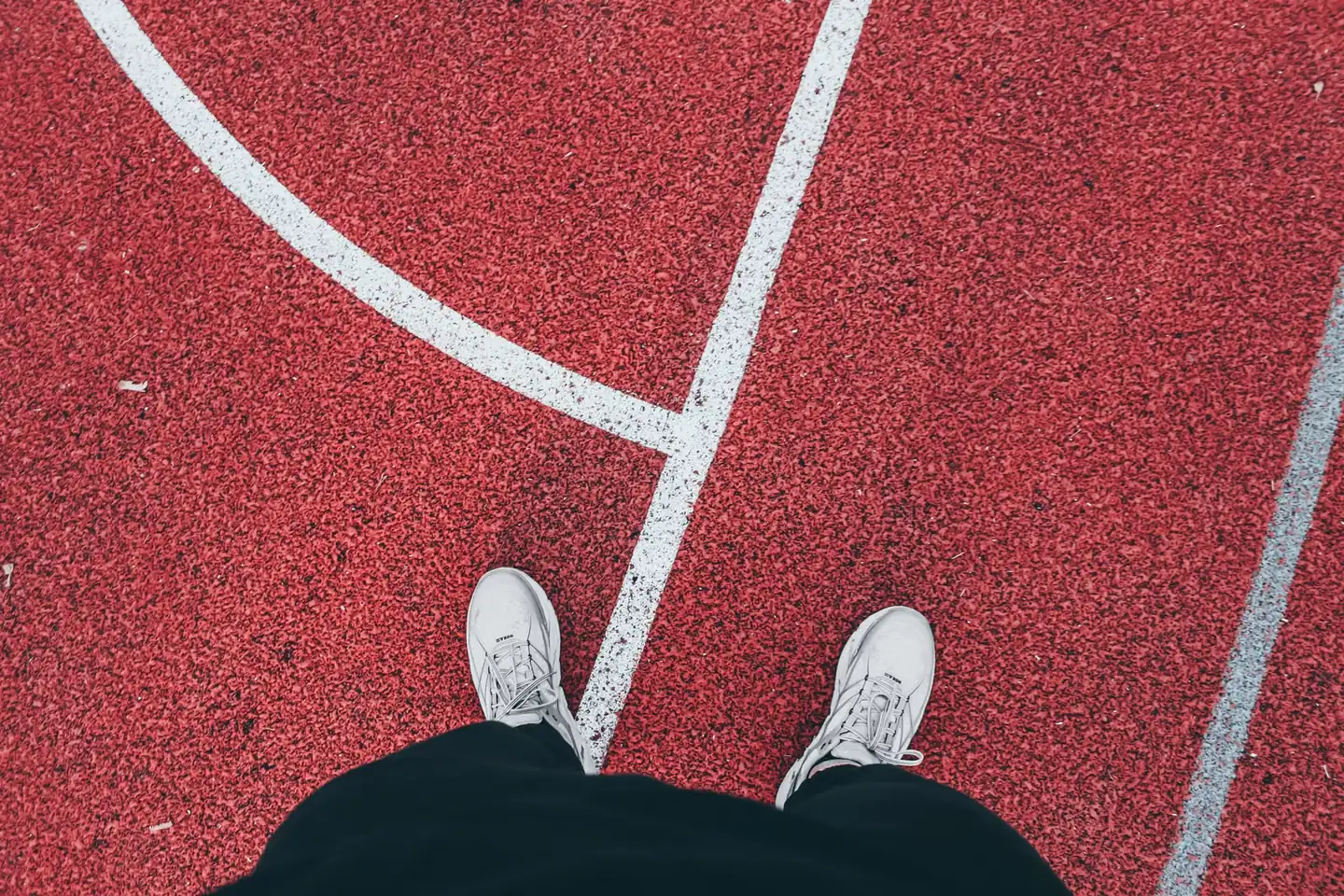
There are shoes that insulate and others that amplify. This Vivobarefoot model clearly belongs to the second group: a proposition designed for anyone who wants to feel the ground, activate the foot more, and run with a much more vivid reading of every footstrike. It does not seek to domesticate the stride with layers of foam, but rather to return prominence to the foot, where much of running stability begins and ends.
Its great defining feature is not just lightness, but the philosophy behind it. The wide last leaves real space for the toes, the sole is very thin and flexible, and the heel does not introduce an artificial drop. That changes the experience from the very first step: less barrier between body and ground, more sensory information, and a sense of freedom that, for some runners, is revelatory and, for others, too stark at first.
An idea of running that puts the foot at the center
Vivobarefoot has spent years defending a very specific approach: the foot is not an appendage that should be hidden under technology, but a complex, sensitive structure capable of working on its own. This shoe neatly sums up that logic. Its design removes unnecessary reinforcements and reduces the mediation between runner and asphalt, so the landing is perceived more clearly and the movement becomes more conscious.
In practice, that means the shoe does not want to correct everything. Nor does it aim to offer an elastic response or cushioning that turns each stride into a small bounce. Its value lies elsewhere: in direct contact, in the ability to feel changes in surface, and in the way it forces technique to be refined. It is a kind of mechanical mirror, very honest, that returns part of what the body gives it.
That honesty has an important consequence: this is not passive footwear. Anyone coming from high, soft models usually notices that the cushion and external assistance disappear, and that, in their place, more sensations appear in the calves, soleus, and the sole of the foot. That is not a flaw; it is the price of a more natural experience. But it is worth understanding this well before taking it out without adaptation.
What changes when excess disappears
The most obvious change appears in the toe box. The toes are not compressed; instead, they have room to spread and stabilize the landing. That small difference alters force distribution and improves the base that supports the body. In a short, relaxed stride, the sensation can be very pleasant: the foot works like a hand feeling the ground and organizing itself on it.
The way information from the terrain is received also changes. The sole transmits more signals and filters less, so the brain gets the subtleties of the landing sooner and more clearly. On a smooth street it feels almost tactilely precise; on an uneven surface, like a call to pay attention. What would be noise in conventional shoes is part of the language here.
The upper supports that idea with a flexible, breathable construction. The foot is not enclosed in a rigid structure, and that helps the shoe feel more like an extension of movement than a shell. That sense of continuity, so valued by those seeking a natural feel, comes precisely from renouncing anything that gets in the way between body and ground.
Why it appeals to so many runners and also leaves others puzzled
The appeal of this type of shoe is not explained only by the minimalist trend. It responds to a deeper concern: the idea that running can be less mechanical and more organic. Those who value technique, proprioception, and a sense of control usually find fertile ground here. Those who prioritize protection, softness, and immediate ease, by contrast, may perceive it as too abrupt a change.
That disagreement is normal, because the model is not trying to please everyone. Its proposition is specific and fairly demanding. It does not seek to hide the runner’s limitations, but to reveal them. If there is limited ankle mobility, stiff hips, or weakness in the foot muscles, the shoe makes it obvious right away. It works almost like a test of biomechanical transparency.
That is why it fits better in the hands of those who have already gone through an adaptation phase with lower-volume models, or those who accept that the transition should be done over time. For runners without prior experience, the first sensation may feel strange: less support under the arch, less foam, more information. But that initial dryness is precisely one of the reasons many consider it a valuable tool for improving body awareness.
The transition matters more than the model
Switching to footwear this unmediated should not be done on impulse. The body needs to adapt to a different mechanics, especially if it has relied for years on thick soles and platforms that offload work onto the shoe. The calves, Achilles tendon, soleus, and plantar fascia are usually the first to notice the change, and it is best that they do so gradually, not in a burst of enthusiasm.
The usual advice is to start by walking, not running. Spending several weeks using this type of shoe for short trips, walks, or very easy sessions allows the foot to build tolerance and the muscles to regain functions that excessive cushioning had pushed aside. Patience here is not a kind suggestion, but a safety condition.
It also helps to understand that adaptation is not linear. There are days when the foot responds easily and others when local fatigue appears, especially in the sole and lower leg. That sensation should not be confused with sharp pain. Mild discomfort is part of learning; persistent pain is not. The difference is important and should be respected.
How it behaves in real running
Its natural terrain is regular surfaces and easy paces. Asphalt, wide avenues, compact tracks, and parks with a homogeneous surface are contexts in which this shoe best displays its virtues. It is not designed to hide mistakes or to offer an explosive response, but to allow for more attentive running and a cleaner stride.
It is especially interesting for short runs and technique sessions. The low stack height helps you feel the landing better, and that information can be useful for adjusting posture, cadence, and the way you touch down. Cadence tends to become more visible, almost more audible, because the body no longer receives so much external assistance. Everything becomes sharper, for better and for worse.
Over longer distances, by contrast, the body feels the lack of protection sooner. Not because the shoe is bad, but because it asks more of the musculo-tendinous system. As the kilometers add up, fatigue can show up in the calves and soleus with an intensity that other cushioned models delay. That is why, for runners used to high volumes or long sessions, the most sensible use is usually partial and progressive.
What the runner feels when they land
The feeling of putting them on is less like wearing a shoe and more like tuning in. The foot notices the ground more immediately, the toes spread freely, and the sole barely intervenes. That closeness creates a very different experience from traditional footwear, where foam absorbs a large part of the contact and softens the reading of the terrain.
Those who enjoy that sensation often describe a kind of mechanical clarity. There is no platform pushing the stride forward, nor a structure imposing too much direction on the movement. There is, rather, a direct relationship between landing and response. The shoe does not push: it accompanies. And that nuance completely changes the perception of effort.
The trade-off is obvious. If the runner lands heavily on the heel, has little ankle mobility, or carries excess tension in the lower leg, the body’s response becomes more demanding. The shoe does not soften those movements as much; it makes them visible. In that sense, it is less forgiving than a conventional model, but also more useful for anyone who wants to correct habits rather than hide them under excess material.
Materials, construction, and sustainability that is not just decoration
The design also speaks to how durability is understood. The brand has been incorporating recycled materials and solutions intended to extend the product’s useful life, something especially relevant in a market that often equates performance with rapid consumption. Here the idea is more restrained: make less artifice, reduce unnecessary parts, and make it easier for the shoe to stay in use as long as possible.
That approach has technical logic and environmental logic. It is not all about the amount of foam or the final weight; it also depends on how long a product can remain functional and how easy it is to repair or repurpose. Sustainability, in this case, is not presented as a marketing embellishment, but as part of the engineering.
The result is a construction that feels clean, almost austere, but with a very clear purpose. There are no superfluous layers or elements that distract from the main goal: to allow the foot to move freely and for the runner to relate to the ground as directly as possible without giving up a minimum of protection against impact and abrasion.
Who it suits best, and who it suits less
This model makes a lot of sense for runners seeking sensitivity, technique, and control. It also works for those who combine running with strength work, mobility, or disciplines where balance and proprioception matter. In that overlap between running, feeling, and stabilizing, the shoe naturally finds its place.
It fits well in low-intensity sessions, warm-ups, or days when the goal is not to rack up miles at all costs, but to care for the movement pattern. For anyone coming from voluminous shoes, its greatest contribution may be educational: it forces you to slow down, listen more, and distribute the workload better between feet, calves, and hips. It is a learning tool, not a machine for instant results.
It is not, however, the most logical option for long runs on days of accumulated fatigue, nor for those who need high protection because of a history of discomfort or a high weekly load. Nor is it for anyone seeking a comfortable, no-surprises transition from the very first use. Its virtue lies in clarity, and clarity in running always asks something in return.
Technique changes because the body stops negotiating so much with the foam
When abundant cushioning disappears, technique is no longer so hidden. Cadence, trunk alignment, and where the foot lands become more important. A slightly more centered landing under the body often feels more natural than a long, overreaching stride, and the runner quickly discovers that forward movement is not the only thing that matters, but also how each step is supported.
The footstrike becomes easier to read. The ground gives feedback, the foot responds, and the lower-body musculature takes on a greater share of the work. That can improve movement economy in those who already have a solid base, but it can also punish anyone who tries to go too fast without having built tolerance first. Technique here is not improvised: it is taught.
That is why this shoe is often more interesting as part of a process than as a standalone solution. In a short session it can be an ally for refining form; on a long outing without preparation, a source of overload. That duality explains why it sparks so much interest among readers and runners: it does not sell immediate comfort, but it does offer a clearer relationship with one’s own movement.
A clean aesthetic that also serves a function
The visual appearance supports the technical message. The lines are restrained, the silhouette is understated, and the whole gives off an almost architectural sense of lightness. There are no excess layers or decorative elements breaking the continuity of the design. That cleanliness helps show that function is not subordinated to appearance, even if the appearance happens to be quite attractive.
The mix of sports use and urban aesthetics explains part of its popularity. It can move naturally between a light running session and everyday wear, as long as the user understands its limits. In this case, versatility does not come from the classic all-round nature of a training shoe, but from a very well-defined identity.
In a market full of giant soles, plates, and promises of explosive return, this model acts as a counterweight. It does not want to seem faster than it is, nor more protective than it can be. It prefers to tell the truth about its design, and that, in a segment saturated with artifice, has real editorial and sporting value.
What it really offers a curious runner
Its appeal lies not only in novelty, but in the question it raises: what would happen if the foot regained more prominence while running. That idea may feel uncomfortable to those who associate progress with more foam, but it is highly stimulating for anyone who sees training as a way to improve perception and efficiency from within.
The shoe works, essentially, as a tool for reassessment. It allows the runner to check how much they depend on the material and how much on their own musculoskeletal system. It is an experience that forces you to refine, reduce noise, and listen to signals that other models bury. And for many, that is already an improvement in itself.
The key is not to ask it for what it does not offer. It is not a catch-all option or a shortcut to perfect technique. It is a model with a very specific intention, built for those who want to run with more sensitivity, more presence, and less distance between body and ground. When understood that way, it stops being a rarity and takes a very precise place within today’s running landscape.
When less material means more information
The paradox of this shoe is quite simple: the less it stands between the foot and the terrain, the more it gives back to the runner. That abundance of data can be uncomfortable, but also extremely useful. It helps detect asymmetries, correct landings, and build a more attentive run, as long as the process is carried out with prudence and without unnecessary heroics.
In a sport where progress is often measured in grams of weight, millimeters of foam, or centimeters of sole, this model reminds us that the real difference can also lie in subtraction. Subtract layers, subtract filters, subtract dependence. And when that reduction is well thought out, the result is not technical poverty, but another way of understanding the act of running.
That is why it continues to spark conversation among specialized readers and runners curious about minimalism. It does not promise miracles or soften the whole road. What it offers is something less flashy, but more interesting: a running experience in which the body once again feels involved from start to finish.
You may also like: The complete guide to the Vivobarefoot Primus Lite III.



How to prevent thigh chafing: causes and real solutions

Women’s running windbreakers: seven jackets and how to choose

Do more workouts get rid of soreness? A guide for runners

Jaén Half Marathon 2026: Record 3,800 Runners Registered

Men’s short running tights: how to choose the right pair

World Triathlon confirms data breach involving medical data

Izan Edo targets podium at Miyazaki World Cup

María Pérez ranks ninth in World Athletics’ 2026 top ten

Dos Santos, Duplantis and Sawe: World Athlete of the Year finalists

San Silvestre Vallecana 2026: 42,000 places, prices and start times

 Races3 months ago
Valencia Half Marathon 2027: date and registration

 Races3 months ago
Valencia Marathon 2026: entry, ballot and course

 Reviews and Comparisons4 months ago
Asics Gel-Roadmiles 3 for men: review and current price

 Reviews and Comparisons4 months ago
Asics Gel Sonoma 8 Gore-Tex: complete analysis for trail and rain

 Sneakers3 months ago
Saucony Endorphin Pro 4: full review and verdict

 News5 months ago
Strava API 2026: what changes for clubs, challenges and runner apps?

 Reviews and Comparisons5 months ago
Nike Alphafly 3: opinions, sensations, and real key points

 Reviews and Comparisons4 months ago
Under Armour running shoes review 2025-2026: models and key features

 Sports Equipment4 months ago
Shoe sizes in cm: a clear guide to getting the right fit for your footwear

 Sneakers3 months ago
Skechers GO RUN Consistent 2.0 analysis: comfort and limits

 News5 months ago
Valencia Marathon 2026 route: key tips to train and run better

 Sneakers4 months ago
Adidas Adizero Boston 13 for men: review and verdict