Reviews and Comparisons
Xiaomi Mi Band 2: price, features, and real value
Lightweight bracelet, with good battery life and basic activity functions. That’s how it compares to the current market.

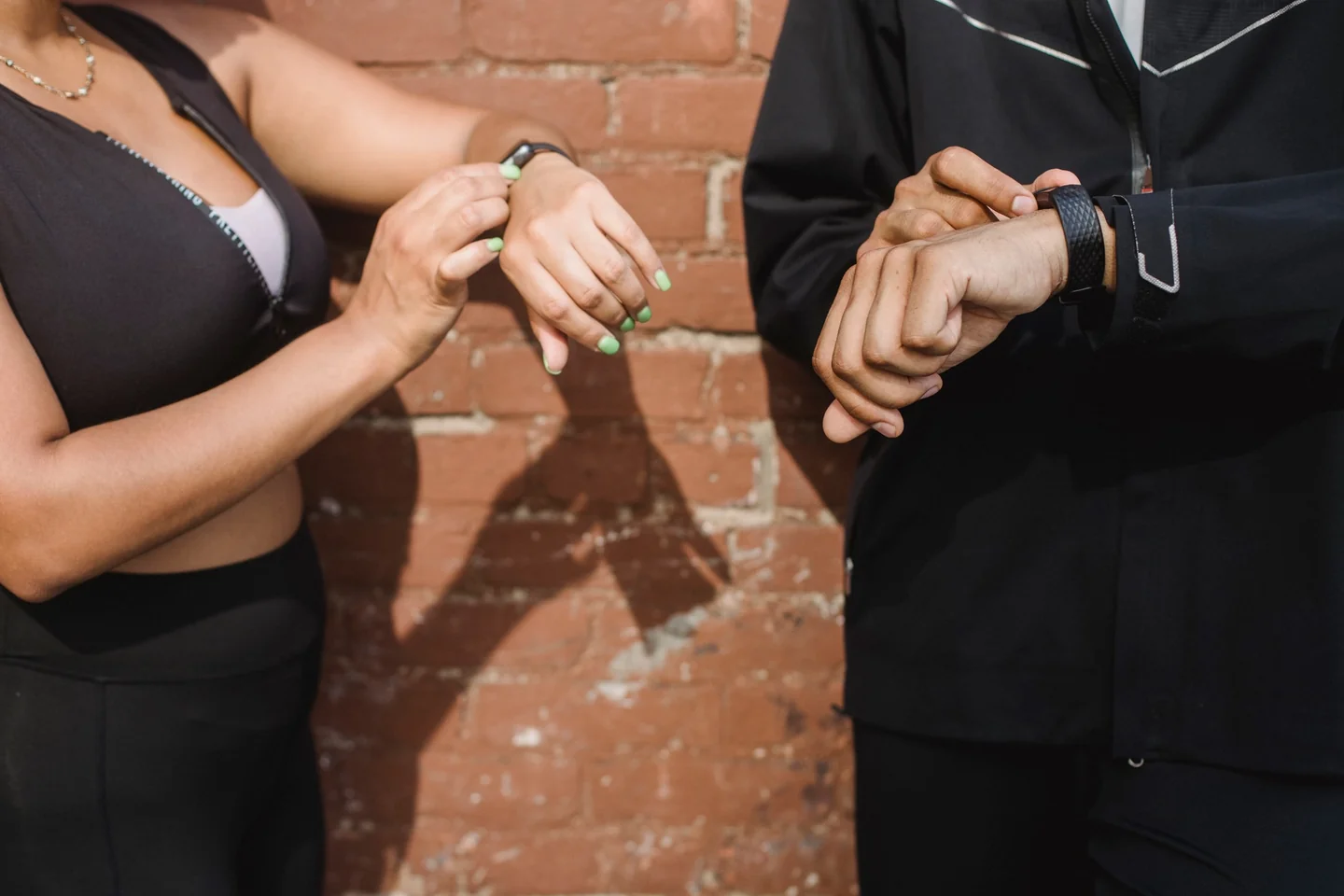
The Xiaomi Mi Band 2 marked an era among activity bands for a reason that is hard to dispute: it was cheap, weighed almost nothing, and did the essentials without too many frills. At the time, the combination of an OLED display, heart-rate monitor, and a claimed battery life of up to 20 days made it a very logical purchase for anyone who wanted to track steps, sleep, and heartbeats without stepping into the territory of more expensive sports watches.
Seen from today’s perspective, its appeal is no longer about competing with modern bands, but about understanding why it became one of the segment’s most influential products. Its spec sheet is still useful for putting the market in context: a 0.42-inch OLED screen, Bluetooth 4.2 BLE, IP67 water resistance, a heart rate optical sensor, and a 70 mAh battery. It’s a modest recipe, yes, but one that was well tuned for everyday use.
A minimal design that prioritized comfort
The Mi Band 2 opted for a small capsule format fitted into an elastomer strap, a very simple idea that worked because it almost disappeared on the wrist. At just 7 grams for the sensor and with an adjustable length from 155 to 210 mm, it was easy to wear all day without bothering you while typing, sleeping, or running. That was its great silent selling point: it did not impose its presence.
In a market where many wearables start out looking like mini wrist computers, Xiaomi’s proposal had something of a pocket tool about it. It did not try to impress with premium materials or a huge screen, but with the feeling of being a practical, almost invisible object. The strap, moreover, was available in several colors, which made it possible to break away from the standard black and add a bit of life to the whole without altering its austere philosophy.
There was also an important ergonomic detail: the band kept the sensor firmly in place even during exercise. For everyday use, that mattered more than any ornament. When a device shifts, rubs, or tightens irregularly, people end up taking it off; when it fits naturally, it becomes a habit. And that was one of the keys to Mi Band 2’s success.
A small, useful, and very limited screen
The big new feature compared with its predecessors was the 0.42-inch OLED display. It made it possible to check the time, steps, heart rate, and battery with a tap, without needing to open the app. In theory, that leap brought the band closer to a basic watch. In practice, the experience was constrained by the screen size and by inconsistent outdoor visibility.
Reading it indoors was fine and the panel did its job, but outside the situation changed. In direct sunlight, visibility suffered noticeably; in dark environments, on the other hand, the light could be too intense. That duality neatly reveals the device’s technological era: Xiaomi had put a screen on the wrist, but had not yet fully solved how it should behave in all real-world scenarios.
The touch button was a more practical solution than the interface itself. A tap was enough to switch data, and in many cases it was more reliable than trying to make the most of such a tiny screen. The idea of seeing more information on the wrist made sense, but its value was limited by the small amount of data it actually displayed. It was a window, not a console.
What it really measured and what it left out
Mi Band 2 focused on three pillars: steps, heart rate, and sleep. The pedometer filtered out irrelevant movement to better approximate daily activity, the heart-rate sensor provided a spot reading of your rhythm, and sleep tracking distinguished between light and deep sleep with the information available in the Mi Fit app. For the average user, that was enough. For a runner obsessed with nuance, not so much.
The band could record workouts and help estimate calories burned, but it was not an advanced tool for athletes looking for detailed metrics. There was no built-in GPS, no altimeter, and no complex records of cadence or training load. Its purpose was humbler and, for that very reason, easier to understand: to provide a general snapshot of daily activity, not an exhaustive performance analysis.
That approach gave it a lot of commercial strength, because it did not force users to learn too much. You walk, you sleep, you check your heart rate, and you see whether you hit a goal. Simplicity, in this case, was not an absolute shortcoming, but part of the product. In exchange, anyone wanting to track running paces, intervals, or heart-rate-zone workouts had to look toward more serious devices.
The heart-rate monitor and the promise of data-driven training
The photoelectric heart-rate sensor offered a quick measurement, but not a continuous one. That meant a clear advantage for battery life and an equally clear disadvantage for sports analysis. The system allowed a spot reading in a few seconds, enough for a quick check, though far from what people training with greater precision expect today.
In real use, that reading served as a guide, not as the basis for a training strategy. The device detected the start of activity and could record heart-rate changes, but its reliability was not on the level of bands or watches designed for serious sport. That does not make it a bad product; it puts it in its place. It was, and still is, an entry point into basic quantification.
For walking, moving more, or monitoring overall effort, it did make sense. For intervals, sudden pace changes, or sessions where every heartbeat matters, it fell short. That difference matters because it avoids a common misunderstanding: not every wearable with a heart-rate sensor is designed to track training with the same precision. The Mi Band 2 never fully hid the fact that it played in another league.
Sleep, inactivity, and the small alerts of the day
Sleep detection was one of the most valued features for its everyday usefulness. The band collected data overnight and the Mi Fit app turned it into a summary of light sleep, deep sleep, and total duration. The reading was not perfect, but it was quite accessible for anyone who wanted to know whether they were sleeping too little, too late, or irregularly.
Alongside that came the inactivity alert, a gentle vibration that reminded the wearer they had been sitting too long. In an office day, that detail added more value than it might seem. It did not solve sedentary behavior, of course, but it worked as a discreet nudge to stand up, walk, or simply break the block of hours in front of a screen.
There were also call and message notifications, though with minimal detail. The band vibrated and showed basic icons, but it was not meant to replace a smartwatch. That design choice kept it cheap and power-efficient, even if it limited its ambition. Instead of competing with a smartwatch, it preferred to remain a quantifying band with restrained aspirations.
Battery life: its greatest weapon and biggest myth
The 70 mAh battery and the promise of 20 days on standby were the strongest sales argument. It was a striking figure, and a realistic one under favorable conditions. The combination of Bluetooth 4.2 BLE, a small screen, and light use made for far longer endurance than many devices of the time. That battery life changed expectations in the segment.
However, everyday use brought the ideal figure down. With notifications, frequent checks, and regular sensor use, actual duration could drop quite a bit. Tests by some specialized media placed real-world performance closer to 9 or 10 days with active use. That is still solid battery life, but it no longer sounds so spectacular when the screen lights up often and the heart rate is measured more frequently.
The weak point was charging: you had to remove the core of the band to connect it to the charger. It was not a disaster, but it was an awkward gesture that broke the continuity of use. It is one of those small inconveniences that stand out more today than they did before, because magnetic charging systems and fast charging have raised the comfort bar considerably.
Bluetooth, the app, and the real value of the Mi Fit ecosystem
The band depended on the Mi Fit app to make complete sense. That was where daily, weekly, and monthly histories of steps, sleep, and heart rate were shown. The app was more important than the screen itself, because it turned scattered data into a comprehensible narrative. Without that control panel, the device lost much of its usefulness.
Synchronization was not always perfect and the Spanish translation could mix terms or feel somewhat rough. Even so, the app did the essentials and provided a solid foundation for anyone who just wanted to review activity, alarms, and notifications. Its role was important because it bridged cheap hardware and a fairly orderly experience.
In a product like this, software decides whether the purchase feels smart or simply cheap. Xiaomi quickly understood that a modest band could gain a lot of traction if it was backed by an app that was easy to read and easy to check. Mi Band 2 did not need to impress on the wrist; it just needed to make sense when you opened the phone.
Water resistance and materials designed to last
The IP67 certification gave it a very clear advantage in everyday use. It could withstand dust, sweat, and splashes, and also tolerate showering without drama. It was not a band for swimming or serious water abuse, but it was a calm companion for normal routines, from the gym to lightly rainy days.
That level of resistance was very well received because it removed a constant worry. Taking a wearable on and off all the time gets tiring; being able to keep it on your wrist simplifies the relationship with the device. Xiaomi also reinforced the whole package with hypoallergenic materials and a scratch- and fingerprint-resistant design on the front, discreet but useful details.
The brand also mentioned demanding durability tests: heat at 70 degrees for 128 hours, cold at -20 degrees for 128 hours, repeated drops from 1.2 meters onto marble, and corrosion tests. These are laboratory figures, not an absolute guarantee in real life, but they help show that the product was designed to withstand much more than its price suggested.
Why it was so important in the band market
Mi Band 2 did not lead because it was the most complete, but because it offered a very convincing balance. It lowered the entry barrier to the world of activity bands and forced rivals to justify higher prices. At a time when Fitbit, Garmin, and other manufacturers were betting on more features and also higher costs, Xiaomi showed that many people simply wanted the basics measured and presented well.
Its success also helped normalize an idea that now seems obvious: a wearable does not have to be expensive to be useful. It was enough to have a small screen, solid battery life, water resistance, and a decent app. From there, everything else was nuance. That formula paved the way for an entire generation of more ambitious bands, but also ones more dependent on direct comparison with its value.
From the perspective of recreational running, its role was that of a lightweight companion. It let you track steps, monitor heart rate in a basic way, and record whether you had gone out to move. It did not replace a sports watch, nor did it claim to. But for those taking their first steps into activity tracking, the product made perfect sense.
What is gained and what is lost versus current models
Compared with current bands, the Mi Band 2 inevitably feels austere. Today, devices in the segment usually offer larger screens, blood oxygen metrics, more sports modes, better app integration, and a broader reading of physical condition. Market evolution has made things standard that back then were almost luxuries: magnetic charging, cleaner interfaces, and more consistent sensors.
But that comparison also has a reverse side. Precisely because it is so simple, the Mi Band 2 retains a quality that is not always common in modern wearables: clarity. It does a few things and does them in a fairly understandable way. It does not overwhelm you with endless menus or a flood of statistics that end up tiring the average user. Its product design was cleaner than it may seem.
The biggest lesson it left behind is both commercial and editorial: the market rewarded not only innovation, but well-packaged everyday usefulness. Anyone looking for a cheap, light tracker with long battery life found a reasonable answer here. Anyone wanting sports accuracy, advanced metrics, or a truly comfortable screen had to look higher up. That boundary is still very useful when reading any activity band.
A reference that still helps explain the sector
The Xiaomi Mi Band 2 became a kind of manual of the essentials. Steps, sleep, heart rate, vibration, water resistance, and battery life that for years seemed unreachable in many direct rivals. Its feature set was not huge, but it was enough to change habits on millions of wrists. And that, in consumer tech, is no small thing.
Today its interest is more historical and comparative than practical. It remains a reference for explaining how Xiaomi’s success in wearables was built: cheap product, discreet design, functional software, and well-defined expectations. That cocktail, so unremarkable in appearance, ended up being very powerful in real life.
For readers who look at the market from a consumer perspective rather than as collectors, the message is clear: the Mi Band 2 mattered because it showed that an activity band did not need to look like an expensive watch to be useful. It was enough to be well thought out, comfortable, and not ask for too much in return. Sometimes, on the wrist, less still means quite a lot.
You may also like: Xiaomi Smart Band 9 vs 10: real differences and which one is worth it.
Este artículo contiene enlaces de afiliado: si compras a través de ellos, se genera una pequeña comisión sin coste adicional para ti. Más información.



How to prevent thigh chafing: causes and real solutions

Women’s running windbreakers: seven jackets and how to choose

Do more workouts get rid of soreness? A guide for runners

Jaén Half Marathon 2026: Record 3,800 Runners Registered

Men’s short running tights: how to choose the right pair

World Triathlon confirms data breach involving medical data

Izan Edo targets podium at Miyazaki World Cup

María Pérez ranks ninth in World Athletics’ 2026 top ten

Dos Santos, Duplantis and Sawe: World Athlete of the Year finalists

San Silvestre Vallecana 2026: 42,000 places, prices and start times

 Races3 months ago
Valencia Half Marathon 2027: date and registration

 Reviews and Comparisons4 months ago
Asics Gel-Roadmiles 3 for men: review and current price

 Races3 months ago
Valencia Marathon 2026: entry, ballot and course

 Reviews and Comparisons4 months ago
Asics Gel Sonoma 8 Gore-Tex: complete analysis for trail and rain

 Sneakers3 months ago
Saucony Endorphin Pro 4: full review and verdict

 News5 months ago
Strava API 2026: what changes for clubs, challenges and runner apps?

 Reviews and Comparisons5 months ago
Nike Alphafly 3: opinions, sensations, and real key points

 Reviews and Comparisons4 months ago
Under Armour running shoes review 2025-2026: models and key features

 Sports Equipment4 months ago
Shoe sizes in cm: a clear guide to getting the right fit for your footwear

 Sneakers3 months ago
Skechers GO RUN Consistent 2.0 analysis: comfort and limits

 News5 months ago
Valencia Marathon 2026 route: key tips to train and run better

 Sneakers4 months ago
Adidas Adizero Boston 13 for men: review and verdict