Health and Nutrition
Benefits of swimming for 30 minutes as a runner
Half an hour in the pool activates muscles, protects joints, and improves mood with effects that are felt throughout the body.

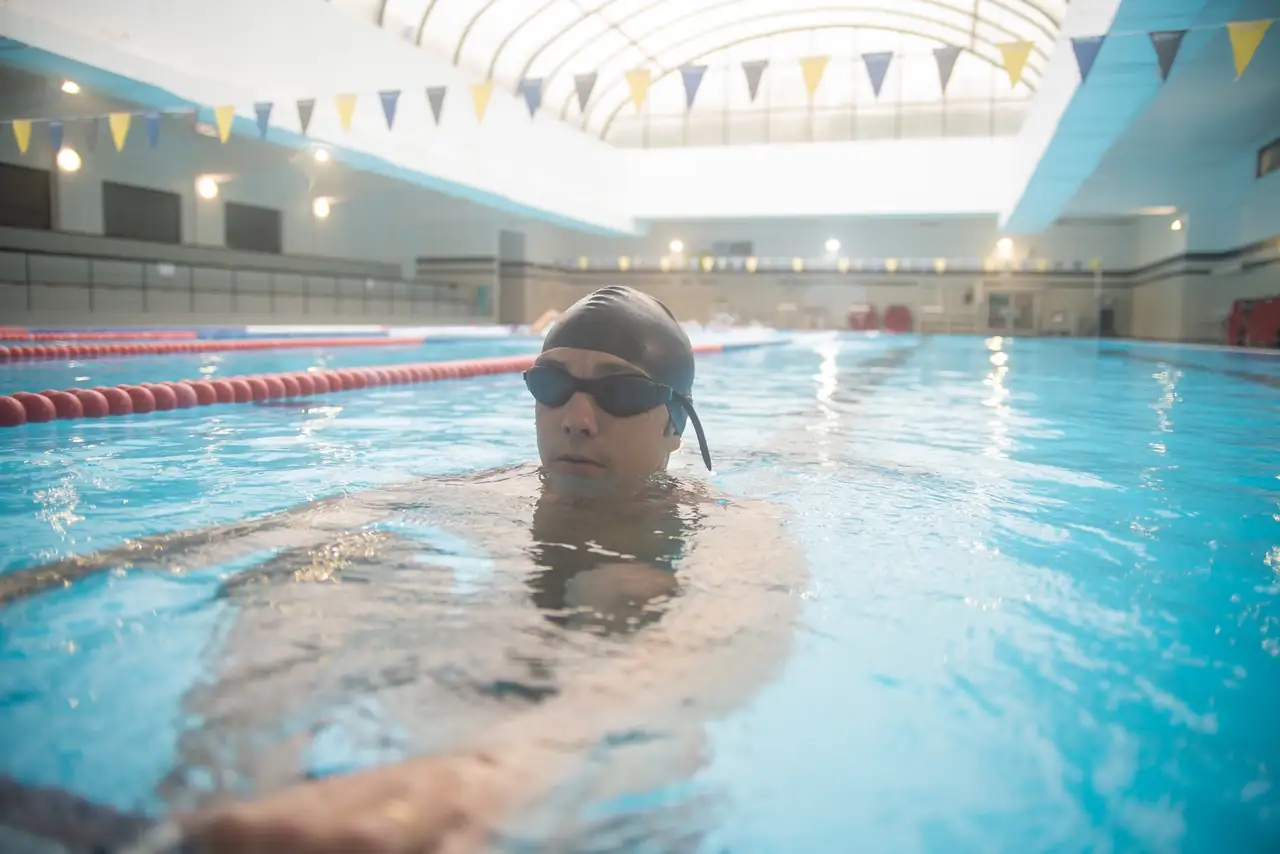
A 30-minute swimming session can complement a runner’s training: it activates large muscle groups, raises the heart rate steadily, and calls for coordination between breathing and strokes. In that time, water provides continuous, demanding work while being gentle on the joints, without the pounding of other impact sports.
The result is not only physical. The half hour in the pool leaves its mark on circulation, lung capacity, mobility, and also on mood. That is why swimming occupies a special place among aerobic exercises: it combines endurance, control, and mental release in a single routine, with a much lower joint cost than running or jumping.
What water does in the first few minutes
The first moments of the session make all the difference. Upon coming into contact with water, the body responds with an immediate adaptation: the cardiovascular system is pushed harder, breathing becomes more rhythmic, and the muscles begin working against a uniform resistance. That external pressure, felt with every stroke while swimming, forces the body to spend more energy than on a walk or a gentle bike ride.
That initial stretch also brings a deceptive feeling of lightness. The body weighs less because of buoyancy, but the work does not lessen; it simply changes form. Every movement pushes against the water, and the water pushes back with resistance. That is why a short session can feel intense without delivering the same impact load on ankles, knees, or hips as other common sports.
Coordination quickly comes into play. Breathing, turning the head, maintaining rhythm, and holding trunk position all require mind and body to synchronize precisely. That neuromuscular demand explains why swimming for half an hour is not a monotonous exercise, but a continuous pattern of fine adjustments, almost like tuning an instrument while it is playing.
Muscle work without punishment for the joints
Swimming has a hard-to-match virtue: it works practically the whole body without pounding it. Arms, shoulders, back, abdomen, glutes, and legs all take part in each lap, although the distribution changes depending on the stroke. Freestyle spreads the effort fluidly; breaststroke places more load on the inner thighs and leg propulsion; backstroke calls for trunk stability and good alignment; butterfly, being more demanding, multiplies muscular and technical requirements.
That distribution makes the 30 minutes in the water a very complete session. You do not need to lift plates or jump boxes to feel your core or mid-back working. The water’s own resistance acts like an invisible weight, always present, accompanying every gesture. The body does not just move: it also supports itself, corrects itself, and balances itself.
The difference from other endurance sports is especially noticeable in joint tolerance. For people with excess weight, lower-back discomfort, injury recovery, or mild arthritis, swimming is often kinder because it reduces mechanical impact. Water takes the pressure off, and that makes it possible to stay active regularly without the punishing feeling that sometimes comes with harsher land-based disciplines.
Energy expenditure and weight control
In half an hour, calorie burn can vary quite a bit depending on intensity, body weight, and the chosen stroke. As a rough guide, a person weighing around 70 kilos can burn between 200 and 400 calories in 30 minutes, with higher figures if the session includes demanding pace, intense technique work, or strokes that require more strength. Butterfly usually consumes more energy; freestyle and backstroke tend to distribute effort better and sustain continuity more effectively.
Beyond the exact number, what matters is the pattern. Swimming combines aerobic exercise and muscular work, so the body not only uses energy during the session, but also maintains a level of post-exercise activation during recovery. That effect, modest but real, helps sustain total daily energy expenditure and can support weight control when integrated into a consistent routine.
In practice, swimming for half an hour every day is often more useful than long, infrequent sessions. Regularity matters more than occasional heroics. Three quarters of an hour once a week leaves a different mark than that brief, steady repetition that gradually refines endurance, technique, and metabolic efficiency, like carving a stone little by little until it takes shape.
Heart, lungs, and internal rhythm
One of swimming’s major effects is on the cardiovascular system. The heart works steadily to move blood to active muscles, and over time that repeated effort helps improve cardiac efficiency. Heart rate rises during exercise, but sustained practice helps the body respond better to that effort and recover sooner.
Water pressure and the horizontal position also play a role. Venous return is easier, and the heart’s work is distributed differently than when running or walking. That is why many people perceive swimming as a more even, less abrupt effort. The heart learns to work in a stable environment, without the jolts of repeated impact.
The lungs follow the same logic. Swimming forces inhalation and exhalation to be coordinated with movement, and that breathing discipline improves the efficiency of air exchange. It is not about breathing harder, but about breathing better. Over time, the sensation of breathlessness decreases, air control improves, and exercise tolerance rises—something especially valuable for those who notice limitations in land-based activities.
Flexibility, posture, and fine coordination
Swimming expands range of motion in a way that is hard to reproduce outside the water. The arms stretch out, the hips rotate, the shoulders work through a wide range, and the spine follows with small adjustments. This combination promotes functional flexibility—the kind that is actually used when dressing, bending down, turning, or running more easily.
There is also a postural effect. People who spend many hours sitting often end up with rounded shoulders, a stiff back, and a tense neck. Swimming, especially backstroke or well-executed freestyle, helps open the chest, activate the back, and redistribute trunk load. It does not correct every bad habit on its own, but it does provide a valuable and very sensory counterbalance: the body notices space where there used to be compression.
Coordination deserves its own mention. Arms and legs do not move at random; they move in sequences that the brain must organize in real time. That demand for synchronization turns swimming into a small laboratory of motor control. The mind counts strokes, corrects support, adjusts rhythm, and learns to economize movement—an ability that later carries over into daily life and other sports.
Effects on mood, stress, and sleep
The pool has something of a decompression chamber about it. The muted sound, buoyancy, and repeated rhythm create an environment that often lowers mental pace almost from the start. Physiologically, exercise promotes the release of endorphins and helps reduce accumulated tension. Subjectively, many people leave the water with a clearer head and a less contracted body.
Stress reduction does not come from a single factor, but from several at once: continuous movement, paced breathing, concentration on a simple task, and the feeling of immersion. That combination can help lower cortisol and modulate everyday anxiety. Swimming works as an active pause, and that pause is anything but passive; it requires presence, rhythm, and attention.
Nighttime rest can also benefit. A body that has used energy, mobilized joints, and released tension tends to settle better into rest. Swimming is not a magic recipe for sleep, but it is a physical stimulus that, when maintained regularly, can promote more restorative sleep and a greater sense of overall balance.
Prevention, metabolic health, and active aging
Regular practice is associated with a more favorable health profile. By improving aerobic capacity, supporting weight control, and helping sustain physical activity without major impact, swimming helps reduce risk factors linked to cardiovascular disease and metabolic disorders. It does not replace medicine or foundational habits, but it does move in a clear direction: more movement and less sedentary behavior.
For people with type 2 diabetes, high blood pressure, or excess weight, swimming can be especially useful because it allows a progressive and measurable load. Water softens the return to exercise when other disciplines feel uncomfortable. Consistency matters more than occasional intensity, and that principle fits well with a sport that can be practiced for years without wearing down the joints as much as harsher activities.
It also fits with active aging. Maintaining strength, mobility, and coordination from midlife onward is a form of physical investment. Half an hour of swimming, several times a week, does not promise miracles, but it does provide a solid platform for preserving independence, balance, and functional capacity over time.
How it changes depending on stroke and pace
Not all sessions produce the same effect. Thirty gentle minutes on your back are not the same as 30 minutes of intense freestyle intervals or a technical class with short breaks. Stroke, intensity, and the number of rests all change the actual stimulus. That is why context matters as much as the clock: two half-hour sessions may seem identical, yet leave very different sensations and adaptations.
Freestyle is usually the gateway because it allows continuity and balanced energy expenditure. Breaststroke, with its slower rhythm, may feel comfortable for those seeking control and range of motion. Backstroke offers a sense of openness that helps many people with postural stiffness. Butterfly, by contrast, requires notable technical conditioning and is not the most reasonable option for building a daily practice from scratch. Choosing the right stroke avoids overload and improves adherence.
The effect also changes depending on water temperature and the quality of technique. Water that is too cold can raise the body’s demand at the start; poor technique forces more energy expenditure to move the same distance. In swimming, as in a good running stride, movement economy matters. The better swimmer is often not the strongest, but the one who wastes less.
What it offers compared with running and other sports
For a reader accustomed to running, swimming offers a contrast that is almost therapeutic. Running builds impact, elasticity, and elastic power; swimming, by contrast, develops endurance with a much lower load on the musculoskeletal system. The two sports complement each other well, but water has a clear advantage during recovery phases, intense heat, or overuse discomfort.
That complement is useful when the body needs to dial things down without stopping training. Swimming keeps the aerobic engine running while giving overworked running tissues a break. Less impact does not mean less work; it means a different kind of work, more distributed, more enveloping, almost like switching asphalt for dense air.
That is why half an hour in the pool should not be read as a universal replacement, but as a very valuable tool within a broader movement ecosystem. It helps build fitness, protect structures, and provide mental variety—three ingredients that are often missing when exercise becomes too repetitive.
Regularity as the true engine of change
Transformation does not come from one brilliant session, but from repetition. Swimming 30 minutes one day and skipping four leaves less of a mark than maintaining a reasonable, continuous, and manageable habit. The body responds to frequent stimuli with gradual improvements in endurance, coordination, and exercise tolerance, and that becomes more noticeable when practice is maintained over weeks and months.
Consistency also avoids the temptation to chase epic sessions that never get repeated. Half an hour is a sensible threshold: enough to activate several body systems and short enough to fit into real schedules. Regularity turns a pool into a routine, and a well-sustained routine is often worth more than an ambitious but intermittent intention.
In that sense, swimming fits a very simple and often underrated idea: the body improves when it receives stimuli it can tolerate over a long time. Water offers exactly that, a demanding yet livable work space where effort brings benefits without making the joints pay too high a price. That is where its most lasting value lies, the one that explains why half an hour in the pool remains one of the most effective and understated ways to take care of yourself.
Swimming for runners: adding low-impact training
For runners, a 30-minute swim can add variety and keep you moving with less impact than a run. Water provides resistance with every stroke, giving your arms, back, core and legs work while you coordinate breathing and movement. But swimming does not reproduce the specific demands of running: it can complement your training, not replace your runs or race preparation.
How hard the session feels depends on your stroke, pace and technique. If you are not used to swimming, keep the effort comfortable and pay attention to how you respond rather than turning it into a test. Slow down or take a rest if your technique starts to fall apart, your breathing becomes difficult to control, or fatigue changes the way you move. Notice any discomfort in your shoulders, neck or back, especially if it keeps returning.
Fit the pool around your key running sessions. An easy swim may work as a lighter activity, while a demanding session might not be ideal right before a long run or important workout if it leaves you tired. Adjust your running load if fatigue builds up, and make room for recovery. Not every session needs to become another hard workout.
Swimming can bring variety and a different sense of relief, but it is not a guarantee against injury and does not replace rest. If pain or other symptoms persist, consult a healthcare professional before continuing to train.
Half an hour that leaves a mark without leaving an impact trace
The effects of swimming 30 minutes a day are, in reality, the sum of small changes that support one another: more endurance, better breathing, greater mobility, less tension, and useful energy expenditure. There is no single benefit that explains everything; there is a chain of adaptations that overlap in thin, almost invisible layers until they change the body’s landscape.
What is interesting is that this improvement comes with a low mechanical cost. Swimming allows firm training without the violence of repeated impact, which makes it a very solid option for different ages, bodies, and goals. Half an hour in the water may not seem like a major feat, but it is often enough to begin moving the heart, lungs, muscles, and mind in the same direction intelligently.
That is why swimming should not be understood as mere summer leisure. In a steady routine, it becomes a complete, quiet, and effective health tool. The body leaves the water tired just enough, looser, more alert, and, over time, better prepared for everything else.
Medical reference: Health benefits of swimming, Cleveland Clinic.



How to prevent thigh chafing: causes and real solutions

Women’s running windbreakers: seven jackets and how to choose

Do more workouts get rid of soreness? A guide for runners

Jaén Half Marathon 2026: Record 3,800 Runners Registered

Men’s short running tights: how to choose the right pair

World Triathlon confirms data breach involving medical data

Izan Edo targets podium at Miyazaki World Cup

María Pérez ranks ninth in World Athletics’ 2026 top ten

Dos Santos, Duplantis and Sawe: World Athlete of the Year finalists

San Silvestre Vallecana 2026: 42,000 places, prices and start times

 Races4 months ago
Valencia Half Marathon 2027: date and registration

 Reviews and Comparisons4 months ago
Asics Gel-Roadmiles 3 for men: review and current price

 Races4 months ago
Valencia Marathon 2026: entry, ballot and course

 Reviews and Comparisons4 months ago
Asics Gel Sonoma 8 Gore-Tex: complete analysis for trail and rain

 Sneakers3 months ago
Saucony Endorphin Pro 4: full review and verdict

 News5 months ago
Strava API 2026: what changes for clubs, challenges and runner apps?

 Reviews and Comparisons5 months ago
Nike Alphafly 3: opinions, sensations, and real key points

 Reviews and Comparisons4 months ago
Under Armour running shoes review 2025-2026: models and key features

 Sports Equipment4 months ago
Shoe sizes in cm: a clear guide to getting the right fit for your footwear

 Sneakers3 months ago
Skechers GO RUN Consistent 2.0 analysis: comfort and limits

 News5 months ago
Valencia Marathon 2026 route: key tips to train and run better

 Sneakers4 months ago
Adidas Adizero Boston 13 for men: review and verdict