Health and Nutrition
How many calories does swimming burn for runners?
Swimming burns from about 200 to more than 800 kcal per hour, depending on effort, stroke, and body type.

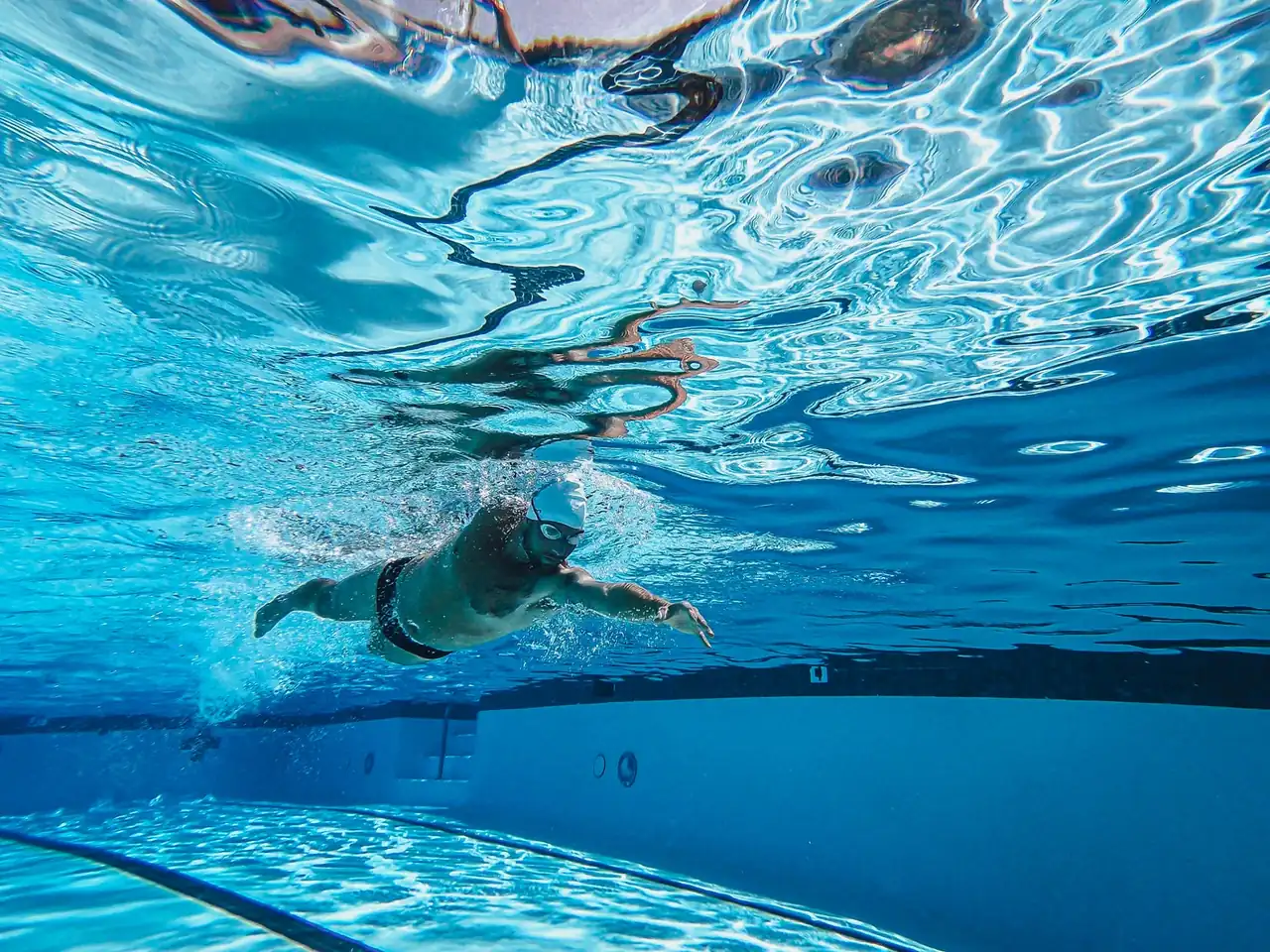
Swimming can burn between 200 and more than 800 kilocalories per hour, but the real figure varies greatly depending on body weight, stroke, intensity, and stroke efficiency. For runners, the pool can offer a low-impact alternative or a way to add variety to training. In a gentle session, a 70-kilo person will usually be in the low or middle range; during vigorous work, energy use rises quickly and the session becomes a demanding workout.
There is no single number because swimming is not just moving through the water: it is also overcoming much greater resistance than air, maintaining buoyancy, coordinating breathing, and sustaining effort without support. That combination explains why swimming is among the most complete activities for burning energy without subjecting the joints to the repetitive impact of running.
Why energy expenditure in water is usually high
Water demands continuous work. Its density is far greater than that of air, and each movement requires pushing through a medium that slows the body more than a land surface does. That resistance turns each stroke, each kick, and each turn into a small mechanical battle. There is no free momentum; everything costs.
On top of that, swimming involves activating large muscle groups at the same time. Back, shoulders, core, glutes, legs, and arms all take part in a coordinated way, which raises energy consumption. On land, part of the effort is shared with the ground. In the pool, the body works suspended and stability depends on technique, breathing, and postural control.
Water temperature also matters. In cooler pools, the body spends extra energy maintaining internal temperature. That expenditure is not always huge, but it does add a small extra amount to the total. That is why two identical sessions, one in warm water and one in cold water, can leave different sensations and calorie burns.
Approximate figures according to weight, pace, and duration
The most useful way to understand calorie expenditure in swimming is to think in ranges. A person weighing around 70 kilos can burn between 400 and 700 kilocalories per hour in a typical workout, with important differences between recreational swimming and intense swimming. When the effort increases and the technique keeps up, the figure can approach or comfortably exceed the upper end of that interval.
In 30 minutes, a relaxed session may be around 180 to 250 kilocalories for a person of average weight, while a hard workout can approach 300 to 450 kilocalories. In one hour, those values roughly double. They are not exact to the last decimal, but they are a solid guide to avoid overestimating or underestimating what happens in the water.
Weight matters because moving a larger body requires more energy. A swimmer weighing 85 kilos normally burns more than one weighing 60 at the same intensity, just as a person with more muscle mass usually uses a bit more. The pool does not measure willpower alone; it also responds to the load it has to move.
What changes depending on the stroke
Not all strokes consume the same amount. Butterfly usually sits at the top of energy expenditure because it requires tougher coordination, powerful upper-body work, and a very demanding undulating kick. Front crawl or freestyle offers a great capacity for energy burn when swum fast, and it is also the most accessible for sustaining steady paces over longer periods.
Breaststroke tends to fall in an intermediate range, with expenditure rising a lot if the execution is vigorous. Backstroke, on the other hand, can be very efficient and comfortable for maintaining prolonged effort, although it does not always burn as much as the more explosive strokes. For the same person, changing technique can noticeably shift the calorie estimate.
In practical terms, a swimmer of average weight can burn approximately 400 to 600 kilocalories per hour in moderate front crawl, 360 to 600 in breaststroke, 300 to 500 in backstroke, and up to 600 to 800 or more in butterfly if the intensity is high. Recreational swimming or simply staying in the water is well below that.
Why technique can make you burn more or less
Poor technique does not always mean more useful calories. On the contrary, an uncoordinated movement can spike fatigue without efficiently increasing cardiovascular work. When the body sinks too much, when breathing breaks the rhythm, or when the stroke wastes its path, part of the energy goes into useless resistance. You sweat less, but you struggle more.
An efficient swimmer usually moves with less energy cost per length than a beginner, not because the workout is worse, but because the mechanics convert force into displacement better. That efficiency may reduce energy cost per meter, while allowing longer, more consistent, and overall more productive sessions in terms of total work.
That is why comparing swimmers is not solved by the stopwatch alone. Two people can swim the same distance and burn very different amounts of energy. Movement economy matters as much as power. In the pool, as in running, not all visible effort translates into better energy performance.
What factors determine the final calorie count
Expenditure depends on a combination of variables that rarely act separately. Body weight is one of the most relevant, but not the only one. Body composition, average pace, total time in the water, temperature, technical experience, and even the density of rest periods between sets also play a role.
Heavier people usually burn more because they move more mass. Those with greater muscle mass also tend to use more energy at rest and during exercise. Intensity is another factor: a continuous moderate-pace session does not leave the same mark as an interval-based workout with speed changes and short recoveries.
Duration is the other major pillar. Sixty steady minutes usually weigh more than twenty very intense minutes in the final balance, even if the second case feels harder per minute. Simply put: a long, sustainable session wins by accumulation; a short, explosive session wins by density. The pool allows both logics.
Swimming versus running and cycling
The comparison with other sports often centers on a very clear idea: running burns slightly more per minute than swimming at equivalent effort, but it also punishes the joints more because of repeated impact. Cycling, on the other hand, usually falls into an intermediate or lower zone depending on pace, although it shares with swimming the advantage of low impact.
The key lies in the type of stimulus. Running puts the body against gravity and the pavement returns each footstrike. Swimming, by contrast, removes that pounding and spreads the load across an environment where resistance is constant and enveloping. That is why the pool is so valuable for those looking to train volume without accumulating as much wear and tear.
In pure energy terms, a fast runner can match or exceed a recreational swimmer. But an intense swimming workout, with demanding paces and intervals, can come very close to running numbers and even surpass them for some people. There is no fixed winner; it depends on the real level of effort sustained in each discipline.
How much rests, distance, and session type matter
A continuous session usually increases total expenditure because it keeps heart rate and muscle work steady. Long rests, by contrast, dilute the average calorie burn even if they allow quality efforts to be repeated. That is why a 2,000-meter session with short breaks bears little resemblance to another with many interruptions and little actual swimming time.
The number of meters matters too, but not as an isolated figure. One thousand gentle meters are not the same as one thousand demanding meters. What really defines expenditure is the combination of volume and intensity. A swimmer who strings together short, fast sets with just enough recovery may end up burning more than someone who swims more meters with less effort density.
In open water, external variables such as temperature, current, waves, and orientation also come into play. There, energy cost can skyrocket if the sea is rough or the wind makes progress harder. The pool offers a more stable reference; the sea, a more uncertain and often costlier scenario for the body.
What it contributes beyond calories
Swimming is not measured only by energy expenditure. It strengthens the cardiovascular system, improves breathing capacity, and engages muscles that in other sports work less in sync. That combination makes it a very useful tool for people looking to improve overall fitness without overloading the joints too much.
It also helps develop functional strength and muscular endurance. The shoulders carry a large part of the workload, but the trunk plays a decisive role in maintaining alignment and transmitting energy efficiently. That global demand creates a very particular sensation: the body ends up tired from top to bottom, but without the sharp impact left by other disciplines.
On a mental level, many people find in the pool a pause effect that is hard to replicate elsewhere. The sound of water, the rhythmic repetition of laps, and the need to coordinate breathing and movement create a kind of body metronome. It is a hard exercise and, at the same time, quite gentle from a joint perspective.
Why one person may burn more than another doing the same thing
Two swimmers can complete the same session and end up with different numbers for very specific reasons. The first is body weight, which raises the cost of movement. The second is technique: the better someone glides, the less energy they need per unit of distance, although they may sustain the work better. The third is fitness level, which changes how the heart, lungs, and muscles respond to effort.
Breathing experience also matters. Swimming requires coordinating air intake with a sequence of movements that is not always natural at first. If breathing becomes disorganized, expenditure rises inefficiently. The body speeds up, but does not necessarily move better. That mismatch is one of the great secrets of fatigue in the water.
Even equipment can alter the reading. Fins, paddles, pull buoys, or suits with more resistance change the muscle demand and the perception of effort. They are not magical shortcuts; they are tools that modify the swimming environment. The body receives a different stimulus and, often, a harder one.
How much energy the most common strokes burn in one hour
Approximate figures help ground the data. For a person weighing about 70 kilos, moderate front crawl is usually around 500 to 600 kilocalories per hour. If the pace increases, it can go above 700. Breaststroke often moves around 450 to 600 depending on intensity and stroke length.
Backstroke usually sits a bit lower, with approximate values of 400 to 500 kilocalories per hour at medium intensity, although it can rise quite a bit if speed increases. Butterfly is the king of energy cost, with figures that can reach 600 to 800 kilocalories per hour or even more in demanding, well-executed sessions.
Recreational swimming, staying afloat, or working very gently sits much lower, often in the 200 to 300 kilocalories per hour range. It is useful for adding activity and moving the body, but it should not be confused with hard training. The name matters less than the actual intensity.
How to interpret estimates correctly without making mistakes
Pool calories are estimates, not an exact reading like a cash register receipt. Activity watches and wristbands provide useful approximations, but they work with algorithms that do not always capture technique well, the real rest between sets, or the specific resistance imposed by the water. They are there to guide, not to measure with surgical precision.
The best way to read those data is to look at trends. If a 45-minute session gives a noticeably higher number than a shorter, gentler one, the comparison makes sense. If the watch shows huge jumps without a change in perceived effort, it is wise to assume there is noise in the measurement. In swimming, as in other sports, context matters.
That is why it is more sensible to understand the pool as a space where energy expenditure is built through the accumulation of stimuli. What matters is not nailing an exact figure, but knowing the order of magnitude and understanding which variables push the count up or down. That approach avoids false expectations and gives a more realistic picture of the work behind each lap.
Swimming as a useful reference for losing weight and staying fit
Swimming can fit very well into a weight-loss goal because it combines calorie burn, low impact, and high muscle involvement. Even so, the final result depends on the whole day, not just what happens in the water. If eating replenishes more than what was spent, the energy balance no longer works in your favor. If the session is repeated consistently, the effect becomes more visible.
In addition, the pool has a practical advantage: it is often easier to keep up for weeks without the joints protesting as much as in other disciplines. That consistency matters much more than a single high burn. What leads to weight loss is not an isolated session, but the sum of effort, regularity, and recovery.
For someone alternating running and swimming, the latter can be a very interesting complement during deload weeks, joint discomfort, or heavier training periods. It does not replace running training, but it can add aerobic volume without multiplying impact. That balance is a large part of its sporting value.
Swimming and running: making sense of energy expenditure
For runners, swimming can provide cardiovascular and muscular work without the repeated impact of running. Energy use depends on body weight, stroke, pace, technique and rest breaks: an hour in the pool is not automatically equivalent to an hour of running, and estimates from a watch or chart cannot precisely measure what you have used. Treat them as a guide, not a number you need to make up for later with food or extra miles.
If you add swimming, fit the session to the purpose of your training week. An easy swim may suit a recovery day or a day when you want to move without adding impact; a harder session still adds training load and should be considered alongside intervals, your long run and races. Start at a duration and pace you can manage comfortably, leaving room to recover before an important workout. If your technique is still developing, alternating relaxed lengths with breaks may be more useful than forcing the pace.
Pay attention to lingering fatigue, unusual difficulty recovering your breath, or persistent discomfort in your shoulders, back or elsewhere. Ease off if the session makes you feel worse, and do not chase a calorie target at the expense of good technique. If pain or symptoms persist, consult a healthcare professional. To assess the overall load, also note the session length, how hard it felt and how you feel on your next run. That information is often more useful than pursuing an exact calorie figure.
The figure worth remembering before looking at the clock
The short answer is this: swimming can burn from around 200 kilocalories per hour in gentle work to more than 800 in an intense session, with a typical range of 400 to 700 for many average-weight adults. Stroke, technique, weight, and actual effort time decide where each session falls.
The full answer is less neat, but much more useful. Swimming does not work like a fixed calorie machine; it is more like an engine with several gears. The same glass of water looks different depending on who pushes it, how they do it, and for how long. That variability does not reduce its value; on the contrary, it makes it richer, more adaptable, and, in many cases, more sustainable than other high-wear sports.
Anyone who comes to the pool looking for energy expenditure finds much more than a number. They find a complete exercise, partially measurable and changing with every lap, where the water’s resistance makes the work visible and the body responds with an effort that is felt even after the stopwatch has already stopped.
Medical reference: Calories burned swimming, Mayo Clinic.



How to prevent thigh chafing: causes and real solutions

Women’s running windbreakers: seven jackets and how to choose

Do more workouts get rid of soreness? A guide for runners

Jaén Half Marathon 2026: Record 3,800 Runners Registered

Men’s short running tights: how to choose the right pair

World Triathlon confirms data breach involving medical data

Izan Edo targets podium at Miyazaki World Cup

María Pérez ranks ninth in World Athletics’ 2026 top ten

Dos Santos, Duplantis and Sawe: World Athlete of the Year finalists

San Silvestre Vallecana 2026: 42,000 places, prices and start times

 Races4 months ago
Valencia Half Marathon 2027: date and registration

 Races4 months ago
Valencia Marathon 2026: entry, ballot and course

 Reviews and Comparisons4 months ago
Asics Gel-Roadmiles 3 for men: review and current price

 Reviews and Comparisons4 months ago
Asics Gel Sonoma 8 Gore-Tex: complete analysis for trail and rain

 Sneakers3 months ago
Saucony Endorphin Pro 4: full review and verdict

 News5 months ago
Strava API 2026: what changes for clubs, challenges and runner apps?

 Reviews and Comparisons5 months ago
Nike Alphafly 3: opinions, sensations, and real key points

 Reviews and Comparisons4 months ago
Under Armour running shoes review 2025-2026: models and key features

 Sports Equipment4 months ago
Shoe sizes in cm: a clear guide to getting the right fit for your footwear

 Sneakers3 months ago
Skechers GO RUN Consistent 2.0 analysis: comfort and limits

 News5 months ago
Valencia Marathon 2026 route: key tips to train and run better

 Sneakers4 months ago
Adidas Adizero Boston 13 for men: review and verdict