Health and Nutrition
Can I cycle with patellar tendinopathy as a runner?
Cycling can be suitable with patellar pain if load, posture, and intensity are controlled.

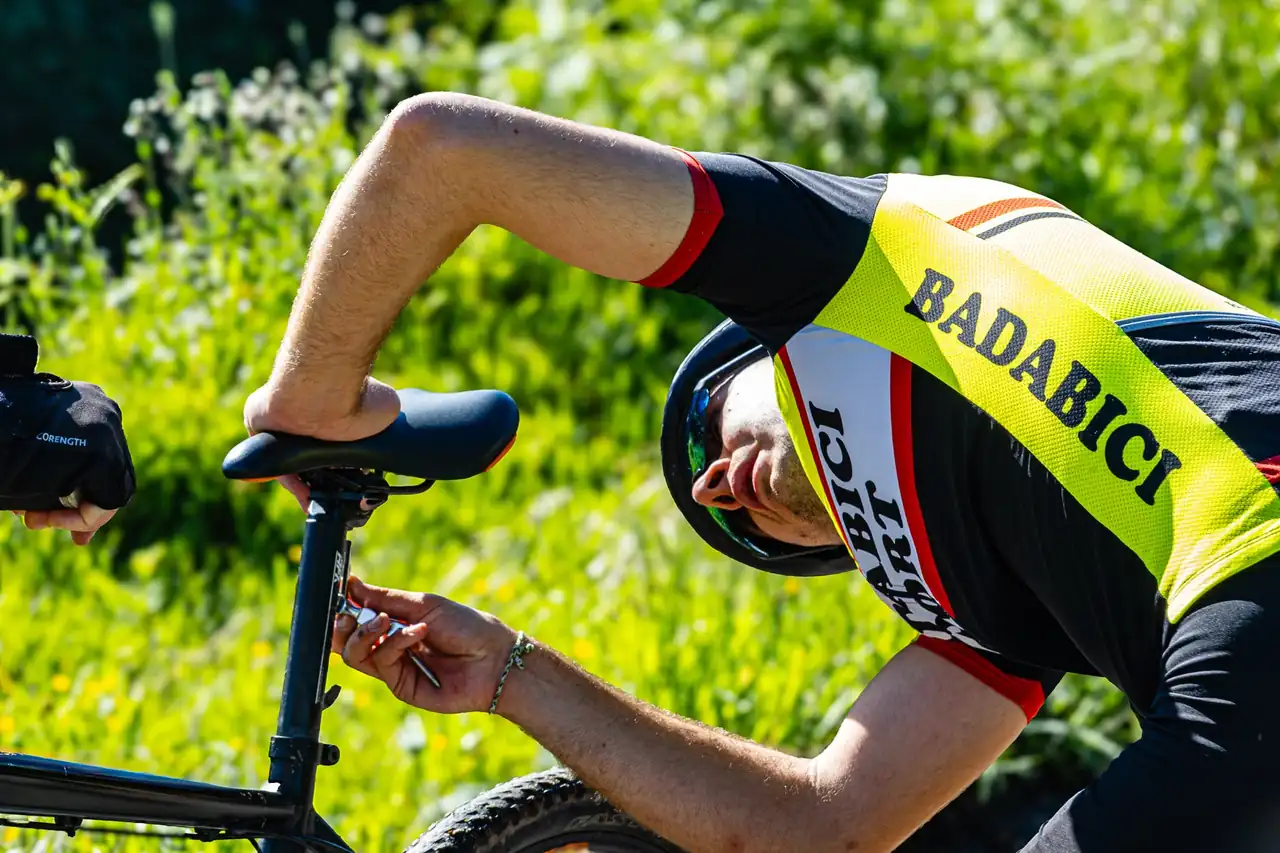
If you run, cycling can be a compatible activity with patellar tendinopathy, but only when pain is controlled and the load is adjusted carefully. In an acute phase, hard pedaling, heavy gears, or uphill riding can irritate the tendon more; by contrast, smooth pedaling, with a comfortable cadence and little effort, is often better tolerated than running or jumping.
The key is not so much whether to forbid or allow the bike as to understand what state the knee is in. A mild discomfort that appears at the end of a ride is not the same as a sharp pain when climbing stairs or standing up from a chair. The same bicycle that helps maintain mobility can become an overload machine if the saddle is poorly positioned, the resistance is excessive, or the movement is repeated on an already sensitized tendon.
What happens in the knee when pain appears
The patellar tendon connects the kneecap to the tibia and acts like a transmission cable between the quadriceps and the leg. Every time the knee extends, that tissue receives tension. In cycling, the movement is repeated thousands of times, but with one favorable feature: there is no direct impact like there is when running. That explains why the bike often comes up as a temporary alternative during an injury of this kind.
Even so, the term tendinitis is often used to describe a problem that, many times, is no longer pure inflammation but rather a overuse tendinopathy. The tissue is not always swollen like in an acute injury; sometimes it is irritated, sensitive, and less tolerant of effort. In that scenario, the usual mistake is to add hills, strength, and duration without leaving room for the tendon to adapt to the workload.
The discomfort usually appears at the front of the knee, just below the kneecap, and can worsen with stairs, squats, starts, or sudden changes in pace. In cyclists, it is also linked to a saddle that is too low, a slow cadence, or a very demanding gear. In that case, the knee works like a hinge forced to close and open without rest, a silent friction that barely warns you at first and later affects every pedal stroke.
When the bike can be a reasonable option
The bicycle is usually more manageable when pain is mild, does not increase during pedaling, and disappears when you finish or within a few hours. Also when the terrain is flat, the session is short, and resistance is kept low. A high cadence and light load reduce the effort of each push and distribute the work in the leg better, which can make the knee tolerate it better than a demanding ride.
During recovery, the value of the bike is not only in staying active. It also allows you to move the joint with a stable pattern, without the impact spikes of track running or the sudden support changes of other sports. Used well, it can be a way to preserve feel, blood flow, and aerobic base without overloading the injured area. It is a useful tool, not a free pass.
The problem arises when compatible activity is confused with permission to train as usual. A cyclist with patellar pain can go out riding, yes, but should not do so with the same volume, the same force, or the same effort ramps as before the episode. The tendon tolerates consistency better than surprises.
When the knee asks for a brake, not pedaling
If pain is already present at rest, if there is limping, if going up or down stairs becomes torture, or if the discomfort worsens with each session, the bicycle stops being a prudent solution. It is also wise to stop if the pain changes in nature: from a local annoyance to a sharp, vivid sensation that lingers for hours after the effort. Pain that accumulates usually does not negotiate well with training.
At those moments, insisting on the bike can prolong irritation and turn a reversible phase into a more stubborn condition. The tendon does not always respond with visible inflammation, but it does show lower tolerance to load. Continuing to add minutes in that context is like trying to loosen an already stripped screw: the motion is the same, but the part suffers more and more.
You also have to be wary of the false improvement that appears during warm-up. Some knees feel acceptable at first and then worsen later, once the tissue is already being stressed repeatedly. That sequence usually reveals that the load exceeds recovery capacity. It is not a sign to push a little harder; it is a warning to reduce intensity and review mechanics.
The adjustments that change the picture
In cycling, biomechanics rule. A saddle that is too low increases knee flexion and often raises anterior load; one that is too high can create other problems, but it does not solve tendon pressure either. Saddle position, its fore-aft placement, and weight distribution over the pedals have a much greater influence than first appears. Small millimeters can change the tension the knee receives with each turn.
Cadence also matters. Pedaling slowly with a hard gear requires more force per revolution, and that force ends up traveling to the front of the knee. By contrast, moving the legs at a quicker rhythm, on flat terrain and without excessive resistance, reduces the peak effort per pedal stroke. This is no minor detail: for an irritated tendon, the difference between 60 and 90 revolutions per minute can feel like going from dragging a stone to moving a light wheel.
Cleats that are poorly positioned, poor foot alignment, or asymmetry in the hip and ankle can also load the area. Sometimes the origin of the pain is not exactly where it hurts. The knee complains, but the problem starts in the overall fit of the body on the bike. That is why, when pain keeps coming back, it is worth looking beyond the tendon and reviewing posture, mobility, and pedaling pattern.
What kind of session fits best during recovery
Short, flat sessions without power spikes are usually the most sensible. The body needs a dose of work that does not wake up pain the next day. The useful reference is not whether you can endure the session, but how the knee responds in the hours afterward and the next morning. If it worsens, the load was too high.
Light resistance, stable terrain, and the absence of sudden changes help preserve the habit without turning exercise into a test of fire. It also helps to start with brief durations and only increase when the knee handles the stimulus well. Progression matters more than heroics: the tendon adapts to a staircase, not to a leap.
At least at first, it is wise to avoid sprints, long climbs, strength workouts, and traffic-heavy routes where braking and accelerating alternate. Each of those actions multiplies the demand on the joint. The bike is not the enemy; the problem is turning it into a sequence of mini-accelerations for a knee that is still negotiating its load capacity.
The importance of distinguishing tolerable pain from pain that worsens
Not all discomfort means additional damage, but in tendon injuries the margin between working and overdoing it can be narrow. Mild, stable, brief pain does not mean the same thing as discomfort that grows with the minutes or leaves the knee more sensitive for the rest of the day. The time course of pain is almost as important as its intensity.
A good sign is that the symptom does not change the way you walk, does not force compensation, and does not increase the next day. A bad sign is that each ride leaves a bigger mark than the last. In that case, the bike is no longer maintaining physical capacity; it is feeding the injury. The body usually warns clearly when certain limits are crossed, even if it does so quietly.
Listening to that progression avoids the most common mistake: confusing momentary tolerance with real recovery. A knee accepting ten minutes of pedaling does not mean it is ready for forty or for a hilly route. Compatibility should be measured by the tendon’s full response, not by the absence of pain in the first minute.
What role rest and strength work play
Total rest is rarely the only answer, but relative rest does matter. Reducing volume and intensity allows the tendon to lower its alarm level while other tissues stay active. At the same time, well-dosed strength work helps improve the system’s tolerance: quadriceps, glutes, and hip should share the load better so the knee does not act as the only support point.
In injuries of this kind, isometric exercises and slow progressions usually make more sense than explosive movements. The goal is not to punish the tendon, but to teach it to bear force again. Real recovery combines smart unloading and measured stimulus. Without stimulus, the tissue deconditions; without unloading, it gets irritated.
General recovery also matters: sleep, easy days, alternating efforts, and no sudden changes during the week. A fatigued tendon responds worse even if technique is correct. In cycling, as in almost everything, the sum of details wins the game. The knee does not break from a single ride, but from a sequence of small concessions that stop being small.
What signs indicate the problem is becoming chronic
When pain repeats for weeks, decreases only slightly with rest, or starts appearing in daily activities, the condition may be moving away from a one-off nuisance. In that phase, the knee becomes more predictable in its discomfort, but less tolerant of load. You notice it when getting up, climbing stairs, and, of course, when trying to pedal hard.
Another warning sign is losing confidence in the leg. The cyclist begins to alter the movement, unconsciously protects the knee, or avoids certain gears and terrain. That compensation pattern not only limits performance; it can also transfer overload to the other leg, the hip, or the back. A poorly managed injury rarely stays alone.
In these cases, insisting on biking without reviewing the situation is usually a bad bet. The priority stops being to accumulate kilometers and becomes recovering tolerance. Sometimes that requires stopping for a few days; other times, simply lowering the demand a lot and adjusting the position. The difference between both scenarios is marked by the pain response, not by the will to keep moving.
Indoor and road bikes do not behave the same
Not all bicycles load the knee in the same way. The stationary bike, properly adjusted and used with little resistance, can offer greater control over effort. Road or mountain bikes, on the other hand, add variables such as hills, wind, technique, bumps, and pace changes. The more unpredictable the session, the harder it is to dose the load.
That does not mean one is always better than the other. It depends on the injury, the fit, and the day’s goal. But for a sensitive knee, a gentle trainer ride or a properly adjusted stationary bike often makes it easier to control the stimulus. Real riding has more mechanical noise; the stationary bike offers more room to measure effort. That difference can be decisive in the early stages.
Posture also changes. On a stationary bike it is easier to monitor alignment and keep a constant cadence, although the feeling of heat and repetition can work against you if the session goes on too long. On a road bike, any climb becomes a test for the tendon. That is why the choice should not be made out of habit, but based on what the knee tolerates at that specific moment.
What usually goes wrong when you try to keep training
The most common mistake is interpreting the bike as permission to keep the plan unchanged. Pain drops a bit, you ride twice, and within a few days the discomfort returns more strongly. Another trap is shifting to harder gears to go faster and finish sooner. Apparent speed does not compensate for the internal load that this creates in the tendon.
People also fail by ignoring position. A poor setup turns every ride into a repetition of the same irritation. And if hills, poor recovery, and overly long sessions are added too, the knee receives a mixed message: that it must endure without having the resources to do so. In that context, the injury stops being a warning and becomes a more serious brake.
There is a less visible but equally important mistake: using the absence of pain during pedaling as the only criterion. Many tendinopathies respond with a delay. The body bills later. That is why the useful assessment does not end when getting off the bike; it continues during the following hours and the next day. That is where the truth of the tendon lies.
Compatibility depends on the moment, not on a fixed rule
There is no universal answer. The bicycle can be an ally or a source of relapse depending on the degree of injury, how you pedal, and individual tolerance. In a mild phase, well-dosed cycling is usually compatible; in a reactive phase or with increasing pain, it is wise to slow down and reorganize the load. The sensible decision comes from the behavior of the symptom, not from an absolute yes or no.
That explains why two cyclists with the same diagnosis may receive different guidance. One will tolerate 20 gentle minutes without trouble, while another will need a longer break. The tendon, like any living tissue, does not respond to labels but to recent history, accumulated fatigue, and pedaling mechanics. Sometimes the margin is wide; other times, just a few degrees of flexion or a little resistance make the difference.
The good news is that cycling is not usually a sport that is incompatible by definition with this kind of pain. The bad news is that it is not harmless by nature either. The line between helping and hurting is thin, and the criterion for crossing it should always be the same: stable pain, low load, clean technique, and favorable progress the next day.
A knee that accepts the bike without punishment
Patellar tendinopathy does not automatically force you to give up the bicycle. It does, however, require changing how you use it. When pedaling is smooth, posture is carefully managed, and intensity stays under control, the bike can sustain physical activity without adding fuel to the fire. When it becomes a strength test, by contrast, the knee responds with more pain and less room to maneuver.
The difference between those two situations is not a secret technique, but the sum of small decisions: saddle height, cadence, ride duration, terrain, recovery, and respect for pain. The knee does not ask for absolute immobility; it asks for common sense. And in injuries of this kind, common sense looks a lot like pedaling with less ego and more awareness.
How to use cycling while protecting your knee and planning your return to running
If running aggravates your patellar tendinopathy, cycling may help you stay aerobically active while reducing impact. It does not, however, show that your knee is ready to run, or replace recovery. Start with easy pedaling on flat ground or a stationary bike, and make the session shorter and gentler than your usual rides. At first, avoid hills, heavy gears, and sudden changes in pace; low resistance and a comfortable cadence generally require less force with each pedal stroke.
Pay attention to how your knee responds during the ride and afterwards. Pain that increases as you pedal, remains when you finish, or gets worse over the following hours is a reason to reduce the load or stop. Also ease off if walking, climbing stairs, or getting up from a chair hurts, or if you change the way you move. Don’t try to make up for missed runs by adding more time or intensity on the bike: the tendon still has to handle the repeated pedaling motion.
Check that your saddle is not too low, and avoid a position that makes you pedal with excessive effort. Keep up strength work and follow the recovery advice recommended for your situation; don’t treat cycling as an automatic substitute. Return to running progressively, guided by your knee’s response rather than simply by whether you completed a bike ride. If pain persists or worsens, consult a healthcare professional.
Medical reference: Tendinitis, MedlinePlus (U.S. National Library of Medicine).



How to prevent thigh chafing: causes and real solutions

Women’s running windbreakers: seven jackets and how to choose

Do more workouts get rid of soreness? A guide for runners

Jaén Half Marathon 2026: Record 3,800 Runners Registered

Men’s short running tights: how to choose the right pair

World Triathlon confirms data breach involving medical data

Izan Edo targets podium at Miyazaki World Cup

María Pérez ranks ninth in World Athletics’ 2026 top ten

Dos Santos, Duplantis and Sawe: World Athlete of the Year finalists

San Silvestre Vallecana 2026: 42,000 places, prices and start times

 Races3 months ago
Valencia Half Marathon 2027: date and registration

 Races3 months ago
Valencia Marathon 2026: entry, ballot and course

 Reviews and Comparisons4 months ago
Asics Gel-Roadmiles 3 for men: review and current price

 Reviews and Comparisons4 months ago
Asics Gel Sonoma 8 Gore-Tex: complete analysis for trail and rain

 Sneakers3 months ago
Saucony Endorphin Pro 4: full review and verdict

 News5 months ago
Strava API 2026: what changes for clubs, challenges and runner apps?

 Reviews and Comparisons5 months ago
Nike Alphafly 3: opinions, sensations, and real key points

 Reviews and Comparisons4 months ago
Under Armour running shoes review 2025-2026: models and key features

 Sports Equipment4 months ago
Shoe sizes in cm: a clear guide to getting the right fit for your footwear

 Sneakers3 months ago
Skechers GO RUN Consistent 2.0 analysis: comfort and limits

 News5 months ago
Valencia Marathon 2026 route: key tips to train and run better

 Sneakers4 months ago
Adidas Adizero Boston 13 for men: review and verdict