Health and Nutrition
Stationary bike benefits for your knees when running
Gentle pedaling unloads the joint, improves mobility, and strengthens the muscular support of the knee.

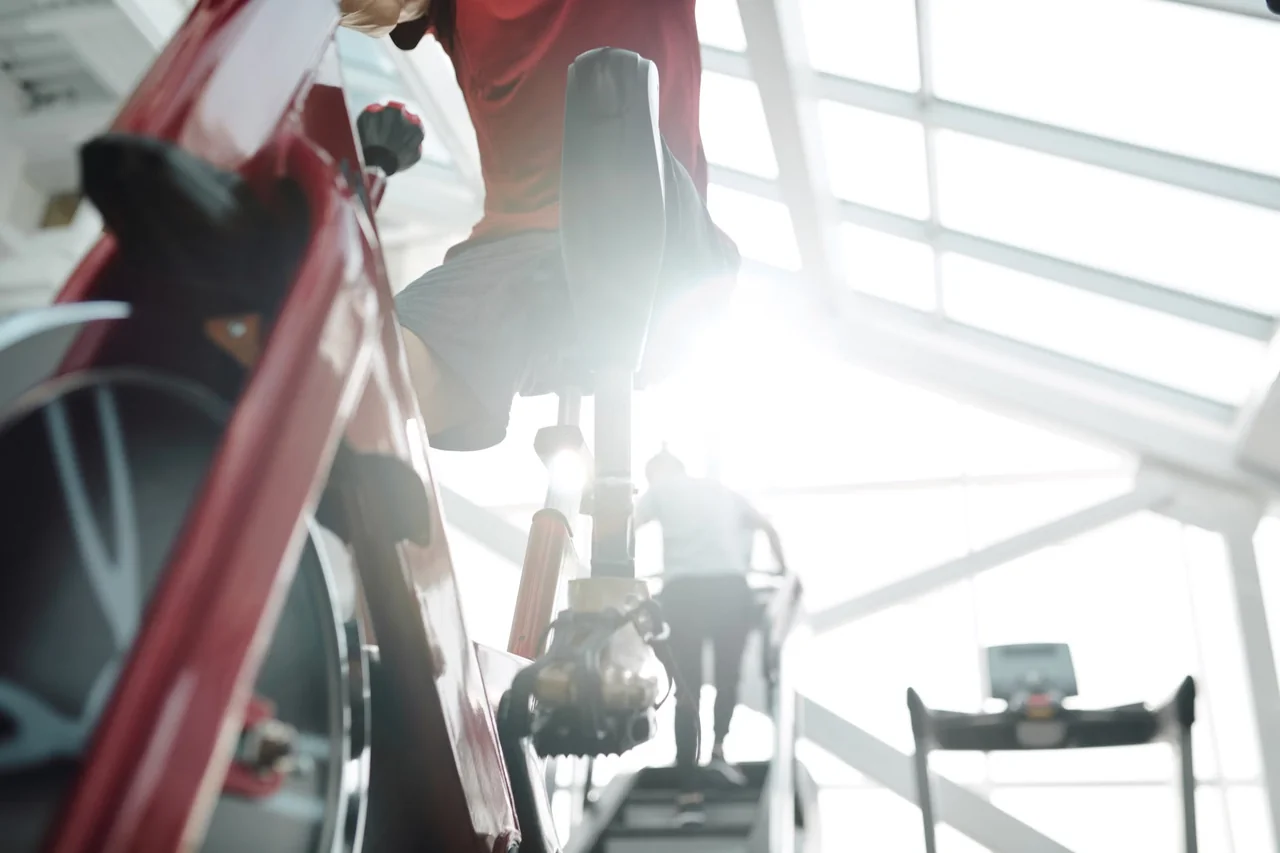
For runners, the stationary bike can be a useful way to keep moving when your knees need a break from impact. It lets you train at home or at the gym, combining cardiovascular work with a controlled joint load that is gentler than running, jumping or repeated stair climbing. That makes it a possible complement to your training when you want to vary the effort without giving up movement.
That mix explains why it often appears in rehabilitation processes, maintenance routines, and also in people who want to stay active despite discomfort, stiffness, or joint wear. Properly adjusted and used sensibly, it offers mobility, strength, and circulation without forcing the joint the way more aggressive disciplines do.
Gentle pedaling that unloads the joint
The knee bears much of the body’s weight and takes part in everyday actions such as walking, standing up from a chair, or climbing stairs. When the ground is uneven or the effort includes impacts, that joint acts like a shock absorber subjected to continuous micro-impacts. On a stationary bike, by contrast, the movement is cyclical, guided, and predictable, a kind of closed track in which the knee works with fewer jolts.
That mechanical behavior reduces abrupt pressure on the cartilage and on the soft structures surrounding the joint. It does not mean a total absence of load, because pedaling requires muscular work, but it does mean a more orderly distribution of effort. For many people with knee discomfort, that difference is noticed right away: less sensation of impact, less afterward stiffness, and greater ease moving without the joint complaining at every step.
The advantage depends not only on the machine, but on how it is used. A poorly positioned saddle, excessive resistance, or a hunched posture can turn a friendly exercise into an uncomfortable session. When setup is correct, the stationary bike behaves almost like an assisted mobility platform: it allows adding minutes of activity without exposing the knee to jumps, braking, or unnecessary twisting.
Why it improves mobility and the feeling of stiffness
Repeated, controlled movement promotes the joint’s natural lubrication and helps synovial fluid perform its function better. Put simply, the knee moves with less friction and a smoother feel. In people with morning stiffness or with a joint that feels rusty, a few minutes of gentle pedaling can act as a progressive unlock.
That effect is not magic or a universal solution, but it is a logical response of the body to dosed movement. The knee needs activity to keep tissues and muscles functioning. The problem usually arises when everything is reduced to prolonged rest or abrupt exertion. The stationary bike occupies a very valuable middle ground: it activates without shaking, mobilizes without demanding jumps, and allows warming up with a more natural transition.
There is also a less visible but very relevant benefit: the nervous system interprets the joint better when it moves steadily and without sharp pain. That improves confidence when bearing weight in daily life. Often, the knee does not fail only because of pain; it also does so because of insecurity, out of fear that it will give way or hurt. Gentle, repeated exercise can help restore that sense of control.
The muscles that protect the knee benefit too
One of the major contributions of the stationary bike is strengthening the muscles that surround and stabilize the knee. Quadriceps, hamstrings, and calves are involved in each pedal stroke, although with varying intensity depending on resistance and posture. This activation improves the joint’s dynamic support, which is key to reducing overload in everyday movements.
The quadriceps deserve special mention. When they gain tone and endurance, they help control knee extension better and distribute effort in movements such as standing up or going down stairs. The hamstrings, for their part, contribute to posterior stability and prevent the workload from falling disproportionately on the front of the joint. Together, that muscular coordination acts like a safety net.
The stationary bike does not build strength explosively or replace specific strength work, but it does provide a very useful base. For delicate knees, that base matters as much as cardiovascular endurance. A joint with more active supporting muscles usually tolerates daily tasks better, and that translates into greater independence and less sense of fragility.
Body weight and pressure on the knee
Weight control also comes into play. Every extra kilo increases the mechanical load the knees bear when walking, climbing stairs, or standing for long periods. The stationary bike, by helping burn energy regularly, can be a useful ally within a physical activity routine aimed at reducing that accumulated pressure on the joint.
This point should be understood with nuance. Pedaling does not cause weight loss on its own or offset any dietary excess, but it does make it easier to maintain a consistent level of activity with less impact. That consistency is what makes the difference: regular, manageable, and sustainable sessions are often more effective than intense, sporadic efforts that end up being abandoned because of discomfort or fatigue.
In addition, when weight is reduced, the knee works in a more favorable environment. The problem does not disappear if there is an injury or osteoarthritis, but part of the everyday pressure does decrease. The stationary bike therefore adds value in two ways: it allows movement and, at the same time, contributes to a biomechanical context that is less hostile to the joint.
Better circulation, less feeling of heaviness
Rhythmic pedaling promotes venous return and activates circulation in the legs, something that can be especially useful when there is a feeling of heaviness or when the joint feels sluggish. This increase in blood flow helps tissues receive oxygen and nutrients better, favoring a more efficient response during and after exercise.
For people who spend many hours sitting, the stationary bike acts almost like an antidote to immobility. The joint moves, the muscles contract and relax, and the knee is no longer trapped in the stiffness of a single posture. That alternation of flexion and extension, as long as it is moderate, usually leaves a feeling of lightness that other, more violent exercises do not offer.
There is also a temperature component: as flow and muscular work increase, the area warms up and responds better. That internal heat, subtle but real, can improve joint comfort. It does not cure conditions, but it does create a more favorable environment for moving with less discomfort and with a greater sense of fluidity.
When a stationary bike stops being kind to the knee
Not all pedaling is beneficial by definition. The same machine that protects can irritate if used incorrectly. The most common mistake is sitting too low. When the saddle is too low, the knee bends too much with each rotation and the load becomes concentrated in an area that already does a lot of work. The result is often front-of-knee discomfort, a feeling of rubbing, or disproportionate fatigue.
The chosen resistance also matters. A level that is too high forces you to push hard with each pedal stroke, which increases joint pressure and can overload the patellar tendon or the inner side of the knee. Added to that is a very slow, almost grinding cadence, which concentrates effort instead of distributing it. The knee responds better to smooth, controlled pedaling than to a brute-force battle against the pedals.
There are also clinical situations that require caution. Acute pain, obvious swelling, joint locking, or instability should not be normalized as training discomfort. In those cases, the bike may be temporarily inappropriate or may require very specific adjustments. Useful exercise is not the one that pushes hardest, but the one that respects the joint’s real response.
Adjustments that completely change the experience
Saddle height makes much of the difference between relief and punishment. As a general reference, at the bottom of the pedal stroke the leg should be almost extended, without locking the knee or keeping it too bent. That position allows for a cleaner lever action and reduces unnecessary compression inside the joint.
The distance between the saddle and handlebars also matters. A posture that is too closed compresses the hips and knees and forces the body to compensate with unwanted tension. By contrast, a reasonable position, with a stable torso and relaxed shoulders, promotes a more efficient movement pattern. Comfort is not a whim; in biomechanics, it is often a sign that the load is better distributed.
Resistance should increase gradually. It is preferable to start with gentle sessions, notice how the knee responds, and adjust from there. Slow, almost domestic progress usually works better than forcing things from day one. The joint, like a well-oiled hinge, responds better to consistency than to spikes in intensity.
Who tends to notice its benefits most
People with knee pain due to disuse, stiffness, or muscle weakness often perceive a noticeable improvement when they incorporate stationary biking carefully. The same goes for those who have lingering mild discomfort after periods of sedentary behavior, or who need to stay active without subjecting themselves to impacts. In these cases, exercise acts as a bridge between inactivity and a more functional life.
In degenerative processes such as osteoarthritis, the benefit usually comes from the combination of mobility, strength, and low impact. The bike does not erase wear and tear, but it can soften symptoms and help preserve movement capacity. The important thing is not to confuse relief with cure: the goal is to move better, with less pain and with more room for daily tasks.
It is also useful for people who combine running with other disciplines. Running and cycling do not necessarily compete; they can complement each other. The stationary bike allows you to add aerobic work when the joints need a break from the repeated impact of asphalt. A large part of its value within modern training lies in that balance.
What daily practice shows, beyond theory
In clinical practice and in the experience of many users, the stationary bike stands out for something simple and decisive: it is easy to stick with. It does not require leaving home, it does not depend on the weather or the terrain, and it adapts to very different paces. That accessibility turns a health recommendation into a doable routine, and that detail matters more than it seems.
Adherence is key. An excellent exercise that is abandoned after a few days is less useful than a modest but consistent activity. The stationary bike gains ground precisely for that reason: it fits into daily life with less friction. It can become a quiet, almost background habit while the body accumulates improvements without great fanfare.
That is why its benefits for the knee should not be read as an abstract list, but as a chain of small advantages that reinforce one another. Less impact, more mobility, more active muscles, better circulation, and a greater sense of control. Sometimes joint health advances this way, along a discreet path, without noise or heroics.
How a stationary bike can support runners’ knees
A stationary bike can offer a lower-impact option when you want to limit your running for a while, such as on a recovery day or when varying your weekly training load. Pedalling is controlled and repetitive, but it is not the same as running: it works your cardiovascular fitness and leg muscles without recreating the demands of an easy run, a long run or a race. Treat it as cross-training, not as proof that your knee is ready to run again.
Start at an easy effort, with enough resistance to pedal smoothly rather than strain. Set the saddle so your knee does not feel excessively bent or stretched at the top and bottom of each pedal stroke. If the session feels comfortable, build the effort gradually. If you usually do intervals or long runs, avoid trying to replace all that work on the bike at once. Begin with an easy ride and notice how your knee feels during the session and afterwards.
Watch for pain that builds as you pedal, discomfort that changes how you move, or symptoms that appear or worsen after the session. Lower the resistance or stop if the ride does not feel comfortable; do not push through just to complete the planned workout. If symptoms persist, speak with a healthcare professional before returning to running or making a substantial change to your training load. Cycling can help you stay active, but it cannot replace individual advice or guarantee a pain-free run.
A useful tool when the knee asks for movement and calm
The stationary bike holds a solid place among knee-friendly exercise options because it combines controlled load and low impact. Its value lies in allowing physical activity without overly punishing the joint, something especially useful when the body wants continuity but rejects the sharp blow of other disciplines.
Its real performance depends on three very specific factors: correct setup, moderate resistance, and listening to the body’s signals. When those elements fit together, the bike stops being just a cardio machine and becomes a joint-care tool. It does not replace diagnosis or clinical judgment, but it does offer a fairly safe ground for adding movement intelligently.
In a sensitive knee, that balance is worth its weight in gold. Pedaling without jolts, with good posture and without rushing, can become one of the most sensible ways to keep the joint active, stable, and less battered by the ups and downs of daily life.
Medical reference: Stationary cycling for knee osteoarthritis, Institutos Nacionales de Salud de EE. UU. (NIH).



How to prevent thigh chafing: causes and real solutions

Women’s running windbreakers: seven jackets and how to choose

Do more workouts get rid of soreness? A guide for runners

Jaén Half Marathon 2026: Record 3,800 Runners Registered

Men’s short running tights: how to choose the right pair

World Triathlon confirms data breach involving medical data

Izan Edo targets podium at Miyazaki World Cup

María Pérez ranks ninth in World Athletics’ 2026 top ten

Dos Santos, Duplantis and Sawe: World Athlete of the Year finalists

San Silvestre Vallecana 2026: 42,000 places, prices and start times

 Races4 months ago
Valencia Half Marathon 2027: date and registration

 Races4 months ago
Valencia Marathon 2026: entry, ballot and course

 Reviews and Comparisons4 months ago
Asics Gel-Roadmiles 3 for men: review and current price

 Reviews and Comparisons4 months ago
Asics Gel Sonoma 8 Gore-Tex: complete analysis for trail and rain

 Sneakers4 months ago
Saucony Endorphin Pro 4: full review and verdict

 News5 months ago
Strava API 2026: what changes for clubs, challenges and runner apps?

 Reviews and Comparisons5 months ago
Nike Alphafly 3: opinions, sensations, and real key points

 Reviews and Comparisons4 months ago
Under Armour running shoes review 2025-2026: models and key features

 Sports Equipment4 months ago
Shoe sizes in cm: a clear guide to getting the right fit for your footwear

 Sneakers3 months ago
Skechers GO RUN Consistent 2.0 analysis: comfort and limits

 News5 months ago
Valencia Marathon 2026 route: key tips to train and run better

 Sneakers4 months ago
Adidas Adizero Boston 13 for men: review and verdict